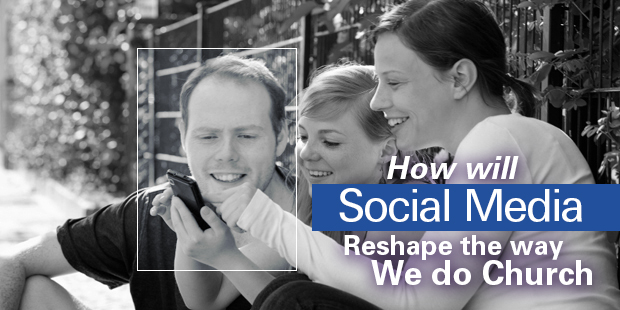
With the increasing use of GPS enabled smart phones and apps like foursquare, social media is attempting to mimic omniscience. We find ourselves in a world where our technology has enabled more meaningful interactions with someone on the other side of the world rather than our next door neighbour.
Whether we like it or not social media will influence the way we do Church both positively and negatively and it is important that as a church, we anticipate and adapt to these changes appropriately.
Now that social media is here to stay, those that see church as primarily their social network may now find that they don’t need church quite so much. Alternatively social media may have little effect on those who experience Church as both spiritual and social.
In the consumer generation, commitment is being eroded and content is fast becoming king. People increasingly are being guided by customer reviews and have the ability to make more choices about the way they live their lives. Is this same consumer mentality being applied to the way we do Church?
Is Church becoming more fluid, with people doing church when it suits them rather than fitting in with existing structure? Could this fluidity cause churches to experience more churn, as people pick and choose when and which meetings they attend? I already know people who are using social media to decide which church meeting to attend? If their favourite speaker or worship leader is not part of the service that day, they may decide to go elsewhere.
In the consumer generation Hebrews 10:24 is interpreted more loosely and in response, the church needs to endorse the concept of being called to a particular church family (James 4:15) rather than allowing people to treat church as a consumer experience.
There was a time when the local Church was able to guard our minds from false doctrine and filter the information that we were subjected to; however that is increasingly no longer the case. We have never before had so much information at our fingertips through social sites, blogs, and on-line magazines. These days due to the web’s low barrier to entry, regardless of their credentials, anyone can publish their ideas.
On a more positive note, is the rise of the ‘social Influencer’ good news for the Church?
It will become increasingly important for Church leadership teams to encourage and mentor their social network entrepreneurs, their influencers and bloggers, and content aggregators. If one of your church members writes a popular blog they are already influencing people on a global scale.
The boundaries between ‘virtual ‘and ‘real in the flesh’ communication will become increasingly blurred as mobile technology and social applications like facebook, twitter and foursquare draw people into more face to face meetings. Will this mean that micro church will happen more spontaneously in the park or culminate as prayers in the coffee house, as technology draws people together through their network of friends?
Social networking will aid in church growth as our influencers use technology in creative ways to convey the gospel message and connect people into family groups.
Good content will become increasingly important.
As the consumer is overloaded with information it is becoming increasingly important for their favourite content to be aggregated into one place. We can already see this happening more and more with sites like Mashable, Pinterest and Delicious becoming more popular. Google no longer just use page rankings to bring you the most relevant content but they now also take into account social influence and relevance. This means that Christian influencers who are able to gather good quality content into their sites will become increasingly popular and influential.

These days it seems like internet gorillas like Google, Facebook and Twitter know you more than you know yourself. Chad Hurley, CEO of Delicious and co-founder of YouTube recently said “As people’s networks and interactions expand, massive data sets will generate predictive models that will know what you want before you look for it.”
Could the prophetic in us, intuitively predict what is about to capture the public’s attention and help inspire good quality content which will re-direct people towards the Gospel?
For the more philosophical, social media could mean more cross-pollination and unity between church groups aspeople attend events organised by other Christians that they discover and connect with on-line. Church leaders could increasingly find themselves communicating and coordinating with their counterparts in other denominations.
Great news for the Christian artist as digital art will become more important. Due to short cybertized attention spans, good quality imagery is needed to capture the attention of the cyber channel clickers.
As one of my friends put it, ‘Social media means church beyond Sunday, and church beyond four walls. Churches should be encouraging a continuing sense of purpose and mission through the embracing of social media.’
In evangelical circles during the last couple of years I have noticed an impetus to empower and mobilize grass roots leaders and influencers. In my denomination they have called this initiative ‘Radical Disciples’.
Combined with the power of social media, never before has the ‘Radical Disciple’ had so much opportunity to influence so many.
Read more from Phil
here.

Tags: Attention, Phil Petty, Social Media
|
What is MyVisionRoom? > | Back to Communication >