The Admission Price of Worship

We live in a culture that places feelings at the apex of our motivation for everything we do. If you feel like doing something, go for it with everything you’ve got. On the flipside, if you don’t feel like it, why do it at all? It’s pointless. Inauthentic.

This mindset holds tremendous consequences for our approach to worship. If we get into a worship experience on the weekend and we don’t feel like worshiping, it can be easy to clock out spiritually and offer God a few scraps of praise. Or simply opt out until next week when we’ll hopefully be in a better mood and we can offer something that’s a little more real.

This reflects a massive misunderstanding of worship and what’s required for it to be authentic and acceptable to God-and it’s not our feelings.

Hebrews 13:15 gives us the real answer: “Through Jesus, therefore, let us continually offer to God a sacrifice of praise.”

Your offering filtered through your feelings might be lacking, but your offering filtered through Jesus’ sacrifice will never be. Feeling is not the admission price for worship. Jesus’ blood is.

Don’t let the devil rob you of your praise by talking you into the lie that a certain feeling must precede worship. Jesus has been faithful to offer the worship you’ll never be able to. So be faithful and offer the worship he asks of you through Him. Even if you’re not feeling it.

Put your feelings in their place and make them have to catch up to your faithfulness.

Read more from Steven here.

Download PDF

Tags: ,

| What is MyVisionRoom? > | Back to Environments >

ABOUT THE AUTHOR

Steven Furtick

Steven Furtick

Pastor Steven Furtick is the lead pastor of Elevation Church. He and his wife, Holly, founded Elevation in 2006 with seven other families. Pastor Steven holds a Master of Divinity degree from The Southern Baptist Theological Seminary. He is also the New York Times Best Selling author of Crash the Chatterbox, Greater, and Sun Stand Still. Pastor Steven and Holly live in the Charlotte area with their two sons, Elijah and Graham, and daughter, Abbey.

See more articles by >

COMMENTS

What say you? Leave a comment!

Recent Comments
comment_post_ID); ?> Thank you for this information. I'm going to use this article to improve my work with the Lord.
 
— Abel Singbeh
 
comment_post_ID); ?> Thank you Ed for sharing your insights into the Church Growth Movement. I have my reservations with Church Growth models because it has done more damage than good in the Body of Christ. Over the years, western churches are more focused on results, formulas and processes with little or no emphasis on membership and church discipline. Pastors and vocational leaders are burnt out because they're overworked. I do believe that the Church Growth model is a catalyst to two destructive groups: The New Apostolic Reformation and the Emerging Church. Both groups overlap and have a very loose definition. They're both focus on contemporary worship, expansion of church brand (franchising), and mobilizing volunteering members as 'leaders' to grow their ministry. Little focus on biblical study, apologetics and genuine missional work with no agenda besides preaching of the gospel.
 
— Dave
 
comment_post_ID); ?> Thank you for sharing such a good article. It is a great lesson I learned from this article. I am one of the leaders in Emmanuel united church of Ethiopia (A denomination with more-than 780 local churches through out the country). I am preparing a presentation on succession planning for local church leaders. It will help me for preparation If you send me more resources and recommend me books to read on the topic. I hope we may collaborate in advancing leadership capacity of our church. God Bless You and Your Ministry.
 
— Argaw Alemu
 

Clarity Process

Three effective ways to start moving toward clarity right now.

The Need for More Homegrown Leaders in Your Church

The church needs more homegrown leaders. It’s not a novel plea. In fact, church researchers have called for local equipping of leaders for a long time. In our globalized society, however, it is becoming even more important. Today everyone has access to the same information at the same time. Podcasts, blogs and sermon videos are ubiquitous.

The best teachers and preachers in the world now broadcast messages for free. Anyone can listen and benefit from excellent teaching—simply take your pick from several great leaders. The problem is applying this teaching to a variety of individual contexts. What we need are local leaders who understand unique cultural nuances of small towns, neighborhoods and enclaves of larger metropolitan cities.

Many churches will benefit by training and equipping local, homegrown leaders who have specific, lifelong knowledge of their context. What are some things to consider when empowering these homegrown leaders?

Inside, not outside hires. Church leaders will do better in most cases to train up people from within their congregations rather than hiring from the outside. First, if a person is faithful to a specific local church, then the likelihood of that person being sold on the vision of the church is higher. Second, inside hires have at least a basic understanding of the church culture (on the inside); whereas it’s speculation on an outside hire being a cultural fit. Additionally, an out-of-town hire will have two cultures to learn: the inside church culture and the outside community culture.

The rise of Boomer volunteers. Perhaps you’ve heard the Baby Boomer generation is reaching retirement age. Many of them will want to spend their retirement years serving—what better place than the local church. As they enter this season of their lives, perhaps they could lead a lay-led revolution within churches. If you’re wondering why your “senior” ministry keeps getting smaller and older, and no “fresh faces” are joining, it’s because Boomers don’t want to be lumped in with their parents. In fact, many churches may discover an army of volunteers by starting a new type of Boomer ministry with a leadership focus.

Intentional diversity. We are becoming a majority minority nation, and most communities in our country are changing. They are becoming more diverse. Homogeneous churches could benefit by utilizing the few people in their congregations of differing ethnicities and socioeconomic statuses. Be intentional about learning from them, giving them leadership positions, and equipping them to reach outward.

Homegrown leadership is not new, but all churches should have a plan to equip their own. And developing homegrown leaders is a biblical way to help the church culture reach outward into the culture of the community.

Read more from Sam here.

Download PDF

Tags: , , ,

| What is MyVisionRoom? > | Back to Leadership >

ABOUT THE AUTHOR

Sam Rainer III

Sam serves as lead pastor of West Bradenton Baptist Church. He is also the president of Rainer Research, and he is the co-founder/co-owner of Rainer Publishing. His desire is to provide answers for better church health. Sam is author of the book, Obstacles in the Established Church, and the co-author of the book, Essential Church. He is an editorial advisor/contributor at Church Executive magazine. He has also served as a consulting editor at Outreach magazine. He has written over 150 articles on church health for numerous publications, and he is a frequent conference speaker. Before submitting to the call of ministry, Sam worked in a procurement consulting role for Fortune 1000 companies. Sam holds a B.S. in Finance and Marketing from the University of South Carolina, an M.A. in Missiology from Southern Seminary, and a Ph.D. in Leadership Studies at Dallas Baptist University.

See more articles by >

COMMENTS

What say you? Leave a comment!

Recent Comments
comment_post_ID); ?> Thank you for this information. I'm going to use this article to improve my work with the Lord.
 
— Abel Singbeh
 
comment_post_ID); ?> Thank you Ed for sharing your insights into the Church Growth Movement. I have my reservations with Church Growth models because it has done more damage than good in the Body of Christ. Over the years, western churches are more focused on results, formulas and processes with little or no emphasis on membership and church discipline. Pastors and vocational leaders are burnt out because they're overworked. I do believe that the Church Growth model is a catalyst to two destructive groups: The New Apostolic Reformation and the Emerging Church. Both groups overlap and have a very loose definition. They're both focus on contemporary worship, expansion of church brand (franchising), and mobilizing volunteering members as 'leaders' to grow their ministry. Little focus on biblical study, apologetics and genuine missional work with no agenda besides preaching of the gospel.
 
— Dave
 
comment_post_ID); ?> Thank you for sharing such a good article. It is a great lesson I learned from this article. I am one of the leaders in Emmanuel united church of Ethiopia (A denomination with more-than 780 local churches through out the country). I am preparing a presentation on succession planning for local church leaders. It will help me for preparation If you send me more resources and recommend me books to read on the topic. I hope we may collaborate in advancing leadership capacity of our church. God Bless You and Your Ministry.
 
— Argaw Alemu
 

Clarity Process

Three effective ways to start moving toward clarity right now.

Don’t Hate Me Because I’m a Church Building

Think about your commute this morning. I bet that somewhere along the way you passed through a mixed neighborhood. You know the kind, where some houses are well-kept and others aren’t.

Now let’s say you had to spend your money buying one of those houses. Which would you choose? Would you pick the one with the fresh paint and a straight roof or the one the tired façade and dated carpets? The answer is pretty obvious.

But it’s probably not obvious at your church. If you were to visit your church for the first time, what would your “fresh eyes” see? How are your carpet, lighting, building smell, media equipment, bathrooms and paint?

CHURCH GOGGLES

Because we love our churches, many times we don’t see what visitors see. We have our “church goggles” on. Andy Stanley likes to say our churches can be like old couches. We love our old couches because of the wonderful memories they bring to mind. But any visitor just looks at our old couch and sees junk.

Church goggles aren’t our only problem. Churches can be caught in a never-ending battle to please everyone. Raise the prospect of spending any meaningful money on your church building and there will be those who criticize. “That money can be better spent on _______ (name any ministry or good cause)” they say. Of course it can. Who wouldn’t agree that dollars spent helping people are better used than buying carpeting?

LIKE IT OR NOT, BUILDINGS ARE A CHOICE YOUR CHURCH MADE

This is where leadership needs to step in. Fresh carpeting can help reach people. When your church bought its building, it made a commitment to a ministry model. A church building the primary tool of the attractional church model. You invite people to “God’s house” where they build relationships and grow spiritually. A building is no different than a family’s house. You don’t just purchase it once and forget about it. When you bought, you implicitly made an commitment to maintain it. My mechanic recently told me about a customer of his that bought an expensive car. He believed that because he paid a lot for it he didn’t need to change the oil. It wasn’t long before the car ceased to function. Do people in your congregation believe the same thing about your church building?

Leaders should remember that your church building is the primary tool your church has chosen to reach your local mission field. By keeping it fresh and attractive your church maintains its ability to reach people.

BUT WE REALLY WANT TO SPEND MONEY ON SOMETHING ELSE

Are you tired of spending tens of thousands of dollars on utilities, mortgage payments and maintenance? Do you want your church’s dollars to go to something more worthy? Great! You can. Get rid of your building. Or downsize. Sell your building to a growing church that really needs your space. You can rent space for meetings or meet in homes. You can use live streaming video to bring together a lot of small locations. There’s no rule that says your church needs a building. A church is not a building but a community.

Form follows function. If you want 50% of your church income to go outside the church, reduce your facilities expenses according. This way your vision and budget are aligned and your building won’t be an unnecessary point of tension/conflict.

NO MIDDLE GROUND

If you have chosen to have a building, maintain it well. Dated, dim and dingy environments won’t help Jesus. They only reinforce the negative impressions held by unchurched people. Own up to the commitment you have already made. Remind your congregation why “clean, bright and up-to-date” are important to reach people.

If you don’t have a building, don’t be too quick to get one. Renting and using technology to connect aren’t bad things. They free you from the massive distraction and expense that come with buildings. If you’re not about attractional church, don’t kill yourself committing to the main tool of attractional church.

With buildings you’re “all in.” Each year building environments are either getting better or getting worse. There is no middle ground.

Download PDF

Tags: , ,

| What is MyVisionRoom? > | Back to Environments >

ABOUT THE AUTHOR

Rob Cizek

See more articles by >

COMMENTS

What say you? Leave a comment!

Recent Comments
comment_post_ID); ?> Thank you for this information. I'm going to use this article to improve my work with the Lord.
 
— Abel Singbeh
 
comment_post_ID); ?> Thank you Ed for sharing your insights into the Church Growth Movement. I have my reservations with Church Growth models because it has done more damage than good in the Body of Christ. Over the years, western churches are more focused on results, formulas and processes with little or no emphasis on membership and church discipline. Pastors and vocational leaders are burnt out because they're overworked. I do believe that the Church Growth model is a catalyst to two destructive groups: The New Apostolic Reformation and the Emerging Church. Both groups overlap and have a very loose definition. They're both focus on contemporary worship, expansion of church brand (franchising), and mobilizing volunteering members as 'leaders' to grow their ministry. Little focus on biblical study, apologetics and genuine missional work with no agenda besides preaching of the gospel.
 
— Dave
 
comment_post_ID); ?> Thank you for sharing such a good article. It is a great lesson I learned from this article. I am one of the leaders in Emmanuel united church of Ethiopia (A denomination with more-than 780 local churches through out the country). I am preparing a presentation on succession planning for local church leaders. It will help me for preparation If you send me more resources and recommend me books to read on the topic. I hope we may collaborate in advancing leadership capacity of our church. God Bless You and Your Ministry.
 
— Argaw Alemu
 

Clarity Process

Three effective ways to start moving toward clarity right now.

The Biggest Church Website Needs for 2013

We asked a simple question: What is something you will need on your church website in 2013?

Hundreds responded and we picked the ones most indicative of the overall themes. Here is what church and ministry leaders from across the country will be implementing on their websites in the next year:

Content Organization  

Investing in finding out what catches someone who is looking at your site for the first time. Josh S.

Organization of our voluminous materials for every audience! Olga D.

A system in place to help people understand how to mature through the different steps and programs available. How to effectively reach people through the web. Carlos B.

Better content management, for site to be relevant representation of church. Shawnte M.

Information architecture to prioritize the pages and information. David E.

Getting information up front and easy to find—and everyone wants their information up front! Heidi H.

Multimedia

Sermon-specific media player. Joel N.

More photos, content, interactivity. Joshua M.

The ability to easily share site pages via Twitter or Facebook. Sam J.

Video capability for streaming our services. Mike K.

Video archives of our Sunday messages. Rick C.

More video/graphic content; less text. I guess I’ll know more after we read this white paper 🙂 Ben C.

Interpersonal Buy-In

We’ll be concentrating on getting ministry staff buy-in for help in generating fresh, engaging, content. Gail H.

Building a volunteer database for maintenance. Especially for keeping track of people with some tech and design savvy. John S.

More stories of life change. Julia H.

Online giving and better intra-church communication. Sarah E.

Building a Professional Website

Integrating our various forms of communication (we use EMMA for our e-newsletter, CCB for congregation info management, Tumblr for our blog, WordPress for our website, and most of our current information (including photos, etc.) is on Facebook. Steve P.

Moving from ‘home-made’ to a professional website. Joe F.

A way to capture and tell stories better. Krista W.

Researching how to direct people to the site, successfully convey the vision of the ministry to them through the site, and keep them engaged in the content of the site in a simple, clear, and effective way. Eric M.

Conclusion

The emerging themes are clear: Content organization and governance, increased multimedia, buy-in from other leaders, and building a professional website are the top priorities for church leaders in 2013.

Did you see anything on this list you’d like to implement in your own context?

Read more from Justin here.

Download PDF

Tags: , , ,

| What is MyVisionRoom? > | Back to Communication >

ABOUT THE AUTHOR

Justin Wise

See more articles by >

COMMENTS

What say you? Leave a comment!

Recent Comments
comment_post_ID); ?> Thank you for this information. I'm going to use this article to improve my work with the Lord.
 
— Abel Singbeh
 
comment_post_ID); ?> Thank you Ed for sharing your insights into the Church Growth Movement. I have my reservations with Church Growth models because it has done more damage than good in the Body of Christ. Over the years, western churches are more focused on results, formulas and processes with little or no emphasis on membership and church discipline. Pastors and vocational leaders are burnt out because they're overworked. I do believe that the Church Growth model is a catalyst to two destructive groups: The New Apostolic Reformation and the Emerging Church. Both groups overlap and have a very loose definition. They're both focus on contemporary worship, expansion of church brand (franchising), and mobilizing volunteering members as 'leaders' to grow their ministry. Little focus on biblical study, apologetics and genuine missional work with no agenda besides preaching of the gospel.
 
— Dave
 
comment_post_ID); ?> Thank you for sharing such a good article. It is a great lesson I learned from this article. I am one of the leaders in Emmanuel united church of Ethiopia (A denomination with more-than 780 local churches through out the country). I am preparing a presentation on succession planning for local church leaders. It will help me for preparation If you send me more resources and recommend me books to read on the topic. I hope we may collaborate in advancing leadership capacity of our church. God Bless You and Your Ministry.
 
— Argaw Alemu
 

Clarity Process

Three effective ways to start moving toward clarity right now.

The Constants of Church Community

“Community” is one of our highest values at Church Community Builder. So much so, we made it part of our name. In fact, as we closed the books on 2012, we did not celebrate the number of new churches who partnered with us, nor did we celebrate another year of phenomenal growth. What we always celebrate is the stories we heard throughout the year about churches who leveraged our technology and coaching to create a greater sense of belonging and community for their people.

As we’ve heard these stories over the years, there’s one principle we’ve noticed time and time again:

Where community is fostered, authentic life change is experienced.

So, if you’re focused on fostering a greater sense of community for your church in 2013, what can you expect? Here are three things I know for sure.

  • It will be messy.
    Where people are involved, so remains the potential for messiness. The messiness of community might make us uncomfortable but that vulnerability and openness leads to authenticity. And authenticity is the building block of relationships, and relationships are the building blocks of communities.
  • More programming won’t necessarily bring more community.
    In the 21st century, our inclination is to over program. And sometimes over programming can fill our church body’s schedules so much that authentic community is not given the proper margin time to form naturally. Take the beginning of the year to look at all your special events, programs, and initiatives and see what can be improved and what can be eliminated. Sometimes the best move you make is saying “no” to something new.
  • You will need community as much as it needs you.
    The church is filled with people. And people are complicated. You’ve probably been tempted at some point to step away from the church after being hurt, upset, or disappointed by people. Believe me, I get it. But while community is often complex and can get downright dirty, don’t forget to tell your congregation the point of all of this: We are there to worship God and worship Him in relationship with fellow believers. We’re not meant to do it alone.

What misconceptions have you had about community? 

Read more from Steve here.


Download PDF

Tags: , ,

| What is MyVisionRoom? > | Back to Process >

ABOUT THE AUTHOR

Steve Caton

Steve Caton

Steve Caton is part of the Leadership Team at Church Community Builder. He leverages a unique background in technology, fundraising and church leadership to help local churches decentralize their processes and equip their people to be disciple makers. Steve is a contributing author on a number of websites, including the Vision Room, ChurchTech Today, Innovate for Jesus and the popular Church Community Builder Blog. He also co-wrote the eBook “Getting Disciple Making Right”. While technology is what Steve does on a daily basis, impacting and influencing the local church is what really matters to him……as well as enjoying deep Colorado powder with his wife and two sons!

See more articles by >

COMMENTS

What say you? Leave a comment!

Recent Comments
comment_post_ID); ?> Thank you for this information. I'm going to use this article to improve my work with the Lord.
 
— Abel Singbeh
 
comment_post_ID); ?> Thank you Ed for sharing your insights into the Church Growth Movement. I have my reservations with Church Growth models because it has done more damage than good in the Body of Christ. Over the years, western churches are more focused on results, formulas and processes with little or no emphasis on membership and church discipline. Pastors and vocational leaders are burnt out because they're overworked. I do believe that the Church Growth model is a catalyst to two destructive groups: The New Apostolic Reformation and the Emerging Church. Both groups overlap and have a very loose definition. They're both focus on contemporary worship, expansion of church brand (franchising), and mobilizing volunteering members as 'leaders' to grow their ministry. Little focus on biblical study, apologetics and genuine missional work with no agenda besides preaching of the gospel.
 
— Dave
 
comment_post_ID); ?> Thank you for sharing such a good article. It is a great lesson I learned from this article. I am one of the leaders in Emmanuel united church of Ethiopia (A denomination with more-than 780 local churches through out the country). I am preparing a presentation on succession planning for local church leaders. It will help me for preparation If you send me more resources and recommend me books to read on the topic. I hope we may collaborate in advancing leadership capacity of our church. God Bless You and Your Ministry.
 
— Argaw Alemu
 

Clarity Process

Three effective ways to start moving toward clarity right now.

What is Your Vision Worth to You?

The king said to me, “What is it you want?” Then I prayed to the God of heaven, and I answered the king, “If it pleases the king and if your servant has found favor in his sight, let him send me to the city in Judah where my fathers are buried so that I can rebuild it.”
Nehemiah 2:4-5

Nehemiah left a comfortable job with the Persian government and risked his life in the presence of the king for the opportunity to rebuild the walls.

God’s vision for his life was worth everything to him.
His job security.
His status of living.
Even his life.

What is your vision for your life worth to you?
Honestly. What would you give up for it?

Your time?
Your pay grade?
Your comfortable lifestyle?
Your current career to start a new one?
Your current home to move to a new one in a new city?
Your relationships that are holding you back or bringing you down?
Even your life?

If not, the problem probably isn’t that you’re just not passionate enough about what your vision for your life is. It could be. Maybe you’ve just been lured into apathy and complacency for a vision that’s truly worth everything. But probably not.

The problem might be that your vision simply isn’t worth being passionate about. The problem might be that you’ve got the wrong vision. Or at least a vision that’s too small.

People who are living in God’s vision for them generally don’t have to get psyched up for it. They have down days. Days where it’s hard to keep chasing after it. Yet their passion sustains them because their vision compels them. Passion is what you’re willing to give up for what you love. And the assumption is that what you love is worth giving something up for.

If your vision for your life isn’t worth giving yourself up for, it’s not worth giving yourself to. Stop wasting time spinning your wheels on something that can’t stir passion within you.

Go back to the drawing board. Pray. Seek. Dream.
And acquire a vision worthy of your life.

Read more from Steven here.

Download PDF

Tags: , ,

| What is MyVisionRoom? > | Back to Vision >

ABOUT THE AUTHOR

Steven Furtick

Steven Furtick

Pastor Steven Furtick is the lead pastor of Elevation Church. He and his wife, Holly, founded Elevation in 2006 with seven other families. Pastor Steven holds a Master of Divinity degree from The Southern Baptist Theological Seminary. He is also the New York Times Best Selling author of Crash the Chatterbox, Greater, and Sun Stand Still. Pastor Steven and Holly live in the Charlotte area with their two sons, Elijah and Graham, and daughter, Abbey.

See more articles by >

COMMENTS

What say you? Leave a comment!

Recent Comments
comment_post_ID); ?> Thank you for this information. I'm going to use this article to improve my work with the Lord.
 
— Abel Singbeh
 
comment_post_ID); ?> Thank you Ed for sharing your insights into the Church Growth Movement. I have my reservations with Church Growth models because it has done more damage than good in the Body of Christ. Over the years, western churches are more focused on results, formulas and processes with little or no emphasis on membership and church discipline. Pastors and vocational leaders are burnt out because they're overworked. I do believe that the Church Growth model is a catalyst to two destructive groups: The New Apostolic Reformation and the Emerging Church. Both groups overlap and have a very loose definition. They're both focus on contemporary worship, expansion of church brand (franchising), and mobilizing volunteering members as 'leaders' to grow their ministry. Little focus on biblical study, apologetics and genuine missional work with no agenda besides preaching of the gospel.
 
— Dave
 
comment_post_ID); ?> Thank you for sharing such a good article. It is a great lesson I learned from this article. I am one of the leaders in Emmanuel united church of Ethiopia (A denomination with more-than 780 local churches through out the country). I am preparing a presentation on succession planning for local church leaders. It will help me for preparation If you send me more resources and recommend me books to read on the topic. I hope we may collaborate in advancing leadership capacity of our church. God Bless You and Your Ministry.
 
— Argaw Alemu
 

Clarity Process

Three effective ways to start moving toward clarity right now.

Is Direct Mail a Part of Your Church’s Communication Strategy?

The number of potential ways that church leaders can communicate with their people can be staggering at times. Email blasts, text messaging, Facebook, Twitter, Instagram, your own website, billboards, flyers, postcards, smoke signals … pony express … list this goes on and on!

In the midst of all those channels I’m still a big believer in well done direct mail being an effective part of the mix of tools used to communicate to your people. According to a recent study done by the USPS 98 percent of people bring in their mail the day it’s delivered, and 77 percent sort through it immediately.  When was the last time your people sorted through all their emails?   How many social media status updates go unread simply because people weren’t online the moment you posted it?

In an increasingly “digital” world … old fashion direct mail has an increased value as a tool churches should leverage.  People have moved their communication to online channels so often it’s only bills arriving in their mailboxes. This creates an “urgency” for people to sort through the mail … and you get to insert the “positive message” of your church adjacent to the “negative message” of all those bills!  Context is a powerful way to focusing people on what you are saying!  Here are some more benefits of well executed direct mail being a part of your strategy:

  • Tangible // Your mailing takes up space in the homes of the people you’re sending it to.  How can you design it in such a way that it will linger for a while rather than just end up in trash? What “space” can you design the piece to occupy once it arrives?  Are you sending them a few invite cards for your next series and asking them to keep them in their car as a tool to invite friends? Is it a fridge magnet reminding your parents about the important dates in the student ministry?
  • Targeted // Your database tells you a lot about the people in your church.  Rather than just “broadcasting” the same message to everyone you can leverage that data to send different people different direct mail pieces.  You can send a letter to people who you know were in a small group last semester asking them if they will be attending again this coming semester while at the same time mailing people who aren’t in a group information on how to get plugged into one. Leverage the fact that you are focus your pieces to wide variety of audiences in your church.
  • Cost Effective // Every church leader is looking for ways to stretch their communication dollars farther. Start by sending a series of postcards to your people which are pennies to print and deliver.  In comparison to other forms of “advertising” this is an inexpensive way to get the message out.  The economies of scale are nice with direct mail as well … generally the more you print the less expensive each piece is to print and send!

Where have you seen direct mail used effectively in a church communications strategy?  I’d love to hear about it!

Read more from Rich here.

Download PDF

Tags: , ,

| What is MyVisionRoom? > | Back to Communication >

ABOUT THE AUTHOR

Rich Birch

Rich Birch

Thanks so much for dropping by unseminary … I hope that your able to find some resources that help you lead your church better in the coming days! I’ve been involved in church leadership for over 15 years. Early on I had the privilege of leading in one of the very first multisite churches in North Amerca. I led the charge in helping The Meeting House in Toronto to become the leading multi-site church in Canada with over 4,000 people in 6 locations. (Today they are 13 locations with somewhere over 5,000 people attending.) In addition, I served on the leadership team of Connexus Community Church in Ontario, a North Point Community Church Strategic Partner. I currently serves as Operations Pastor at Liquid Church in the Manhattan facing suburbs of New Jersey. I have a dual vocational background that uniquely positions me for serving churches to multiply impact. While in the marketplace, I founded a dot-com with two partners in the late 90’s that worked to increase value for media firms and internet service providers. I’m married to Christine and we live in Scotch Plains, NJ with their two children and one dog.

See more articles by >

COMMENTS

What say you? Leave a comment!

Mr. Steven Finkill — 01/15/13 11:09 am

This is an interesting article. I do a lot of work on communication and this helped me think about direct mail from a different perspective. Good stuff!

Recent Comments
comment_post_ID); ?> Thank you for this information. I'm going to use this article to improve my work with the Lord.
 
— Abel Singbeh
 
comment_post_ID); ?> Thank you Ed for sharing your insights into the Church Growth Movement. I have my reservations with Church Growth models because it has done more damage than good in the Body of Christ. Over the years, western churches are more focused on results, formulas and processes with little or no emphasis on membership and church discipline. Pastors and vocational leaders are burnt out because they're overworked. I do believe that the Church Growth model is a catalyst to two destructive groups: The New Apostolic Reformation and the Emerging Church. Both groups overlap and have a very loose definition. They're both focus on contemporary worship, expansion of church brand (franchising), and mobilizing volunteering members as 'leaders' to grow their ministry. Little focus on biblical study, apologetics and genuine missional work with no agenda besides preaching of the gospel.
 
— Dave
 
comment_post_ID); ?> Thank you for sharing such a good article. It is a great lesson I learned from this article. I am one of the leaders in Emmanuel united church of Ethiopia (A denomination with more-than 780 local churches through out the country). I am preparing a presentation on succession planning for local church leaders. It will help me for preparation If you send me more resources and recommend me books to read on the topic. I hope we may collaborate in advancing leadership capacity of our church. God Bless You and Your Ministry.
 
— Argaw Alemu
 

Clarity Process

Three effective ways to start moving toward clarity right now.

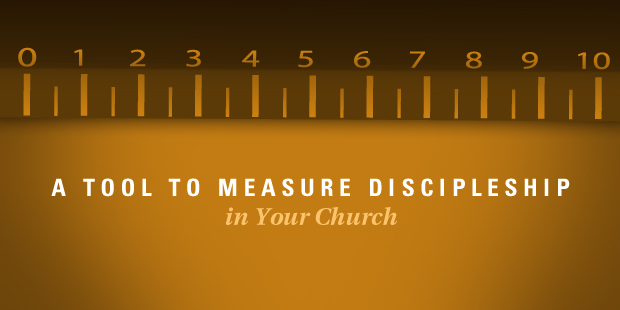
A Tool to Measure Discipleship in Your Church

How do we measure discipleship? It is relatively easy to measure church attendance, giving, or small group participation, but how do we measure church members becoming more like Christ? The Willow Creek Reveal Study pointed out that church activity doesn’t necessarily lead to fully devoted follower of Christ, but are there activities we can measure to help our congregation grow?

I think there are six vital areas that point to a growing disciple:

  • Serving in a local church. Church attendance without service does not grow me as a disciple. To grow I have to serve generously with my time, talent and treasure.
  • Praying consistently. This is so obvious that it seems to get overlooked. A growing disciple follows Jesus’ pattern of consistent, heartfelt prayer.
  • Reading the Bible daily. Separate studies by the Willow Creek Association and Lifeway on discipleship came to the same conclusion; the single biggest factor in growing as a disciple is reading the Bible every day. It’s the magic pill of discipleship.
  • Engaging in biblical community. Discipleship throughout the Bible is always in context of community. Being in a small group does not guarantee discipleship, but not being in biblical community prevents it.
  • Actively involved in missional outreach. Biblical disciples engage in Kingdom transformation in their home, their community and their world.
  • Developing other disciples. Jesus final command was very clear, Go make disciples. Every growing disciple of Christ develops other disciples.

I’d like to suggest the following tool to help determine the temperature of discipleship in your congregation (and in your own life). I have used the acronym SPREAD to make the six areas easier to remember. Your church attenders may need some additional information to understand how you define each area in your context.

Create a simple survey with the following questions. Give the survey and a pen to everyone who attends one weekend, and take time during the service to fill out the survey out together.

As a growing disciple of Jesus I (circle all that apply)

  • Serve my local church generously with my time, talent and resources
  • Pray consistently
  • Read my Bible almost every day
  • Engage regularly in a biblical community (small group)
  • Actively participate in missional outreach
  • Develop other disciples

The first time you take the survey serves as a baseline for discipleship. Use the results to celebrate where the congregation is strong and to focus on helping them grow in areas where they are weak. Choose one area that seems to be weak across the board and focus for the next quarter on growing in that area as a church. Retake the survey every three months for a year to measure progress.

Be sure to let me know if you use this tool and how I can make it more effective.

Read more from Geoff here.

Download PDF

Tags: , ,

| What is MyVisionRoom? > | Back to Process >

ABOUT THE AUTHOR

Geoff Surratt

Geoff Surratt

Geoff lives in Denver, Colorado with his wife Sherry (CEO of MOPS International). Geoff and Sherry have two awesome kids (Mike and Brittainy), a wonderful daughter-in-law (Hilary) and the most beautiful granddaughter on earth (Maggie Claire) Geoff has served on staff at Seacoast Church and Saddleback Church. He is now the Director of Exponential and a freelance Church Catalyst and Encourager.

See more articles by >

COMMENTS

What say you? Leave a comment!

VRcurator — 01/29/13 12:03 pm

Glad you liked it Randy. Geoff has had great success with discipleship in his churches. Be sure to check out the Vision Room for other articles on Discipleship!

Randy Willis — 01/29/13 9:00 am

Thanks for the simple tool. I think it could be helpful in getting a sense of where people are, as well as conveying the importance of these essential areas in a disciple's life.

Recent Comments
comment_post_ID); ?> Thank you for this information. I'm going to use this article to improve my work with the Lord.
 
— Abel Singbeh
 
comment_post_ID); ?> Thank you Ed for sharing your insights into the Church Growth Movement. I have my reservations with Church Growth models because it has done more damage than good in the Body of Christ. Over the years, western churches are more focused on results, formulas and processes with little or no emphasis on membership and church discipline. Pastors and vocational leaders are burnt out because they're overworked. I do believe that the Church Growth model is a catalyst to two destructive groups: The New Apostolic Reformation and the Emerging Church. Both groups overlap and have a very loose definition. They're both focus on contemporary worship, expansion of church brand (franchising), and mobilizing volunteering members as 'leaders' to grow their ministry. Little focus on biblical study, apologetics and genuine missional work with no agenda besides preaching of the gospel.
 
— Dave
 
comment_post_ID); ?> Thank you for sharing such a good article. It is a great lesson I learned from this article. I am one of the leaders in Emmanuel united church of Ethiopia (A denomination with more-than 780 local churches through out the country). I am preparing a presentation on succession planning for local church leaders. It will help me for preparation If you send me more resources and recommend me books to read on the topic. I hope we may collaborate in advancing leadership capacity of our church. God Bless You and Your Ministry.
 
— Argaw Alemu
 

Clarity Process

Three effective ways to start moving toward clarity right now.

Thirteen Issues for Churches in 2013, Part Two

In a previous post, I noted six key issues facing many American congregations. I will discuss seven more issues in this article, and thus provide 13 issues for 2013. As a reminder, these 13 items are not as much prognostications as they are current trends that are accelerating.

  1. Innovative use of space. I recently drove onto a church property located on approximately three to four acres. My consultant training told me that 300 to 500 people could worship on that site. The Millennial pastor who was riding with me said that the site could easily accommodate 2,000 in attendance. The younger pastor did not see limitations of times or days of worship. Indeed that generation will cause us to look anew at church space limitations.
  2. Heightened conflict. The Millennial generation will not accept church-as-usual. They are shaking the status quo in many churches. They are not seeking to be adversarial; they are simply asking tough questions that those of us in older generations were reticent to address. Anecdotally the greatest resistance to change is occurring in the Builder generation and the older Boomer generation (roughly including those born before 1955).
  3. Adversarial government. More public schools and other public facilities will be less accepting of churches meeting in their facilities. Some other local governments are resisting approval of non-tax paying congregations expanding their facilities. New churches and existing churches that are expanding their venues will be forced to become more creative as they look for new locations.
  4. Community focus. One of the great benefits the Millennial generation brings to our churches is their focus on the community in which the church is located. They are not content simply to offer ministries to those who come to the church facilities; they are going into the community to serve the merchants and residents who work and live there.
  5. Cultural discomfort. Many of the issues noted thus far point to growing levels of discomfort for the congregations in the culture they seek to minister and serve. For all of the twentieth century and even the early years of the twenty-first century, it was culturally acceptable, even expected, to be a part of  a local congregation. Those expectations are all but gone. There is a growing and distinct divide between the values of the culture and the Christian values most churches hold.
  6. Organizational distrust. There is a pervasive and growing distrust of institutions in general. Those institutions are found in both government and business, but religious institutions are not exempt from this lack of trust. That diminishing confidence exudes from those both in churches and those who do not attend churches.
  7. Reductions in church staff. I am watching this development carefully. Two different forces are at work. First, in many congregations there is a greater emphasis on laypersons handling roles once led by paid staff.  Second, the tough economic climate and declining church attendance are naturally affecting church budgets. Congregations are reticent to fire staff, but more and more are not filling vacant positions.

What is your reaction to these issues? What trends would you add to this list?

Read Part One here.

Read more from Thom here.

Download PDF

Tags: , ,

| What is MyVisionRoom? > | Back to Leadership >

ABOUT THE AUTHOR

Thom Rainer

Thom Rainer

Thom S. Rainer is the founder and CEO of Church Answers, an online community and resource for church leaders. Prior to founding Church Answers, Rainer served as president and CEO of LifeWay Christian Resources. Before coming to LifeWay, he served at The Southern Baptist Theological Seminary for twelve years where he was the founding dean of the Billy Graham School of Missions and Evangelism. He is a 1977 graduate of the University of Alabama and earned his Master of Divinity and Ph.D. degrees from The Southern Baptist Theological Seminary.

See more articles by >

COMMENTS

What say you? Leave a comment!

Recent Comments
comment_post_ID); ?> Thank you for this information. I'm going to use this article to improve my work with the Lord.
 
— Abel Singbeh
 
comment_post_ID); ?> Thank you Ed for sharing your insights into the Church Growth Movement. I have my reservations with Church Growth models because it has done more damage than good in the Body of Christ. Over the years, western churches are more focused on results, formulas and processes with little or no emphasis on membership and church discipline. Pastors and vocational leaders are burnt out because they're overworked. I do believe that the Church Growth model is a catalyst to two destructive groups: The New Apostolic Reformation and the Emerging Church. Both groups overlap and have a very loose definition. They're both focus on contemporary worship, expansion of church brand (franchising), and mobilizing volunteering members as 'leaders' to grow their ministry. Little focus on biblical study, apologetics and genuine missional work with no agenda besides preaching of the gospel.
 
— Dave
 
comment_post_ID); ?> Thank you for sharing such a good article. It is a great lesson I learned from this article. I am one of the leaders in Emmanuel united church of Ethiopia (A denomination with more-than 780 local churches through out the country). I am preparing a presentation on succession planning for local church leaders. It will help me for preparation If you send me more resources and recommend me books to read on the topic. I hope we may collaborate in advancing leadership capacity of our church. God Bless You and Your Ministry.
 
— Argaw Alemu
 

Clarity Process

Three effective ways to start moving toward clarity right now.

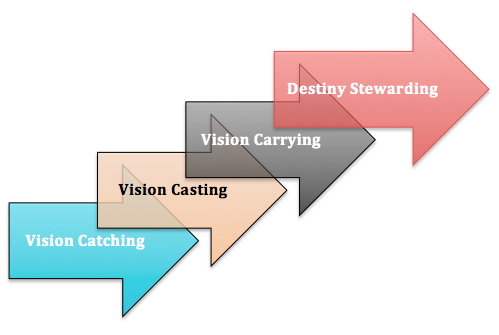
The Four Stages of Visionary Leadership

I have reflected over a decade on the question of how visionaries develop. These are some initial thoughts that I want to share with blog readers as I think out loud a bit. I would really appreciate your comments and input toward the development of these ideas.

Stage One: VISION CATCHING

Every visionary leaders starts by following someone else’s vision. Here, the fundamental practice of following well precedes and develops the ability to lead well. During this time, a future visionary learns to submit to godly authority. In this stage the future visionary’s style is shaped by the strengths and limitation of the lead visionary. Strengths provide a foundational modeling opportunity. Limitations and weakness forge convictions that will eventually shape the values of the future leader.

Stage Two VISION CASTING

Eventually the visionary leader starts casting vision themselves. There are three nuances of how this vision relates to the the prior vision-catching content. In other words, most of early vision casting is found “underneath” the vision of a leader and/or organization of the developing visionary. The visionary casts vision: a) in support of, b) in relation to, and finally c) in contrast with.

  • In Support Of: The first practice is recasting the vision that already exists. The visionary is articulating and communicating what was given to them. The art of communication is matured as commitment, passion and ownership of the vision progresses. For example, a student pastor shares the greater vision of the church he has been serving for the last two years with his seminary buddies.
  • In Relation To: Eventually the emerging visionary will create and develop their own initiatives or ministry models within the larger vision. This mini-step takes the art of visionary leadership to a new level. As a visionary leader “builds” within their “domain” of the larger ministry they are responsible to relate what they are doing to the bigger picture. That is, they are advancing and enhancing the vision that they “caught” by casting new vision for their team, event, group, area or department. Our student pastor, for example, is recruiting two dozen new volunteer leaders for a high-school, gospel saturation strategy he developed. This strategy and mini-vision is developed in concert with the broader church vision.
  • In Contrast With: This is the positive step of beginning to sense a shift in calling or being attracted to a new ministry vehicle. While this is not an eventual reality for all visionary leaders it will happen for many of them. And by the way, it’s difficult for many senior leaders to watch this happen without sensing betrayal or hurt. This is normal. Yet from God’s perspective, isn’t it natural that a strong emerging visionary will develop completely a new “holy discontent?” Won’t he see new problems and want to find new solutions? The term “in contrast with” is helpful because oftentimes in the mind of the developing visionary, the language of the new is contrasted with and compared to the existing vision. (Hence we talk about missional vs. attractional approaches  or going to unreached people groups vs. growing an existing flock.) For example the student pastor starts dreaming of planting a different kind of church in contrast with the vision he has been serving in.

Stage Three: VISION CARRYING

At this pivotal place, the vision casting stage has matured to a point of full ownership, most often embodied by the senior position or lead role. Hence, not every visionary leaders reaches this point. And it is wrong, in my opinion, to expect that all visionary leaders should aspire to. (Or we would have not visionary second-chair leaders or visionary teams.)

The greatest experiential difference for the vision carrier is the increasing awareness that the vision came from God not himself. Over time, a greater convergence of spiritual maturity, life circumstances, and divine relationships unveil how little the vision truly emerged from within. Eventually he sees how God was orchestrating the events of life to the point that he knows that God himself gave him a vision to carry. Of course his practice of vision-casting hits full-bloom as the vision grows and expands from an ever-strengthening identity and awareness of God calling.

Stage Four: DESTINY STEWARDING

The final stage is one that fewer leaders reach because it is found only with unusual favor AND demonstrated success as a vision carrier over a long time. The success builds a platform of extraordinary influence beyond what was ever imagined. Hence, I believe this stage is experience by leaders in or after their fifties. The feeling of “carrying” a vision for a time, which is in itself a stewardship, moves to an even greater awareness of unplanned, yet God-ordained impact. For the best leaders, this enables them to guard a humble spirit and embrace a broader influence. For example the student pastor plants a church that becomes a church planting movement, or or transforms a city or adopts an unreached people group. At this stage, decades of vision carrying are seen from a different and more enlightened perspective.

At this stage it’s easy for current names to come to mind like Rick Warren or Bill Hybels or T.D. Jakes or Mark Driscoll or Andy Stanley. But I believe there are thousands and thousands of leaders who reach this point, that we will never read about. Despite tremendous impact, they steward a more silent destiny.

So how do you react to this initial framing of these stages? Specifically how does this match up to your personal experience? What would you add or tweak or take away?  Thanks for considering a response.

Read more from Will here.

Download PDF

Tags: , ,

| What is MyVisionRoom? > | Back to Leadership >

ABOUT THE AUTHOR

Will Mancini

Will Mancini

Will Mancini wants you and your ministry to experience the benefits of stunning, God-given clarity. As a pastor turned vision coach, Will has worked with an unprecedented variety of churches from growing megachurches and missional communities, to mainline revitalization and church plants. He is the founder of Auxano, creator of VisionRoom.com and the author of God Dreams and Church Unique.

See more articles by >

COMMENTS

What say you? Leave a comment!

Elder Chris Allen — 03/20/14 11:38 am

** I think the Area that Needs the most care, Prayer & Training is the 'In Contrast to Vision Casting'. If not fully understood, not only can the Senior Pastor feel rejected or betrayed, the Student Pastor can feel a sense of Guilt with can turn into a sense of rebellion. During this time, the Student Pastor may be in need of even more guidance from the Senior Pastor, but to many times the Relationship becomes Strained & distant.

klministriesKay Lenear — 03/20/14 10:03 am

A visionary must be given the gift of seeing through the Lord's eyes, in fact, a visionary must have his eyes. This is what the Lord has said to me.

Recent Comments
comment_post_ID); ?> Thank you for this information. I'm going to use this article to improve my work with the Lord.
 
— Abel Singbeh
 
comment_post_ID); ?> Thank you Ed for sharing your insights into the Church Growth Movement. I have my reservations with Church Growth models because it has done more damage than good in the Body of Christ. Over the years, western churches are more focused on results, formulas and processes with little or no emphasis on membership and church discipline. Pastors and vocational leaders are burnt out because they're overworked. I do believe that the Church Growth model is a catalyst to two destructive groups: The New Apostolic Reformation and the Emerging Church. Both groups overlap and have a very loose definition. They're both focus on contemporary worship, expansion of church brand (franchising), and mobilizing volunteering members as 'leaders' to grow their ministry. Little focus on biblical study, apologetics and genuine missional work with no agenda besides preaching of the gospel.
 
— Dave
 
comment_post_ID); ?> Thank you for sharing such a good article. It is a great lesson I learned from this article. I am one of the leaders in Emmanuel united church of Ethiopia (A denomination with more-than 780 local churches through out the country). I am preparing a presentation on succession planning for local church leaders. It will help me for preparation If you send me more resources and recommend me books to read on the topic. I hope we may collaborate in advancing leadership capacity of our church. God Bless You and Your Ministry.
 
— Argaw Alemu
 

Clarity Process

Three effective ways to start moving toward clarity right now.