Speaking the Truth in Love to the Culture

The Bible says, in John 7:13, “No one had the courage to speak favorably about Jesus in public” (NLT). Even some of history’s greatest spokespeople for the gospel have struggled in their resolve to proclaim the truth boldly. The Bible says in Acts 18:9, “One night the Lord spoke to Paul in a vision: ‘Do not be afraid; keep on speaking, do not be silent’” (NIV).

In our current cultural climate, it’s more intimidating than ever to stand up for biblical truths that are seen as politically incorrect. And in order to do so, courageously, believers need a thorough understanding of the world that is framed by Scripture.

Everyone thinks about the world through a particular lens, or filter. We refer to this filter as someone’s “worldview.” And in our post-Christian culture, most Christians have a non-Christian worldview. In other words, a big part of our preaching assignment is helping our listeners to see the world through the lens of a biblical worldview.

Our task is not necessarily to shape the specific opinions that people should have on a particular topic, unless the Bible directly and clearly addresses it. Instead, our job is to present a biblical worldview that will collide with and correct every other, contradictory worldview held by people who are attempting to follow Jesus.

Let me give you some examples of the kinds of worldviews held by the people to whom you preach regularly…

Materialism

Materialism is the worldview that all that matters is the physical, material world. Therefore, what matters most is money and the acquiring of possessions. When believers fall into the trap of materialism, economics trumps everything else. It determines how they vote, act, and think. But the Jesus said, in Luke 12:15, “A man’s life does not consist in the abundance of his possessions” (MSG). In other words, your valuables don’t determine your value.

Hedonism

Hedonism is the philosophy that whatever feels good must be good. In materialism, money is God. In hedonism, pleasure is God. With hedonism, the whole goal of life is to be happy, to have fun, and to be comfortable. But happiness is simply a byproduct of living the purpose you were created for. Happiness was never meant to be your primary goal in life. But the Bible says in Proverbs 21:17 that “the pursuit of pleasure is never satisfied” (MSG).

Individualism

Individualism says, “I’m god.” It’s a me-first mentality. America was built on rugged individualism. I do what I want to do, when I want to do it and nobody can tell me not to do it. Today that has evolved into the culture of narcissism. But God didn’t create you to live for you. You were made for something far, far bigger than yourself. Individualism destroys marriages and relationships. It causes us to make selfish, destructive decisions. Philippians 2:4-5 says, “Don’t look out only for your own interests, but take an interest in others, too. You must have the same attitude that Christ Jesus had” (NLT).

Very few leaders in our culture are calling people to self-denial, but it’s part of courageously proclaiming the truth to people as you preach.

Collectivism

Collectivism is also called socialism. Socialism is an anti-Christian worldview that says government is god. It basically says government should control everything. There’s nothing wrong with government. Government is a good thing. In fact, it was invented by God. But people who don’t know God make government god.

What I’ve discovered while speaking in all kinds of cultural forums is this: Politics is the religion of people who don’t know God. Again, there’s nothing wrong with politics, but politics is not the savior. If you think any politician is going to be your savior, you’re going to be deeply disappointed. The Bible says there are three purposes of government: to protect freedom, to insure justice, and to preserve peace.

Jesus explained the limited role of government in Matthew 22:21 when he said, “Give to Caesar what belongs to Caesar, but give to God what belongs to God” (NLT). I should give my government my respect, my taxes, and my obedience to the law of the land.

By the way, the Bible says give to Caesar what is Caesar’s. Who is Caesar in a democracy? We don’t have a king or a caesar. We don’t have a dictator. In a democracy, the voters are Caesar. The power in America does not reside with the judicial branch or the legislative branch or the executive branch. It resides with the people who elect politicians to office.

Anytime you are preaching to Christians, you are preaching to people with dual citizenship. I’m a citizen of the United States but I’m also a citizen of heaven. And my greater loyalty is to God, not to government. And if there is difference between God and government, there’s no question which one I’m going to side with. A biblical worldview rebukes any belief that God and country are equally important.

We have the crumbling of our culture, crisis in our schools, controversies in our courts, corruption in our businesses, chaos in our government, carnality in our churches, confusion in our families, and conflicts in our personal lives.

What is the biblical worldview? That’s why God gave us the Bible, which gives to us a complete picture of God, of humanity, and of eternity.

When it comes to your preaching, there are plenty of things in the Bible that don’t upset anyone. And you don’t need extra courage to preach about those things. For instance the Bible says you must help the poor, care for the sick, tell the truth and be fair, respect everyone, love everybody, and take care of the environment.

But there are three aspects of the Christian worldview that are hated by this world. And most Christians clam up and shut up because they’re afraid to stand up in the areas that are controversial. These three areas are…

1. The sanctity of life

The sanctity of life tells us that God has a purpose for every unborn baby. God planned your life before you were born. In fact, God planned your life before your parents were born. The Christian worldview informs us that before God created the universe, he thought of you. There are accidental parents but there are no accidental babies. There are illegitimate parents but there are no illegitimate babies. God is bigger than human mistakes. God is bigger than human sin.

We are responsible to speak up for those who cannot speak up for themselves. And the people in our culture least capable of speaking up for themselves are the unborn – the almost sixty million Americans who would be here if they hadn’t been aborted. Every life is precious.

2. The sanctity of sex

The sanctity of sex teaches us that sex only for marriage. Sex was God’s idea, and he created sex to bond a husband and wife together. I told you a couple weeks ago that when a man and a woman have sex together it releases oxytocin in both of them. Oxytocin is the bonding chemical that binds a husband and wife together. It enhances emotional commitment. When a woman nurses a baby it releases oxytocin in both the mom and in the baby. It is a bonding agent.

The fact that God designed sex for the bonding of a husband and wife is the reason why there’s no such thing as casual sex. When you have casual sex, it releases oxytocin in you, which is a bonding element, and that’s why people get hurt. When people are cheated on, it bothers them. Why? Because it’s not just physical. It’s emotional and spiritual.

Sex isn’t bad. Sex isn’t dirty. Sex isn’t wrong. Sex is holy. And the sanctity of sex is that God designed it for the creation of all of us, and to bring husbands and wives together, and to be a model of the union between Christ and the church. The Bible says in Hebrews 13:4 that “Marriage is to be honored by all, and husbands and wives must be faithful to each other. God will judge those who are immoral and those who commit adultery” (TEV).

God’s instructions have never changed. Premarital sex is unacceptable to God. It always has been; it always will be. Living together without getting married and the commitment of marriage and the blessing of God is unacceptable to God. It always has been; it always will be. Adultery is unacceptable to God. It always has been; it always will be.

Pornography and the objectification of a man’s or a woman’s body is unacceptable to God. It always has been; it always will be. Same-sex sex is unacceptable to God. It always has been; it always will be. Notice I said same-sex sex, not same-sex attraction. Attraction is not sin; action is. You can’t control all of your attractions, but you can control all of your actions.

If you’re guilty of any of these sins, the church is for you because we’re all forgiven sinners. You can find forgiveness through a relationship with Jesus and healing in the context of a loving and accepting church family.

3. The sanctity of marriage

The Bible is very clear that marriage is the union of one man and one woman for life. That is God’s intended, original design. What about all the polygamy in the Bible? The Bible doesn’t approve of everything that the Bible reports. It’s hard to find a book that reports more violence, incest, rape, molestation, murder, jealousy, and greed. But we call it the Holy Bible because it tells the truth, and nothing but the truth.

Matthew 19:4-6 says, “Jesus answered, “Don’t you know that in the beginning the Creator made a man and a woman? That’s why a man leaves his father and mother and gets married. He becomes like one person with his wife. Then they are no longer two people, but one. And no one should separate a couple that God has joined together” (CEV).

There are many issues in life where people of good will can disagree. There is no healthcare plan in the Bible, so Christians can disagree on that. There is no defense plan in the Bible, so Christians can disagree on that. There is no economic recovery plan in the Bible, so Christians can disagree on that. But when it comes to the sanctity of life, the sanctity of marriage, and the sanctity of sex – these are nonnegotiable.

I never have and never will endorse a candidate. I want to minister to both sides of the aisle. I have friends who are Democrats and I have friends who are Republicans and I’m for my friends. Nobody gets it right all the time. So I would advise against preaching, as though you’re speaking for the Bible, on issues that the Bible doesn’t directly deal with. But you should be preaching the truth of the Bible courageously to call Christians to adopt a biblical worldview.

You don’t need to apologize for voting for a Christian worldview, which stands up for the sanctity of life, the sanctity of sex, and the sanctity of marriage. Preach so as to move people to accept God’s Word as their first and final authority. And preach God’s truth even when it is unpopular, fearing God’s disapproval more than the disapproval of people.

If you don’t know what the Word says, check out Foundations. Foundations is the course at Saddleback Church, written by Pastor Tom Holladay and by my wife, Kay, that teaches you what God says about the Bible, about God, about Jesus, about the Holy Spirit, about the second coming, about heaven and hell, about salvation and creation and how to grow, and what the Bible says about good and evil.

The rewards of standing courageously for the truth will last forever. Hebrews 10:35 (TEV) says, “Do not lose your courage, then, because it brings with it a great reward.” That reward is far greater than any disapproval you might have to put up with.

> Read more from Rick.

Download PDF

Tags: , , ,

| What is MyVisionRoom? > | Back to Execution >

ABOUT THE AUTHOR

Rick Warren

Rick Warren

Rick Warren is the founding pastor of Saddleback Church in Lake Forest, Calif., one of America's largest and most influential churches. Rick is author of the New York Times bestseller The Purpose Driven Life. His book, The Purpose Driven Church, was named one of the 100 Christian books that changed the 20th century. He is also founder of Pastors.com, a global Internet community for pastors.

See more articles by >

COMMENTS

What say you? Leave a comment!

Recent Comments
comment_post_ID); ?> Thank you for this information. I'm going to use this article to improve my work with the Lord.
 
— Abel Singbeh
 
comment_post_ID); ?> Thank you Ed for sharing your insights into the Church Growth Movement. I have my reservations with Church Growth models because it has done more damage than good in the Body of Christ. Over the years, western churches are more focused on results, formulas and processes with little or no emphasis on membership and church discipline. Pastors and vocational leaders are burnt out because they're overworked. I do believe that the Church Growth model is a catalyst to two destructive groups: The New Apostolic Reformation and the Emerging Church. Both groups overlap and have a very loose definition. They're both focus on contemporary worship, expansion of church brand (franchising), and mobilizing volunteering members as 'leaders' to grow their ministry. Little focus on biblical study, apologetics and genuine missional work with no agenda besides preaching of the gospel.
 
— Dave
 
comment_post_ID); ?> Thank you for sharing such a good article. It is a great lesson I learned from this article. I am one of the leaders in Emmanuel united church of Ethiopia (A denomination with more-than 780 local churches through out the country). I am preparing a presentation on succession planning for local church leaders. It will help me for preparation If you send me more resources and recommend me books to read on the topic. I hope we may collaborate in advancing leadership capacity of our church. God Bless You and Your Ministry.
 
— Argaw Alemu
 

Clarity Process

Three effective ways to start moving toward clarity right now.

Distill It Down to the Smallest Pattern

My friend is excellent at taking the complex and making it simple.  I love having her on the team because she really makes it possible to replicate.

The simpler anything is, the easier it is to repeat.  The more complex, the more difficult to pass it on.

In Chapter 11 of their book, “Missional Moves:  15 Tectonic Shifts that Transform Churches, Communities, and the World”  Rob Wegner and Jack Magruder put it this way:

“The simpler and more easily repeatable a fractal is, the harder the system is to break or destroy.”

“The more sophisticated and complex a fractal is, the harder it is to replicate, the easier it is to mutate, and the easier it is to destroy.”

What’s a fractal?  Wegner and Magruder define it this way:  “A fractal is the smallest repeatable pattern of any given system.”

It’s hard for me to think of anything that I do now naturally that didn’t begin with some simple, repeatable actions that were within my grasp to do.  Even overwhelming, “stretch me” kind of challenges began with a simple, repeatable step.

There is no movement without reproduction.  And there is no reproduction without small repeatable patterns.

In the Chapter on Adaptive Methods in Steve Addison’s book, “Movements that Change the World” Steve writes, “As the Word became flesh, Jesus fully entered into our world.  He chose to communicate and minister in ways that matched his context and were easily picked up by his disciples.  His message was profound but simple.  It was easily transmitted, shaped, and passed on by his disciples.”

He states that Adpative Methods are:

  • Sustainable-Able to reproduce without external funding
  • Flexible-Can be modified as the context changes
  • Transferable-Easily passed on to new disciples
  • Simple-Only the essentials are included
  • Functional-Effective for the purpose they were intended
  • Scaleable-Capable of multiplying without distortion
  • Reproducing-Spreads rapidly from person to person, network to network

Consider these:

Begin with prayer

Listen

Eat

Serve

Story

  • Don Everts and Doug Schaupp in their book “I Once Was Lost” articulate 5 things you should invite your friends to repeat over and over again in your discipling relationships:

Get them praying.

Get them reading Scripture.

Get them serving.

Get them to share their story.

Get them to live in community.

  • Greg Finke, the founder of Dwelling 114, encourages 5 questions as sort of a weekly check-in with those we are living in community with:

Where have you seen God this week?

What has God been teaching you in His Word?

What discussions are you having with those who are far from God?

What good can we do around here?

How can we lift each other up in prayer?

  • In our missional communities (lifeGroups) at the Church we use 4 W’s to help us:

Welcome-we share our lives with each other around food and fellowship.

Worship-we experience the presence of God and experiment with different ways of responding.

Word-the Scripture holds a sacred, central place in our gatherings.

Witness-we consider how we might bless our community and engage our friends who are far from God (impact lists).

Notice any similarities?

One of the main reasons why we are not seeing the multiplication of new believers and discipling relationships in the church in America is because we have allowed our ministries to become so complex that only a few can truly participate.  We have not done the hard work of distilling down our systems to the smallest repeatable pattern.

In my work with Auxano we call this effort of intentional integration a “Duplicatable Process”.  Anything in ministry you hope to reproduce must be broken down into simple repeatable patterns (fractals).  Only then, will there be any movement.

So, spend time considering such things.  Watch Jesus.  Discuss and discern with your leaders. Engage and employ a strategic outsider like Auxano.  Ask God for clarity.  Decide and synthesize your language.  Live it with joy to the glory of God.  And, as you do, invite others to join you and imitate you.

Read more from Jeff here.

Download PDF

Tags: , , , ,

| What is MyVisionRoom? > | Back to Execution >

ABOUT THE AUTHOR

Jeff Meyer

Jeff Meyer

I am Jeff Meyer, and I start fires. Ever since that basketball game in college when I came off the bench and lit a spark for my team, I have carried the nickname "Fire Meyer." (Until that point in my career my jersey #22 never saw the floor in an actual game. Perhaps the #22 was a symbol of my life calling: 2 Timothy 2:2?) I live to see sparks ignited and connections made. I long to see the church wake up and live. I long to see Jesus-followers display passionate commitment to Jesus. Jesus' invitation to follow Him was an adventure of epic proportions. Can we recapture that today? I long to see communities transformed into healthy places of wholeness. I believe that communities are transformed when Jesus-followers are stoked and respond. Perhaps you've heard it said that the church is the hope of the world. I believe that a responsive Jesus-follower is the hope of the world. "Igniting connections" is my way of setting off some inspirational sparks; sparks that ignite a passionate response to the call of Jesus.

See more articles by >

COMMENTS

What say you? Leave a comment!

Recent Comments
comment_post_ID); ?> Thank you for this information. I'm going to use this article to improve my work with the Lord.
 
— Abel Singbeh
 
comment_post_ID); ?> Thank you Ed for sharing your insights into the Church Growth Movement. I have my reservations with Church Growth models because it has done more damage than good in the Body of Christ. Over the years, western churches are more focused on results, formulas and processes with little or no emphasis on membership and church discipline. Pastors and vocational leaders are burnt out because they're overworked. I do believe that the Church Growth model is a catalyst to two destructive groups: The New Apostolic Reformation and the Emerging Church. Both groups overlap and have a very loose definition. They're both focus on contemporary worship, expansion of church brand (franchising), and mobilizing volunteering members as 'leaders' to grow their ministry. Little focus on biblical study, apologetics and genuine missional work with no agenda besides preaching of the gospel.
 
— Dave
 
comment_post_ID); ?> Thank you for sharing such a good article. It is a great lesson I learned from this article. I am one of the leaders in Emmanuel united church of Ethiopia (A denomination with more-than 780 local churches through out the country). I am preparing a presentation on succession planning for local church leaders. It will help me for preparation If you send me more resources and recommend me books to read on the topic. I hope we may collaborate in advancing leadership capacity of our church. God Bless You and Your Ministry.
 
— Argaw Alemu
 

Clarity Process

Three effective ways to start moving toward clarity right now.

5 Social Media Cautions for Pastors

Recently, Mark DeMoss addressed a group of fifty senior pastors on the topic of social media. As a well known Christian public relations guy, I expected a list of pros and cons. But Mark shared 30-minutes worth of cons only, focusing on the unintentional abuse of social media by leaders and the downsides of engagement without reflection. After a few days of ruminating on his insights, the following “cautions” are my re-articulated points of his advice to pastors.

Crucial  Caution #1: Beware of a gradual grip of narcissism 

As someone who studies the brands of ministries and Christian leaders, Mark made a provocative statement. He noted that there is little difference sometimes between the social media of famous Christians and those just “famous for being famous.” While social media doesn’t change the heart or create narcissism, it certainly can be a tool to accelerate an unhealthy focus on self.

Crucial Caution #2: Don’t let immediate emotions get the best of you

The instant access to publishing on social media means that we can start “talking” in public while being frustrated and angry. Recently Perry Noble, the lead pastor of NewSpring Church, tweeted his frustration at American Airlines. His blog and apology for “I freaking hate American Airlines”  is a worthwhile lesson for any pastor on social media.

Crucial Caution #3: Consider whose benefit you are posting for

The question is, “Who is your constituency?” Who really is the designed beneficiary of your social media content. You? Your family? Your peers? Your congregation? Your “followers?”  Is it the people who sit on the front line of your ministry or other pastors in your network? I think it is easy for pastors to post content that is positioning themselves rather than serving the people they lead. 

To help calibrate the social media content for a pastor, Mark suggested asking this question: “Would an unemployed person in your church, whose spouse is battling cancer, appreciate your post?” 

Crucial Caution #4: Manage content to minimize “dueling brands”

It’s possible over time that the messaging of your social media feed starts to contradict your mission. What types of content create a disconnect from your true calling among the people in your sphere of social influence? To dramatize the reality that your social media is always emanating a brand, a message and a mission, Mark posed the scenario: “What if the next time your were introduced, they pulled up your instagram feed instead?” Would your most recent pictures and content be a suitable introduction? Would the mission and values of your life and ministry be present?

Crucial Caution #5: Don’t respond to critics in the social media space.

Because Mark deals with crisis management, I thought his black and white advice on responding to critics was helpful: Don’t! Due to the public nature of social media and the inherent lack of accountability and control of people who can attack, manipulate and fabricate, he recommends not responding.

One humorous example Mark gave involved a pastor who was responding back and forth to a critic on twitter. The pastor, with tens of thousands of followers, engaged in what become a social debate with the critic. The pastor soon realized that the critic only had a dozen followers. The critic was criticizing and no one was listening. No one was listening that is, until the pastor starting responding.

> Read more from Will.

Download PDF

Tags: , ,

| What is MyVisionRoom? > | Back to Communication >

ABOUT THE AUTHOR

Will Mancini

Will Mancini

Will Mancini wants you and your ministry to experience the benefits of stunning, God-given clarity. As a pastor turned vision coach, Will has worked with an unprecedented variety of churches from growing megachurches and missional communities, to mainline revitalization and church plants. He is the founder of Auxano, creator of VisionRoom.com and the author of God Dreams and Church Unique.

See more articles by >

COMMENTS

What say you? Leave a comment!

Rev. Samantha Roach — 07/18/16 10:29 am

I say AMEN brother good word

VRcurator — 06/17/16 10:49 am

The general principles here might not apply to all social media situations. The illustration used in the post was Twitter, not a public Facebook page. In that case I think (I am not an expert on Facebook at all) that negative comments should be curated and deleted.

Adam — 06/16/16 9:50 am

Thanks Will. What about a CHURCH Facebook page (not "Will Mancini" but "Main Street Church" Facebook page). If someone posts on my church Facebook page, "This church stinks because of they don't like children!" ... at that point I'm thinking the church probably ought to post ONE well-thought-through response - not ignore it. Is that right in your eyes, Will?

Recent Comments
comment_post_ID); ?> Thank you for this information. I'm going to use this article to improve my work with the Lord.
 
— Abel Singbeh
 
comment_post_ID); ?> Thank you Ed for sharing your insights into the Church Growth Movement. I have my reservations with Church Growth models because it has done more damage than good in the Body of Christ. Over the years, western churches are more focused on results, formulas and processes with little or no emphasis on membership and church discipline. Pastors and vocational leaders are burnt out because they're overworked. I do believe that the Church Growth model is a catalyst to two destructive groups: The New Apostolic Reformation and the Emerging Church. Both groups overlap and have a very loose definition. They're both focus on contemporary worship, expansion of church brand (franchising), and mobilizing volunteering members as 'leaders' to grow their ministry. Little focus on biblical study, apologetics and genuine missional work with no agenda besides preaching of the gospel.
 
— Dave
 
comment_post_ID); ?> Thank you for sharing such a good article. It is a great lesson I learned from this article. I am one of the leaders in Emmanuel united church of Ethiopia (A denomination with more-than 780 local churches through out the country). I am preparing a presentation on succession planning for local church leaders. It will help me for preparation If you send me more resources and recommend me books to read on the topic. I hope we may collaborate in advancing leadership capacity of our church. God Bless You and Your Ministry.
 
— Argaw Alemu
 

Clarity Process

Three effective ways to start moving toward clarity right now.

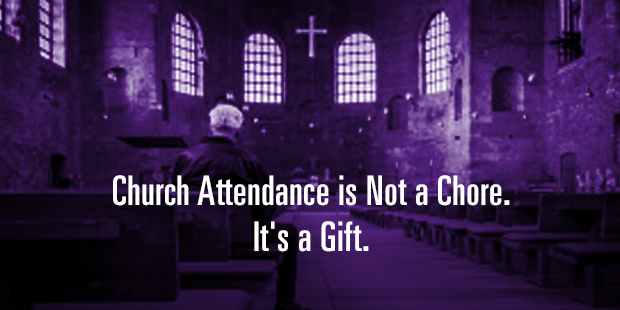
Church Attendance is Not a Chore. It’s a Gift.

A sparse sanctuary can discourage a pastor.

Surveys show that, in the past twenty years, the definition of a “faithfully attending church member” has fallen from three times a week to three times a month, resulting in sparser attendance in many evangelical churches, even if membership has climbed or plateaued.

Loving God, Loving His People

Church attendance came up in discussion with my small group recently, in a study on Joshua’s statement about his family choosing to “serve the Lord.” We asked the question: How do you cultivate in your family a love for God and a desire to gather with His people?

Some of the group members said you must do more than simply talk about the importance of gathering with God’s people; you’ve got to demonstrate that importance by the commitment and consistency you maintain as a family. Others mentioned how “forcing” your family to go to church, if it is done solely as a duty or as an obligation, can backfire and lead to resentment from your kids.

Writing at Christianity Today, Michelle Van Loon warns against using church attendance as a scorecard of faithfulness:

“When I hear a pastor talking about how true commitment and godly character requires being at church every week, I imagine him tapping his foot impatiently while holding a scorecard in one hand and a red Sharpie in the other.”

But while Michelle is right to say that “perfect attendance is not a reliable metric of one’s fidelity to Jesus,” gathering with God’s people is one of the primary ways we are reminded of Jesus’ fidelity to us.

That’s why we need to turn this conversation around. If you think of attending a worship service as merely a duty or an obligation that you are bound to fulfill, then you are speaking of worship as if it were a chore. Regular church attendance may feel like that at times, just as a daily “work out” sometimes does. But we’re off base if we regularly conceive of our weekly efforts to “meet together” and to “stir one another to love and good works” as merely an obligation.

Having To, Getting To

One of the dads in my small group said that he corrects his kids if they ever ask about having to go to church on a weekend. “We never have to,” he says, “we get to go.” I like that. He’s policing the language of the house because he knows that the way he talks about church will send a signal to the rest of the family about how to view Sundays – as chore or as privilege.

Here are three ways we should see gathering with God’s people as privilege:

1. Culturally

In some places, church attendance is regulated by the government. Unless you are registered, you cannot legally meet. Or you must meet in small numbers. Or you can meet, but are constantly afraid of what might happen. The news of church bombings across the world, often during worship services, is a frightening reminder of the high cost of meeting with other believers.

We have the privilege of living in a society where we are free to get to go to church. It is hard to imagine persecuted believers whose baptismal services are secret, dangerous affairs ever saying they have to go to church. Listen to the global church, and be renewed in your gratitude for the privilege of freely worshipping with believers.

2. Theologically

In some religions, adherents must fulfill elaborate rituals and sacrifices before gaining access to a holy space or the ability to appease the gods. Christianity, however, teaches that we have direct access to God because of the final, perfect sacrifice of Jesus Christ on our behalf. The gateway to God has been opened by Jesus, the Door.

Whenever we conceive of our praying and singing and listening to God’s Word as merely a duty or obligation, we forget that we are responding to a precious invitation. We have the privilege of speaking to and hearing from the King of the Universe. Do we have to meet with God Himself? Or do we get to address “our Father”?

3. Corporately

One of the reasons I love meeting with other believers is because I feel like I have a front-row seat at what God is doing in the lives of people around me. Over time, I see how God’s Word slowly transforms us into His image. I see how God brings people from different backgrounds and interests, different ethnicities and generations, and unifies them by the gospel without obliterating their differences, thus shining a spotlight on the goodness and grace of God from gloriously different angles.

We are not lonely pilgrims on individual journeys to glory; we are a community of faith, marching forward as exiles in this world, beloved by God and beloved by each other. It is a privilege to be part of each other’s lives, to cheer one another on in the faith, to chasten and chide with holy reverence when needed, and to love one another as Christ has loved us.

Conclusion

We do not go to church because of guilt. We are the church because of grace.

As Jonathan Leeman writes, we “gather to hear the Lord’s words, to affirm [our] accountability to it, and to extend its ministry in one another’s lives.” What an honor! Do we have to extend the ministry of God’s Word in the lives of others? Or do we get to see and show Jesus in the lives of our fellow church members?

Church attendance is not a chore. It’s a gift. Therefore, it should elicit gratitude, not griping.

> Read more from Trevin.

Download PDF

Tags: , , ,

| What is MyVisionRoom? > | Back to Execution >

ABOUT THE AUTHOR

Trevin Wax

Trevin Wax

My name is Trevin Wax. I am a follower of Jesus Christ. My wife is Corina, and we have two children: Timothy (7) and Julia (3). Currently, I serve the church by working at LifeWay Christian Resources as managing editor of The Gospel Project, a gospel-centered small group curriculum for all ages that focuses on the grand narrative of Scripture. I have been blogging regularly at Kingdom People since October 2006. I frequently contribute articles to other publications, such as Christianity Today. I also enjoy traveling and speaking at different churches and conferences. My first book, Holy Subversion: Allegiance to Christ in an Age of Rivals, was published by Crossway Books in January 2010. (Click here for excerpts and more information.) My second book, Counterfeit Gospels: Rediscovering the Good News in a World of False Hope(Moody Publishers) was released in April 2011.

See more articles by >

COMMENTS

What say you? Leave a comment!

Recent Comments
comment_post_ID); ?> Thank you for this information. I'm going to use this article to improve my work with the Lord.
 
— Abel Singbeh
 
comment_post_ID); ?> Thank you Ed for sharing your insights into the Church Growth Movement. I have my reservations with Church Growth models because it has done more damage than good in the Body of Christ. Over the years, western churches are more focused on results, formulas and processes with little or no emphasis on membership and church discipline. Pastors and vocational leaders are burnt out because they're overworked. I do believe that the Church Growth model is a catalyst to two destructive groups: The New Apostolic Reformation and the Emerging Church. Both groups overlap and have a very loose definition. They're both focus on contemporary worship, expansion of church brand (franchising), and mobilizing volunteering members as 'leaders' to grow their ministry. Little focus on biblical study, apologetics and genuine missional work with no agenda besides preaching of the gospel.
 
— Dave
 
comment_post_ID); ?> Thank you for sharing such a good article. It is a great lesson I learned from this article. I am one of the leaders in Emmanuel united church of Ethiopia (A denomination with more-than 780 local churches through out the country). I am preparing a presentation on succession planning for local church leaders. It will help me for preparation If you send me more resources and recommend me books to read on the topic. I hope we may collaborate in advancing leadership capacity of our church. God Bless You and Your Ministry.
 
— Argaw Alemu
 

Clarity Process

Three effective ways to start moving toward clarity right now.