Six Tips for Using Instagram in Your Church

Stop me if you’ve heard this one before: Instagram is a pretty big deal.

It’s not breaking news but something I thought about as I was going to bed last night. I was about to fall asleep when I realized I hadn’t checked my Instagram feed. I reached from my bed, grabbed my phone and scrolled through the square, filtered photos of people, buildings, foliage, workouts, posters and, of course, food. I commented, Liked and even searched through a few hashtags to find fellow Instagrammers who share my passions.

For the better part of the last decade, I haven’t checked a social media platform not named Facebook or Twitter daily until now. Instagram has quickly become one of the top three social networks, and since photos are more personal than a 140-character statement, it has the potential to connect brands with fans on a deeper level than Twitter.


Instagram is a channel that brands soon won’t be able to ignore, and innovative brands are already making waves on the platform.

Here are a few tips for steering your brand’s journey on Instagram:

1. EMPLOY USER-GENERATED CONTENT

If you can motivate your fans to submit photos of their own, like pictures of them using your product or just living your brand story, add them to your Instagram stream. Sharpie does this well, often featuring works of art created with its pens and markers.


2. OFFER A GLIMPSE INTO YOUR HUMANITY
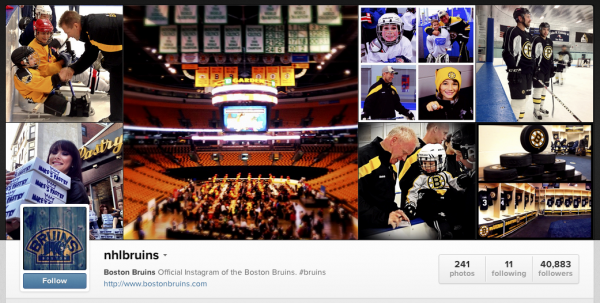
 

While Instagram can be a place to feature your products in action, consider using it exclusively as a place where your brand’s fans can get a glimpse behind the scenes. Feature photos of faces and places they never get to see. Show them that your brand is more than just the product or service you sell. The Boston Bruins have done a great job of this, especially while the league is in a lockout. The team often shares photos of their fans, the players, and the organization’s philanthropic endeavors.


3. PRODUCT IN ACTION 

There’s no hard data to back this up, but I’d bet that Instagram features more photos of food than any other subject. Outback Steakhouse and other restaurants have used Instagram as a place to find photos of all their dishes in their filtered glory. There’s a thin line between sharing great content and being overly promotional, so be considerate when sharing photos of your product in action.


4. CONSIDER USING TEXT, BUT NOT TO BRAND OR COPYRIGHT

Overgram and other apps allow you to add text to your Instagram photos. Add a hashtag, give credit for user-generated content, or just add creative copy that will resonate. But use it for good, not evil, and not on every photo. It’s not a place to stamp your brand mark or try to copyright your images. In fact, doing this will make it very unlikely that the photo will be shared with your audience’s audiences.


5. DEDICATE DESIGN RESOURCES

Instagram has challenges that other social channels do not. The app is purely mobile, so the photos have to be at least published, if not taken, from a phone. Make sure your Instagram community manager knows the brand’s tone of voice well enough and has an eye for photography so he or she can capture the right kinds of photos.


6. HASHTAGS
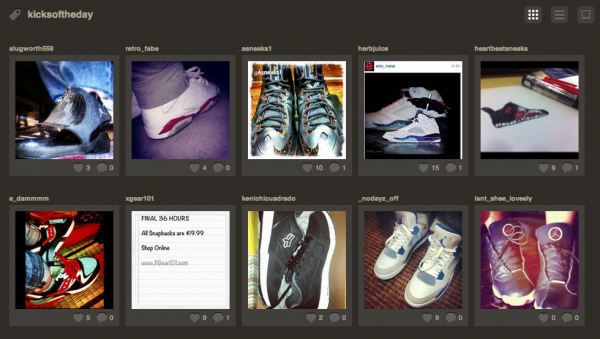
The best way to find users with a common interest is through hashtags. This is a feature that quickly caught on because of its popularity on Twitter. Are you a sneaker brand? Check out #kicksoftheday. Instagram will even help you with similar suggestions and sort them by popularity. Create your own hashtag, like Tiffany’s did with #TrueLovePictures, to activate fans on Instagram.


Remember, there’s a risk and reward here. Instagram isn’t the best social network to help you drive traffic to your site or be a conduit for e-commerce as well as Twitter or even Facebook will. It’s this inability to “sell,” however, that allows Instagram users lower their guard and embrace the brands that use the platform well.

See more from Jon here.

Download PDF

Tags: , , ,

| What is MyVisionRoom? > | Back to Communication >

ABOUT THE AUTHOR

Jon Thomas

See more articles by >

COMMENTS

What say you? Leave a comment!

Recent Comments
comment_post_ID); ?> Thank you for this information. I'm going to use this article to improve my work with the Lord.
 
— Abel Singbeh
 
comment_post_ID); ?> Thank you Ed for sharing your insights into the Church Growth Movement. I have my reservations with Church Growth models because it has done more damage than good in the Body of Christ. Over the years, western churches are more focused on results, formulas and processes with little or no emphasis on membership and church discipline. Pastors and vocational leaders are burnt out because they're overworked. I do believe that the Church Growth model is a catalyst to two destructive groups: The New Apostolic Reformation and the Emerging Church. Both groups overlap and have a very loose definition. They're both focus on contemporary worship, expansion of church brand (franchising), and mobilizing volunteering members as 'leaders' to grow their ministry. Little focus on biblical study, apologetics and genuine missional work with no agenda besides preaching of the gospel.
 
— Dave
 
comment_post_ID); ?> Thank you for sharing such a good article. It is a great lesson I learned from this article. I am one of the leaders in Emmanuel united church of Ethiopia (A denomination with more-than 780 local churches through out the country). I am preparing a presentation on succession planning for local church leaders. It will help me for preparation If you send me more resources and recommend me books to read on the topic. I hope we may collaborate in advancing leadership capacity of our church. God Bless You and Your Ministry.
 
— Argaw Alemu
 

Clarity Process

Three effective ways to start moving toward clarity right now.

Lessons in Live Polling at Your Church

Last month we hosted a series of messages at Liquid where we featured “live polling” as a core part of the message.  The “big idea” of the series was to use national interest in the upcoming election as a jump off point to talk about the Kingdom of God.  Tim did an amazing job with the entire series.  [Click here to check out the series and see the live polling in action.] [Download this infographic of some of the things we learned from polling our people.]

Live Polling gives your services an incredibly dynamic feel. Our people are used to interactive everything but when they come to our church services they are often seen as just “one way” monologues where people on a stage dispense information.  By using the cel phones that are in people’s pockets you are able to access what your people are thinking and create a fun dialogue with your people.  Here are some lessons we learned about live polling in church:

  • Choose Technology Wisely – I spent a bunch of time over the summer looking at a number of different technology solutions for live polling because I didn’t want to have any problems once we actually got to the services.  I would highly recommend [Poll Everywhere] because their service is robust and gives you tonnes of options for conducting your live polls.
  • Set Autoresponders – When people submit their poll answer make sure the service sends back an acknowledgement text because as important as actually taking in people answers is … having your people know that you got their answer is even more important! People want to know that their vote counted.
  • Do “Demo” Questions – Every week we had our Campus Pastors walk our audiences through fun questions earlier in the service to show how the technology works.  Each demo included the campus pastor asking everyone to take our their cel phone (wave them in the air!) and then actually explaining how the “short codes” work for the polling.  We asked questions like “Which Pastor is most handsome?” and “Who is going to win the Super Bowl?”
  • Tell the Press About it – Make sure to send out a press release to local and regional news outlets about the fact that you are attempting to garner your people’s feedback through polling.  It’s counter to the broader culture’s perception of what “churches do” and therefore it’s a great news story!  [We had coverage from both local] and [regional news outlets about our use of this technology]. [Check out our press release.]
  • Ask Questions with Wide Variety of Opinions – Try to craft your questions in such a way that they don’t lend themselves to “binary” responses.  Our participation was more dynamic and engaging when we had responses that became a horse race between 3-4 answers.
  • Practice the Technology – This probably goes without saying … but make sure you test the questions multiple times before you get to Sunday morning.  Make sure you know exactly how you are going to display the response screen … make sure the shortcodes work … make sure everyone is well aware of what is happening.  Spending extra time on the front end will make sure it’s a smooth experience for your people!

Live Polling could add a nice interactive piece to an up coming series at your church!  How could you see using this technology in your ministry?

Read more from Rich here.

Download PDF

Tags: , , ,

| What is MyVisionRoom? > | Back to Communication >

ABOUT THE AUTHOR

Rich Birch

Rich Birch

Thanks so much for dropping by unseminary … I hope that your able to find some resources that help you lead your church better in the coming days! I’ve been involved in church leadership for over 15 years. Early on I had the privilege of leading in one of the very first multisite churches in North Amerca. I led the charge in helping The Meeting House in Toronto to become the leading multi-site church in Canada with over 4,000 people in 6 locations. (Today they are 13 locations with somewhere over 5,000 people attending.) In addition, I served on the leadership team of Connexus Community Church in Ontario, a North Point Community Church Strategic Partner. I currently serves as Operations Pastor at Liquid Church in the Manhattan facing suburbs of New Jersey. I have a dual vocational background that uniquely positions me for serving churches to multiply impact. While in the marketplace, I founded a dot-com with two partners in the late 90’s that worked to increase value for media firms and internet service providers. I’m married to Christine and we live in Scotch Plains, NJ with their two children and one dog.

See more articles by >

COMMENTS

What say you? Leave a comment!

Recent Comments
comment_post_ID); ?> Thank you for this information. I'm going to use this article to improve my work with the Lord.
 
— Abel Singbeh
 
comment_post_ID); ?> Thank you Ed for sharing your insights into the Church Growth Movement. I have my reservations with Church Growth models because it has done more damage than good in the Body of Christ. Over the years, western churches are more focused on results, formulas and processes with little or no emphasis on membership and church discipline. Pastors and vocational leaders are burnt out because they're overworked. I do believe that the Church Growth model is a catalyst to two destructive groups: The New Apostolic Reformation and the Emerging Church. Both groups overlap and have a very loose definition. They're both focus on contemporary worship, expansion of church brand (franchising), and mobilizing volunteering members as 'leaders' to grow their ministry. Little focus on biblical study, apologetics and genuine missional work with no agenda besides preaching of the gospel.
 
— Dave
 
comment_post_ID); ?> Thank you for sharing such a good article. It is a great lesson I learned from this article. I am one of the leaders in Emmanuel united church of Ethiopia (A denomination with more-than 780 local churches through out the country). I am preparing a presentation on succession planning for local church leaders. It will help me for preparation If you send me more resources and recommend me books to read on the topic. I hope we may collaborate in advancing leadership capacity of our church. God Bless You and Your Ministry.
 
— Argaw Alemu
 

Clarity Process

Three effective ways to start moving toward clarity right now.

Closing the Collaboration Gap on Your Leadership Team

In an age of smart devices and breathtaking changes to familiar business models, innovation continues to magnetize our attention. Every day the business press is packed with information on how to innovate more effectively. Sage advice ranges from transforming an entire organizational culture to shifting accepted go-to-market practices, or adopting radically new business models.

And lots of this advice is really good. Much of it is well written, and well researched.

Consider the huge body of material from respected innovation champions like Gary Hamel Vijay Govindarajan and Chris Trimble, IDEO mavens David Kelley and Tom KelleyFaisal Hoque, or the man who – in the eyes of many – first positioned innovation as a discipline worth studying, Clayton Christensen.

So, with all this good guidance, why aren’t we doing better at innovation? Why don’t we see successful innovation initiatives being hailed everywhere we look?

THE COLLABORATION GAP

I believe there’s a crucial gap in our approach to innovation: we’ve forgotten that collaboration plays a vital role in the process. In fact, I would go even further and say we’re lacking a baseline sense of what collaboration really is. This gap is especially dangerous given the expanding connection between human beings and virtual technologies…globally.

I’ve had a chance to deeply research the process of collaboration for my new book Midnight Lunch . The book takes a focused look at what I call ‘true collaboration,’ and offers specific action steps we can employ to engage collaborative innovation in our digital era. (If you’d like to delve into key themes from the book, Midnight Lunch is featured in the December/January edition of Fast Company magazine.)

Why is collaboration such a big gap in our innovation efforts? For one thing, collaboration is quixotic. It’s hard to measure. Collaboration requires meshing ‘soft skills’ like communication, inspiration, and leadership with hard skills like software programming, manufacturing prowess, or scientific acumen.

Because collaboration engages shoulder-to-shoulder processes which often make leaders squeamish, we don’t hear the C-suite mentioning collaboration in their organization’s core values. (Maybe it’s also because we rarely find real collaboration in the C-suite at all.)

So, where can we go to get some solid collaboration basics?

I recommend we look to one of the world’s greatest innovators: Thomas Edison. Odd as it may sound to those who still falsely describe Edison as a solo-preneur, Edison offers today’s executives a solid model for collaboration – especially in our digital age.

While we cannot draw a straight line from Edison’s era to our own, there is much we can learn from a man who spearheaded the development of 6 industries in less than 40 years. Working collaboratively with dozens of workers in his storied Menlo Park and West Orange, New Jersey laboratories, by 1910 Edison and his teams had churned out patents and industries valued at more than $6.7 billion – a figure that today would exceed $100 billion.

Although patent law at the turn of the 20th century only allowed a maximum of two people to appear on a patent, it’s clear from Edison’s notebooks that he served as a crucial catalyst for innovations derived in collaboration with a myriad of folks in his labs. Contrary to the popular lore that brings Edison to mind alongside tales of American inventors working solo in their garage, Edison collaborated with others even when he was a teenage inventor – and never stopped.

WHAT IS A “MIDNIGHT LUNCH?”

We can find the foundations for Edison’s collaborative culture stemming from a compelling practice called “midnight lunch.” Midnight lunch was the affectionate slang Edison’s Menlo Park crew used to refer to the meal Edison ordered in at about 9 PM on nights when workers stayed late at the lab to complete their experiments.

Edison would often finish his workday at 5 PM, head home for dinner with his family, then return to the lab if he had projects to oversee, or if he wanted to check on how key experiments were progressing. Starting at about 7 PM, all who were still present at the Menlo Park lab would roll up their sleeves, and share insights about the experiments they were undertaking. This meant that employees from any specialty could mingle with others holding completely different backgrounds, and learn from them. Often these casual, unstructured conversations yielded deeply creative outcomes.

After an hour or two, there would be a pause in this heady dialogue. Edison would order in sandwiches and beverages for everyone from a local tavern. Everyone present would kick back, eat, sing songs, tell stories, play music, and generally let their hair down — regardless of title or tenure, there were no limits on participation.

During midnight lunch, no one was ‘monitoring’ things. No one was dreaming up something to put on your performance appraisal. From apprentices all the way up to Edison himself, during midnight lunch, everyone simply engaged their best thinking in a casual, hands-on environment. In short, workers became colleagues.

Midnight lunches formed the foundation for what I call ‘true collaboration’ – a process outlined in depth in my new book Midnight Lunch: The 4 Phases of Team Collaboration Success, from Thomas Edison’s Lab (Wiley). The practice of midnight lunch forms a crucial part of Phase 1 – Capacity, where the core underpinnings of collaboration are established.

Today, with the global proliferation of smart devices and the rise of virtual teams, we need to remember the power of simple rituals like midnight lunch. We need to draw forward the principles and practices that create ‘invisible glue’ and collegiality between team members. Turning on a computer monitor and logging into an online meeting is not enough. A foundation for collegiality must also exist.

Keep these factors in mind when seeking to build collegiality within your own collaboration team:

  • Create opportunities for team members to meet and ‘talk shop’ while socializing in a casual environment
  • Ensure that hands-on project engagement is a part of your efforts
  • Listen for – and use – language that is “we” focused and not “me” focused

Read more from Sarah here.

Download PDF

Tags: , , ,

| What is MyVisionRoom? > | Back to Leadership >

ABOUT THE AUTHOR

Sarah Miller Caldicott

Sarah Miller Caldicott

A great grandniece of Thomas Edison, Sarah Miller Caldicott has been engaged in creativity and innovation throughout her life. Inspired by a family lineage of inventors dating back five generations, Sarah spent the first 15 years of her 25-year career as an executive with Global 500 firms including Quaker Oats/Pepsi and the Helene Curtis subsidiary of Unilever. Working with global teams, Sarah spearheaded major innovation initiatives in North America, Europe, and Asia. Concerned that America risks losing its innovation edge, Sarah spent three years researching Edison’s innovation methods with experts at Rutgers University. She co-authored the first book ever written on the subject of Thomas Edison’s world-changing innovation methods. Entitled Innovate Like Edison: The Five Step System for Breakthrough Business Success, Sarah’s book has been translated into 5 languages and is used as an innovation textbook in graduate and undergraduate programs across the US. Sarah's newest book, Midnight Lunch: The 4 Phases of Team Collaboration Success, has just been released from Wiley publishing. Midnight Lunch reveals how to develop collaboration as a backbone for innovation success in the digital era.

See more articles by >

COMMENTS

What say you? Leave a comment!

Recent Comments
comment_post_ID); ?> Thank you for this information. I'm going to use this article to improve my work with the Lord.
 
— Abel Singbeh
 
comment_post_ID); ?> Thank you Ed for sharing your insights into the Church Growth Movement. I have my reservations with Church Growth models because it has done more damage than good in the Body of Christ. Over the years, western churches are more focused on results, formulas and processes with little or no emphasis on membership and church discipline. Pastors and vocational leaders are burnt out because they're overworked. I do believe that the Church Growth model is a catalyst to two destructive groups: The New Apostolic Reformation and the Emerging Church. Both groups overlap and have a very loose definition. They're both focus on contemporary worship, expansion of church brand (franchising), and mobilizing volunteering members as 'leaders' to grow their ministry. Little focus on biblical study, apologetics and genuine missional work with no agenda besides preaching of the gospel.
 
— Dave
 
comment_post_ID); ?> Thank you for sharing such a good article. It is a great lesson I learned from this article. I am one of the leaders in Emmanuel united church of Ethiopia (A denomination with more-than 780 local churches through out the country). I am preparing a presentation on succession planning for local church leaders. It will help me for preparation If you send me more resources and recommend me books to read on the topic. I hope we may collaborate in advancing leadership capacity of our church. God Bless You and Your Ministry.
 
— Argaw Alemu
 

Clarity Process

Three effective ways to start moving toward clarity right now.

My Love-Hate Relationship with Church Vision

For over 20 years, I have been a big advocate of the need for churches and ministries to get clear about the vision that God is leading them to. I still think that a clear, shared, compelling vision is important and powerful, and yet …

I have seen many churches with wonderful vision statements and no forward momentum. I have talked to pastors and laypeople who are jaded about visions and visioning processes. What’s the problem? Isn’t a vision supposed to supply the direction and energy that lead to positive results? Here are four common vision-related diseases that afflict many churches and ministries:

  • It’s not their vision. Vision statements may not seem unique, but the meaning behind them should be specific to the church and its context. If a congregation decides to copy someone else’s vision, they are unlikely to see much impact. Likewise, if the core leadership team doesn’t have a high level of ownership in the vision, it will lack traction. There are a variety of ways to achieve this, but there are no shortcuts to creating a meaningful vision with high commitment.
  • It’s not God’s vision. The church belongs to God, not us, so we should be seeking the owner’s guidance as we make decisions. Asking where God is leading is essential. This is much more than a perfunctory prayer at the start of each meeting. It’s a process that is done by spiritually mature leaders who will commit substantial time to listen for God’s voice with the outcome being that, “It seemed right to the Holy Spirit and us …” (Acts 15:28).
  • No hard choices are made. The power of a real vision is that it declares a church’s priorities. By implication, it also declares those things that are NOT priorities. Unfortunately, many visions (and the processes by which they are developed) suffer from a bad case of peacekeeping and accommodation. When leaders approach the point of making hard trade-offs that will disappoint or alienate someone, they often pull back. The result is a lack of focus and clarity that robs the ministry of the anticipated benefits.
  • The next steps are missing. Visionary leaders are generally not known for their execution ability. Even if the visioning process has avoided the previous three ailments, someone needs to make the transition from a high-level, inspirational vision to concrete plans. Without this, people will wait and wonder what they are supposed to do.

I’m not the only person who has these mixed feelings about visions. I will close with one of my favorite quotes from one of America’s truly visionary pastors. “Visions excite people. They inspire people. They compel people into action. But unless people eventually see progress toward the fulfillment of the vision they will conclude that the vision caster is just a dreamer blowing smoke, and their morale will plummet” (Bill Hybels, Courageous Leadership). What’s the health of your vision?

Read more from Mike here.

Download PDF

Tags: , ,

| What is MyVisionRoom? > | Back to Vision >

ABOUT THE AUTHOR

Mike Bonem

See more articles by >

COMMENTS

What say you? Leave a comment!

Recent Comments
comment_post_ID); ?> Thank you for this information. I'm going to use this article to improve my work with the Lord.
 
— Abel Singbeh
 
comment_post_ID); ?> Thank you Ed for sharing your insights into the Church Growth Movement. I have my reservations with Church Growth models because it has done more damage than good in the Body of Christ. Over the years, western churches are more focused on results, formulas and processes with little or no emphasis on membership and church discipline. Pastors and vocational leaders are burnt out because they're overworked. I do believe that the Church Growth model is a catalyst to two destructive groups: The New Apostolic Reformation and the Emerging Church. Both groups overlap and have a very loose definition. They're both focus on contemporary worship, expansion of church brand (franchising), and mobilizing volunteering members as 'leaders' to grow their ministry. Little focus on biblical study, apologetics and genuine missional work with no agenda besides preaching of the gospel.
 
— Dave
 
comment_post_ID); ?> Thank you for sharing such a good article. It is a great lesson I learned from this article. I am one of the leaders in Emmanuel united church of Ethiopia (A denomination with more-than 780 local churches through out the country). I am preparing a presentation on succession planning for local church leaders. It will help me for preparation If you send me more resources and recommend me books to read on the topic. I hope we may collaborate in advancing leadership capacity of our church. God Bless You and Your Ministry.
 
— Argaw Alemu
 

Clarity Process

Three effective ways to start moving toward clarity right now.

The Danger of Outranking Your Team

I was enjoying a meal with a well-known Christian leader a few weeks ago. He is a brilliant man who leads a large team of great people. We were discussing a particularly entrenched dynamic on his team that he didn’t understand and didn’t like. It seemed every time he wanted the team to wrestle with a difficult challenge their organization was facing, the team would always haltingly poke around for the “right answer”–the solution that the team believed their leader had already thought of. To them, it wasn’t a discussion so much as a test to see if they could or would come up with the same answer the leader had already decided on.

Only, this really wasn’t the leader’s intent. He really did want them to wrestle together to find solutions to creative challenges, and he really didn’t already have an answer in mind. But no matter how often he would say that, the team didn’t seem to believe him. They would keep trying to uncover the “right answer” as he saw it rather than offering their own unvarnished opinions and ideas. All of this was doubly frustrating because this happened to be a team full of creative powerhouses!

So what was really going on here?


It’s difficult to unravel dynamics like this without first understanding the notion of “rank” on a team. Rank is a way of describing a person’s level of authority on the team within a particular arena. Every member of a team has some form of rank. The kind of rank we’re most familiar with is positional rank. The leader in this story, for example, is the boss over everyone on his team. So he has the highest positional rank.

But there are many other kinds of rank that exist on a team, and these often carry more weight than positional rank. For example:

  • intellectual rank (who’s the one that the team holds as the smartest among them?),
  • emotional rank (which team member’s emotional state matters most to the team?),
  • spiritual rank (who is seen as the wisest spiritually?),
  • social rank (who is the one who holds the group together as a relational community?)

…and so on.

There are as many types of rank as there are arenas of authority. Having a particular kind of rank in a team is not the same thing as playing a particular role; in fact, sometimes there can seem to be little connection between a person’s rank and their role on the team. The person taking the notes (a role) may be the one with the greatest emotional rank on the team (i.e. when he’s happy, everyone’s happy; when he’s upset, the group stops everything to “make it better” for him). Or the person with the lowest paid job may have the highest social rank (i.e. she’s the one who has the power to either include or exclude anyone on the team from the social community within the team or the organization).

So back to this leader’s story. His problem was that he was carrying too much rank in too many arenas within the team, and that was effectively shutting down the team’s capacity to function creatively. Besides having positional rank on the team, he also had the highest intellectual rank, and the highest emotional rank. He was the boss. He was seen as smarter than anyone else in the room. And everyone on the team was bent on keeping him emotionally happy. No wonder the team couldn’t have open creative discussions!

Now that he knows about his rank (most people are unaware of the rank they hold within a team), he is able to intentionally “give it away” it to others on the team. For example, he’s shifting the organizational structure so that others on the team have more positional authority. He’s also begun to consciously defer to the team’s collective intelligence in many key decisions as a way of transferring his own intellectual rank to others on the team. Finally, he’s learning to better manage his emotions to avoid inadvertently hijacking the team’s creative process when he feels frustrated or sad.

What about your team (or teams)? How do you notice “rank” impacting your team?

Read more from Michael here.

Download PDF

Tags: , , ,

| What is MyVisionRoom? > | Back to Leadership >

ABOUT THE AUTHOR

Michael Warden

Michael is a leadership coach and team dynamics expert who partners with Christian leaders to help them become better leaders and help them change the world.

See more articles by >

COMMENTS

What say you? Leave a comment!

Recent Comments
comment_post_ID); ?> Thank you for this information. I'm going to use this article to improve my work with the Lord.
 
— Abel Singbeh
 
comment_post_ID); ?> Thank you Ed for sharing your insights into the Church Growth Movement. I have my reservations with Church Growth models because it has done more damage than good in the Body of Christ. Over the years, western churches are more focused on results, formulas and processes with little or no emphasis on membership and church discipline. Pastors and vocational leaders are burnt out because they're overworked. I do believe that the Church Growth model is a catalyst to two destructive groups: The New Apostolic Reformation and the Emerging Church. Both groups overlap and have a very loose definition. They're both focus on contemporary worship, expansion of church brand (franchising), and mobilizing volunteering members as 'leaders' to grow their ministry. Little focus on biblical study, apologetics and genuine missional work with no agenda besides preaching of the gospel.
 
— Dave
 
comment_post_ID); ?> Thank you for sharing such a good article. It is a great lesson I learned from this article. I am one of the leaders in Emmanuel united church of Ethiopia (A denomination with more-than 780 local churches through out the country). I am preparing a presentation on succession planning for local church leaders. It will help me for preparation If you send me more resources and recommend me books to read on the topic. I hope we may collaborate in advancing leadership capacity of our church. God Bless You and Your Ministry.
 
— Argaw Alemu
 

Clarity Process

Three effective ways to start moving toward clarity right now.

Sparking Creativity and Innovation

A few weeks ago, my wife and I found ourselves in need of a new vehicle after our previous one died on us unexpectedly. We immediately started our research online in hopes of purchasing a well kept, used Prius (a vehicle we had hoped to purchase one day given the current gas prices!). After visiting numerous sites and speaking with friends who had purchased Prius’ in the past, all we could think about was the Prius. We soon became really familiar with all its features, pricing models, customer reviews, and even warranty options. Whenever we were out, we saw countless people driving one. It was as if Toyota had secretly planted Prius’ all over our city in order to convince us of our need to purchase. Needless to say, the Prius was on our minds.

I think that sparking creative ideas works in an analogous fashion. Just as we anticipated to see the Prius around town, creative ideas become visible if we choose to look for them.

It’s not so much that we work extra hard to develop a process that births creativity. Rather, it’s more important that we posture ourselves to carry a mindset that welcomes and looks for creative and innovative thoughts. As Louis Pasteur once said, “Chance favors (only) the prepared mind.”

Unfortunately, many have given up on the notion that they are creative or innovative. They choose not to see the great ideas that swirl around them in their environment. They lose out because they turn a blind eye to opportunity.

Do You See What I See?

  • Take a moment this week to pause and look around you. Are there things that can help trigger creative or innovate thoughts about the things you’re working on?
  • Invite yourself into new, unexpected environments to explore how others unlike you think about the world. Seemingly unrelated concepts often need to clash to spark creativity and innovation.
  • Breathe and write down “random” things that come to mind when you consider your ideas. Overtime, you’ll discover some interesting connections.
  • Watch a film or listen to music outside of what you’re use to. Take some notes on what you like and dislike about what you’re experiencing. Explain why you feel the way you do.
  • Look at Pinterest (yes, Pinterest) boards on design and creativity. It’s a fun, simple way of visually exploring thoughts.

Creative innovation is all around us. Do you see it?

Read more from Charles here.

Download PDF

Tags: , , ,

| What is MyVisionRoom? > | Back to Leadership >

ABOUT THE AUTHOR

Charles T. Lee

Charles T. Lee

I'm the Chief Idea-Maker of Ideation Consultancy, Inc., an idea agency that specializes in turning good ideas into remarkable brands by developing innovative business design, strategic infrastructure, strong brand presence, memorable visual identities & design, creative marketing, new media PR strategies, and web presence.

See more articles by >

COMMENTS

What say you? Leave a comment!

Recent Comments
comment_post_ID); ?> Thank you for this information. I'm going to use this article to improve my work with the Lord.
 
— Abel Singbeh
 
comment_post_ID); ?> Thank you Ed for sharing your insights into the Church Growth Movement. I have my reservations with Church Growth models because it has done more damage than good in the Body of Christ. Over the years, western churches are more focused on results, formulas and processes with little or no emphasis on membership and church discipline. Pastors and vocational leaders are burnt out because they're overworked. I do believe that the Church Growth model is a catalyst to two destructive groups: The New Apostolic Reformation and the Emerging Church. Both groups overlap and have a very loose definition. They're both focus on contemporary worship, expansion of church brand (franchising), and mobilizing volunteering members as 'leaders' to grow their ministry. Little focus on biblical study, apologetics and genuine missional work with no agenda besides preaching of the gospel.
 
— Dave
 
comment_post_ID); ?> Thank you for sharing such a good article. It is a great lesson I learned from this article. I am one of the leaders in Emmanuel united church of Ethiopia (A denomination with more-than 780 local churches through out the country). I am preparing a presentation on succession planning for local church leaders. It will help me for preparation If you send me more resources and recommend me books to read on the topic. I hope we may collaborate in advancing leadership capacity of our church. God Bless You and Your Ministry.
 
— Argaw Alemu
 

Clarity Process

Three effective ways to start moving toward clarity right now.

You’re Not a Lead Worshipper

The term “lead worshipper” has been around for several years, popularized by some of the most well-respected song writers and worship leaders on the earth today. While I understand the intent behind this phrase, I believe that the unintended consequence of this approach has led to un-engaging worship experiences for many congregations.

Your role as the worship leader, first and foremost, is to create an environment where the people you are leading can enter into the worship of their Creator. Leading worship should be all about serving those you lead by crafting an environment that helps them worship. If I consider myself the “lead worshipper,” I will tend to put together services and set lists that are based on my personal worship experience rather than on creating an experience where the largest number of people can engage in worship.

For you, or for them?

Let me give you an example. Many great worship songs are being written today. I love these songs. I crank them up when I’m driving in my car, and many times I have to be careful when I do this because my eyes fill with tears, making the road hard to see. I have powerful personal worship times with these songs. The problem, however, is that many of these songs are not written to make them singable for a large majority of people. They work well for guys that are tenors … everyone else seems to be left out.

I’ve been a part of too many worship services where these songs are presented as a part of what is supposed to be a participatory worship service in the same key and with the same arrangement as they are in the original recordings. I look at the people around me as they struggle at first to sing along, and then ultimately give up and just listen. Can people enter into worship without singing? Of course. But don’t expect or encourage people to “sing along” or truly engage when you’ve placed the song in the best key for your voice, not for their participation.

Another place this approach can be seen is just in the songs we select. Many worship leaders today gravitate to newer choruses and newer arrangements of hymns. As worship leaders, we prefer these songs for many reasons—we’re sick of singing the old songs or they feel outdated musically. And I’m certainly not against new songs in general. But when you include a new song, you should pack some “old favorites” around it so that people can stay engaged in the service.

Create a space for worship

If I consider myself to be a lead worshipper, though, these considerations will rarely enter my mind and spirit as I prepare. Our worship team can really enter into worship well during rehearsal because we really like the new songs and we’ve got the vocal ability to really tear it up. If we think of ourselves as lead worshippers, we’ll expect to have a great worship service. On the other hand, if we think of our role as creating an environment where it is easy for others to engage, we would probably do things differently.

Create a space for people to worship. That’s your job, first and foremost. Make it as easy as possible for people to engage. You are there to serve them, not to create a worship experience that you personally enjoy. During your personal worship time, jam to all the new songs and put them in the key where your voice sounds best. When you’re leading worship, lean toward songs they will know and put them in the key where the majority of people can join in. You might be surprised at the sweet offering of worship that rises up around you. And God will be honored.


Download PDF

Tags: ,

| What is MyVisionRoom? > | Back to Environments >

ABOUT THE AUTHOR

Steve Finkill

See more articles by >

COMMENTS

What say you? Leave a comment!

Ken — 01/29/18 11:00 am

"While I understand the intent behind this phrase" Expound please. What do you understand to be the intent behind that phrase?

Eric Olson — 02/05/13 7:04 am

This article is right on and accurate. Participatory worship is becoming a lost expression of Christ-Followers in our newer, contemporary churches. (I am part of one!) It is possible to be current, relevant and even "cool" and at the same time create an atmosphere that helps people engage. I might add that if participatory worship is a high value for a church, then Worship and Ministry must be more important than the music and the art. We don't have to sacrifice the music and the art - our Creator God lets us use them - but we must make them accessible to the non-musician and non-artist in the church service. It's a challenge, but well-worth the work. Thanks, Steve, for your well-crafted insight in this article!

Recent Comments
comment_post_ID); ?> Thank you for this information. I'm going to use this article to improve my work with the Lord.
 
— Abel Singbeh
 
comment_post_ID); ?> Thank you Ed for sharing your insights into the Church Growth Movement. I have my reservations with Church Growth models because it has done more damage than good in the Body of Christ. Over the years, western churches are more focused on results, formulas and processes with little or no emphasis on membership and church discipline. Pastors and vocational leaders are burnt out because they're overworked. I do believe that the Church Growth model is a catalyst to two destructive groups: The New Apostolic Reformation and the Emerging Church. Both groups overlap and have a very loose definition. They're both focus on contemporary worship, expansion of church brand (franchising), and mobilizing volunteering members as 'leaders' to grow their ministry. Little focus on biblical study, apologetics and genuine missional work with no agenda besides preaching of the gospel.
 
— Dave
 
comment_post_ID); ?> Thank you for sharing such a good article. It is a great lesson I learned from this article. I am one of the leaders in Emmanuel united church of Ethiopia (A denomination with more-than 780 local churches through out the country). I am preparing a presentation on succession planning for local church leaders. It will help me for preparation If you send me more resources and recommend me books to read on the topic. I hope we may collaborate in advancing leadership capacity of our church. God Bless You and Your Ministry.
 
— Argaw Alemu
 

Clarity Process

Three effective ways to start moving toward clarity right now.

Leveraging Social Media for Your Next Church Event

As our people use social media all the time it’s becoming a growing expectation that as a church we leverage these tools to help them experience what we do. How can you use these tools within your ministry?

I sat down with Ali Raney who is the Social Media Coordinator at The Meeting House to talk about how they leveraged these channels at a recent event.  Ali is thoughtful leader, talented musician and gift to the church on all things social media.  You should follow her on twitter: @aliraneymusic.

On October 20th 2012, The Meeting House hosted a large event (part worship service / part tailgate party / part epic dance party) for all 13 sites at a local hockey arena (how Canadian!) called One Roof. The purpose of the event was to bring the entire family together under (you got it!) one roof and to kick off the church’s new mission, Transform.

RB: How did you leverage social media to help promote your event before the big day?

AR: We are a large multi-site community of around 6,000 people and we hoped to pack the place out! So two months before October 20th, we made the big announcement on a Sunday morning and immediately followed that up with an e-news blast and a “save the date” on our Twitter feed and all of our Facebook pages. We also introduced a hashtag for the event (#OneRoof) and I made sure to use it every time I posted anything about the event on Twitter (and we asked staff to do the same). A month before the event, we began putting One Roof promo into heavy rotation on all of our communication channels. At least once or twice a week we featured a short, engaging
video on Facebook and Twitter, and/or a photo from last year’s event reminding people to mark it in their calendars. In the last three weeks before One Roof, we did a Facebook cover photo campaign in which we changed the cover photo on each of our 14 pages weekly to feature a picture from last year’s event accompanied with helpful – why, where, who, what, how – details.

RB: Describe how you interacted with your community on the day of the event.

AR: The night before One Roof I scheduled an hourly countdown in HootSuite. I made sure each tweet had momentum by building in excitement, photos, practical reminders and our #OneRoof hashtag. I was sure to follow the hashtag and retweet almost everything that came in from followers. As we got closer to the event, people started to tweet more and more and I was RT’ing about 7 or 8 tweets every 5 – 10 minutes. As soon as doors opened for the event, we began a live-tweeting party! As the 5,000 seat arena was filling up, I had a long list of (pre-planned) fun, serious and meaningful community- building questions scrolling on the big screens. We would tweet a question and then RT our followers’ answers. Our community went crazy for it, and it created an awesome vibe as people waited anxiously in their seats for One Roof to commence!

Later on in the evening we had an epic dance party, deejayed by none other than our Teaching Pastor/ DJ Bruxy. We set the stage throughout the day on Twitter by asking the Instagrammers in our community to start posting photos of their One Roof experience, using the #OneRoof hashtag. We then used all of their photos in a scrolling slideshow throughout the dance party! This was an awesome social media feature, because as people were dancing, they saw photos up on the big screen and wanted to see themselves and their friends up there too. It was an easy way to get people to
interact with us!

RB: What tools did you use to manage your day?

AR: HootSuite for posting and scheduling Tweets, ProPresenter 5’s Twitter app for fielding and posting tweets on the big screen, Facebook, Instagram and Hashtagram.com – the fun web platform that allowed us to automatically create a big screen slideshow of people’s personal photos from the day, using the #OneRoof hashtag in Instagram.

RB: What did you do that you would repeat in the future at an event like this?

AR: I would definitely do a live-tweeting session again. It created such a cool, community vibe as we waited for the service to start. It helped to build momentum because it was an active, living, breathing thing that people could immediately participate in, and receive immediate gratification in seeing their Twitter handle and photo up on the screens in the arena. It definitely encouraged others to join in the party (and we got 60 new Twitter followers, 72 new Facebook fans and 53 new Instagram followers throughout the day because of it)! I would also do the Facebook cover photo campaign and the day-of countdown again as well as the Instagram slideshow – another great reason to create an event specific Hashtag.

RB: Was there anything you did that you wouldn’t repeat?

AR:I would investigate other Instagram sharing platforms as Hashtagram has limited functionality. You have no control over which photos are put up and in our context, although that wasn’t really a huge concern, it would have been nice to deselect any photos that were in the rotation for too long. I’m not sure if it was a site traffic thing, or something in Hashtagram’s functionality, but it seemed like many people’s photos were never shown (although they followed the instructions correctly) and so we had an issue with the same photos recycling over and over, which got a little stale. It corrected itself a few times over the course of the two hours that we were rolling, but it was disappointing that so many great photos didn’t get any air time on the big screens.

RB: Anything else you want to let our readers know?

AR: I think that social media within the church is one of the most underused methods of evangelism and community building. It (of course) will never (and shouldn’t) replace real time face-to-face relationships, but why not do both well? I’m excited to see where we go from here and I look forward to connecting with other churches and organizations on how best to share the message of Jesus through the use of great social media strategy and application. I would love to connect directly via email with anyone who might be interested in chatting.

Read more from Rich here.


Download PDF

Tags: , , ,

| What is MyVisionRoom? > | Back to Communication >

ABOUT THE AUTHOR

Rich Birch

Rich Birch

Thanks so much for dropping by unseminary … I hope that your able to find some resources that help you lead your church better in the coming days! I’ve been involved in church leadership for over 15 years. Early on I had the privilege of leading in one of the very first multisite churches in North Amerca. I led the charge in helping The Meeting House in Toronto to become the leading multi-site church in Canada with over 4,000 people in 6 locations. (Today they are 13 locations with somewhere over 5,000 people attending.) In addition, I served on the leadership team of Connexus Community Church in Ontario, a North Point Community Church Strategic Partner. I currently serves as Operations Pastor at Liquid Church in the Manhattan facing suburbs of New Jersey. I have a dual vocational background that uniquely positions me for serving churches to multiply impact. While in the marketplace, I founded a dot-com with two partners in the late 90’s that worked to increase value for media firms and internet service providers. I’m married to Christine and we live in Scotch Plains, NJ with their two children and one dog.

See more articles by >

COMMENTS

What say you? Leave a comment!

Recent Comments
comment_post_ID); ?> Thank you for this information. I'm going to use this article to improve my work with the Lord.
 
— Abel Singbeh
 
comment_post_ID); ?> Thank you Ed for sharing your insights into the Church Growth Movement. I have my reservations with Church Growth models because it has done more damage than good in the Body of Christ. Over the years, western churches are more focused on results, formulas and processes with little or no emphasis on membership and church discipline. Pastors and vocational leaders are burnt out because they're overworked. I do believe that the Church Growth model is a catalyst to two destructive groups: The New Apostolic Reformation and the Emerging Church. Both groups overlap and have a very loose definition. They're both focus on contemporary worship, expansion of church brand (franchising), and mobilizing volunteering members as 'leaders' to grow their ministry. Little focus on biblical study, apologetics and genuine missional work with no agenda besides preaching of the gospel.
 
— Dave
 
comment_post_ID); ?> Thank you for sharing such a good article. It is a great lesson I learned from this article. I am one of the leaders in Emmanuel united church of Ethiopia (A denomination with more-than 780 local churches through out the country). I am preparing a presentation on succession planning for local church leaders. It will help me for preparation If you send me more resources and recommend me books to read on the topic. I hope we may collaborate in advancing leadership capacity of our church. God Bless You and Your Ministry.
 
— Argaw Alemu
 

Clarity Process

Three effective ways to start moving toward clarity right now.

The Quest for Community

To be sure, experiences can become idolatrous as well as addictive. Postmoderns collect experiences like moderns collect stuff. The church must offer Christ-initiated–or what Donald Whitney calls “Scripture-induced”–experiences.

Count me in


A fellow eBay-er calls the auction site a “participant sport.” I felt such an adrenaline rush during my weeklong bidding war over an 1827 pewter communion token. eBay has made me into a global trader. It’s exhilarating.

At eBay the power belongs to the people, not to the producers. In electronic commerce, the buyer sets the price. It/s the medieval bazaar come to life in cyberspace.

Some call this haggling the “age of participation.” Others call it the “horizontal society.” Postmodern people take cues not from those above them but from others around them. There are no more bosses, only clients.

The Web typifies the trend. Online, we’re all experts: we’re all priests, we’re all doctors or lawyers or architects, we’re all authorities in whatever we’re chatting about at the moment.

And we’re already seeing its impact in church. The rituals of marriage and remembrance are becoming more EPIC.

More than clinking glasses, weddings also feature pull-the-kiss-from-the-hat performances, the surrender of the keys, and couples presenting to each other symbols of the things they bring to their union.

Do-it-yourself funerals are at a record high. More people are burying their dead without embalming, mortuaries, or cemeteries. More participatory rites are being created alongside official rituals, including ad hoc shrines, white caskets that mourners can sign, and eulogies in which almost everyone present has got to say something.

The problem is no longer onerous taxation without representation. The problem now is worship without participation. In the church, representation simply isn’t enough anymore.

Get the picture?

Visit as many of the more than 2 million eBay sites as you want. You’ll find each one has an image of what is for sale. Each image comes to life with story and sometimes music. Each site tries to draw you into a relationship with that image and story.

eBay is not alone in using images to establish relationships. NCR’s ATM machines are “transforming transactions into relationships” according to their ads. Agency.com is dedicated to what it calls “interactive relationship management.” Its slogan: “It’s not the medium, it’s the relationship.”

The lesson for the church is simple: images generate emotions and people will respond to their feelings.

Postmodern culture is image-driven. The modern world was word-based. Not until the fourteenth century did truth become embedded in principles and positions. Its theologians tried to create an intellectual faith, placing reason and order at the heart of religion. Mystery and metaphor were seen as too fuzzy, too mystical, too illogical.

The church now enters a world where metaphor is at the heart of spirituality. Propositions are lost on postmodern ears; but metaphor they will hear, images they will see and understand. These come as close as human beings will get to a universal language. Indeed, it seems clearer than ever that metaphysics is nothing but metaphor.

Page 3

Download PDF

Tags: , ,

| What is MyVisionRoom? > | Back to Process >

ABOUT THE AUTHOR

Leonard Sweet

See more articles by >

COMMENTS

What say you? Leave a comment!

Recent Comments
comment_post_ID); ?> Thank you for this information. I'm going to use this article to improve my work with the Lord.
 
— Abel Singbeh
 
comment_post_ID); ?> Thank you Ed for sharing your insights into the Church Growth Movement. I have my reservations with Church Growth models because it has done more damage than good in the Body of Christ. Over the years, western churches are more focused on results, formulas and processes with little or no emphasis on membership and church discipline. Pastors and vocational leaders are burnt out because they're overworked. I do believe that the Church Growth model is a catalyst to two destructive groups: The New Apostolic Reformation and the Emerging Church. Both groups overlap and have a very loose definition. They're both focus on contemporary worship, expansion of church brand (franchising), and mobilizing volunteering members as 'leaders' to grow their ministry. Little focus on biblical study, apologetics and genuine missional work with no agenda besides preaching of the gospel.
 
— Dave
 
comment_post_ID); ?> Thank you for sharing such a good article. It is a great lesson I learned from this article. I am one of the leaders in Emmanuel united church of Ethiopia (A denomination with more-than 780 local churches through out the country). I am preparing a presentation on succession planning for local church leaders. It will help me for preparation If you send me more resources and recommend me books to read on the topic. I hope we may collaborate in advancing leadership capacity of our church. God Bless You and Your Ministry.
 
— Argaw Alemu
 

Clarity Process

Three effective ways to start moving toward clarity right now.

The Quest for Community

I am an eBay addict. I may need help. My most recent purchase is one of the first books published by my Ph.D. adviser. It has been missing from my library for 20 years. I got this copy for 50 cents. The postage cost more than the book. But for $2.50 I reclaimed my pedigree. At eBay, I feel like a kid in a candy store.

The online auction house is one of the wonders of the last decade. From 1995 to 1998, eBay did no outside advertising; yet it boasted 3.8 million registered users and grew from 289,000 items in 1996 to 2.2 million today. With a $23-billion market, eBay is now worth more than Kmart, Toys R Us, Nordstrom, and Saks combined.

eBay is so effective because its owners understand postmodern culture. It also alerts us to what the church must do to get the attention and attendance of postmodern people.

Just do it!
eBay makes shopping an experience. Journalist Stewart Alsop, analyzing the phenomenon, calls it “nail-biting, thrilling fun.” eBay works in our experience-oriented economy. What keeps shoppers returning to a store? Not just the products. As one patron said, leaving a new Greenwich Village eatery called Peanut Butter and Company, “This is very much an experience; it’s not just a sandwich.”

Postmoderns are not willing to live at even an arm’s length from experience. They want life to explode all around them. And the more extreme the better.

Tom Beaudoin, a Gen-X Christian with a theology degree from Harvard and a body piercing, says that piercing and tattooing “reflect the centrality of personal and intimate experience in Xers’ lives.” Tattooing is branding in a brand culture, the marking of a spiritual experience.

The pursuit of dreams, emotions, and extreme experience is not unique to this era. Every expression of romanticism in history has tilted toward the experiential. But never before has experience become the currency of a global economic system.

Page 2

Download PDF

Tags: , ,

| What is MyVisionRoom? > | Back to Process >

ABOUT THE AUTHOR

Leonard Sweet

See more articles by >

COMMENTS

What say you? Leave a comment!

Recent Comments
comment_post_ID); ?> Thank you for this information. I'm going to use this article to improve my work with the Lord.
 
— Abel Singbeh
 
comment_post_ID); ?> Thank you Ed for sharing your insights into the Church Growth Movement. I have my reservations with Church Growth models because it has done more damage than good in the Body of Christ. Over the years, western churches are more focused on results, formulas and processes with little or no emphasis on membership and church discipline. Pastors and vocational leaders are burnt out because they're overworked. I do believe that the Church Growth model is a catalyst to two destructive groups: The New Apostolic Reformation and the Emerging Church. Both groups overlap and have a very loose definition. They're both focus on contemporary worship, expansion of church brand (franchising), and mobilizing volunteering members as 'leaders' to grow their ministry. Little focus on biblical study, apologetics and genuine missional work with no agenda besides preaching of the gospel.
 
— Dave
 
comment_post_ID); ?> Thank you for sharing such a good article. It is a great lesson I learned from this article. I am one of the leaders in Emmanuel united church of Ethiopia (A denomination with more-than 780 local churches through out the country). I am preparing a presentation on succession planning for local church leaders. It will help me for preparation If you send me more resources and recommend me books to read on the topic. I hope we may collaborate in advancing leadership capacity of our church. God Bless You and Your Ministry.
 
— Argaw Alemu
 

Clarity Process

Three effective ways to start moving toward clarity right now.