People Are Job 1

As a leader if you are not devoting your time to people issues, you’re missing the big picture. Amy Lyman, author of The Trustworthy Leader, was once asked what could you do if you only had five minutes a day to devote to people issues? It is a stunning question on its face but reveals something deeper.

Lyman explained that “leading is a full-time job. If you want to be a successful leader, you need to devote all of your time to people issues….Five minutes a day—or even five minutes an hour—is the wrong approach.” The problem is we tend to separate our “work” from the “people” issues; respond to people issues when asked to, but focus our intellectual talents on the mechanics of the specific tasks in front of us.

Lyman makes the point that people are integral to our ability in every single area in our organizations and if we do not include consideration of people in every aspect of our work, then we are doing ourselves and our organizations a great disservice. Yet it is not uncommon to find leaders who see people as the problem—the distraction—that takes them away from their work. Our work is people.

Trustworthy leaders…understand the complexity of bringing together a group of human beings to pursue extraordinary accomplishments. They are masters at guiding, directing, encouraging, and challenging people to contribute their best, in part because they ask the same of themselves. Trustworthy leaders know that their relationships with other throughout the organization are key to their success—however success is measured.

Lyman identifies six elements that both influence how a leader acts and reflect how that person thinks about being a leader:

  • Feels Honored—Sense of honor and gratitude for being asked to lead and acknowledging the responsibility that comes with it.
  • Inclusive—Promotes the inclusion of every person into the larger community of the organization.
  • Ability to Value and Engage Followers—Pay attention to followers and learn from them, support their contributions and connect with them beyond their work roles.
  • Openly Shares Information—Employees contributions will be magnified to the degree that they have access to useful information.
  • Develops Others—Help employees to learn, grow, and discover their talents. It’s part of who they are because they think about others more than themselves.
  • Ability to Move through Uncertainty to pursue Opportunities—The skillful weighing of risks and rewards attached to the opportunities available is one of the most important actions that leaders can take on.

When employees see their leader act with honor, feel included, choose to follow, have access to information they can use, and are supported in their development, they will support their leader’s efforts to try novel approaches and find the best way forward.

Trustworthy leaders succeed in the marketplace because their trustworthiness provides them with two key competitive advantages: first, they benefit from the cooperation of employees with each other, across departments, and throughout the organization as a whole; and second they engender a deep, strong commitment among employees to the long-term success of the company, its mission, and its vision as expressed by the leader.

Read more from Michael here.

Download PDF

Tags: , ,

| What is MyVisionRoom? > | Back to Leadership >

ABOUT THE AUTHOR

Michael McKinney

See more articles by >

COMMENTS

What say you? Leave a comment!

Recent Comments
comment_post_ID); ?> Thank you for this information. I'm going to use this article to improve my work with the Lord.
 
— Abel Singbeh
 
comment_post_ID); ?> Thank you Ed for sharing your insights into the Church Growth Movement. I have my reservations with Church Growth models because it has done more damage than good in the Body of Christ. Over the years, western churches are more focused on results, formulas and processes with little or no emphasis on membership and church discipline. Pastors and vocational leaders are burnt out because they're overworked. I do believe that the Church Growth model is a catalyst to two destructive groups: The New Apostolic Reformation and the Emerging Church. Both groups overlap and have a very loose definition. They're both focus on contemporary worship, expansion of church brand (franchising), and mobilizing volunteering members as 'leaders' to grow their ministry. Little focus on biblical study, apologetics and genuine missional work with no agenda besides preaching of the gospel.
 
— Dave
 
comment_post_ID); ?> Thank you for sharing such a good article. It is a great lesson I learned from this article. I am one of the leaders in Emmanuel united church of Ethiopia (A denomination with more-than 780 local churches through out the country). I am preparing a presentation on succession planning for local church leaders. It will help me for preparation If you send me more resources and recommend me books to read on the topic. I hope we may collaborate in advancing leadership capacity of our church. God Bless You and Your Ministry.
 
— Argaw Alemu
 

Clarity Process

Three effective ways to start moving toward clarity right now.

The Pope Resigns and Strategic Quitting

For the first time in 600 years, a Pope resigned.

On February 11, 2013, Pope Benedict XVI issued a letter of resignation stating, “After having repeatedly examined my conscience before God, I have come to the certainty that my strengths, due to an advanced age, are no longer suited to an adequate exercise of the Petrine ministry. I am well aware that this ministry, due to its essential spiritual nature, must be carried out not only with words and deeds, but no less with prayer and suffering.” Click here for the full transcript of his resignation letter.

If the Pope can quit so can you. I am probably not talking about your job; I am definitely talking about ministry programs that aren’t bearing fruit.

Maybe they were fruitful once. Maybe they were fruitful for the guy down the street but never took off in your context. Or, maybe the fruit is dwarfed by the cost. Whatever your reasons for not quitting, let the Pope’s decision inspire you to consider the hidden upside of quitting.

Let’e be honest, nobody likes a quitter and pastors are loath to stop anything that was once done in the name of God. But let’s also keep it real: Jesus gave us a commission to go into all the nations and make disciples. If one of our ministries are using the time, talents, and treasures entrusted to us by God, but not bearing fruit, how will we explain ourselves when we stand before God?

To be clear, I am not advocating reckless abandonment: I am talking about strategic quitting. I propose you consider two economic principals involved in strategic quitting.

1. Sunk costs are the costs that you’ve already put into a project that make it hard to quit. These costs can be complex and dynamic in a ministry setting, but the reality behind sunk costs is that they are, well, sunk–the’re already spent. If the fruit isn’t there, we should consider moving on rather than repeating fruitless activity that continues to burn up more resources that could otherwise be redirected.

2. Opportunity cost counts the cost of an opportunity taken in terms of the value the related opportunity missed. In other words, for every dollar or moment you spend doing one thing, that dollar and moment could have been spent on something else. The value of that something else is the opportunity cost.

Strategic quitting is a part of visionary leadership. The Pope’s decision to resign leads the church forward. He had the maturity to trust his successors and freely yield the reigns of his power. Ultimately, he had the vision to see that a younger and more vital Bishop could be a better fit for the office and that by resigning he could break the calcification of tradition for the sake of his  church and all the Bishops of Rome who will follow him.

Jesus commissions us to makes disciples. Measuring only the success of our strategies (in numbers and dollars) or the busyness of our activities isn’t sufficient. We need to measure the fruitfulness of our ministry and be willing to strategically quit.

What and how can you strategically quit to lead upward? 

FYI…for a five minute podcast on sunk costs and opportunity costs from Marketplace click here.

Read more from Mike here.

Download PDF

Tags: , , ,

| What is MyVisionRoom? > | Back to Vision >

ABOUT THE AUTHOR

Mike Gammill

See more articles by >

COMMENTS

What say you? Leave a comment!

Recent Comments
comment_post_ID); ?> Thank you for this information. I'm going to use this article to improve my work with the Lord.
 
— Abel Singbeh
 
comment_post_ID); ?> Thank you Ed for sharing your insights into the Church Growth Movement. I have my reservations with Church Growth models because it has done more damage than good in the Body of Christ. Over the years, western churches are more focused on results, formulas and processes with little or no emphasis on membership and church discipline. Pastors and vocational leaders are burnt out because they're overworked. I do believe that the Church Growth model is a catalyst to two destructive groups: The New Apostolic Reformation and the Emerging Church. Both groups overlap and have a very loose definition. They're both focus on contemporary worship, expansion of church brand (franchising), and mobilizing volunteering members as 'leaders' to grow their ministry. Little focus on biblical study, apologetics and genuine missional work with no agenda besides preaching of the gospel.
 
— Dave
 
comment_post_ID); ?> Thank you for sharing such a good article. It is a great lesson I learned from this article. I am one of the leaders in Emmanuel united church of Ethiopia (A denomination with more-than 780 local churches through out the country). I am preparing a presentation on succession planning for local church leaders. It will help me for preparation If you send me more resources and recommend me books to read on the topic. I hope we may collaborate in advancing leadership capacity of our church. God Bless You and Your Ministry.
 
— Argaw Alemu
 

Clarity Process

Three effective ways to start moving toward clarity right now.

Study Your City: Key Questions Missional Christians Should Be Asking About Their City

Over the last few years, the word “missional” has gained particular amounts of attention. However, defining missional can be a complicated process. For example, this week I had a conversation with an aspiring church planter who wants to plant a church in a bar in the southeast as I did a few years ago. He’s been reading, praying, and thinking about what a man on mission looks like. Let’s say you’re in this boat too: being convinced by Scripture and convicted by the Holy Spirit to step out, deeply burdened to see lost people in your neighborhood, bars, coffee shops, gyms, grocery stores, and schools meet Jesus. This means you have to think like a missionary—a mindset that requires both studying the culture you find yourself in, as well as engaging with it.

For starters, identifying the needs, the idols, and the history of the city must become part of your routine thinking. This is the prep work, and oftentimes the success of your ministry rides on it. That’s not to say that God can’t use you or accomplish his will or that all the pressure is you, but a call to lead is a call to prepare. A call to obediently make disciples as Jesus commands (Matt. 28:18–20) is also a command to focus on what’s in front of you. This part of the job can be really fun! Most of it can be done by using a concept already in your vocabulary. No, it’s not what some long word theologians constantly debate over—e.g. sublapsarianism, variegated nomism, or penal substitutionary atonement—rather, it is a simple, but often overlooked word: intentional.

KNOW PEOPLE TO REACH PEOPLE

All missionaries (and if you’re a Christian, you are a missionary) have got to be the most intentional people in the world. Asking questions, studying demographics, and making note of trends help make this possible! If you intimately know whom you want to reach, then you will be better set up to engage people effectively with the gospel of Jesus.

What are the goals, values, and beliefs of your city?

Here are just a few questions that we, as missional Christians, should be asking:

  1. What’s happening in my city?
  2. Who’s moving into my city?
  3. What buildings are going up in my city?
  4. What buildings are coming down in my city?
  5. How many schools are there in my city?
  6. How many people are here in my city?
  7. What is the crime rate like in my city?
  8. What are the goals of my city?
  9. What are the values of my city?
  10. What are the beliefs of my city?
  11. What is the history of my city?
  12. How long has my city been a city?
  13. At what times and days does everything come alive in my city?
  14. What do the people in my city love about my city?
  15. What do people despise about my city?
  16. What’s the media saying about my city?
  17. What do people in my city put their hope in?
  18. Who’s hurting in my city?
  19. Who’s succeeding and thriving in my city?

For everyday missionaries, the questions are endless.

Bank clerks, grocery store checkers, hair stylists, and property development workers can tell you so much of what you need to know about your city because they are in the city, working in the city, and up to date on what’s going on in the city.

Perhaps if you don’t know where to start, you should go get a trim and practice asking the person cutting your hair questions.

Dear Christian, are you studying your city?

Read the full story from Alex here.

Download PDF

Tags: , ,

| What is MyVisionRoom? > | Back to Vision >

ABOUT THE AUTHOR

Alex Early

Alex Early

I planted Four Corners Church in Newnan, Georgia, three and a half years ago with Acts 29. Our church plant was a bit peculiar being that the calling to plant was birthed out of first seeing an interview in 2006 with Pastor Mark where he described his week of ministry as a pastor who was on mission in the city, reaching the broken, burned out, and hopelessly lost. After that I was convicted: I quit my easy church job, got a job at a bar, and started reaching out. Before long, I had a vision and planted the church in Newnan, factoring in a one-year leave where Jana and I moved to London to pursue my second master’s degree in hermeneutics at the London School of Theology. The church was planted and today has over 300 in weekly attendance. Jana and I have been married for eight years and have two kids. Our daughter is Tovah (2), and our son Jude (13 months). I joined the Lead Pastor Residency Program because I deeply love the ministry of Mars Hill and now have the oppurtunity to serve as the lead pastor of Mars Hill Ballard.

See more articles by >

COMMENTS

What say you? Leave a comment!

Recent Comments
comment_post_ID); ?> Thank you for this information. I'm going to use this article to improve my work with the Lord.
 
— Abel Singbeh
 
comment_post_ID); ?> Thank you Ed for sharing your insights into the Church Growth Movement. I have my reservations with Church Growth models because it has done more damage than good in the Body of Christ. Over the years, western churches are more focused on results, formulas and processes with little or no emphasis on membership and church discipline. Pastors and vocational leaders are burnt out because they're overworked. I do believe that the Church Growth model is a catalyst to two destructive groups: The New Apostolic Reformation and the Emerging Church. Both groups overlap and have a very loose definition. They're both focus on contemporary worship, expansion of church brand (franchising), and mobilizing volunteering members as 'leaders' to grow their ministry. Little focus on biblical study, apologetics and genuine missional work with no agenda besides preaching of the gospel.
 
— Dave
 
comment_post_ID); ?> Thank you for sharing such a good article. It is a great lesson I learned from this article. I am one of the leaders in Emmanuel united church of Ethiopia (A denomination with more-than 780 local churches through out the country). I am preparing a presentation on succession planning for local church leaders. It will help me for preparation If you send me more resources and recommend me books to read on the topic. I hope we may collaborate in advancing leadership capacity of our church. God Bless You and Your Ministry.
 
— Argaw Alemu
 

Clarity Process

Three effective ways to start moving toward clarity right now.

Defining Your Leadership Pipeline

When someone first steps into leadership what should they focus on learning?  There are dozens of possibilities.  As a mentor I don’t want to frustrate a new leader by having them focus on things that are too advanced or even too simple.  However, it’s important that I provide a Learning Pathway that makes sense and helps them progress in their ability to lead at the next level.  One of the exercises we did as a leadership team while I was at Seacoast was to identify the competencies we felt were most important at each level of our leadership pipeline.  Below you will find what we came up with.  Also if you click HERE (Leading Others Mentoring Guide) you can download a sample of one of the Leadership Greenhouse Guides we developed for our leaders to mentor their leaders.

The list for your organization will be different than ours, so I encourage you to gather your Lead team, identify the levels of your leadership pipeline and then define the competencies that are most important to you for each level.  This is a great exercise that will force your team to decide what leadership behaviors are most important in your origination.  You’ll also discover this list will provide a framework not only for training but for hiring, promoting and evaluating employees.  Just remember when you sit down to develop the list it will take more than one meeting.  Don’t rush it, going through the process is just as valuable as having the final list of core competencies.

LEADING YOURSELF

  • Managing Your Time
  • Setting Personal Goals
  • Improving Personal Communication
  • Managing Your Personal Resources
  • Dealing with Conflict
  • Leading with Your Strengths
  • Submitting to Authority

LEADING OTHERS

  • Casting Vision
  • Managing Others’ Goals
  • Recruiting Volunteers
  • Giving Soul Care
  • Practicing 360 Communication
  • Resolving Conflict
  • Aligning People

LEADING LEADERS

  • Evaluating
  • Motivating Others
  • Managing Budgets
  • Team Building
  • Decision Making
  • Leading Meetings
  • Applying Situational Leadership

LEADING DEPARTMENTS

  • Persevering in Difficulties
  • Evaluating Systems
  • Building Morale
  • Employee Engagement
  • Hiring, Firing and Repositioning Talent
  • Mentoring Leaders
  • Focusing

 LEADING ORGANIZATIONS

  • Establishing Organizational Value
  • Forecasting the Future
  • Managing the Leadership Pipeline
  • Taking Risks
  • Inspiring Others
  • Succession Planning
  • Practicing Execution

If you would like help in building a fully functional leadership pipeline at your church with Mac Lake, let us know.

Read more from Mac here.

Download PDF

Tags: , , ,

| What is MyVisionRoom? > | Back to Leadership >

ABOUT THE AUTHOR

Mac Lake

Mac Lake

Mac is a pioneering influence in the church planting movement. In 1997, he planted Carolina Forest Community Church (Myrtle Beach, South Carolina). In 2004, he began serving as Leadership Development Pastor at Seacoast Church (Charleston, South Carolina) where he served for over six years. In July 2010, Mac Lake joined with West Ridge Church to become the Visionary Architect for the LAUNCH Network. In 2015 Mac begin working with Will Mancini and Auxano to develop the Leadership Pipeline process. He joined Auxano full time in 2018. Mac and his wife, Cindy, live in Charleston, South Carolina and have three children, Brandon, Jordan and Brianna.

See more articles by >

COMMENTS

What say you? Leave a comment!

Recent Comments
comment_post_ID); ?> Thank you for this information. I'm going to use this article to improve my work with the Lord.
 
— Abel Singbeh
 
comment_post_ID); ?> Thank you Ed for sharing your insights into the Church Growth Movement. I have my reservations with Church Growth models because it has done more damage than good in the Body of Christ. Over the years, western churches are more focused on results, formulas and processes with little or no emphasis on membership and church discipline. Pastors and vocational leaders are burnt out because they're overworked. I do believe that the Church Growth model is a catalyst to two destructive groups: The New Apostolic Reformation and the Emerging Church. Both groups overlap and have a very loose definition. They're both focus on contemporary worship, expansion of church brand (franchising), and mobilizing volunteering members as 'leaders' to grow their ministry. Little focus on biblical study, apologetics and genuine missional work with no agenda besides preaching of the gospel.
 
— Dave
 
comment_post_ID); ?> Thank you for sharing such a good article. It is a great lesson I learned from this article. I am one of the leaders in Emmanuel united church of Ethiopia (A denomination with more-than 780 local churches through out the country). I am preparing a presentation on succession planning for local church leaders. It will help me for preparation If you send me more resources and recommend me books to read on the topic. I hope we may collaborate in advancing leadership capacity of our church. God Bless You and Your Ministry.
 
— Argaw Alemu
 

Clarity Process

Three effective ways to start moving toward clarity right now.

Think of Strategy as Daily Small Steps

One thing that frustrates me about the word “strategy” is that it implies something big. Sure, strategy is both important and broad reaching, but it is really nothing more than a series of steps.

It’s the things you do (and don’t do) on a daily basis that, in aggregate, impact your team’s culture, productivity, and business model. So, when it comes to executing “strategy,” we should really just dive into the details of our day-to-day.

Herein lies the problem: The more efficient we are, the more difficult it is to change the steps we take every day.  Even with a big bold strategy in mind, we’re hesitant to take any unfamiliar steps in our workflow. For every decision we cite precedence, always opting for a familiar step – thus failing to charter new territory.

It is hard to take new steps because each one defies some rule or precedent for how we make day-to-day decisions.

Leaders of change recognize that a great strategy is made up of many steps that, on their own, don’t make sense and often break conventional norms. To innovate, you must advocate for and preserve the unordinary steps required to create something extraordinary.

The lesson here is that the “big idea” is the easy part. Large companies usually know where they need to go to stay on the cutting edge, but they don’t have the fortitude and flexibility to take the right steps to get there. The necessary steps are diverted by the usual steps, otherwise known as protocol. When you only take familiar steps, you don’t travel far.

A great strategy is made up of many steps that, on their own, don’t make sense.

As you seek to implement a bold new strategy, keep the following tips in mind:

  • Eliminate the bias towards “precedent” when you’re building something new. New strategy warrants unprecedented action.
  • Don’t let the new steps you must take be overridden by legal, branding, impatience, or other logistics. While it may seem easy to give in on the little details, any little turn off the road points you in a new direction. The only thing that should override strategy is better strategy.
  • Keep reiterating “why” you’re pursuing change, and the consequences for not changing. Sometimes, especially in established businesses, the consequences of not changing are more motivating than the goals.
Read the full story from Scott here.
Read more from Scott here.


Download PDF

Tags: , ,

| What is MyVisionRoom? > | Back to Vision >

ABOUT THE AUTHOR

Scott Belsky

See more articles by >

COMMENTS

What say you? Leave a comment!

Recent Comments
comment_post_ID); ?> Thank you for this information. I'm going to use this article to improve my work with the Lord.
 
— Abel Singbeh
 
comment_post_ID); ?> Thank you Ed for sharing your insights into the Church Growth Movement. I have my reservations with Church Growth models because it has done more damage than good in the Body of Christ. Over the years, western churches are more focused on results, formulas and processes with little or no emphasis on membership and church discipline. Pastors and vocational leaders are burnt out because they're overworked. I do believe that the Church Growth model is a catalyst to two destructive groups: The New Apostolic Reformation and the Emerging Church. Both groups overlap and have a very loose definition. They're both focus on contemporary worship, expansion of church brand (franchising), and mobilizing volunteering members as 'leaders' to grow their ministry. Little focus on biblical study, apologetics and genuine missional work with no agenda besides preaching of the gospel.
 
— Dave
 
comment_post_ID); ?> Thank you for sharing such a good article. It is a great lesson I learned from this article. I am one of the leaders in Emmanuel united church of Ethiopia (A denomination with more-than 780 local churches through out the country). I am preparing a presentation on succession planning for local church leaders. It will help me for preparation If you send me more resources and recommend me books to read on the topic. I hope we may collaborate in advancing leadership capacity of our church. God Bless You and Your Ministry.
 
— Argaw Alemu
 

Clarity Process

Three effective ways to start moving toward clarity right now.

Outward vs. Inward Focused Churches

Over the last several years, I’ve worked with church leaders from close to 200 different churches in consulting and coaching relationships. These churches are all different shapes and sizes. There are denominational and non-denominational churches. Traditional and contemporary churches. Small churches and megachurches. Church plants and churches who have existed for over a hundred years.

After working with all those churches, though, this is probably the key distinguishing factor when it comes to the health of the church: It’s whether the church is outward-focused or inward-focused. That issue is always what creates the most tension when it comes to the potential for change.

At the heart of the issue is this basic question: What are we willing to do to reach people outside the church and outside the faith? For some churches I’ve worked with, the answer is just about anything short of sin. For others, it’s just about nothing if it means losing people who already attend the church.

Here’s what I’ve found to be true about these two types of churches:

  • The Outward-Focused Church — The primary challenge will be how to we help people take steps in their spiritual journey after they accept Christ. The fact is, though, most outward-focused churches are very sensitive to this challenge. These leaders are uncomfortable with people getting stuck spiritually, and they recognize that people with vibrant relationships with Jesus want to continue to reach people outside the faith. Maturing Christians join the mission.
  • The Inward-Focused Church — The primary challenge will be how do we reach people who don’t have a relationship with Jesus. Most inward-focused churches are not sensitive to this challenge. These leaders are uncomfortable with any changes that might address that challenge for fear that it might push insiders away and, frankly, impact the bottom line. Ironically, any organization, including a church, that doesn’t focus on reaching new people has already started to decline and will eventually die.

This may be hard for you to hear, but I’ve seen most (though not all) outward-focused churches have a very intentional path for spiritual development. Many offer discipleship opportunities to help people take steps toward Christ outside the weekend service. And, of the churches I work with, most of the students and adults who attend those churches are engaged in that discipleship path.

On the other hand, I’ve never seen an inward-focused church have an intentional path for reaching people outside the faith. In those instances, the inward-focused churches hope (and sometimes pray) people outside the faith will somehow join what the church is already doing for existing church members. When it comes to reaching people outside the faith, I’ve never seen that strategy work.

What kind of church are you leading? In either instance, are you willing to engage the primary challenge your church faces? I’m hoping you will step up to the challenge…even if it makes others (including you) uncomfortable.

Read more from Tony here.

Download PDF

Tags: , ,

| What is MyVisionRoom? > | Back to Process >

ABOUT THE AUTHOR

Tony Morgan

Tony Morgan

Tony is the Chief Strategic Officer and founder of TonyMorganLive.com. He’s a consultant, leadership coach and writer who helps churches get unstuck and have a bigger impact. More important, he has a passion for people. He’s all about helping people meet Jesus and take steps in their faith. For 14 years, Tony served on the senior leadership teams at West Ridge Church (Dallas, GA), NewSpring Church (Anderson, SC) and Granger Community Church (Granger, IN). With Tim Stevens, Tony has co-authored Simply Strategic Stuff, Simply Strategic Volunteers and Simply Strategic Growth – each of which offers valuable, practical solutions for different aspects of church ministry. His book, Killing Cockroaches (B&H Publishing) challenges leaders to focus on the priorities in life and ministry. His most recent books on leadership and ministry strategy are available on Kindle. Tony has also written several articles on staffing, technology, strategic planning and leadership published by organizations like Outreach Magazine, Catalyst and Pastors.com. Tony and his wife, Emily, live near Atlanta, Georgia with their four children — Kayla, Jacob, Abby and Brooke.

See more articles by >

COMMENTS

What say you? Leave a comment!

Recent Comments
comment_post_ID); ?> Thank you for this information. I'm going to use this article to improve my work with the Lord.
 
— Abel Singbeh
 
comment_post_ID); ?> Thank you Ed for sharing your insights into the Church Growth Movement. I have my reservations with Church Growth models because it has done more damage than good in the Body of Christ. Over the years, western churches are more focused on results, formulas and processes with little or no emphasis on membership and church discipline. Pastors and vocational leaders are burnt out because they're overworked. I do believe that the Church Growth model is a catalyst to two destructive groups: The New Apostolic Reformation and the Emerging Church. Both groups overlap and have a very loose definition. They're both focus on contemporary worship, expansion of church brand (franchising), and mobilizing volunteering members as 'leaders' to grow their ministry. Little focus on biblical study, apologetics and genuine missional work with no agenda besides preaching of the gospel.
 
— Dave
 
comment_post_ID); ?> Thank you for sharing such a good article. It is a great lesson I learned from this article. I am one of the leaders in Emmanuel united church of Ethiopia (A denomination with more-than 780 local churches through out the country). I am preparing a presentation on succession planning for local church leaders. It will help me for preparation If you send me more resources and recommend me books to read on the topic. I hope we may collaborate in advancing leadership capacity of our church. God Bless You and Your Ministry.
 
— Argaw Alemu
 

Clarity Process

Three effective ways to start moving toward clarity right now.

Hurdles to Established Church Innovation

Does the established nature of some churches hinder innovation? Is an established structure antithetical to quick, nimble changes? For most established churches, yes, but it does not mean established churches cannot innovate.

A church plant is an innovation. Innovation is the process of successfully establishing something new. To introduce something new—and to get it to work longer than a month—is innovation. Perhaps some luck into the right change at the right time. Perhaps some churches land on the right demographic with the right leadership. Not all innovations are intentional or well-planned. But an effective church plant should be noted as innovation.

As organizations become more established, they tend to be less prone to change. By its nature, an established organization has a system in place that pushes against change. To establish is to create firm stability. Churches need stability. For example, a discipleship process that is not rooted into the culture of the church (or established) is not likely to last long. And it’s only a matter of time before the innovative church plant begins to feel the pull of becoming established. Everything is new only once, after all.

While stability is necessary, every church should also innovate. Established churches, in particular, can take comfort in the establishment. Traditions and history can easily become a guise for complacency. Innovation can take a back seat to the entrenched processes that help create the stability. While most church planters will admit to having many of the same people problems as established churches, church plants do innovate more easily. They have no history pulling them in a certain direction. Everyone is new. The church is new. Each decision is new. In the early days of a church plant, everything feels like an innovation even if it’s not.

So what hurdles to innovation exist in the established church? Here are four examples.

  • Lack of intentionality. Generally, established churches have more resources than new churches. When resources are limited, churches must be more intentional about innovation. Failure—especially one that is expensive—can quickly derail a church with limited resources. When resources are plentiful, the temptation is to be less intentional. Established churches can generally absorb more failures. But a practice of spaghetti-against-the-wall-and-see-what-sticks is not true innovation. It’s haphazard chaos. Give it a month and see how many people get annoyed.
  • Lack of originality. Build on your foundation, but don’t slap a new logo on an existing program and call it innovation. Innovation is introducing something new, not introducing something with the façade of newness.
  • The wrong metrics. What gets measured gets done, and what you measure is typically an indicator of what you value. A mature church will measure different things than a new church. Most church plants are not attempting to track down meeting minutes from a dozen committees for next week’s business meeting. And established churches don’t have to worry about the retention ratio of people from a launch service. However, an overemphasis on the metrics sustaining the establishment will inevitably deemphasize innovation and dissuade team members from attempting innovation.
  • The ease of appeasement. In an established church some leaders prefer the ease of appeasing members rather than innovating to reach new people. Obviously, a long-term member may not desire to be appeased, but rather challenged. However, most churches have a segment of people who would rather rest in the stability of the establishment. It’s not necessarily a sin issue, and leaders should care about all members whatever their spiritual maturity. Appeasing existing members, however, is much easier than challenging a church to innovate and reach new people. Even in a healthy established church, one ready to reach outward, innovation is a challenge. The typical established church has several groups of people who joined during different seasons of the church for different reasons. Even when people agree to reach outward, getting them to agree on timing, direction, budgeting, and pace is a challenge. It’s easier to appease. But appeasement is never innovation.

Though established churches are not new, they can still introduce new things. They can innovate. Hurdles exist. These hurdles, however, are surmountable.

Read more from Sam here.

Download PDF

Tags: , ,

| What is MyVisionRoom? > | Back to Leadership >

ABOUT THE AUTHOR

Sam Rainer III

Sam serves as lead pastor of West Bradenton Baptist Church. He is also the president of Rainer Research, and he is the co-founder/co-owner of Rainer Publishing. His desire is to provide answers for better church health. Sam is author of the book, Obstacles in the Established Church, and the co-author of the book, Essential Church. He is an editorial advisor/contributor at Church Executive magazine. He has also served as a consulting editor at Outreach magazine. He has written over 150 articles on church health for numerous publications, and he is a frequent conference speaker. Before submitting to the call of ministry, Sam worked in a procurement consulting role for Fortune 1000 companies. Sam holds a B.S. in Finance and Marketing from the University of South Carolina, an M.A. in Missiology from Southern Seminary, and a Ph.D. in Leadership Studies at Dallas Baptist University.

See more articles by >

COMMENTS

What say you? Leave a comment!

Recent Comments
comment_post_ID); ?> Thank you for this information. I'm going to use this article to improve my work with the Lord.
 
— Abel Singbeh
 
comment_post_ID); ?> Thank you Ed for sharing your insights into the Church Growth Movement. I have my reservations with Church Growth models because it has done more damage than good in the Body of Christ. Over the years, western churches are more focused on results, formulas and processes with little or no emphasis on membership and church discipline. Pastors and vocational leaders are burnt out because they're overworked. I do believe that the Church Growth model is a catalyst to two destructive groups: The New Apostolic Reformation and the Emerging Church. Both groups overlap and have a very loose definition. They're both focus on contemporary worship, expansion of church brand (franchising), and mobilizing volunteering members as 'leaders' to grow their ministry. Little focus on biblical study, apologetics and genuine missional work with no agenda besides preaching of the gospel.
 
— Dave
 
comment_post_ID); ?> Thank you for sharing such a good article. It is a great lesson I learned from this article. I am one of the leaders in Emmanuel united church of Ethiopia (A denomination with more-than 780 local churches through out the country). I am preparing a presentation on succession planning for local church leaders. It will help me for preparation If you send me more resources and recommend me books to read on the topic. I hope we may collaborate in advancing leadership capacity of our church. God Bless You and Your Ministry.
 
— Argaw Alemu
 

Clarity Process

Three effective ways to start moving toward clarity right now.

Brand Storytelling: What Fear Can Teach You

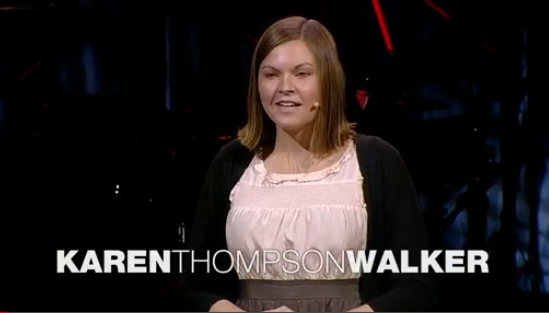
KAREN THOMPSON WALKER—WHAT FEAR CAN TEACH US

Walker, a fiction writer, explains that fear is a kind of unintentional storytelling we’re all born knowing how to do. We imagine our own futures, accurately or not, by creating stories. Doing so can alter the paths we choose to take. And as is evident in the story she tells of the shipwrecked sailors, how we read the stories we create in our minds can determine whether we achieve our desired outcomes.


What brands can learn from this talk:
Creating content worth sharing often requires faith and courage. Few brands are brave enough to go out on a limb, and instead create uninspiring content that prevents most people from reacting in any way, positively or negatively. It’s the fear of the unknown and the stories that brand managers create in their minds that bind their creativity and limit their spontaneity. What if the content is too edgy? What if the article ruffles too many feathers? Won’t responding to the irate customer’s Facebook post just make the problem more obvious?

Instead of fearing the unknown, take a look at the types of content and brands that have succeeded in the post-advertising age. From Red Bull to Oreo and Warby Parker, the brands that aren’t afraid to push the creative envelope, embrace unique and innovative marketing techniques and actively (and equally) respond to customers’ praise and criticism are the brands that have succeeded.

Watch Part 1 and Part 2 of Brand Storytelling

Read more from Jon here.

Download PDF

Tags: , , ,

| What is MyVisionRoom? > | Back to Communication >

ABOUT THE AUTHOR

Jon Thomas

See more articles by >

COMMENTS

What say you? Leave a comment!

Recent Comments
comment_post_ID); ?> Thank you for this information. I'm going to use this article to improve my work with the Lord.
 
— Abel Singbeh
 
comment_post_ID); ?> Thank you Ed for sharing your insights into the Church Growth Movement. I have my reservations with Church Growth models because it has done more damage than good in the Body of Christ. Over the years, western churches are more focused on results, formulas and processes with little or no emphasis on membership and church discipline. Pastors and vocational leaders are burnt out because they're overworked. I do believe that the Church Growth model is a catalyst to two destructive groups: The New Apostolic Reformation and the Emerging Church. Both groups overlap and have a very loose definition. They're both focus on contemporary worship, expansion of church brand (franchising), and mobilizing volunteering members as 'leaders' to grow their ministry. Little focus on biblical study, apologetics and genuine missional work with no agenda besides preaching of the gospel.
 
— Dave
 
comment_post_ID); ?> Thank you for sharing such a good article. It is a great lesson I learned from this article. I am one of the leaders in Emmanuel united church of Ethiopia (A denomination with more-than 780 local churches through out the country). I am preparing a presentation on succession planning for local church leaders. It will help me for preparation If you send me more resources and recommend me books to read on the topic. I hope we may collaborate in advancing leadership capacity of our church. God Bless You and Your Ministry.
 
— Argaw Alemu
 

Clarity Process

Three effective ways to start moving toward clarity right now.

Are Your Young Leaders Getting Reps?

Are the young leaders in your organization getting the reps they need to truly sharpen their leadership skills? Coaches understand the importance of their players getting reps in practice.  In baseball each player gets time in the batting cage to get swings at the plate.  In basketball each player spends countless hours shooting multiple free throws.  In football each player runs through the same play over and over again to ensure they know their assignment.  It’s these reps during practice that give each player a higher probability of doing well in the game.

What areas do your young leaders need reps?

  • Communication – find various platforms inside and outside organization to give your young communicators the opportunity to get more speaking reps.
  • Decision making – put your young leaders in meetings where significant decisions are being made, allow them to have a voice, share their opinion and exercise their decision-making muscles.
  • Leading teams – give your young leaders an assignment to lead a task force or project team.  Allow them to get the practice of getting results through others.
  • Developing leaders – Challenge your young leaders to identify, recruit and train up new potential leaders. Ask them on a regular basis who they’re raising up and what that individuals next step is in their development.

Giving them reps accomplishes three things for these young leaders

  • It develops their competencies
  • It strengthens their confidence
  • It enhances their credibility

What’s your next step and getting your young leaders more reps?

Read more from Mac here.
Download PDF

Tags: , ,

| What is MyVisionRoom? > | Back to Leadership >

ABOUT THE AUTHOR

Mac Lake

Mac Lake

Mac is a pioneering influence in the church planting movement. In 1997, he planted Carolina Forest Community Church (Myrtle Beach, South Carolina). In 2004, he began serving as Leadership Development Pastor at Seacoast Church (Charleston, South Carolina) where he served for over six years. In July 2010, Mac Lake joined with West Ridge Church to become the Visionary Architect for the LAUNCH Network. In 2015 Mac begin working with Will Mancini and Auxano to develop the Leadership Pipeline process. He joined Auxano full time in 2018. Mac and his wife, Cindy, live in Charleston, South Carolina and have three children, Brandon, Jordan and Brianna.

See more articles by >

COMMENTS

What say you? Leave a comment!

Joe Wickman — 02/17/13 10:59 pm

I couldn't agree more. I've been that young leader who got the reps. Now I'm turning into the leader who's making sure the next generation gets the training. It's essential stewardship.

Recent Comments
comment_post_ID); ?> Thank you for this information. I'm going to use this article to improve my work with the Lord.
 
— Abel Singbeh
 
comment_post_ID); ?> Thank you Ed for sharing your insights into the Church Growth Movement. I have my reservations with Church Growth models because it has done more damage than good in the Body of Christ. Over the years, western churches are more focused on results, formulas and processes with little or no emphasis on membership and church discipline. Pastors and vocational leaders are burnt out because they're overworked. I do believe that the Church Growth model is a catalyst to two destructive groups: The New Apostolic Reformation and the Emerging Church. Both groups overlap and have a very loose definition. They're both focus on contemporary worship, expansion of church brand (franchising), and mobilizing volunteering members as 'leaders' to grow their ministry. Little focus on biblical study, apologetics and genuine missional work with no agenda besides preaching of the gospel.
 
— Dave
 
comment_post_ID); ?> Thank you for sharing such a good article. It is a great lesson I learned from this article. I am one of the leaders in Emmanuel united church of Ethiopia (A denomination with more-than 780 local churches through out the country). I am preparing a presentation on succession planning for local church leaders. It will help me for preparation If you send me more resources and recommend me books to read on the topic. I hope we may collaborate in advancing leadership capacity of our church. God Bless You and Your Ministry.
 
— Argaw Alemu
 

Clarity Process

Three effective ways to start moving toward clarity right now.

Brand Storytelling: The Technology of Storytelling

JOE SABIA—THE TECHNOLOGY OF STORYTELLING

In less than four minutes, iPad storyteller Joe Sabia introduces the audience to Lothar Meggendorfer and explains how Lothar’s invention of the pop-up book is helping us tell stories today. He also makes me realize that I’m underutilizing my iPad.

What brands can learn from this talk

“The art of storytelling has remained unchanged…but the way in which humans tell the stories has always evolved, with pure consistent novelty,” Sabia says. Emerging technology has allowed brands to tell stories in many ways. Consider all the storytelling options available to your brand. You aren’t required to embrace and be present on all channels, but don’t limit yourself to traditional mediums because that’s all you know. There are so many tools available that are more effective and less expensive than traditional, interruptive means, and inevitably there will be even newer tools that have yet to be imagined.

Read more from Jon here.

Download PDF

Tags: , , , , ,

| What is MyVisionRoom? > | Back to Communication >

ABOUT THE AUTHOR

Jon Thomas

See more articles by >

COMMENTS

What say you? Leave a comment!

Recent Comments
comment_post_ID); ?> Thank you for this information. I'm going to use this article to improve my work with the Lord.
 
— Abel Singbeh
 
comment_post_ID); ?> Thank you Ed for sharing your insights into the Church Growth Movement. I have my reservations with Church Growth models because it has done more damage than good in the Body of Christ. Over the years, western churches are more focused on results, formulas and processes with little or no emphasis on membership and church discipline. Pastors and vocational leaders are burnt out because they're overworked. I do believe that the Church Growth model is a catalyst to two destructive groups: The New Apostolic Reformation and the Emerging Church. Both groups overlap and have a very loose definition. They're both focus on contemporary worship, expansion of church brand (franchising), and mobilizing volunteering members as 'leaders' to grow their ministry. Little focus on biblical study, apologetics and genuine missional work with no agenda besides preaching of the gospel.
 
— Dave
 
comment_post_ID); ?> Thank you for sharing such a good article. It is a great lesson I learned from this article. I am one of the leaders in Emmanuel united church of Ethiopia (A denomination with more-than 780 local churches through out the country). I am preparing a presentation on succession planning for local church leaders. It will help me for preparation If you send me more resources and recommend me books to read on the topic. I hope we may collaborate in advancing leadership capacity of our church. God Bless You and Your Ministry.
 
— Argaw Alemu
 

Clarity Process

Three effective ways to start moving toward clarity right now.