FREE Clarity Spiral ebook: An Overview of the 4 Break-Thru Practices to Find Your One Thing in Life

As promised in my last post, I am interrupting the series on the 7 Essential Life Design Skills so you can now download my new eBook about finding your one thing in life. This book covers four practices I have used and taught to find and align your vocational vision. The Clarity Spiral also happens to be the first master tool in a Personal Vision Journey offered through Life Younique– a training company that brings gospel-centered life design to people through certified coaches in the local church.

I want to take this moment to thank you for being a blog reader. As always new content comes to you first. If you have already been through the Younique Experience, you will find totally new content in this book. If you are signed up to go through in 2019, these books will soon come with our kit.

If you really like the book, you will be able to purchase a hard copy on Amazon soon. If you are interested in a Younique small group experience you can purchase the Younique 6-week Primary by Dave Rhodes here. Dave is the cofounder of Younique.

Enjoy your FREE book!

I would love to learn a little more about you as you download the book so I have included some optional information like the decade you were born, and whether or not you work as a church staff. Again these are optional.

Download Your FREE Clarity Spiral eBook

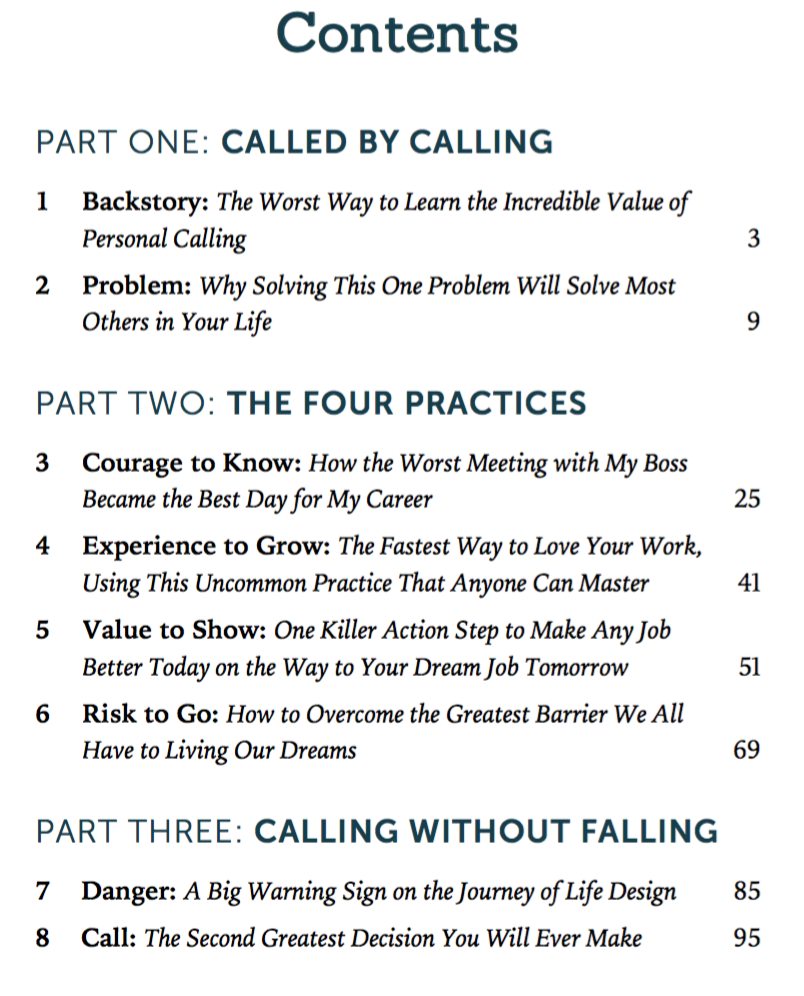
Check out some of the chapters below!!!

> Read more from Will.


Download PDF

Tags: , , , , ,

| What is MyVisionRoom? > | Back to Vision >

ABOUT THE AUTHOR

Will Mancini

Will Mancini

Will Mancini wants you and your ministry to experience the benefits of stunning, God-given clarity. As a pastor turned vision coach, Will has worked with an unprecedented variety of churches from growing megachurches and missional communities, to mainline revitalization and church plants. He is the founder of Auxano, creator of VisionRoom.com and the author of God Dreams and Church Unique.

See more articles by >

COMMENTS

What say you? Leave a comment!

Recent Comments
comment_post_ID); ?> Thank you for this information. I'm going to use this article to improve my work with the Lord.
 
— Abel Singbeh
 
comment_post_ID); ?> Thank you Ed for sharing your insights into the Church Growth Movement. I have my reservations with Church Growth models because it has done more damage than good in the Body of Christ. Over the years, western churches are more focused on results, formulas and processes with little or no emphasis on membership and church discipline. Pastors and vocational leaders are burnt out because they're overworked. I do believe that the Church Growth model is a catalyst to two destructive groups: The New Apostolic Reformation and the Emerging Church. Both groups overlap and have a very loose definition. They're both focus on contemporary worship, expansion of church brand (franchising), and mobilizing volunteering members as 'leaders' to grow their ministry. Little focus on biblical study, apologetics and genuine missional work with no agenda besides preaching of the gospel.
 
— Dave
 
comment_post_ID); ?> Thank you for sharing such a good article. It is a great lesson I learned from this article. I am one of the leaders in Emmanuel united church of Ethiopia (A denomination with more-than 780 local churches through out the country). I am preparing a presentation on succession planning for local church leaders. It will help me for preparation If you send me more resources and recommend me books to read on the topic. I hope we may collaborate in advancing leadership capacity of our church. God Bless You and Your Ministry.
 
— Argaw Alemu
 

Clarity Process

Three effective ways to start moving toward clarity right now.

How to Achieve Peak Performance at Life’s 3 Crossroads

When does a human being peak? What is a person’s “succeed-by” date (as in, if you haven’t succeeded by now, forget it)?

Some feel it when they’re 25 or so, when at a professional level athletes ascend, and dancers dazzle and beauty blooms. It’s where cool is concentrated in our youth-obsessed culture. It’s easy for ambitious people to believe that if they don’t get on a 30-under-30 list, they’ll never be a world-changer.

Many feel the peak when they’re around 40. They’re performing at a high level because they have more wisdom and influence than they did in their 20s. The career is progressing nicely and family relationships are going relatively well.

Some feel the peak—or hope to—around the time they retire, usually in their 60s. They want to leave their profession in a blaze of glory, full of achievement. With decent health and with personal wealth at an all-time high, they hope to live it up in their golden years.

So when does a person peak? To get a true grasp—and to get there!—you need Essential Life Design Skill #1 (in the series of 7 skills) and the third skill we are unpacking. (Not in numerical order.) This skill is about embracing four lifelong practices to maximize your work potential and find your dream job. The four practices are:

  • Courage to know – Do you seriously know yourself (really) or do you just think that you do?
  • Experience to grow – Are you using every good and bad work experience to zero-in on what you can do best?
  • Value to show – Are you proactively negotiating how you spend your time at work as the weeks and months of your “9-5 life” go by?
  • Risk to go – Are you prepared to leave your current job when the time is right in order to steward of your one and only life?

I talk all about these four practices in my new e-book that releases tomorrow Clarity Spiral: The 4 Break-Thru Practices to Find the One Thing You’re Called to Do. But in this post, I’m proposing that these four practices for finding your one thing become especially critical at three crossroads: quarterlife, midlife, and three-quarterlife. Take a moment and consider the crucial question that people must confront at each crossroad and a corresponding prescription.

The Quarterlife Question: “What Am I Doing?”

Quarterlife crisis” labels a phenomenon that’s become almost universal among adults in their 20s. It’s a point in life where aimlessness not only plunges many into depression, but it also threatens to cut off the impact a person may have in the future.

Some people at the quarterlife crisis spend their adolescent years rebelling against parents’ or teachers’ expectations. Others are busy just surviving their dangerous decisions. Yet when these people become adults, their lack of educational success limits their vocational options.

Other people got the diploma or degree they were “supposed” to get. But they never really believed in a career path themselves, so now they’re prepared to do work they don’t care about. They might try to cope with purposelessness by living for the next pleasure (with diminishing returns) or by attempting to draw more meaning from a relationship than it can ever provide.

Still others diligently pursued a life goal they believed in, but once they get their credentials, start a job, or settle down, they find that it doesn’t provide the satisfaction they expected. As one 23-year-old put it:

No one prepares us for the decades’ worth of post-education revelations such as ‘dream jobs’ are pretty hard to come by (but by the way, unemployment isn’t), having a real job is not like an episode of Mad Men, and finding ‘the one’ is virtually impossible.

The Quarterlife Prescription: Commit to Purposeful, Productive Activity Despite Uncertainty

Purposeful, productive activity could be a line of work, raising children, a place to serve, or all of the above. The critical thing is the ability to put up with the drudgery, weight of responsibility, lack of appreciation, and even your own mistakes as a part of the learning process to bring value to the world in general and the workplace world in particular.

In his studies of ministry leaders’ vocational journeys, J. Robert Clinton found that the typical first few years after preparation for their vocation were “provisional ministry.” Clinton gave it that name because it wasn’t clear whether the person would stick with the ministry path or switch to a different career. For those who stuck with it, however, provisional ministry kicked off a 10- to 20-year period of learning to be competent and in some ways excellent at their vocation.

The most important thing about this transition isn’t that you pick the perfect path in life. It’s that you pick some path in life. It doesn’t have to be the last one—in fact, it almost certainly won’t be. But it has to make you willing to devote yourself to getting good at something that does good in the world. That’s the way you find out what you’re good at (and not good at). Then it becomes the launchpad for your next leap.

Fortunately, you don’t have to figure out a good path to take on your own. There’s help out there, which I’ll share at the end of this post.

The Midlife Question: “Is There Something More?”

Many people are surprised that no matter how ardently they commit to a calling in their 20s, it doesn’t sustain them through their whole adulthood. In fact, by age 35 they may begin having serious doubts about it.

Some people get unsettled because of success. Like a player who beats a video game, they’re bored playing it even though they’re good at it. What’s the new challenge that strikes the “sweet spot” of their personal calling?

Other people get unsettled because of failure—or at least, they didn’t get as much success as they had hoped they would. Now they don’t get as much attention either; they’re no longer groomed as up-and-comers but are taken for granted as middle-and-stayers.

Most people probably experience some combination of success and failure. They demonstrate proficiency in what they do, but the path to greater achievement gets a little harder to find.

At midlife people look for a new way to activate and advance their personal calling. But now the stakes are much higher than they were at quarterlife. Loads of people hang on what you do or don’t do: workmates, customers, church members, volunteer organizations, friends, parents, and far above them all your children and spouse. And on top of your relational obligations, your financial obligations are much greater than they once were.

The Midlife Prescription: Take the Risk to Follow Your Calling by Specializing Even More

Robert Clinton found that ministry leaders reach a point at midlife where they need to become more specialized to become more effective. In other words, to contribute more to the kingdom, leaders have to concentrate their efforts on the specific things they do best in the specific sphere and scope where they are most useful.

However, getting into that zone isn’t easy! It often disrupts the life of the leader and those around them in a big way. Because it’s so risky, many—maybe even most—don’t take that path. They remain competent generalists, but they’re no longer growing in effectiveness; they might even start declining.

By contrast, those who take the risks required of specialization find their impact increasing in ways they can hardly imagine. But to take that big step of faith, you need a strong conviction about the good works that God dreamed only you would do. Once again, fortunately, you don’t have to gain this conviction alone, as I’ll share below.

The Three-Quarterlife Question: “What Will Outlive Me?”

People who navigate the midlife transition successfully find that it leads to a new challenge that they don’t expect. In fact, their very success may have set them up to stumble at this crucial point.

Until roughly age 55, your fruitfulness is tied to your activity. If you took the necessary risks at midlife, your activity has probably been exceptionally productive.

But as you approach the three-quarter mark of life, you become ever more aware that you won’t be doing stuff forever. Your faculties are deteriorating. It is more apparent in practical ways that someday you will die. Will the fruit of your labor disappear when you do? What legacy are you going to leave? Will you have borne “fruit that will last” (John 15:16 NIV)?

The Three-Quarterlife Prescription: Make Your Ultimate Contribution to the World by Guiding Others Not Doing It Yourself

Robert Clinton wrote about a leader’s accomplishment that sums up their ministry long after they’re gone. He called it “ultimate contribution.” Because ultimate contribution is about leaving a legacy, it almost always involves preparing people who will carry on your work when your time is done. That means shifting your focus from doing to developing, from mastery to mentoring.

This transition can take different forms depending on your personality and gifting. It could mean evolving your leadership style toward collaborating and coaching and away from planning and directing. It could mean going full time in a job in the training or education field for the first time. It could mean concentrating your creative work on a magnum opus that younger generations will study. It could mean moving from “pro” to “caddie” by deliberately taking a new position as a loyal subordinate, such as a lead pastor who becomes an associate pastor or a parent who supportively assists their grown children as parents.

These are all big-time moves that require as much willingness to change as the transitions you navigated at quarterlife and midlife. This is not easy, because as you age, the energy you have to allocate becomes more limited than ever. In most cases, you can’t do legacy-making activity unless you stop much of what you’ve been doing up to this point, which happens to be stuff you are very good at it and receive applause for. In fact, what you have been doing probably pays better. Therefore you have to determine the nature of your payday: is it a bigger paycheck at age 67 or a greater legacy? For the few people who even make it to this life-stage crisis, fewer still navigate it with great intention.

But those who successfully navigate this crossroads make an impact that remains on this earth long after they stop working and even after they stop breathing. “They will still bear fruit in old age, healthy and green” (Ps. 92:14 CSB).

Help at the Three Crossroads

The challenges at quarterlife, midlife, and three-quarterlife are all different. But in this respect they are the same: to overcome them, you need grow in clarity about your special calling from God.

Younique was created to help people do just that.

Younique equips people to know and name their life’s purpose, which is especially valuable at the quarterlife crossroads.

Younique equips people to focus their calling and inspires them to take “risk to go,” which is especially valuable at the midlife crossroads.

Younique equips people to discern and embrace their ultimate contribution to the world, which is especially valuable at the three-quarterlife crossroads.

At the beginning of this post I asked, “When does a human being peak?” Depending on how you look at it, your strength starts declining at any of these crossroads. That’s just a part of this mortal life.

But for a servant of God, that’s not the whole story. Your impact—your fruit—can increase your whole life long. You can even hit peak after you’ve left it for good! God will perpetuate your effectiveness from generation to generation if you follow his calling at every crossroads of your life.

Don’t forget, my free e-book launches tomorrow!

In addition, as I navigate my own crossroads at age 49 this year, I want to help others dream and plan while I dream and plan. So I am launching an initiative to help you complete your 100 Life Dream List by Easter 2019. I’ll be guiding you from Aspen as I fulfill the bucket list dream that I share more about here. #LifeDesignWithMe

Cory Hartman contributed to this post.

> Read more from Will.


Download PDF

Tags: , , , , , , , ,

| What is MyVisionRoom? > | Back to Vision >

ABOUT THE AUTHOR

Will Mancini

Will Mancini

Will Mancini wants you and your ministry to experience the benefits of stunning, God-given clarity. As a pastor turned vision coach, Will has worked with an unprecedented variety of churches from growing megachurches and missional communities, to mainline revitalization and church plants. He is the founder of Auxano, creator of VisionRoom.com and the author of God Dreams and Church Unique.

See more articles by >

COMMENTS

What say you? Leave a comment!

Recent Comments
comment_post_ID); ?> Thank you for this information. I'm going to use this article to improve my work with the Lord.
 
— Abel Singbeh
 
comment_post_ID); ?> Thank you Ed for sharing your insights into the Church Growth Movement. I have my reservations with Church Growth models because it has done more damage than good in the Body of Christ. Over the years, western churches are more focused on results, formulas and processes with little or no emphasis on membership and church discipline. Pastors and vocational leaders are burnt out because they're overworked. I do believe that the Church Growth model is a catalyst to two destructive groups: The New Apostolic Reformation and the Emerging Church. Both groups overlap and have a very loose definition. They're both focus on contemporary worship, expansion of church brand (franchising), and mobilizing volunteering members as 'leaders' to grow their ministry. Little focus on biblical study, apologetics and genuine missional work with no agenda besides preaching of the gospel.
 
— Dave
 
comment_post_ID); ?> Thank you for sharing such a good article. It is a great lesson I learned from this article. I am one of the leaders in Emmanuel united church of Ethiopia (A denomination with more-than 780 local churches through out the country). I am preparing a presentation on succession planning for local church leaders. It will help me for preparation If you send me more resources and recommend me books to read on the topic. I hope we may collaborate in advancing leadership capacity of our church. God Bless You and Your Ministry.
 
— Argaw Alemu
 

Clarity Process

Three effective ways to start moving toward clarity right now.

The Second Greatest Gift Ever Given is Your Personal Calling

Happy New Year! I hope you’ve enjoyed time with family and friends this past Christmas season. I also hope that Immanuel—“God with us”—is with you and your ministry, drawing people to himself.

I know it’s as cliché as it gets, but Jesus really is the reason for the season. Amid all that we do, we can never be reminded too many times that he is the greatest gift we will ever receive. While this post is about unwrapping the second greatest gift of your life, let’s refresh God’s goodness in first giving us Jesus.

Christmas reminds me of some old words—lines from one of the verses of “O Little Town of Bethlehem”:

How silently, how silently The wondrous gift is given! So God imparts to human hearts the blessings of His heaven.

It also reminds me of some much older words recited regularly by some of the churches I serve: “For us and for our salvation he came down from heaven, was incarnate of the Holy Spirit and the Virgin Mary and became truly human.” For us and for our salvation . . . can we even imagine it? He bridged the gap between us and God; he paid the full, bitter cost of our sin to redeem us; he set us free from the devil, death, and hell; and he made us sons and daughters of God with him. What a gift!

But Jesus did more than that. He made it possible for each one of us to live out the unique purpose God planned before he even made us. If salvation is the greatest blessing God gave us in Christ, then the blessing of personal calling is right behind it!

I’m convinced that every believer can learn to know and name this blessing. That’s why Essential Life Design Skill #2 is to Discover Your One Thing. It means summing up a wealth of self-assessments with a clear and concise understanding of your special calling from God. Every month at Life Younique we see scores of individuals naming their special assignment from God and declaring their “one thing” in life. It doesn’t have to remain a mystery!

I’ve just written a free e-book to get people ready to learn this skill. It’s called Clarity Spiral: The Four Break-Thru Practices to Find the One Thing You’re Called to Do. Here’s an excerpt from the book (coming soon!) about the Second Greatest Gift we’ve received from God and the decision it challenges each of us to make”

“The single most important decision in your life is whether you believe that God is who he reveals he is. The second greatest decision is whether you will do what God made you to do.

The portal to your potential is the belief that you were created do something that only you can do. It’s a remarkable idea to ponder: God has a special assignment for you to accomplish on earth. This truth is most clearly evidenced by Ephesians 2:10: “For we are [God’s] workmanship, created in Christ Jesus for good works, which God prepared ahead of time for us to do” (CSB). This key verse of Scripture is rocket fuel for the journey of personal calling.

Imagine how crazy-good this truth makes your life! You are a one-of-kind design made by the most brilliant mind in the universe—God himself. Every day is an on-ramp to opportunities that put your design into action—with all of your personality, passion, gifts, and gumption. In any hour of your day, a door may open for a simple act that was prepared from before time began: speaking, deciding, touching, or building. In any moment of your week, God may orchestrate a conversation or a collision. He may prompt a prayer or a dare. He might ignite a moment that turns a frown around or a movement that turns a nation upside down.

Every day God draws the curtain and you’re on center stage of this thing called your life. God dreamed you up and gets excited about how he wants to use you. He prepared good works for you to do, like a mom whipping from scratch that favorite meal.

But Ephesians doesn’t say that you will walk in them. You are not an automaton or a stringed-up puppet. No, it says that you should walk in them. They are to be discerned and discovered, engaged and enjoyed. I like to say, “It’s your call.” It’s your calling because you were engineered with meticulous intent. But it’s also your call, because it’s not a given that you will experience your intent; you must choose it.

If this page were a mirror let me tell you what I see: you are a gold medalist at something. And by the way, the world is watching, waiting, even needing you to enter the games. Whatever that something is, I believe it is knowable and nameable. That’s what makes Younique truly unique. The process steps in The Younique Journey take you from a general sense that there is something for you to do to declaring your One Thing—the one thing that changes everything. That’s your Life Younique.”

God-Confidence

Since I claimed that you are a divine design, allow me to clarify that my confidence is not first in you, but in God. I find that a person’s own greatness is somewhat hard to believe in their own mind, and you may be struggling with my optimism about your talent. But consider: your Creator has put within you capabilities that he hand-made and skillfully forged. He is no typical artisan; he twirls a galaxy on his finger like a fidget spinner. His code for all living things—DNA—makes Apple’s latest OS look like first-grader fridge art. If you put Einstein and Shakespeare and da Vinci along with the next three geniuses you admire into one person, God is still infinitely more talented. You were made by a loving God with unfathomable resources and inexhaustible creativity.

You might consider him a master playwright too—with infinite genius, of course. He orchestrated the stage, the scenery, and the story of your life. No situation, no surprise, no sadness in your life is outside of his design and, yes, even his embrace. The stroke of his careful pen is writing an ideal story for you—a personal storybook experience that is grace-lined and gift-laden, guided by the goodness of God that is better than you can imagine.

As this series on the 7 Essential Life Design Skills continues this week, I will be releasing a digital version of the Clarity Spiral book FREE to all of my blog readers. (If you want a hard copy it will be available on Amazon for $9.99.)

Until you get your copy, I’ll encourage you to get started planning this year by applying the single most important step in goal setting and then using these 10 goal setting life hacks.

If you are serious about this topic, you can also join me for a very unique opportunity to finish your list of 100 Life Dreams by Easter this year. That’s right, while I check off one of my biggest bucket list items ever in Aspen, I will be hosting a #LifeDesignWithMe experience to get you stoked about dreaming big this year and for the rest of your life. The journey will provide the tools, training, time and encouragement to make a list of 100 things you want to do for God’s glory in your lifetime.

Cory Hartman contributed to this post.

> Read more from Will.


Download PDF

Tags: ,

| What is MyVisionRoom? > | Back to Vision >

ABOUT THE AUTHOR

Will Mancini

Will Mancini

Will Mancini wants you and your ministry to experience the benefits of stunning, God-given clarity. As a pastor turned vision coach, Will has worked with an unprecedented variety of churches from growing megachurches and missional communities, to mainline revitalization and church plants. He is the founder of Auxano, creator of VisionRoom.com and the author of God Dreams and Church Unique.

See more articles by >

COMMENTS

What say you? Leave a comment!

Recent Comments
comment_post_ID); ?> Thank you for this information. I'm going to use this article to improve my work with the Lord.
 
— Abel Singbeh
 
comment_post_ID); ?> Thank you Ed for sharing your insights into the Church Growth Movement. I have my reservations with Church Growth models because it has done more damage than good in the Body of Christ. Over the years, western churches are more focused on results, formulas and processes with little or no emphasis on membership and church discipline. Pastors and vocational leaders are burnt out because they're overworked. I do believe that the Church Growth model is a catalyst to two destructive groups: The New Apostolic Reformation and the Emerging Church. Both groups overlap and have a very loose definition. They're both focus on contemporary worship, expansion of church brand (franchising), and mobilizing volunteering members as 'leaders' to grow their ministry. Little focus on biblical study, apologetics and genuine missional work with no agenda besides preaching of the gospel.
 
— Dave
 
comment_post_ID); ?> Thank you for sharing such a good article. It is a great lesson I learned from this article. I am one of the leaders in Emmanuel united church of Ethiopia (A denomination with more-than 780 local churches through out the country). I am preparing a presentation on succession planning for local church leaders. It will help me for preparation If you send me more resources and recommend me books to read on the topic. I hope we may collaborate in advancing leadership capacity of our church. God Bless You and Your Ministry.
 
— Argaw Alemu
 

Clarity Process

Three effective ways to start moving toward clarity right now.

10 Life Hacks for Using the Five Kinds of Goals in Life

We’re just a few days into the New Year. With the odometer of life turning one more calendar-year digit, many people will think, hope, dream and plan about what’s next in life.

What’s been on your mind? What are you hoping to do next in life? What goal or New Year’s resolution have you been pondering?

Perhaps a better question is, “Do you have a plan to make a plan?” If you were to go about setting a few goals this next year, how would you spend your time? This is a pertinent question right now, because the time between early in the New Year lends itself to refection.

That’s why this post jumps ahead to the fifth essential life design skill in the current series, God’s Plan for Your Life Plan. (This is the second post in the series that includes a free e-book giveaway for those that follow along.) The name of Life Design Skill #5 is “Imagine Your Better Future.” It’s all about thinking further ahead to where God is leading you and defining your life’s biggest wins. Again, now is a fantastic time to start practicing this skill.

As you know, the intentional living product market is saturated with books, events, and online courses. It can be a bit intimidating to navigate a wide variety of different approaches and even philosophies. The purpose of this post is to introduce you to some of the basics that have been integrated in the complete life planning system called Life Younique.

To start, I want to explain the basic barriers that all people experience when they set goals. There are five common common obstacles.

5 Common Obstacles to Setting Goals

  1. People plan to do too much. Another way to say it is that people over-plan. They simply set too many goals or make too big of a to-do list.
  2. People don’t take enough time to plan. This second barrier is related to why people plan too much. It’s faster to make a list of 10 things to do than it is to make a list of the three most important things to do first.
  3. People hope for vague aspirations or outcomes. All human beings long for a better future. We all dream to some degree. But most folks don’t get vivid, precise or specific about what they want to do. This also requires time. It’s important to know that allowing yourself to be guided by only a “general sense” of the future is your greatest barrier to setting life goals or creating a life plan. Fuzzy is your enemy.
  4. People never write things down. There is something magic about writing down your life goals. It’s forces you to get specific and it enables ongoing attention and attentiveness. If fuzzy is your enemy, than focus is your friend. And writing is a key step in engaging your ability to focus.
  5. People don’t use a system. Ultimately when you succeed at setting and reaching a goal, you want to do it again. Goal setting done well is a repeatable process. And a good process brings a myriad of benefits based on the input and experience of others. And others, I might add, who have accomplished more than you.

Given these barriers we can now assert the single most important step for setting life goals: Set aside enough time to plan well.

How much time is enough? That is different for everyone, but I recommend that you spend an entire day. This can be a special day during a holiday or weekend that you set aside to enjoy. Or, you might make a retreat experience where you spend two half-days planning while doing other activities that you love. For example, I like to travel for a weekend away while giving myself two, 4-hour time slots to plan and set new goals for the year. During the other times I will ride my mountain bike, kite board, snowboard, go fishing or just read.

The most important aspect of designing this time is to make it life-giving. What place energizes you? What activities motivate you? Do you like curling up with a warm cup of hot chocolate on the sofa, or would you rather sit a picnic table in the woods? Do you write your goals in a leather-bound journal or with an apple pencil?

Once you block the time on your calendar, you need to know how to spend it. To get started with that, you need to understand different kinds of goals. This topic is where the different approaches come in and can become confusing. So I want to give you an extremely practical and powerful way of understanding different types of goals.

I am not talking about different life domains when I refer to different types of goals. A goal may be set in your work life (make 10% more this year) or in your social life (go on one date per week) or with a personal hobby (run a half marathon). I am referring to the time-frame and complexity related to different kinds of goals. Losing five pounds and learning to play the piano, for example, take different amounts of time, preparation and steps in order to complete. In fact, its the failure to understand different types of goals and the different time horizons that relate to them that make most goal setting processes a waste of time.

When you survey all of the kinds of human accomplishment there are really five types of goals.

The 5 Types of Goals

  1. Ultimate or Lifetime Aspiration Goals. These goals are those classic bucket-list kind of dreams. Many of these take a long time to prepare for or are things that you hope to do in different life stages. Generally speaking the will happen more than 3 years away. Included in this type of goal is the classic epitaph refection. What are you hoping that people will say about you at your funeral? What do you sense will be the ultimate contribution of your life? While this may sound “heavy,” I am a firm believer in the meaningful, imaginative work and planning on this level. It’s the ultimate horizon of “before you die” thinking. I wrote a blog post series years ago on how to develop your bucket list with lots of examples. I have also shared some insights from Steve Job’s life on how he used reflection on death to accomplish great things.
  2. Next Chapter or Life Prototype Goals. These are goals you set for roughly the next 3 years. They require reflection that is not common or immediate (hence the full day needed to plan). They relate to all of your life domains, so you will be thinking as much about your job as you are your family. This kind of goal setting engages your thinking about life stages, personal values, and deeper aspirations. These goals are crucial because so many people get stuck in ruts with their life, like the job that doesn’t challenge or that degree you didn’t finish.
  3. One Year or New Year Resolution Goals. These are the goals that define what you want different about your life as you take another lap around the sun. The most important aspect of this kind of goal setting is that you want to be able to accomplish the goal within a 12-month window. Examples include developing a financial plan this year, taking 4 camping trips with the family or finishing a job training certificate in the next 12 months.
  4. 90-Day or Sustained-Sprint Goals. This type of goal is very significant in the planning model that I have developed at Younique. A 90-day goal is just long enough to enable you get something really big accomplished. Yet it is short enough for an season of intense focus. That’s why I think of it as a “sustained-sprint” goal. Examples include, reading 5 books or saving 1,000 dollars or loosing 15 pounds in the next 90 days.
  5. Daily To-do or Weekly Task List Goals. This type of goal is the smallest and most bite-sized. Some people couldn’t go through life without creating lists every day while others resist this kind of short-term or daily planning. (After all God has wired human beings with an incredible variety of creative and productive capability.) I realize that in a post on setting life goals you are probably not thinking about this kind of goal. Yet, it is important to distinguish the mini-goals that make up our days and weeks and relate these to our bigger life goals. Examples include making calls to your top ten clients or purchasing everything you need for a work project at Home Depot.

Once you have a good handle on the kinds of goals you have to work with, it’s now time to put the life planning puzzle together. The secret to creating a simple yet powerful life plan is to have the right kind of goals at the right amount of time in the future. I have personally spent a great deal of time learning, practicing and training others to optimize the recipe for human functioning. You will note how this recipe helps you navigate the five common obstacles to setting goals.

The best way to work with the five types of goals is to employ these 10 guidelines.

10 Life Hacks For Creating a Life Plan (Once You Know About the 5 Types of Goals)

  1. Create a “future context” by working on goals furthest away first.
  2. Develop one to three sentences that describe your ultimate contribution or what we call at Younique your “Tombstone tweet:” The 140-280 character tweet you would want to describe why your life ultimately mattered. This is the first part of your “Ultimate Goals”
  3. Create a bucket list of 20-100 things you want to do before your life has expired. Every time you do a day of planning, try to add 5-10 things the list until you have a completed list of 100. Mark things off the list you have completed. This is the second part of your “Ultimate Goals”
  4. Select a picture to describe your life 3-years from now. This the first part of your “Next Chapter Goals.”
  5. Develop a list of vivid description bullets for your life three years from now (Next Chapter Goals). Think of this as your next chapter “prototype.” A prototype is something fun that you get to tweak and design. Every time you do a day of planning revisit the prototype of what you hope your life looks like 3-years from now. I recommend having at least nine bullets that vividly describe your life. (In a future post in this series I will share my current list.) This is the second part of your “Next Chapter Goals”.
  6. Decide on no more than 4, one-year objectives (New Year’s Resolutions) you would like to accomplish in the next year. More goals than that is futile for 98% of the population. You want to win so don’t overcomplicate my recipe. If you do all four things this year, then you can consider adding more next year.
  7. All goals longer than 90-days away may be qualitative only and don’t necessarily need to be quantitative. But if goals you set in your bucket list or in your 3-year prototype or with your one-year objectives are quantitative that is okay. Just don’t obsess about a number that is too far away.
  8. Clarify one 90-day goal at a time. Get very specific about it. Don’t have more than one. All goals 90-days MUST be developed as “smart goals.” S.M.A.R.T. goals are Specific, Measurable, Actionable, Results-oriented and Time bound. You got this!
  9. Focus every day on your one 90-day goal.
  10. Set weekly and daily task list goals only after you have reviewed your other goals. While I recommend that you use a a list for weekly and daily tasks, I know many successful people who do not. But to the degree that you do set short-term goals, make sure you always review and activate steps toward your one 90-day goal before you do anything else.

It’s now up to you to create a simple life plan and start dreaming about your future. Remember you need to block a good chunk of time. Why not get your calendar out right now and make it happen! If you don’t create the margin you won’t activate your imagination.

Here are a few things to keep you going. First, be on the look out for a free e-book that I am about to release to help guide your life planning this year. Second, I am going on a bucket list adventure of a lifetime in the first quarter of 2019. Are you interested in learning more about life design from me? If so get ready to follow along as I will give an unprecedented amount of free content and training live from a destination soon to be announced. It’s a #LifeDesignWithMe initiative and you are invited.

> Read more from Will.


Download PDF

Tags: , , , , , , , , ,

| What is MyVisionRoom? > | Back to Vision >

ABOUT THE AUTHOR

Will Mancini

Will Mancini

Will Mancini wants you and your ministry to experience the benefits of stunning, God-given clarity. As a pastor turned vision coach, Will has worked with an unprecedented variety of churches from growing megachurches and missional communities, to mainline revitalization and church plants. He is the founder of Auxano, creator of VisionRoom.com and the author of God Dreams and Church Unique.

See more articles by >

COMMENTS

What say you? Leave a comment!

Recent Comments
comment_post_ID); ?> Thank you for this information. I'm going to use this article to improve my work with the Lord.
 
— Abel Singbeh
 
comment_post_ID); ?> Thank you Ed for sharing your insights into the Church Growth Movement. I have my reservations with Church Growth models because it has done more damage than good in the Body of Christ. Over the years, western churches are more focused on results, formulas and processes with little or no emphasis on membership and church discipline. Pastors and vocational leaders are burnt out because they're overworked. I do believe that the Church Growth model is a catalyst to two destructive groups: The New Apostolic Reformation and the Emerging Church. Both groups overlap and have a very loose definition. They're both focus on contemporary worship, expansion of church brand (franchising), and mobilizing volunteering members as 'leaders' to grow their ministry. Little focus on biblical study, apologetics and genuine missional work with no agenda besides preaching of the gospel.
 
— Dave
 
comment_post_ID); ?> Thank you for sharing such a good article. It is a great lesson I learned from this article. I am one of the leaders in Emmanuel united church of Ethiopia (A denomination with more-than 780 local churches through out the country). I am preparing a presentation on succession planning for local church leaders. It will help me for preparation If you send me more resources and recommend me books to read on the topic. I hope we may collaborate in advancing leadership capacity of our church. God Bless You and Your Ministry.
 
— Argaw Alemu
 

Clarity Process

Three effective ways to start moving toward clarity right now.

Introducing the 7 Essential Skills of Gospel-Centered Life Design

God wants you to design your life.

That’s a bold statement. But is it too bold? Heretical even?

Let’s try out the opposite claim: God wants you to make major life decisions without thinking them through.

We know that can’t be right. The Bible shouts against the folly of thoughtless decision-making. There’s even a whole book about it (Proverbs).

So let’s take one more crack at it. Maybe the problem is that we’re assuming that we should be making decisions at all. Maybe that’s our pride talking. Surely the most gospel-centered statement is something like this: God doesn’t want you to make decisions about your life. He wants you to receive the life he designed for you.

Sounds orthodox, doesn’t it? Pious, even. We could close the service and take up the offering right there.

But how does it actually work? What does it practically mean to leave everything up to God?

Think of it this way: is there any hint in Scripture that the more gospel-centered your life is, the fewer decisions you make? If that were true, then the godlier you become, the more you resemble a jellyfish or a houseplant or a lamp-post or something else that doesn’t make decisions. It’s hard even to picture what life like that would be. Worse, it doesn’t match up with the model of the godliest people in the Bible, including Jesus himself.

So what is God’s plan for this thing called a life plan? How do you follow Jesus and fashion your life in a proactive way?

Becoming gospel-centered doesn’t mean becoming less human, but more human. It doesn’t mean making fewer decisions about your life. It means making more decisions the right way.

God wants to do more than command you as a servant. He wants to raise you as his child. Our Father in heaven is training you and me to make the decisions that he would make if he were in our shoes.

That is gospel-centered life design.

So I’m going to reassert the claim I began with: God wants you to design your life. But I want to add a tag: God wants you to design your life after his dream for you. God’s plan for your life plan is simple: it’s all about finding your personal calling and aligning it with your daily life, especially your job.

See, God has been dreaming about your life since before he created the world. In fact, he created the world with his dream of you in mind. He has a special assignment for you to do. He intended that the world he made and everything that has ever happened in it would shape the person who is reading this sentence at this very moment. Yes—you read that right.

God’s dream of you is utterly unique. The proof is that you are utterly unique. God’s heart’s desire for you is that you would fully live out all that he made you to be as a one-of-a-kind reflection of his glory. He is so committed to that destiny for you that he sent his Son to die for your sins to put you back on track to get there.

In the end, gospel-centered life design is about learning to be you and do you, with Christ and for Christ.

But gospel-centered life design doesn’t come naturally. It is learned behavior, thoughtfully practiced over time.

Over the next few weeks, I’m going to introduce you to the 7 Essential Skills of Gospel-Centered Life Design (The Life Design 7). These seven skills guide the work we do at Younique, a training company for the church that Dave Rhodes and I recently started. Our aim to help Christ followers gain break-thru clarity in their personal calling and vocational planning. The mission of Younique is to deliver gospel-centered life design to every believer.

I can’t wait till the next post to get started, so I’m going to show you all seven life design skills right now:

Skill #1 – Engage Your Vocational Vision. Embrace four lifelong practices to maximize your work potential and find your dream job.

Skill #2 –Discover Your One Thing. Sum up a wealth of self-assessments with a clear and concise understanding of your special calling from God.

Skill #3 – Own Your Personal Calling. Live every day from a deep sense of what you were born to do and what drives everything you do.

Skill #4 – Improve Your Whole Life. Take a few simple steps right now toward vitality in all dimensions of life.

Skill #5 –Imagine Your Better Future. Think further ahead to where God is leading you and define your life’s biggest wins.

Skill #6 – Achieve Your Next Goal. Bring laser focus to the most important next step in your life, over and over again.

Skill #7 – Integrate Your Continual Break-Thru. Repeatedly reflect on your progress and reset your priorities using three universal rhythms.

As the New Year kicks off, I’d encourage you to follow this series closely as I shed light on these seven essential skills one at a time. And watch for an upcoming release of a free resource on Skill #1: A free ebook named “Clarity Spiral.”

Cory Hartman contributed to this article.

> Read more from Will.


Download PDF

Tags: , , , ,

| What is MyVisionRoom? > | Back to Vision >

ABOUT THE AUTHOR

Will Mancini

Will Mancini

Will Mancini wants you and your ministry to experience the benefits of stunning, God-given clarity. As a pastor turned vision coach, Will has worked with an unprecedented variety of churches from growing megachurches and missional communities, to mainline revitalization and church plants. He is the founder of Auxano, creator of VisionRoom.com and the author of God Dreams and Church Unique.

See more articles by >

COMMENTS

What say you? Leave a comment!

Recent Comments
comment_post_ID); ?> Thank you for this information. I'm going to use this article to improve my work with the Lord.
 
— Abel Singbeh
 
comment_post_ID); ?> Thank you Ed for sharing your insights into the Church Growth Movement. I have my reservations with Church Growth models because it has done more damage than good in the Body of Christ. Over the years, western churches are more focused on results, formulas and processes with little or no emphasis on membership and church discipline. Pastors and vocational leaders are burnt out because they're overworked. I do believe that the Church Growth model is a catalyst to two destructive groups: The New Apostolic Reformation and the Emerging Church. Both groups overlap and have a very loose definition. They're both focus on contemporary worship, expansion of church brand (franchising), and mobilizing volunteering members as 'leaders' to grow their ministry. Little focus on biblical study, apologetics and genuine missional work with no agenda besides preaching of the gospel.
 
— Dave
 
comment_post_ID); ?> Thank you for sharing such a good article. It is a great lesson I learned from this article. I am one of the leaders in Emmanuel united church of Ethiopia (A denomination with more-than 780 local churches through out the country). I am preparing a presentation on succession planning for local church leaders. It will help me for preparation If you send me more resources and recommend me books to read on the topic. I hope we may collaborate in advancing leadership capacity of our church. God Bless You and Your Ministry.
 
— Argaw Alemu
 

Clarity Process

Three effective ways to start moving toward clarity right now.

Communicate Your Vision: Create Stories that Reflect Experience

There is no more powerful engine driving an organization toward excellence and long-range success than an attractive, worthwhile, and achievable vision of the future, widely shared.

– Burt Nanus

The right vision for the future of an organization moves people to action, and because of their action, the organization evolves and makes process. Like a bicycle, an organization must continually move forward, or fall over. The role of vision in driving the organization forward is indispensible.

The vision’s power lies in its ability to grab the attention of those both inside and outside the organization and to focus that attention on a common dream – a sense of direction that both makes sense and provides direction.

To that end, your church’s vision cannot exist merely as words on a page or website, or in an impressive visual display in your church foyer.

Articulating your vision through consistent and powerful ideas is one of the toughest tasks of leadership.

THE QUICK SUMMARY – Whoever Tells the Best Story Wins, by Annette Simmons

Stories have tremendous power. They can persuade, promote empathy, and provoke action. Better than any other communication tool, stories explain who you are, what you want…and why it matters. In presentations, department meetings, over lunch any place you make a case for new customers, more business, or your next big idea you’ll have greater impact if you have a compelling story to relate.

Whoever Tells the Best Story Wins will teach you to narrate personal experiences as well as borrowed stories in a way that demonstrates authenticity, builds emotional connections, inspires perseverance, and stimulates the imagination. Fully updated and more practical than ever, the second edition reveals how to use storytelling to:

  • Capture attention
  • Motivate listeners
  • Gain trust
  • Strengthen your argument
  • Sway decisions
  • Demonstrate authenticity and encourage transparency
  • Spark innovation
  • Manage uncertainty

Complete with examples, a proven storytelling process and techniques, innovative applications, and a new appendix on teaching storytelling, Whoever Tells the Best Story Wins hands you the tools you need to get your message across and connect successfully with any audience.

A SIMPLE SOLUTION

Organizations run on numbers, facts, forecasts, and processes. If that sounds dull and unengaging, it’s because those factors are not what really drive our passion and desire to excel, to lead, or to sink our hearts and souls into the work we do. Ultimately, the kind of transformative results that can come only from enriched, passionate people depend on a distinctly human element – storytelling.

The power of even a simple story to affirm someone’s connection to your organization’s people, values, and vision can mean the difference between simple competence and fully realized ownership. Your stories help people feel more engaged and alive.

Story can be defined as a reimagined experience narrated with enough detail and feeling to cause your listener’s imaginations to experience it as real.

You are already telling stories about who you are, why you are here, and what you envision, value, teach, and think about. The problem is, you haven’t realized how much your stories matter. To help us pay attention, let’s look at the six kinds of stories we tell that lead to influence, imagination, and innovation.

Who-I-Am Stories

What qualities earn you the right to influence a particular person? Tell of a time, place, or event that provides evidence you have these qualities.

Why-I-Am-Here Stories

When someone assumes you are there to sell an idea that will cost him or her money, time, or resources, it immediately discredits your “facts” as biased.

Teaching Stories

Certain lessons are best learned from experience, and some lessons are learned over and over again. It’s better to tell a story that creates a shared experience.

Vision Stories

A worthy, exciting future story reframes present difficulties as “worth it.”

Value-in-Action Stories

Values are subjective. Hypothetical situations sound hypocritical.

I-Know-What-You-Are Thinking Stories

People like to stay safe. It is a trust-building surprise for you to share their secret suspicions in a story that first validates then dispels these objections without sounding defenseless.

When you turn your attention to the six kinds of stories, you will be more intentional in creating the kind of perceptions that achieve goals rather than reinforce problems.

Annette Simmons, Whoever Tells the Best Story Wins

A NEXT STEP

People are starving for meaningful stories, while we are surrounded by impersonal messages dressed in bells and whistles that are story-ish but are not effective. People want to feel a human presence in your messages, to taste a trace of humanity that proves there is a “you” as sender. Learning how to tell personal stories teaches you how to deliver the sense of humanity in the messages you send.

Schedule some time where you can be alone to complete the following exercise.

Imagine you are stranded alone on a desert island. You have six slips of paper, a pencil, and six bottles. If you could communicate one thing by using each of the six story types listed above that would inspire your church for the future, what would it be and how would you say it?

Write each of the six “messages” on a separate sheet of paper, then roll them up to create scrolls. Insert each message in a separate bottle.

At your next team meeting, read each message aloud, and discuss it as a group.

Ask each team member to repeat the process on his or her own over the next month.

Excerpt taken from SUMS Remix 84-1, issued January 2018.


This is part of a weekly series posting excerpts from one of the most innovative content sources in the church world: SUMS Remix book excerpts for church leaders.

SUMS Remix takes a practical problem in the church and looks at it with three solutions; each solution is taken from a different book. Additionally, a practical action step is included with each solution.

As a church leader you get to scan relevant books based on practical tools and solutions to real ministry problems, not just by the cover of the book. Each post will have the edition number which shows the year and what number it is in the overall sequence. (SUMS Remix provides 26 issues per year, delivered every other week to your inbox). 

> > Subscribe to SUMS Remix <<


Download PDF

Tags: , ,

| What is MyVisionRoom? > | Back to Vision >
ABOUT THE AUTHOR

VRcurator

VRcurator

Bob Adams is Auxano's Vision Room Curator. His background includes over 23 years as an associate/executive pastor as well as 8 years as the Lead Consultant for a church design build company. He joined Auxano in 2012.

See more articles by >

COMMENTS

What say you? Leave a comment!

Recent Comments
comment_post_ID); ?> Thank you for this information. I'm going to use this article to improve my work with the Lord.
 
— Abel Singbeh
 
comment_post_ID); ?> Thank you Ed for sharing your insights into the Church Growth Movement. I have my reservations with Church Growth models because it has done more damage than good in the Body of Christ. Over the years, western churches are more focused on results, formulas and processes with little or no emphasis on membership and church discipline. Pastors and vocational leaders are burnt out because they're overworked. I do believe that the Church Growth model is a catalyst to two destructive groups: The New Apostolic Reformation and the Emerging Church. Both groups overlap and have a very loose definition. They're both focus on contemporary worship, expansion of church brand (franchising), and mobilizing volunteering members as 'leaders' to grow their ministry. Little focus on biblical study, apologetics and genuine missional work with no agenda besides preaching of the gospel.
 
— Dave
 
comment_post_ID); ?> Thank you for sharing such a good article. It is a great lesson I learned from this article. I am one of the leaders in Emmanuel united church of Ethiopia (A denomination with more-than 780 local churches through out the country). I am preparing a presentation on succession planning for local church leaders. It will help me for preparation If you send me more resources and recommend me books to read on the topic. I hope we may collaborate in advancing leadership capacity of our church. God Bless You and Your Ministry.
 
— Argaw Alemu
 

Clarity Process

Three effective ways to start moving toward clarity right now.

Breakthrough Guest Experience Ideas with Danny Franks

On a recent episode of the My Ministry Breakthrough podcast, Danny Franks tells the incredible story of a parking lot volunteer that eventually became a church planter in China. It all started with a conversation with some visiting exchange students and a leader taking the time to do more than only help someone park their car. This ordained moment fuels Danny’s calling as Pastor of Guest Services at the Summit Church in Raleigh-Durham, North Carolina. And it also challenges him to ensure that, each weekend, there is always at least one more volunteer than he actually needs. You can listen to the whole conversation here.

Here are some key breakthrough ideas with Danny:

  • When God says “I am doing something…” words begin to create worlds.
  • Learn why nobody wants to give their life away to show up and help somebody find a parking space.
  • Why serving on a hospitality team is a lot of fun for about three weeks but becomes a lousy hobby if there is no substance.
  • If all we are calling people to do is show up to check off a box, they will only be excited for a short time. Train for this instead.
  • How vital is a welcoming ministry in a church where there is so much emphasis on the gospel and missions?
  • Is a First Impressions ministry essential? Answering this question with the Gospel is critical, here’s why.
  • Could it be that there roles in the church that we are presenting as family chores? Serving should never feel like taking out the garbage.
  • There are plenty of opportunities to offend people and make them uncomfortable when you see with first-time guest eyes.
  • We can do everything possible to make 60-75 minutes inside the worship service flawless, but if we are not thinking through what somebody sees first, it may not matter.
  • Do we need to ask – what do they see first?
  • Make sure that the messages from the stage hold up to the messages on the sidewalk.
  • The gospel is offensive but nothing else should be, especially your welcome.
  • Guests far from God may disagree with points of your sermon, but they cannot argue with the love of your people.
  • There are all kinds of offenses on a Sunday that we can fix… the gospel is one offense we shouldn’t try to fix.
  • If we make it feel like we love people, we planned for them, and we cannot wait for them to come back, people hostile to the gospel will eventually take hold.
  • Helping people understand the purpose behind needed changes is critical to keeping volunteer hearts engaged.
  • The why behind The Summit’s hospitality begins and ends with the gospel.
  • The big win of the weekend is that everyone hears the gospel communicated.
  • The Summit First Impressions Plumbline: The gospel is offensive, nothing else should be
  • The Summit First Impressions Plumbline: The why is more important than the what.
  • The Summit First Impressions Plumbline: Everything speaks.
  • The Summit First Impressions Plumbline: The first visit should set up the second visit
  • The Summit First Impressions Plumbline: Make it personal – every weekend is someone’s first weekend, meet people where they are
  • The why has to be more caught than taught. People should understand what matters most beyond just hearing words at a training meeting.
  • Leaders must be present and in conversation to ensure that culture is stewarded well from campus to campus.
  • Stories are the most significant indicator of cultural health.
  • Asking guests about their experience is a way to hear from guests and listen for systemic issues in your hospitality experience.
  • The first time guest experience is a health indicator for the entire church.
  • Stats don’t grab people’s hearts the way stories do… tell stories to motivate and to cultivate the results you want to see.
  • Gospel discipleship in every ministry means that people can move from parking cars to planting churches.
  • The majority of guest services conversations are transactional, but are your people available to connect beyond the welcome and into the relational?
  • The bare minimum number of volunteers result in the bare minimum number of gospel experiences.
  • You always need more volunteers – more people engaged in the mission creates more opportunities to engage people.
  • There has to be a passion for the guest experience… your volunteers need to see welcoming people as more than just family chores.
  • Nobody dreams of being a guest services pastor, but the reality is that Biblical hospitality is a critical component of following Jesus.
  • Guest Services are a biblical virtue expressed on an organizational level.
  • Essential Qualities of a Great Hospitality Leader: People person, Attention to detail, Dreamer not afraid to take measured risks
  • We don’t always need to learn something new; we need to revisit the truth over and over again.
  • Leaders sharpen their tools by reading – and not just leadership books.
  • You can engineer EPIC moments to engage First Time Guests.
  • Relax… let go of the perfect plan and the ideal event. Outside of salvation, there are very few things in ministry that are as life and death as we think they are.
  • We can sacrifice people on the altar of our idol the plan.
  • We are not here for the plans we are here for the people.

Listen to the whole podcast here.

If you want to learn how to create an exceptional Guest Experience at your church, check out Auxano’s Guest Experience Boot Camp coming up January 29-30 in Newport Beach, CA

Click here for more information and registration.

Download PDF

Tags: , , , , ,

| What is MyVisionRoom? > | Back to Execution >

ABOUT THE AUTHOR

Bryan Rose

Bryan Rose

As Lead Navigator for Auxano, Bryan Rose has a strong bias toward merging strategy and creativity within the vision of the local church and has had a diversity of experience in just about every ministry discipline over the last 12 years. With his experience as a multi-site strategist and campus pastor at a 3500 member multi-campus church in the Houston Metro area, Bryan has a passion to see “launch clarity” define the unique Great Commission call of developing church plants and campus, while at the same time serving established churches as they seek to clarify their individual ministry calling. Bryan has demonstrated achievement as a strategic thinker with a unique ability to infuse creativity into the visioning process while bringing a group of people to a deep sense of personal ownership and passion.

See more articles by >

COMMENTS

What say you? Leave a comment!

Recent Comments
comment_post_ID); ?> Thank you for this information. I'm going to use this article to improve my work with the Lord.
 
— Abel Singbeh
 
comment_post_ID); ?> Thank you Ed for sharing your insights into the Church Growth Movement. I have my reservations with Church Growth models because it has done more damage than good in the Body of Christ. Over the years, western churches are more focused on results, formulas and processes with little or no emphasis on membership and church discipline. Pastors and vocational leaders are burnt out because they're overworked. I do believe that the Church Growth model is a catalyst to two destructive groups: The New Apostolic Reformation and the Emerging Church. Both groups overlap and have a very loose definition. They're both focus on contemporary worship, expansion of church brand (franchising), and mobilizing volunteering members as 'leaders' to grow their ministry. Little focus on biblical study, apologetics and genuine missional work with no agenda besides preaching of the gospel.
 
— Dave
 
comment_post_ID); ?> Thank you for sharing such a good article. It is a great lesson I learned from this article. I am one of the leaders in Emmanuel united church of Ethiopia (A denomination with more-than 780 local churches through out the country). I am preparing a presentation on succession planning for local church leaders. It will help me for preparation If you send me more resources and recommend me books to read on the topic. I hope we may collaborate in advancing leadership capacity of our church. God Bless You and Your Ministry.
 
— Argaw Alemu
 

Clarity Process

Three effective ways to start moving toward clarity right now.