Do You Want Normal or Normalcy?

There is a difference in “getting back to normal” and “getting back to normalcy” in your church.

The latter is a restoration of the rhythms and relationships found in gathering together as the Church once again. The former is a restoration of the habits and practices of doing Church as it was pre-COVID-19.

We are now in a season in which church leaders can consider, as we all yearn for normalcy, the potential of instilling a “new normal” within our congregations. What if our families could stay connected? What if our discipleship efforts could remain decentralized and outward focused? What if being the Church could continue to outpace doing Church?

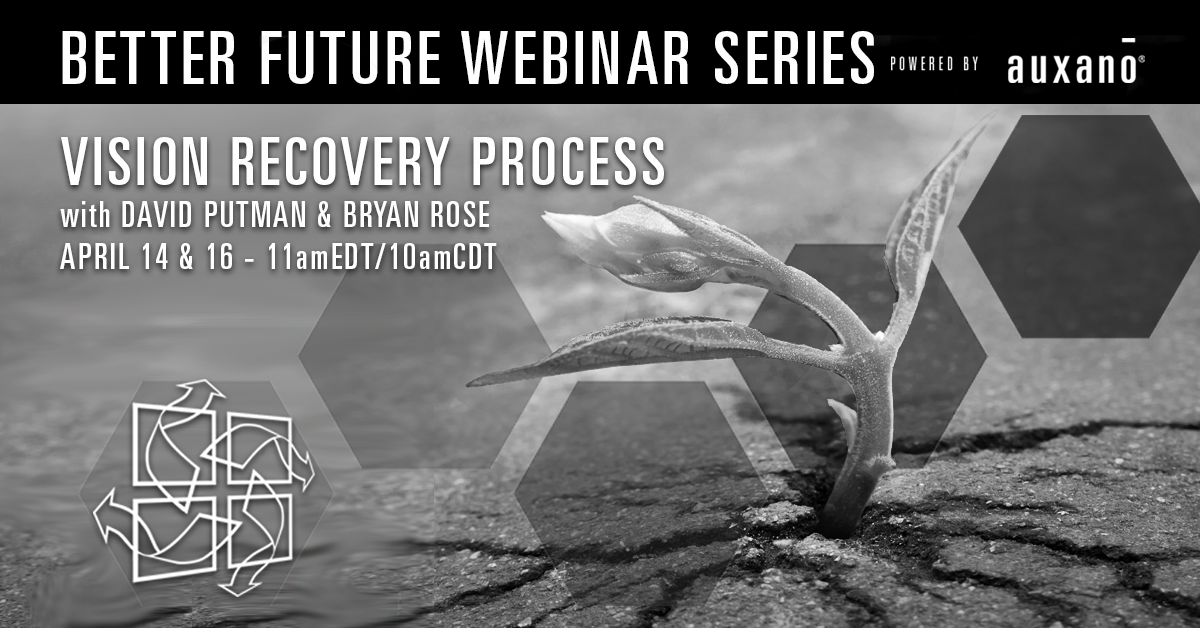
Join Auxano Navigators David Putman and Bryan Rose on this week’s Better Future Webinar as they present a brand-new training tool, the Vision Recovery Process. In this two-part online training, attendees will learn:

  • How to process the timing around three phases of disruption
  • Key conclusions about disciple-making in a “new normal” of church life
  • Five critical steps to recovering your church’s disciple-making vision
  • Ten questions every church should ask every member this week

Part one will be Tuesday, April 14, at 11:00 am EDT / 10:00 am CDT, and part two will be on Thursday, April 16, at the same time. You don’t have to attend both, but we recommend reserving a spot here because space will be limited.

The last thing any of us needs is another talking-head driven ZOOM call, so Auxano promises that every Better Future Webinar will be super practical, immediately applicable, and founded on process tools that will make a difference in your leadership.

Thanks for you all you are doing for your congregation and community in this generation-marking season. We hope to see you right here on Tuesday!


Download PDF

Tags: , , , , ,

| What is MyVisionRoom? > | Back to Vision >

ABOUT THE AUTHOR

Bryan Rose

Bryan Rose

As Lead Navigator for Auxano, Bryan Rose has a strong bias toward merging strategy and creativity within the vision of the local church and has had a diversity of experience in just about every ministry discipline over the last 12 years. With his experience as a multi-site strategist and campus pastor at a 3500 member multi-campus church in the Houston Metro area, Bryan has a passion to see “launch clarity” define the unique Great Commission call of developing church plants and campus, while at the same time serving established churches as they seek to clarify their individual ministry calling. Bryan has demonstrated achievement as a strategic thinker with a unique ability to infuse creativity into the visioning process while bringing a group of people to a deep sense of personal ownership and passion.

See more articles by >

COMMENTS

What say you? Leave a comment!

Recent Comments
comment_post_ID); ?> Thank you for this information. I'm going to use this article to improve my work with the Lord.
 
— Abel Singbeh
 
comment_post_ID); ?> Thank you Ed for sharing your insights into the Church Growth Movement. I have my reservations with Church Growth models because it has done more damage than good in the Body of Christ. Over the years, western churches are more focused on results, formulas and processes with little or no emphasis on membership and church discipline. Pastors and vocational leaders are burnt out because they're overworked. I do believe that the Church Growth model is a catalyst to two destructive groups: The New Apostolic Reformation and the Emerging Church. Both groups overlap and have a very loose definition. They're both focus on contemporary worship, expansion of church brand (franchising), and mobilizing volunteering members as 'leaders' to grow their ministry. Little focus on biblical study, apologetics and genuine missional work with no agenda besides preaching of the gospel.
 
— Dave
 
comment_post_ID); ?> Thank you for sharing such a good article. It is a great lesson I learned from this article. I am one of the leaders in Emmanuel united church of Ethiopia (A denomination with more-than 780 local churches through out the country). I am preparing a presentation on succession planning for local church leaders. It will help me for preparation If you send me more resources and recommend me books to read on the topic. I hope we may collaborate in advancing leadership capacity of our church. God Bless You and Your Ministry.
 
— Argaw Alemu
 

Clarity Process

Three effective ways to start moving toward clarity right now.

Empathy During a Pandemic, Part 2: The Weirdness of Work for Now

In Part 1, we explored how personality differences can cause us to act out during a time of uncertainty and stress. Let’s face it: It is just weird right now.

As we try to continue being productive, we need to recognize the complexity of the shifting sands beneath our feet when it comes to workplace engagement. On top of that, some of us have toddlers beneath our feet at the same time. Many of us are asking questions about what post-pandemic life will be like – and whether or not we will have a job (or the same job) as many organizations will re-structure.

Still, we press on. And work is work, which means that there are still the normal differences of opinion, misunderstandings about the expectations of our supervisors, and the “normal” ups and downs of the business side of life.

But the complexity of navigating day-to-day business just ramped up because virtual work highlights the sometimes-stark differences in life stage for some of us.

In my experience so far, some who are empty nesters have even a more uncluttered workspace without the natural interruptions of being in a physical workspace. No one “drops by” to say hello or chitchat about the weather or their favorite baseball team. Heck, no one is playing baseball anyway. These are the people that can actually stay focused for more than a few minutes at a time. This is not so for many.

Again, let’s consider some reminders that can give us the empathy we all need to get through for a while longer:

Stage of life affects work now more than ever. Another aspect of what has surfaced recently is that people respond according to their age and stage of life. There are plenty of differences between Gen Z, Millennials, Gen X, and Boomers in terms of their prioritization of family, work-life balance and more. This is less of an issue because most work environments level the playing field. We all come to an office and are operating in an environment that is free from the things that distinguish our ages. But now there is a massive difference between people who are dealing with the challenges of infants, toddlers, school age children and college kids at home. Most of us got thrust into a home office environment that is drastically different than our normal work life and has a level of chaos. Then there is another group of us who do not have children at home and have even more time to concentrate and ramp up our efficiency, wondering why others are not in 5th gear with us. And still others have concerns that characterize middle to late career – the stock market, long-term health care, and aging parents. Again, normally these things don’t hang around our necks when we arrive to the office. But today, everyone’s context and stressors are decidedly different.

Leaders have a difficult job. Under normal circumstances, leaders are expected to provide clarity and direction. They are to point out the vision for our future, and then align us to help see that vision turn into reality. Every leader has a different capacity to deliver this guidance in a healthy way, but everyone is simply guessing right now. Under these new stressful circumstances, the weaknesses and strengths of our leadership will be on display. Leaders will respond according to their wiring and immediate context – some are in personal turmoil, some do not deal well with conflict or crisis, and so on. But this is usually smoothed out by the fact that they can communicate with each other (senior teams, executive committees, etc.) and come up with a solid game plan. These days even that is compromised as they may be struggling just to connect with each other. When leaders are disconnected and destabilized, the chaos is exacerbated.  

We are not sure if our work matters. For our friends in healthcare and government it is very clear that their work matters. There are also some non-profits that were built for such a time as this. But for many others the questions about the future stimulate questions about the value of their work now. Am I doing the right thing? Am I doing enough? Is this actually going to mean something if the organization gets completely re-shuffled in the new order of post-pandemic life? Are the leaders not telling us something about our job stability? And, when we return, will I even recognize the organization as a place that I once knew and thrived in?

As we move forward in this “new normal,” how can we lead strong and get the best from those around us? What are the areas that are under our control? What can we do to build influence and goodwill in our organization? Here are a few recommendations:

1. We can communicate with clarity. Clarity wins in an uncertain time. A very helpful approach to communicating right now is to connect with people compassionately, empathize with the uncertainty, and tell them what you know and don’t know yet. Remember the old adage “under promise and over deliver.” Stick to the emotion in the room (or video chat) and communicate what you know and how you are expecting people to operate in the organizational wilderness.

2. We can come up with ground rules for the new normal. The rules and boundaries that are present will need to be revised in light of the changing circumstances. Perhaps an approach could be a “From-To” exercise where leadership expresses that we are moving “from” this “to” that. For example, we are moving from three-hour weekly executive tam meetings at 9-12 on Mondays to a 30-minute check-in Zoom call with the executive team from 9-9:30am on Monday, Wednesday, and Friday. As well, there may be temporary processes established around other functions: decision-making, budgeting and spending, meeting rhythm, resolving disputes or conflicts, etc. Clear communication is key here.

3. We can offer grace and latitude. If there was ever a time to give people grace and latitude, the time is now. Apple has a customer service approach that is deeply embedded in empathy. They say that the first thing a person needs to feel is that you care about their situation or problem. Now is the time to mimic this and step into the humanness of each person with whom we interact. As much as the above observations and recommendations are about what to do when we see each other “off the rails,” the fact is that many people and organizations are modeling this beautifully. May we all find our way of doing the same.


In case you missed it, here is part one of this series.

Download PDF

Tags: , , ,

| What is MyVisionRoom? > | Back to Vision >

ABOUT THE AUTHOR

Greg Gibbs

Greg Gibbs

Greg Gibbs is a coffee roaster, consultant and author, and regularly tries to convince his wife that he is an Organizational Communication guru. After 30 years and raising four children together, she is still not quite convinced. Greg has spent decades in the church world, advising leadership on vision clarity, fundraising process, and communication effectiveness. He and his wife reside in the suburbs of Detroit.

See more articles by >

COMMENTS

What say you? Leave a comment!

Recent Comments
comment_post_ID); ?> Thank you for this information. I'm going to use this article to improve my work with the Lord.
 
— Abel Singbeh
 
comment_post_ID); ?> Thank you Ed for sharing your insights into the Church Growth Movement. I have my reservations with Church Growth models because it has done more damage than good in the Body of Christ. Over the years, western churches are more focused on results, formulas and processes with little or no emphasis on membership and church discipline. Pastors and vocational leaders are burnt out because they're overworked. I do believe that the Church Growth model is a catalyst to two destructive groups: The New Apostolic Reformation and the Emerging Church. Both groups overlap and have a very loose definition. They're both focus on contemporary worship, expansion of church brand (franchising), and mobilizing volunteering members as 'leaders' to grow their ministry. Little focus on biblical study, apologetics and genuine missional work with no agenda besides preaching of the gospel.
 
— Dave
 
comment_post_ID); ?> Thank you for sharing such a good article. It is a great lesson I learned from this article. I am one of the leaders in Emmanuel united church of Ethiopia (A denomination with more-than 780 local churches through out the country). I am preparing a presentation on succession planning for local church leaders. It will help me for preparation If you send me more resources and recommend me books to read on the topic. I hope we may collaborate in advancing leadership capacity of our church. God Bless You and Your Ministry.
 
— Argaw Alemu
 

Clarity Process

Three effective ways to start moving toward clarity right now.

Empathy During a Pandemic, Part 1: Personality Differences Matter in a Virtual World

In this unprecedented time, many people are “acting out” at an alarming pace! Many of us are finding ourselves a little more grumpy than normal.

The articles and information in the first few weeks of the crisis have been about the tactical and technical; how to move things to virtual, increase your online presence or what to do if you are experiencing a financial dip.

What about the people? What about our work relationships? The ways we interact with and treat our colleagues in this season are of critical importance. These interactions can be gifts or scars – and either will last long after the stay-at-home edicts.

We seem to be forgetting the lessons we have learned – especially over the last decade – around the social sciences. And, some have taken what we know about basic human communication in a digital age and filed it away somewhere deep in their mental memory banks. 

These moments of forgetfulness are rearing their ugly head right now in the midst of a crisis. Here are a few reminders to keep us all sane – because we may be in this new normal for a while:

The stress is unprecedented. Few of us have dealt with a multi-faceted attack on our collective sense of security. In a very short amount of time, almost everything we count as normal has a big question marking floating above it. Many of us are dealing with health and economic questions – all shining a spotlight on an uncertain future. Add to that the social and relational component with families in close proximity, rocky marriages can be even more strained, work relationships are still trying to find equilibrium, and much more. Some have concerns outside of the home with aging parents or under-resourced members of the family who do not live nearby. Unfortunately, many of us can put a check mark next to every single category mentioned above. The truth is that this collective level of stress is higher than many of us are prepared for.

Under stress we default to the worst version of ourselves. Each of us has a unique story, personality, and wiring. That wiring has unique strengths and some distinct weaknesses. Many of the social sciences (Enneagram, Myers Briggs, Gallup StrengthFinder, Disc, etc.) give us language for the highs and lows. The ability to understand that everyone has a natural tendency to act, respond, communicate, disagree, work, play and live in a certain way is paramount to connecting to people under stress. Your personal wiring can also show that you have a certain response to conflict or stress. There are the classics – overeating or drinking, amusing oneself with mindless games or hobbies, procrastinating, etc. But some of the “basement” versions of ourselves affect others in hurtful ways. Controlling behaviors, blame, anger, and more – all things that come out of us when we wish they would not. Not surprisingly, the ugly ones are coming to the surface by now. Understanding these tendencies and preferences while being proactive is key to leading in this crisis.

For now, dealing with conflict is digital. Part of the challenge right now is that our culture went from in-person to virtual in a matter of days.  Some of us are adept at living in a digital or virtual world with meetings and interactions – you’ve been Zooming or FaceTiming since those platforms existed. But most of us are not. Many had never heard of Zoom until a few weeks ago. Even if we had been trafficking in online meetings and interactions, it just went to warp speed and we don’t have all the ground rules for human interaction in the new mode. How do we address conflict in this space? What is the best way to deal with differences over video, phone and text? When you eliminate the 85% of non-verbal communication everything changes. Even phone calls aren’t ideal for conflict for the same reason. The fact is most of our communication still eliminates the non-verbal and the mediums that we are using right now can hurt us not help us. Learning to deal with conflict in an emotionally intelligent way is needed now more than ever. 

In the “new normal” what are the ground rules? Can we even figure that out right now? It is a time that calls for great empathy and still a level of productivity. Here are a few recommendations:

1. We should presume everyone is stressed. Everyone has a different definition of “being stressed” and some handle it better than others. But for now, we would do well to presume that everyone is off balance. A flight attendant explained to me once that whether it is the mother with a toddler or the frequent traveling businessperson who seems to have it all together, travel is stressful for everyone – flight attendants are trained to presume this and act accordingly.

2. We can begin meetings with personal “check-ins.” This is the virtual substitute for hallway or coffee room conversations that usually allow for the social lubricant to keep the organization engine moving. Without recognizing the humanness of our colleagues, the mechanics will start to produce friction. Some people may seem quiet or frustrated and do not know how to express that on a virtual call with multiple team members. It may be helpful to offer to a colleague, “Can I check in with you after this meeting just to make sure you and I are on the same page?” These gestures of care may seem obvious but happen with more ease in a physical space. Intentionality is needed more than ever with relationship management.

3. We must agree on conflict resolution dynamics. Even when we are together in a workspace, we tend to forget that opinions, emotions, and critique of someone (or even their idea) is not as well received on email or text. Still, we get a little lazy, and shoot off an email with the hopes that it was so well written we will solve the fuzziness or disagreement. It takes less time but may add to a breech in relationship with tiny little “cracks” that build up over time. Each organization needs to decide how this will be handled and then play by a set of rules, even if they are only for our pandemic wilderness. No one has “steady legs” right now, so practicing extra kindness and empathy will help us now and in the future.


Want to know more? Auxano Senior Lead Navigator Mike Gammill unpacks questions and concerns around your church staff team in a virtual setting.

Download PDF

Tags: , ,

| What is MyVisionRoom? > | Back to Vision >

ABOUT THE AUTHOR

Greg Gibbs

Greg Gibbs

Greg Gibbs is a coffee roaster, consultant and author, and regularly tries to convince his wife that he is an Organizational Communication guru. After 30 years and raising four children together, she is still not quite convinced. Greg has spent decades in the church world, advising leadership on vision clarity, fundraising process, and communication effectiveness. He and his wife reside in the suburbs of Detroit.

See more articles by >

COMMENTS

What say you? Leave a comment!

Recent Comments
comment_post_ID); ?> Thank you for this information. I'm going to use this article to improve my work with the Lord.
 
— Abel Singbeh
 
comment_post_ID); ?> Thank you Ed for sharing your insights into the Church Growth Movement. I have my reservations with Church Growth models because it has done more damage than good in the Body of Christ. Over the years, western churches are more focused on results, formulas and processes with little or no emphasis on membership and church discipline. Pastors and vocational leaders are burnt out because they're overworked. I do believe that the Church Growth model is a catalyst to two destructive groups: The New Apostolic Reformation and the Emerging Church. Both groups overlap and have a very loose definition. They're both focus on contemporary worship, expansion of church brand (franchising), and mobilizing volunteering members as 'leaders' to grow their ministry. Little focus on biblical study, apologetics and genuine missional work with no agenda besides preaching of the gospel.
 
— Dave
 
comment_post_ID); ?> Thank you for sharing such a good article. It is a great lesson I learned from this article. I am one of the leaders in Emmanuel united church of Ethiopia (A denomination with more-than 780 local churches through out the country). I am preparing a presentation on succession planning for local church leaders. It will help me for preparation If you send me more resources and recommend me books to read on the topic. I hope we may collaborate in advancing leadership capacity of our church. God Bless You and Your Ministry.
 
— Argaw Alemu
 

Clarity Process

Three effective ways to start moving toward clarity right now.

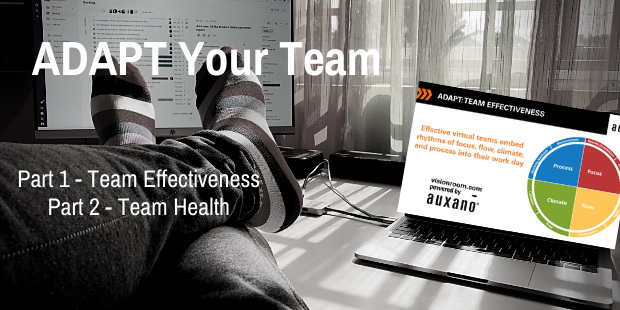
Better Future Series: Adapt Your Team

In these no-cost, 30-minute daily leadership moments, our team of Navigators is delivering timely content designed to bring breakthrough clarity in a season of unprecedented uncertainty.

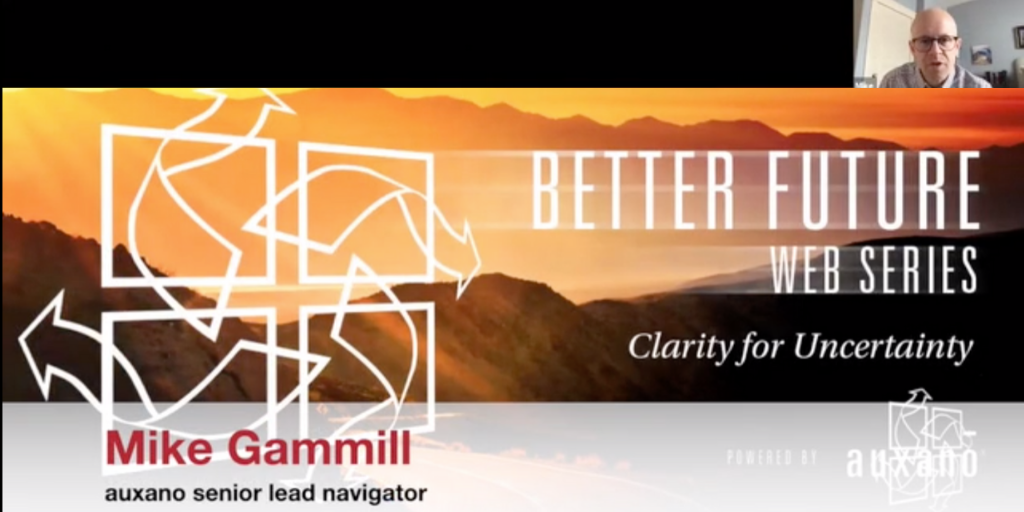
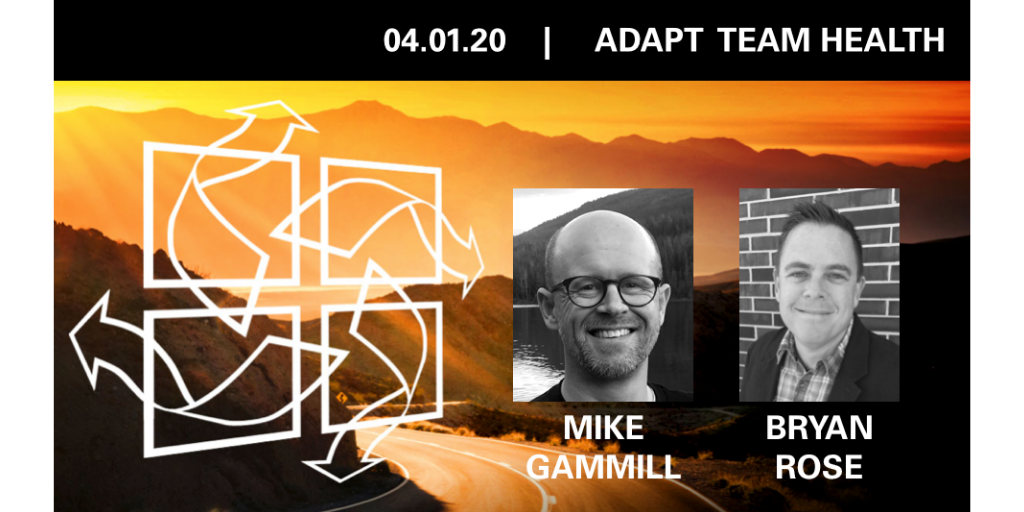
For these two sessions, Auxano Senior Lead Navigator Mike Gammill unpacks questions and concerns around your church staff team in a virtual setting. Click on the images below to watch the videos.

PART 1 – Team Effectiveness

Effective virtual teams embed rhythms of focus, flow, climate, and process into their work day.

PART 2 –  Team Health

We each have four color energies within us; it is the combination of the four energies that creates the unique YOU.


Check out the Better Future Web Series video archives here for more!

Beginning Tuesday April 14, watch LIVE at 11am EDT/10am EDT!


Download PDF

Tags: , , , ,

| What is MyVisionRoom? > | Back to Leadership >

ABOUT THE AUTHOR

VRcurator

VRcurator

Bob Adams is Auxano's Vision Room Curator. His background includes over 23 years as an associate/executive pastor as well as 8 years as the Lead Consultant for a church design build company. He joined Auxano in 2012.

See more articles by >

COMMENTS

What say you? Leave a comment!

Recent Comments
comment_post_ID); ?> Thank you for this information. I'm going to use this article to improve my work with the Lord.
 
— Abel Singbeh
 
comment_post_ID); ?> Thank you Ed for sharing your insights into the Church Growth Movement. I have my reservations with Church Growth models because it has done more damage than good in the Body of Christ. Over the years, western churches are more focused on results, formulas and processes with little or no emphasis on membership and church discipline. Pastors and vocational leaders are burnt out because they're overworked. I do believe that the Church Growth model is a catalyst to two destructive groups: The New Apostolic Reformation and the Emerging Church. Both groups overlap and have a very loose definition. They're both focus on contemporary worship, expansion of church brand (franchising), and mobilizing volunteering members as 'leaders' to grow their ministry. Little focus on biblical study, apologetics and genuine missional work with no agenda besides preaching of the gospel.
 
— Dave
 
comment_post_ID); ?> Thank you for sharing such a good article. It is a great lesson I learned from this article. I am one of the leaders in Emmanuel united church of Ethiopia (A denomination with more-than 780 local churches through out the country). I am preparing a presentation on succession planning for local church leaders. It will help me for preparation If you send me more resources and recommend me books to read on the topic. I hope we may collaborate in advancing leadership capacity of our church. God Bless You and Your Ministry.
 
— Argaw Alemu
 

Clarity Process

Three effective ways to start moving toward clarity right now.