5 Keys to Cultivating an Environment of Growth

When it comes to faith, it’s our job as leaders to make what is intangible and supernatural, practical and assessable. That’s not easy.

In a rapidly changing culture where the Bible is an option to as many as it is the inerrant Word of God, it’s challenging to create an environment of abiding faith in Jesus.

An environment that cultivates faith is rooted in the gospel, evangelism, and prayer. Ultimately it champions and results in life change.

The idea is to create an environment where people in all stages of a relationship with God, sense a grace-filled invitation to pursue faith. From agnostic (even atheist) to those who have been to church but have become disenfranchised and have fallen away.

It also includes mature Christians who have faith but desire greater faith. For example, maybe moving their prayer life from routine to believing for a miracle. Again, it’s not easy to reach this diverse of a crowd all at the same time.

The process of spiritual understanding and maturation is not a fast one. We lead toward “decisions” and that is good, but in the end, process and practices grow faith one day at a time over a lifetime.

It’s not wise to try to shortcut this process. That’s not a lack of evangelistic zeal; it’s a realization that faith can’t be rushed. Allow the Holy Spirit to move and give him the time and space required.

Cultivating a faith environment:

1) Communicate hope.

Developing faith is difficult for people in a culture that does not intuitively trust God or is at least inconsistent in their trust of God.

Let them know that even though you fully believe and trust God, there are times of uncertainty. Yet at the same time, you know that God is present, active, faithful and loves you unconditionally.

This helps establish your credibility to then communicate your hope and faith in their better future.

Essentially, your faith rubs off! It’s contagious. They see you as real and begin to believe they can experience hope for a better future too. (This is obviously not limited to a Sunday morning worship experience.)

2) Demonstrate acceptance and lean into the Gospel.

Faith is at the center of the four gospel accounts, along with love.

One of the most recognizable verses of all time is John 3:16..

For God so loved the world that he gave his one and only Son, that whoever believes in him shall not perish but have eternal life. 

The foundation of the gospel is unconditional love. Only faith (belief) is required.

The next verse is not quoted nearly as often but is vitally instructive in this process.

For God did not send his Son into the world to condemn the world, but to save the world through him.

John 3:17

God accepts each person as they are, and it’s our great privilege and responsibility to do the same in our churches. It’s only after initially trusting God that there is an appropriate challenge to grow in their faith.

3) Make faith challenges doable.

For those that experience the miraculous early on in their faith development, that’s great, but that may not be the pattern over decades to come. Therefore, a consistent and steady pursuit of faith is often best over the long haul.

What can you believe God will do? That’s a helpful question. That’s not the same as, “What do you believe God can do?” The first reveals a person’s faith, the second reveals a person’s understanding of who God is.

You know God can do anything, because of your knowledge and relationship with Him. In short, your maturity. There are many in your church who cannot yet grasp this concept.

For example, can they trust Him with their marriage, their money, or their job? Anyone of those can be overwhelming.

This isn’t about dumbing down God to our level; it’s about helping believers rise to understand and embrace the fullness of God.

4) Emphasize do’s over don’ts.

It’s true that the Scriptures contain numerous things we should not do, and we can’t ignore that instruction. However, a steady diet of mostly “thou shall not’s”, defeats faith and discourages progress.

First, in the natural realm, the person gives up on their ability to live up to the standards of a growing faith and Christian maturity.

Second, they can become discouraged that a Christian lifestyle is just not achievable, even with God’s help.

A balance of admonition and encouragement is important, but the presence and power of the Holy Spirit has a way of increasing what is pleasing to God, and slowly eliminating the things that break His heart.

5) Tell stories that inspire faith.

Few things are more inspiring than real stories of people engaging their faith.

Tell stories and show video interviews of people trusting God with their money, trusting God with their time (serving), and of course salvation.

Baptism stories are among my favorites. In one minute, you catch a glimpse of someone’s early faith story. There is nothing more powerful, more captivating, or that cultivates faith better than a fresh conversion story followed by a live baptism!

And when you also add in stories of marriages that have been restored, addictions that have been broken, and physical sickness that has been healed, faith increases for nearly everyone.


This is not a comprehensive list, but it can serve as a helpful guideline or conversation starter to evaluate if your church environment is what you want it to be.

It’s easy to get caught up in the mechanics of ministry, and you may risk missing the heart of your purpose. I hope that this post may help you process the very thing you are passionate about!

> Read more from Dan.


Download PDF

Tags: , , ,

| What is MyVisionRoom? > | Back to Discipleship >

ABOUT THE AUTHOR

Dan Reiland

Dan Reiland

Dr. Dan Reiland serves as Executive Pastor at 12Stone Church in Lawrenceville, Georgia. He previously partnered with John Maxwell for 20 years, first as Executive Pastor at Skyline Wesleyan Church in San Diego, then as Vice President of Leadership and Church Development at INJOY. He and Dr. Maxwell still enjoy partnering on a number of church related projects together. Dan is best known as a leader with a pastor's heart, but is often described as one of the nations most innovative church thinkers. His passion is developing leaders for the local church so that the Great Commission is advanced.

See more articles by >

COMMENTS

What say you? Leave a comment!

Recent Comments
comment_post_ID); ?> Thank you for this information. I'm going to use this article to improve my work with the Lord.
 
— Abel Singbeh
 
comment_post_ID); ?> Thank you Ed for sharing your insights into the Church Growth Movement. I have my reservations with Church Growth models because it has done more damage than good in the Body of Christ. Over the years, western churches are more focused on results, formulas and processes with little or no emphasis on membership and church discipline. Pastors and vocational leaders are burnt out because they're overworked. I do believe that the Church Growth model is a catalyst to two destructive groups: The New Apostolic Reformation and the Emerging Church. Both groups overlap and have a very loose definition. They're both focus on contemporary worship, expansion of church brand (franchising), and mobilizing volunteering members as 'leaders' to grow their ministry. Little focus on biblical study, apologetics and genuine missional work with no agenda besides preaching of the gospel.
 
— Dave
 
comment_post_ID); ?> Thank you for sharing such a good article. It is a great lesson I learned from this article. I am one of the leaders in Emmanuel united church of Ethiopia (A denomination with more-than 780 local churches through out the country). I am preparing a presentation on succession planning for local church leaders. It will help me for preparation If you send me more resources and recommend me books to read on the topic. I hope we may collaborate in advancing leadership capacity of our church. God Bless You and Your Ministry.
 
— Argaw Alemu
 

Clarity Process

Three effective ways to start moving toward clarity right now.

Successful Churches Use Social Media to Tell the Bigger Story

Communication today is real-time, all the time. Thanks to the continuing innovations in technology and the rapid rate of adaption, events that occur around the world – or across the street – are now capable of being seen by millions of individuals. And it’s not just the “viewing” that is important – it’s what effect those views have on the individual watching them.

The social media platforms that exist today, as well as those which are being developed and will be the next big thing, can have a far-reaching impact on the ministries of your church.

Are you taking advantage of them? Or, do you feel like they take advantage of you? Is social media creating communication traction? Or is it becoming a constant distraction?

THE QUICK SUMMARY – Trending Up, edited by Mark Forrester

Every church has a story that can change the course of people’s lives but how do you share that story beyond your four walls?

Throughout these pages, you’ll find simple strategies for creating powerful content that can connect your church to the people who need the life-changing story of Christ. Leading church communications specialists break down complex social media themes, providing accessible, practical answers to questions that all churches face, such as:

  • What should I be posting based on my goals?
  • How do I use social media as a tool to foster community?
  • How do I get the people I’m trying to reach with social media?

With this book, your church will be ready to reach one of the biggest missions fields today: the billions of active users on social media. Topics include:

  • Why Social Media?
  • Content Strategy
  • Story: Your Church’s Story & God’s Story
  • Connecting with Your Church
  • Reaching Your Community

The book includes recommended books, websites, blogs, and other tools to help you develop your social media presence.

A SIMPLE SOLUTION

The power of story to captivate people and move them to action has been used by leaders for thousands of years. From the earliest oral traditions passed from generation to generation to cat memes that have a lifespan only as long as it takes to view them, stories can be a powerful communication tool.

The platform of social media can take the power of story and communicate it instantly to hundreds or thousands of people. With it, you can connect with people at work, at home, in the car, at the store – literally almost anywhere.

However, that same platform can turn off hundreds or thousands of people if it is not used in a way that aligns with the rest of your church’s story.

Your social media strategy should fit into everything your church communicates, which means it must fit into a bigger story.

The best way to bring social media into a bigger story is to use it to help tell the three bigger stories already happening around you: your church’s bigger story, your community’s bigger story, and God’s bigger story. Identifying each one is the first step in understanding how social media can complement – and not compete with – everything you do.

Connect to Your Church’s Bigger Story

There’s a good chance your church has boiled down its work into one simple mission statement. Everything you do as an organization – from program and marketing to human resources – should fit into this concise statement. That includes social media.

Every picture and video, post, and reply is aimed at furthering your mission,

Connect to Your Community’s Bigger Story

If you look long and hard at the community you live in, there’s a good chance you’ll see groups of people gathered around certain ideas. Your community is crawling with bigger stories.

Knowing your city’s DNA can help you use your social media efforts to tell your community’s bigger story. Find one or two of those stories and engage your social media efforts to tell it.

Connect to God’s Bigger Story

If your church incorporates Christian doctrine into everything you do, why shouldn’t you include social media? If we meet, pray, and serve because the Bible tells us to, may Scripture offers direction can be guided as well.

It might seem a bit trite, but the more you can connect your social media strategy to the words God has given us through Scripture, the better. Simply put, obeying God’s bigger story can help your social media to tell a bigger story.

Mark Forrester, Editor, Trending Up

A NEXT STEP

Make a chart tablet sheet for each of the three “bigger stories” listed above. Draw a vertical line down the middle of each chart tablet under the title.

In a team meeting, ask your team to review each of the three chart tablets and list social media actions that you are currently doing for that topic. Complete each of the three chart tablets in a similar manner.

Next, evaluate the lists. Are these actions effective? How do you know? How are you measuring effectiveness? Is there something you could be doing, but are not, to make the action more effective? If so, assign responsibility for someone on the team to ensure that is done.

Next, ask your team to review each of the three chart tablets and list social media actions that you should be doing for that topic. Complete each of the three chart tablets in a similar manner.

On another chart tablet, pull out the actions you should be doing, and group them under similar headings. For example, all actions under “Instagram” will be written under that heading. After you have grouped the actions by category, discuss as a team which are the most important for you to accomplish first.

Pull out the top three items, and assign responsibility, a timeline, and checkpoints for each. At a future meeting, discuss the status of each.

After the top three have been accomplished, measure their effectiveness, and review with the team how they need to be revised, left as is, or scrapped.

Follow the same process with all items on the list, three at a time, until all have been implemented.

Excerpt taken from SUMS Remix 78-1, issued October 2017.


This is part of a weekly series posting excerpts from one of the most innovative content sources in the church world: SUMS Remix book excerpts for church leaders.

SUMS Remix takes a practical problem in the church and looks at it with three solutions; each solution is taken from a different book. Additionally, a practical action step is included with each solution.

As a church leader you get to scan relevant books based on practical tools and solutions to real ministry problems, not just by the cover of the book. Each post will have the edition number which shows the year and what number it is in the overall sequence. (SUMS Remix provides 26 issues per year, delivered every other week to your inbox). 

>> Subscribe to SUMS Remix <<


Download PDF

Tags: , , , ,

| What is MyVisionRoom? > | Back to Communication >

ABOUT THE AUTHOR

VRcurator

VRcurator

Bob Adams is Auxano's Vision Room Curator. His background includes over 23 years as an associate/executive pastor as well as 8 years as the Lead Consultant for a church design build company. He joined Auxano in 2012.

See more articles by >

COMMENTS

What say you? Leave a comment!

Recent Comments
comment_post_ID); ?> Thank you for this information. I'm going to use this article to improve my work with the Lord.
 
— Abel Singbeh
 
comment_post_ID); ?> Thank you Ed for sharing your insights into the Church Growth Movement. I have my reservations with Church Growth models because it has done more damage than good in the Body of Christ. Over the years, western churches are more focused on results, formulas and processes with little or no emphasis on membership and church discipline. Pastors and vocational leaders are burnt out because they're overworked. I do believe that the Church Growth model is a catalyst to two destructive groups: The New Apostolic Reformation and the Emerging Church. Both groups overlap and have a very loose definition. They're both focus on contemporary worship, expansion of church brand (franchising), and mobilizing volunteering members as 'leaders' to grow their ministry. Little focus on biblical study, apologetics and genuine missional work with no agenda besides preaching of the gospel.
 
— Dave
 
comment_post_ID); ?> Thank you for sharing such a good article. It is a great lesson I learned from this article. I am one of the leaders in Emmanuel united church of Ethiopia (A denomination with more-than 780 local churches through out the country). I am preparing a presentation on succession planning for local church leaders. It will help me for preparation If you send me more resources and recommend me books to read on the topic. I hope we may collaborate in advancing leadership capacity of our church. God Bless You and Your Ministry.
 
— Argaw Alemu
 

Clarity Process

Three effective ways to start moving toward clarity right now.

16 Ideas for Better Facebook Live Videos

Is your church doing regular Facebook Live broadcasts? Why or why not? The popularity of this tool continues to grow and flourish, and it is a powerful communication method that your church should be taking advantage of. While the service has been around for almost three years, which is comparative to something like 30 “social media years”, there are still a lot of churches that aren’t utilizing this tool to reach people.

That being the case, the goal of this article is to convince you to start doing or do more Facebook Live videos. You’ve been warned.

Facebook is still the default social media network for many people in our communities. In fact, in most communities, 68% of adults are accessing the platform regularly. [ref] Stop and think about that. If two-thirds of the people in your town participated in the same thing on a regular basis, wouldn’t you want to know more about it? Even further, wouldn’t you want to figure out how to best use that trend to see people connected to your church and the message of Jesus? Within Facebook, live videos continue to be a thriving and growing feature of the platform. In fact, 2 billion people have watched Facebook Live broadcasts. [ref] And the number keeps growing every day!

4 Ingredients of Great Facebook Live Videos for Your Church

Here are the four basic elements that your Facebook Live video broadcasts need to have to help you leverage this channel to reach people.

  • A “Hook” // You need to start with an interesting premise or quick hit idea at the beginning of the video that draws people in to watch more. Like the title of a great news article, a good hook’s job is to grab and hold people’s attention.
  • Educate or Entertain? // Your video needs to either entertain people by making them laugh or it needs to educate them by revealing something. If you use Facebook Live to just “advertise” what’s coming up at your church your audience will tune out. How can you provide value to them? Use one of these approaches to do so.
  • Show, Don’t Tell // This is a visual medium so leverage it. Broadcast from a visually interesting location. Show a prop on camera that will get people’s attention. Avoid the temptation to just be a “talking head” on the video.
  • Call to Action // What are you asking people to “do” because of the video? What is their next step after watching the video? Don’t let people just sit back and passively consume the content but entice them to take a next step!

Facebook is Still Pushing Live Video

It’s no secret that Facebook continues to encourage people to produce, view, and engage with live videos. In a very real way it seems like Facebook is transforming itself into a video-driven platform. We have all noticed that our “organic” posts on Facebook being viewed less and less. However, the platform continues to push the video content form in front of our audiences. Some churches have reported as much as 200 times more views on a Facebook Live video over a typical status update post.

“Live is like having a TV camera in your pocket. Anyone with a phone now has the power to broadcast to anyone in the world,” CEO Mark Zuckerberg has said. “This is a big shift in how we communicate, and it’s going to create new opportunities for people to come together.” [ref]

People Love Behind-the-Scenes Videos

87% of audiences would prefer to watch online videos if it included more behind-the-scenes content than a standard TV broadcast. [ref] One of the major “stickiness factors” of live videos is that we get access to things that we don’t normally get to see. Take your audience backstage at your church and allow them to experience something that is usually only experienced by a small group of leaders or community members.

3 Examples of Behind-the-Scenes Videos

  • Mid-week Message Prep // Do you prepare your messages in a unique location? Take us there with a quick two minute video to show people what that space looks like and discuss the upcoming week. Use this opportunity to ask a question or two about an upcoming message to draw people in and help you write that message!
  • Early Morning “Backstage” // More and more, we’re beginning to see it be a “standard practice” of churches to do a quick early morning video inviting people to come to church. Resist the urge to do these videos from the lobby, and take us backstage to see the behind-the-scenes activities of the morning prep. Is there a cleaning crew vacuuming the hallways? Is the guest services team planning something extra special this morning? What does it look like from the “tech booth” while the worship team rehearses? Find an interesting visual hook that people don’t normally see and show it to them!
  • Team Training // Training volunteers and leaders is a critical part of any growing church. Why not shoot a quick live video from your next training event? You could invite a person who just experienced the event onto camera and they could share what they learned! Sometimes at training events we do an “appreciation” segment where we go out of our way to thank a particular volunteer. What better way to turn up the appreciation by broadcasting it live as well!

Live Positions Your Church with the “Big Leagues”

Increasingly, huge brands and entertainment organizations are leveraging the exact same tools to broadcast to their audiences. For example, Facebook has secured exclusive rights to 25 MLB games this season [ref]. When your church chooses to leverage this channel, it puts your ministry on par with other brands.

While it’s a great thing to have your live broadcasts compete alongside some of the largest content providers in the world, it does require us to continually increase the quality of our content. We need to develop best practices for the type of content we’re providing as well as improve the technical quality of our broadcasts. Your church will need to pay particular attention to ensure that you are evaluating how the content is being received and what is working “best” to increase engagement with your community.

3 Tools to Increase the Quality of Your Church’s Live Videos

  • Rode Lav Mic // This mic provides great quality audio for a single presenter on a live video from your phone. It not only provides clear audio but requires little technical set up! Just plug the mic into the headphone jack of your phone and then clip it to the presenter’s shirt.
  • Mevo Camera // This is a clever, super high definition camera with a novel smartphone interface. It allows the users to present what looks like a “multi-camera” shot all with a single lens through some fancy programming. This product is great for when you want to shoot something six to ten feet from the camera.
  • Selfie Light Ring // Sometimes when you’re backstage at the church there just isn’t enough lighting to allow your audience to clearly see the presenter. This little device attaches directly to your phone and helps light up a subject when in selfie mode.

Engagement is 10X Higher on Live vs. Pre-Recorded Video

Have you ever stepped back and asked why your church does anything on social media? What’s the goal of all this effort you put into these channels? It’s all about engagement! We are attempting to connect with people in churches and the surrounding community in a way that draws them in to dialogue and connection. Live videos are the highest form of engagement in social media today. In fact, viewers comment “more than 10 times more on Facebook Live videos than regular ones.” [ref] The reason social media networks are pushing this content is because they know it’s engaging, which is what we want!

3 Easy Ways to Drive Up Engagement

  • Lead with a Question // In the first ten seconds of your video lead with a question that you want your audience to answer. What’s your favorite worship song that we’ve been singing at our church these days? If we could talk about one thing in our messages, what would you want that to be? What would you love to see us change in our kids ministry? A sticky question drives people to stay connected with the video and gives them the opportunity to interact and contribute.
  • Ask for the Share // Again, early on in the video the best practice is to ask people to share the video so the content can reach more people. Don’t beat around the bush but directly ask people to share the video so their friends can see it too. Point to where the “share” button is and ask them!
  • Give a Gift // At the end of the video, tell people to do something in order to receive a free gift from the host. For example, the first ten people to comment with a fact or point from the live broadcast could receive a gift certificate to a local coffee shop.

Online Live Video is Leading to Offline Engagement

Social media isn’t the destination but a stop along the road! Ultimately, we’re using these tools to encourage people to connect at our “offline” locations. There are industries that demonstrate that live video is an effective tool for driving “real world” engagement, not just “likes, comments, and shares”. For instance, 67% of audiences who watched a live stream purchased a ticket to a similar offline event the next time it occurred. [ref] Real estate mogul and social media guru Grant Cardone used a swarm of live videos to drive over 9,000 people to his conference in 2018. [ref] It would seem like live video is a shortcut for building an online community that “knows, likes, and trusts” a communicator or organization. That social capital can then be translated into real-world responses.

3 Ways to Bridge Offline Engagement

  • Show Your Campuses // Use your live streams to walk people through the Sunday morning experience. Park in your parking lot and then walk through various entrances to help people picture themselves arriving.
  • Introduce Pastoral Staff // Oftentimes, it seems like churches are using secondary team members “on screen” during live videos. However, brands that are moving people to offline engagement have the primary communicator and “face of the brand” at the center of their live videos.
  • Call to Action // Don’t be afraid to ask people for an “offline” action! Ask your audience to join the church at an upcoming special event. Ask them if they are willing to get in their cars and join the church at the next service. A well-timed call to action can motivate more people to connect with your church!

> Read more from Rich.


Download PDF

Tags: ,

| What is MyVisionRoom? > | Back to Communication >

ABOUT THE AUTHOR

Rich Birch

Rich Birch

Thanks so much for dropping by unseminary … I hope that your able to find some resources that help you lead your church better in the coming days! I’ve been involved in church leadership for over 15 years. Early on I had the privilege of leading in one of the very first multisite churches in North Amerca. I led the charge in helping The Meeting House in Toronto to become the leading multi-site church in Canada with over 4,000 people in 6 locations. (Today they are 13 locations with somewhere over 5,000 people attending.) In addition, I served on the leadership team of Connexus Community Church in Ontario, a North Point Community Church Strategic Partner. I currently serves as Operations Pastor at Liquid Church in the Manhattan facing suburbs of New Jersey. I have a dual vocational background that uniquely positions me for serving churches to multiply impact. While in the marketplace, I founded a dot-com with two partners in the late 90’s that worked to increase value for media firms and internet service providers. I’m married to Christine and we live in Scotch Plains, NJ with their two children and one dog.

See more articles by >

COMMENTS

What say you? Leave a comment!

Recent Comments
comment_post_ID); ?> Thank you for this information. I'm going to use this article to improve my work with the Lord.
 
— Abel Singbeh
 
comment_post_ID); ?> Thank you Ed for sharing your insights into the Church Growth Movement. I have my reservations with Church Growth models because it has done more damage than good in the Body of Christ. Over the years, western churches are more focused on results, formulas and processes with little or no emphasis on membership and church discipline. Pastors and vocational leaders are burnt out because they're overworked. I do believe that the Church Growth model is a catalyst to two destructive groups: The New Apostolic Reformation and the Emerging Church. Both groups overlap and have a very loose definition. They're both focus on contemporary worship, expansion of church brand (franchising), and mobilizing volunteering members as 'leaders' to grow their ministry. Little focus on biblical study, apologetics and genuine missional work with no agenda besides preaching of the gospel.
 
— Dave
 
comment_post_ID); ?> Thank you for sharing such a good article. It is a great lesson I learned from this article. I am one of the leaders in Emmanuel united church of Ethiopia (A denomination with more-than 780 local churches through out the country). I am preparing a presentation on succession planning for local church leaders. It will help me for preparation If you send me more resources and recommend me books to read on the topic. I hope we may collaborate in advancing leadership capacity of our church. God Bless You and Your Ministry.
 
— Argaw Alemu
 

Clarity Process

Three effective ways to start moving toward clarity right now.

The Importance of Being Sent

In the New Testament epistles and the Revelation of John, the arrival of the Messiah in the world is seen as a part of the sending motif in Scripture. Noted from John’s first epistle, insight is given into the motivation for God’s sending activity. John wrote, “God’s love was revealed among us in this way: God sent His One and Only Son into the world so that we might live through Him. Love consists in this: not that we love God, but that He loved us and sent His Son to be the propitiation for our sins” (1 John 4:9–10).

The motivating force in God’s mission and subsequent commission of the church is shown to be His love and desire to have people reconciled to Him. In Galatians 4:4–6, Paul wrote that God had sent the Son for the work of redemption and “sent the Spirit of His Son, into our hearts, crying, ‘Abba, Father!’”

Consequently, the church is now a commissioned group in the world, having been sent so people can hear the witness of the Gospel (Rom 10:15). The mission of God and the commission of the church would appear to have love as one of the motivating factors. In 1 Cor 5:14–15, Paul wrote of the reason for ministry and mission, “For Christ’s love compels us, since we have reached this conclusion: If One died for all, then all died. And He died for all so that those who live should no longer live for themselves, but for the One who died for them and was raised.”

Additionally, the final book of the Bible includes some the language of sending as well. John wrote that the revelation was sent to him and verified by an angel (Rev 1:1). The messages John received in the first three chapters were sent to the seven churches named in them (1:11). In the closing chapter of the book, John records that “These words are faithful and true,” because the Lord “has sent His angel to show His slaves what must quickly take place” (22:6). The epistles and Revelation continue the teaching that God sends both the message of salvation and the power by which believers may live out their redemptive calling of mission and ministry.

From the banishment (sending out) of Adam and Eve from the Garden of Eden to the revelation of insight about the end of days, God is a sender. Throughout the Scriptures, God presents Himself as on mission for His glory and His redemptive purposes. In Missional Church, Darrell Guder wrote,

We have come to see that mission is not merely an activity of the church. Rather, mission is the result of God’s initiative, rooted in God’s purposes to restore and heal creation. . . . God’s mission unfolded in the history of God’s people across the centuries recorded in Scripture, and it reached its revelatory climax in the incarnation of God’s work of salvation in Jesus ministering, crucified, and resurrected. God’s mission continued then in the sending of the Spirit to call forth and empower the church as the witness to God’s good news in Jesus Christ. . . . and it moves toward the promised consummation of God’s salvation in the eschaton (“last” or “final day”).

The Scriptures are quite clear that God is on mission, and that He is sending His people out into the world to participate in that mission as well.

> Read more from Philip.


Download PDF

Tags: ,

| What is MyVisionRoom? > | Back to Discipleship >

ABOUT THE AUTHOR

Philip Nation

Philip Nation

serve as the Director of Advancement and Global Impact Churches with the Baptist World Alliance and frequently speak at churches and conferences. I earned a Master of Divinity from Beeson Divinity School and a Doctor of Ministry from Southeastern Baptist Theological Seminary. In 2010-2012, I was the national spokesperson for the Back to Church Sunday campaign from Outreach. Over the years, I’ve served as a pastor, minister of education, and a church planter. My latest published work is the video-based Bible study Pursuing Holiness: Applications from James. In 2016, I published Habits for Our Holiness: How the Spiritual Disciplines Grow Us Up, Draw Us Together, and Send Us Out with Moody Publishers. I’ve coauthored two other books: Compelled: Living the Mission of God and Transformational Discipleship: How People Really Grow. I was also the general editor of The Mission of God Study Bible. Along the way, I have written the small-group studies Storm Shelter: Psalms of God’s Embrace, Compelled by Love: The Journey to Missional Living and Live in the Word, plus contributed to The Great Commission Resurgence: Fulfilling God’s Mandate in Our Lifetime.

See more articles by >

COMMENTS

What say you? Leave a comment!

Recent Comments
comment_post_ID); ?> Thank you for this information. I'm going to use this article to improve my work with the Lord.
 
— Abel Singbeh
 
comment_post_ID); ?> Thank you Ed for sharing your insights into the Church Growth Movement. I have my reservations with Church Growth models because it has done more damage than good in the Body of Christ. Over the years, western churches are more focused on results, formulas and processes with little or no emphasis on membership and church discipline. Pastors and vocational leaders are burnt out because they're overworked. I do believe that the Church Growth model is a catalyst to two destructive groups: The New Apostolic Reformation and the Emerging Church. Both groups overlap and have a very loose definition. They're both focus on contemporary worship, expansion of church brand (franchising), and mobilizing volunteering members as 'leaders' to grow their ministry. Little focus on biblical study, apologetics and genuine missional work with no agenda besides preaching of the gospel.
 
— Dave
 
comment_post_ID); ?> Thank you for sharing such a good article. It is a great lesson I learned from this article. I am one of the leaders in Emmanuel united church of Ethiopia (A denomination with more-than 780 local churches through out the country). I am preparing a presentation on succession planning for local church leaders. It will help me for preparation If you send me more resources and recommend me books to read on the topic. I hope we may collaborate in advancing leadership capacity of our church. God Bless You and Your Ministry.
 
— Argaw Alemu
 

Clarity Process

Three effective ways to start moving toward clarity right now.

Why Minding Community is Better than Finding It

One of the great myths of relational life is that community is something found. In this fairy tale, community is simply out there – somewhere – waiting to be discovered like Prince Charming finding Cinderella. All you have to do is find the right person, join the right group, get the right job or become involved with the right church. It’s kind of an “Over the Rainbow” thing; it’s not here, so it must be over there.

Which is why so many people – and you’ve seen them and probably flirted with this yourself – go from relationship to relationship, city to city, job to job, church to church, looking for the community that they think is just around the corner if they could only find the right people and the right place. The idea is that real community exists somewhere and we simply must tap into it. It’s not something you have to work at; in fact, if you have to work at it, then you know it’s not real community.

This mindset runs rampant in our day. If you have to work at community in a marriage, you must not be right for each other. If you have to work on community where you are employed, you’ve got a bad boss or bad coworkers or a bad structure. If you have to work at community in a neighborhood, you just picked the wrong subdivision. If you have to work on things with people in a church, well, there are obviously just problems with the church or its leadership or… yep, its “community.”

I cannot stress enough how soundly unrealistic, much less unbiblical, this is. Community is not something you find; it’s something you build. What you long for isn’t about finding the right mate, the right job, the right neighborhood, the right church—it’s about making your marriage, making your workplace, making your neighborhood and making your church the community God intended. Community is not something discovered; it is something forged. I don’t mean to suggest any and all relationships are designed for, say, marriage. Or that there aren’t dysfunctional communities you should flee from. My point is that all relationships of worth are products of labor.

This is why the Bible talks about people needing to form and make communities, not just come together as a community or “experience” community. It’s why principles are given – at length – for how to work through conflict. It’s why communication skills are articulated in the Bible and issues such as anger are instructed to be dealt with. It’s why the dynamics of successfully living with someone in the context of a marriage or family are explored in depth. As the author of Hebrews puts it so plainly:

So don’t sit around on your hands! No more dragging your feet… run for it! Work at getting along with each other. (Hebrews 12:12-14, The Message)

> Read more from James.


Download PDF

Tags: , ,

| What is MyVisionRoom? > | Back to Discipleship >

ABOUT THE AUTHOR

James Emery White

James Emery White

James Emery White is the founding and senior pastor of Mecklenburg Community Church in Charlotte, NC, and the ranked adjunctive professor of theology and culture at Gordon-Conwell Theological Seminary, which he also served as their fourth president. He is the founder of Serious Times and this blog was originally posted at his website www.churchandculture.org.

See more articles by >

COMMENTS

What say you? Leave a comment!

Recent Comments
comment_post_ID); ?> Thank you for this information. I'm going to use this article to improve my work with the Lord.
 
— Abel Singbeh
 
comment_post_ID); ?> Thank you Ed for sharing your insights into the Church Growth Movement. I have my reservations with Church Growth models because it has done more damage than good in the Body of Christ. Over the years, western churches are more focused on results, formulas and processes with little or no emphasis on membership and church discipline. Pastors and vocational leaders are burnt out because they're overworked. I do believe that the Church Growth model is a catalyst to two destructive groups: The New Apostolic Reformation and the Emerging Church. Both groups overlap and have a very loose definition. They're both focus on contemporary worship, expansion of church brand (franchising), and mobilizing volunteering members as 'leaders' to grow their ministry. Little focus on biblical study, apologetics and genuine missional work with no agenda besides preaching of the gospel.
 
— Dave
 
comment_post_ID); ?> Thank you for sharing such a good article. It is a great lesson I learned from this article. I am one of the leaders in Emmanuel united church of Ethiopia (A denomination with more-than 780 local churches through out the country). I am preparing a presentation on succession planning for local church leaders. It will help me for preparation If you send me more resources and recommend me books to read on the topic. I hope we may collaborate in advancing leadership capacity of our church. God Bless You and Your Ministry.
 
— Argaw Alemu
 

Clarity Process

Three effective ways to start moving toward clarity right now.

Developing the Mature Mind of Christ

God wants you to grow up.

“God wants us to grow up, to know the whole truth and tell it in love – like Christ in everything” (Ephesians 4:15 The Message).

“We are not meant to remain as children ….” (Ephesians 4:14 Phillips).

Your heavenly Father’s goal is for you to mature and develop the characteristics of Jesus Christ, living a life of love and humble service.  Sadly, millions of Christians grow older but never grow up.  They are stuck in perpetual spiritual infancy, remaining in diapers and booties. The reason is because they never intended to grow.

Spiritual growth is not automatic. It takes an intentional commitment. You must want to grow, decide to grow, make an effort to grow, and persist in growing.

Discipleship – the process of becoming like Christ – always begins with a decision.

“As Jesus passed on from there, he saw a man called Matthew sitting at the tax booth, and he said to him, ‘Follow me.’ And he rose and followed him” (Matthew 9:9 ESV).

When the first disciples chose to follow Jesus, they didn’t understand all the implications of their decision. They simply responded to Jesus’ invitation. That’s all you need to get started: decide to become a disciple.

Nothing shapes your life more than the commitments you choose to make. Your commitments can develop you or they can destroy you, but either way, they will define you. Tell me what you are committed to, and I’ll tell you what you’ll be in 20 years. We become whatever we are committed to.

It is at this point of commitment that most people miss God’s purpose for their lives.  Many are afraid to commit to anything and just drift through life. Others make half-hearted commitments to competing values, which leads to frustration and mediocrity. Others make a full commitment to worldly goals, such as becoming wealthy or famous, and end up disappointed and bitter. Every choice has eternal consequences, so you’d better choose wisely.

“Since everything around us is going to melt away, what holy, godly lives you should be living!” (2 Peter 3:11 NLT).

Christlikeness comes from making Christlike commitments. You must commit to living the rest of your life for the five purposes God made. Jesus summarized these purposes in the Great Commandment and the Great Commission.

A great commitment
to the Great Commandment
and the Great Commission
will make you a great Christian.

Once you decide to get serious about becoming like Christ, you must begin to act in new ways. You’ll need to let go of some old routines, develop some new habits, and intentionally change the way you think.

“Continue to work out your salvation with fear and trembling, for it is God who works in you to will and to act in order to fulfill his good purpose” (Philippians 2:12 NIV).

This verse shows the two parts of spiritual growth: “work out” and “work in.”  The “work out” is your responsibility and the “work in” is God’s role.  Spiritual growth is a collaborative effort between you and the Holy Spirit. God’s Spirit works with us, not just in us.

This verse, written to believers, is not about how to be saved, but how to grow. It does not say “work for” your salvation, because you can’t add anything to what Jesus already did! During a physical workout, you exercise to develop your body, not to get a body.

When you “work out” a puzzle, you already have all the pieces – your task is to put it together. Farmers work the land, not to get land, but to develop what they already have. God has given you a new life; now you are responsible to develop it “with fear and trembling.” That is to take your spiritual growth seriously, because it will determine your role in eternity. When people are casual about their growth in Christlikeness, it shows they don’t understand the implications.

To change your life, you must change the way you think. Behind everything you do is a thought. Every behavior is motivated by a belief, and every action is prompted by an attitude. God revealed this thousands of years before psychologists understood it:

“Be careful how you think; your life is shaped by your thoughts” (Proverbs 4:23 GNT).

Imagine riding in a speedboat on a lake with an automatic pilot set to go east. If you decide to reverse and head west, you have two possible ways to change the boat’s direction.  One way is to grab the steering wheel and physically force it to head in the opposite direction that the autopilot is programmed to go. By sheer willpower, you could overcome the autopilot, but you’d feel constant resistance. Your arms would eventually tire of the stress, you’d let go of the steering wheel, and the boat would instantly head back east, the way it was internally programmed.

This is what happens when you try to change your life with willpower: You say “I’ll force myself to eat less. . .stop smoking. . .quit being disorganized and late.” Yes, willpower can produce short-term change, but it creates constant internal stress because you haven’t dealt with the root cause. The change doesn’t feel natural.

Eventually you give up, and go off the diet. There is a better and easier way: Change your autopilot – the way you think.

“Let God transform you into a new person by changing the way you think” (Romans 12:2 NLT).

Your first step in spiritual growth is to start changing the way you think. Change always starts first in your mind. The way you think determines the way you feel, and the way you feel influences the way you act.

“Let the Spirit renew your thoughts and attitudes” (Ephesians 4:23 NLT).

To be like Christ you must develop the mind of Christ. The New Testament calls this mental shift “repentance,” which in Greek literally means “to change your mind.” To repent means to change the way you think – about God, yourself, sin, other people, life, your future, and everything else. You adopt Christ’s outlook and perspective on life.

“In your relationships with one another, have the same mindset as Christ Jesus” (Philippians 2:5 NIV). 

There are two parts to thinking like Jesus. The first half of this mental shift is to stop thinking immature thoughts, which are self-centered and self-seeking.  Babies, by nature, are completely selfish. They think only of themselves. That is immature thinking.

“Those who are dominated by the sinful nature think about sinful things” (Romans 8:5 NLT).

“Stop thinking like children. In regard to evil be infants, but in your thinking be adults” (1 Corinthians 14:20 NIV).

The second half of thinking like Jesus is to start thinking maturely, which focuses on others, not yourself. In his great chapter on what real love is, Paul concluded that thinking of others is the mark of maturity: “When I was a child, I talked like a child, I thought like a child, I reasoned like a child. When I became a man, I put the ways of childhood behind me” (1 Corinthians 13:11 NIV).

Today, many assume that spiritual maturity is measured by how much biblical knowledge and doctrine you know. While knowledge is one measurement of maturity, it isn’t the whole story. The Christian life is far more than creeds and convictions; it includes conduct and character. Our deeds must be consistent with our creeds and our beliefs must be backed up with Christlike behavior.

Christianity is not a philosophy, but a relationship and a life, where we practice thinking of others as Jesus did:

“We should think of their good and try to help them by doing what pleases them” (Romans 15:2 CEV).

Don’t be selfish; don’t try to impress others. Be humble, thinking of others as better than yourselves. Don’t look out only for your own interests, but take an interest in others, too” (Philippians 2:3-4 NLT).

Thinking of others is the heart of Christlikeness and the goal of spiritual growth.  This kind of thinking is unnatural, countercultural, and rare. The only way we will learn to think this way is by filling our minds with the Word of God.

> Read more from Rick.


Connect with an Auxano Navigator to learn more about developing a discipleship process.

Download PDF

Tags: , ,

| What is MyVisionRoom? > | Back to Discipleship >

ABOUT THE AUTHOR

Rick Warren

Rick Warren

Rick Warren is the founding pastor of Saddleback Church in Lake Forest, Calif., one of America's largest and most influential churches. Rick is author of the New York Times bestseller The Purpose Driven Life. His book, The Purpose Driven Church, was named one of the 100 Christian books that changed the 20th century. He is also founder of Pastors.com, a global Internet community for pastors.

See more articles by >

COMMENTS

What say you? Leave a comment!

Recent Comments
comment_post_ID); ?> Thank you for this information. I'm going to use this article to improve my work with the Lord.
 
— Abel Singbeh
 
comment_post_ID); ?> Thank you Ed for sharing your insights into the Church Growth Movement. I have my reservations with Church Growth models because it has done more damage than good in the Body of Christ. Over the years, western churches are more focused on results, formulas and processes with little or no emphasis on membership and church discipline. Pastors and vocational leaders are burnt out because they're overworked. I do believe that the Church Growth model is a catalyst to two destructive groups: The New Apostolic Reformation and the Emerging Church. Both groups overlap and have a very loose definition. They're both focus on contemporary worship, expansion of church brand (franchising), and mobilizing volunteering members as 'leaders' to grow their ministry. Little focus on biblical study, apologetics and genuine missional work with no agenda besides preaching of the gospel.
 
— Dave
 
comment_post_ID); ?> Thank you for sharing such a good article. It is a great lesson I learned from this article. I am one of the leaders in Emmanuel united church of Ethiopia (A denomination with more-than 780 local churches through out the country). I am preparing a presentation on succession planning for local church leaders. It will help me for preparation If you send me more resources and recommend me books to read on the topic. I hope we may collaborate in advancing leadership capacity of our church. God Bless You and Your Ministry.
 
— Argaw Alemu
 

Clarity Process

Three effective ways to start moving toward clarity right now.

6 Places Where Vision Communication Must Be Clear

Clarity is the highest goal of all church communications. Our role is to cut through the clutter and deliver the message we are giving with as much precision as possible. In order to do that we employ a wide variety of tactics to persuade people towards the goals that we’ve set. In an effort to persuade our communications can slip to a place where they stop being clear and become just clever. We can become too self-impressed with how we’re communicating the message that the content of the message is lost.

Here are a handful of times that I’ve seen churches lose clarity when communicating with their community:

  • Family Ministry Environment Names // When a first time guest sees the names of your kid’s and student’s ministries do they make sense? If I have an infant do I take them to “WhizBangLand” or “GrowUpGang”? Too many churches employ clever ministry names that don’t make sense to people outside of the church. It’s the ultimate insider focused tactic to use names that are not self-evident to guests. Make sure people can clearly understand the signage and printed materials about your family ministry environments without having to interpret what they mean.
  • Campus Location Labeling // Too often churches attempt to be clever by naming campuses using relative locations to the original campus … Crossroads Church North, St. Paul’s East … the problem is that naming convention assumes that the new campus is a small satellite of something larger. Quickly after you launch people will attend the new location that have never been to the original campus … when you use a naming convention that points back to the first location it diminishes the work in the new campus. Pick an approach to labeling the new location that casts vision for the community for want to reach … Crossroad Church Essex County, St. Paul’s Uptown.
  • Graphic Design // Can I speak to the graphic designers for a minute? There is a difference between something looking amazing and it communicating clearly. Most of the great art I’ve ever seen is ambiguous and hard to understand what the artist is saying. The fact that I need to wrestle with the meaning of the piece is what makes it art. Your role as a graphic designer is to use elements of design to communicate a message. Communication leads … art follows. It would be prettier to have the super slender font on that flyer … but people wouldn’t understand that it’s talking about. This isn’t a tension to be managed … communication comes before beauty … function before form.
  • Next Steps // Once people start attending your church for a while they will be looking for their next steps to getting connected. Often I’ve seen churches call their first steps for new people some fancy name that just doesn’t make sense on the surface … Discovery Class, Engage, Connection. By definition, people who are new to your church don’t have any sense of your “integration process” and are just wondering what they should do first. At our church we call this environment First Step because we want it to be the first thing people who when they come to our church. This is also the case when you ask people to take any sort of “next step” in their spiritual journey. Make the right next step obvious and clear.
  • Financial Reporting // Report your finances in a way that can be easily understood by “non-financial” people. Use plain language, simple charts and clear commentary when talking about the financial state of the church. Financials are not self-evident to most people. We need to provide simple commentary that helps people benchmark what is happening in the life of the church. Bold clarity in this area will build trust with your donors and ultimately encourage them to give more to your ministry. If people don’t understand this part of what happens at your church they will be less likely to give. Active obfuscation of the truth is the shortest route to financial ruin of a church.
  • Online Calls to Action // Your church’s website probably has too many options on it. When people arrive at your site what do you want them to “do”? Are you focusing their attention on just a few next steps rather than a wide variety of options? Every ministry wants to be “featured” on your site … but if you “feature” them all you will just generate clutter and noise for your guests. Often we use our websites to move people to action in our church … asking them to donate, join a small group, volunteer for a team, connect with our team, etc … but when we pile on the “calls to action” each new ask erodes the impact of the last.

Read more from Rich.


Want help keeping your communication clear? Find out more about Auxano’s Communication service.

Download PDF

Tags: , , ,

| What is MyVisionRoom? > | Back to Communication >

ABOUT THE AUTHOR

Rich Birch

Rich Birch

Thanks so much for dropping by unseminary … I hope that your able to find some resources that help you lead your church better in the coming days! I’ve been involved in church leadership for over 15 years. Early on I had the privilege of leading in one of the very first multisite churches in North Amerca. I led the charge in helping The Meeting House in Toronto to become the leading multi-site church in Canada with over 4,000 people in 6 locations. (Today they are 13 locations with somewhere over 5,000 people attending.) In addition, I served on the leadership team of Connexus Community Church in Ontario, a North Point Community Church Strategic Partner. I currently serves as Operations Pastor at Liquid Church in the Manhattan facing suburbs of New Jersey. I have a dual vocational background that uniquely positions me for serving churches to multiply impact. While in the marketplace, I founded a dot-com with two partners in the late 90’s that worked to increase value for media firms and internet service providers. I’m married to Christine and we live in Scotch Plains, NJ with their two children and one dog.

See more articles by >

COMMENTS

What say you? Leave a comment!

Recent Comments
comment_post_ID); ?> Thank you for this information. I'm going to use this article to improve my work with the Lord.
 
— Abel Singbeh
 
comment_post_ID); ?> Thank you Ed for sharing your insights into the Church Growth Movement. I have my reservations with Church Growth models because it has done more damage than good in the Body of Christ. Over the years, western churches are more focused on results, formulas and processes with little or no emphasis on membership and church discipline. Pastors and vocational leaders are burnt out because they're overworked. I do believe that the Church Growth model is a catalyst to two destructive groups: The New Apostolic Reformation and the Emerging Church. Both groups overlap and have a very loose definition. They're both focus on contemporary worship, expansion of church brand (franchising), and mobilizing volunteering members as 'leaders' to grow their ministry. Little focus on biblical study, apologetics and genuine missional work with no agenda besides preaching of the gospel.
 
— Dave
 
comment_post_ID); ?> Thank you for sharing such a good article. It is a great lesson I learned from this article. I am one of the leaders in Emmanuel united church of Ethiopia (A denomination with more-than 780 local churches through out the country). I am preparing a presentation on succession planning for local church leaders. It will help me for preparation If you send me more resources and recommend me books to read on the topic. I hope we may collaborate in advancing leadership capacity of our church. God Bless You and Your Ministry.
 
— Argaw Alemu
 

Clarity Process

Three effective ways to start moving toward clarity right now.

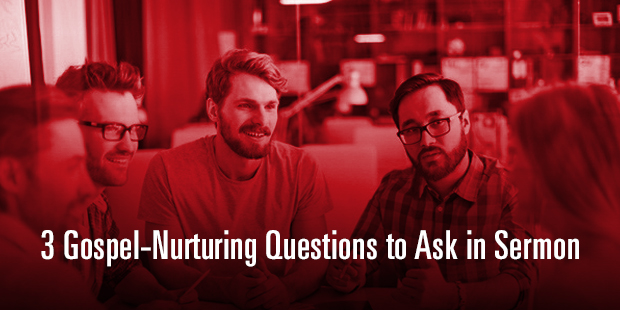
3 Gospel-Nurturing Questions to Ask in Sermon Preparation

A few weeks ago, my daughter called to update me on her field trip to the nature center with my grandson Cash. When I answered the phone, her voice was shaky. Here is how the conversation went:

My daughter: “Cash committed a murder today! We were in the butterfly exhibit and I took my eyes off him for like 30 seconds. When I found him crawling out from behind the trees, I could see he was carrying something. When I asked him to show me, he unfolded his cupped hands and – MOM – pieces of a dead, mangled, yellow butterfly fell to the floor!”

Me: “Oh no! What did you do?”

My daughter: “We hauled our heinie to the next exhibit as fast as possible! When the coast was clear, I told Cash; ‘Hey buddy. You can’t hold the butterflies. You can hurt them. They are soft and fragile. Ok?’ Mom, it was so sad. He looked up at me and said, ‘I just hold it a little bit. I just look at it. Teeny Tiny. So soft.’”

I empathized with both sides.

  • The murderer: How sad that this little nature lover accidentally killed something he adored. In his passionate zeal, he came on too strong. He didn’t realize his own power and it had irreversible, devastating consequences.
  • The victim: How sad that this butterfly had his life violently and unexpectedly crushed. I’m sure he thought he was in a safe place. I mean, is there any place safer for a butterfly than in the protected butterfly habitat at the nature center?

The story represented something else to me. It’s really not that big of leap, if you think about it. Church communicators can be murderers. Our message is the victim.

Here are three questions to ask ourselves so that we won’t kill the gospel message in our zeal to communicate quickly and effectively:

#1: Am I coming on too strong?

Do we get in a hurry and come on too strong in our zeal? Are we bypassing Jesus in our eagerness to help people take steps towards Jesus? It’s a common shortcut and it’s tempting: just get people to the destination we’ve prescribed for them as quickly as possible.

We suck the life out of our content when we use all of our promotional real estate pointing people to programs and events in our church instead of next steps with Jesus. Our communication comes across as high pressure and out of touch when we forget to connect people to the higher ideals and spiritual disciplines outside our own church-sponsored events. Life change is not limited to an individual transaction on our church calendar.

Pro tip: Don’t tell the whole story in promotions. Just share little appetizers to pull people into what you have to offer. Then build a sequence of little content nuggets around a central theme in all the communication intersections along your audience’s journey of discovery (e.g., web, social media, platform, bulletin, lobby, etc.).

#2: Do I lack awareness?

Have we created a safe environment for people to ask questions and explore faith, or are we telling people what to think and do—rushing ahead to solve the problem for them? How can we slow down, trust God’s part in the process, and spend more time pointing people to places they can find the answer on their own, even if they color outside the lines a little bit along the way?

When we are students of culture, we have better relationships with ALL people, not just OUR people.

Pro tip: Link to resources, articles, and content from a variety of sources that address the questions people are asking about life, relationships, community, and healing. Don’t hesitate to share content from other leaders, industries, and environments to help people with whole life context around their spiritual next steps.

When we trust and empower individuals with a variety of reinforcements, they naturally take steps towards deeper levels of commitment inside their church family because they have ownership in the journey.

#3: Is my delivery sterile?

In our attempt to achieve professionalism and excellence, our institutional brands have become overdesigned, polished, and censored. Where can we do a better job embracing the imperfections of our humanity to demonstrate vulnerability and authenticity as fellow travelers on a journey?

When we create more space and environments for personal conversations, people are less skeptical and start to respond because they can relate.

Pro tip: While your corporate website can be centralized and standardized, loosen control over organic, conversational outlets like social media. Crowd source photos and content to build community, not perfection. Measure engagement, not graphics standards compliance. While the teams will need coaching along the way, be sure to promote connection over content and nurture conversation over correction.

Effective communications, on both individual and institutional levels, is about locating and disarming the landmines that have the potential to kill the message. But, it’s not difficult to make incremental improvements.

Just look for, and reduce, the areas where you might be wearing people out, turning people off, or taking up space with white noise to bring life back into your messaging.

>Read more from Kem.


Download PDF

Tags: , , ,

| What is MyVisionRoom? > | Back to Communication >

ABOUT THE AUTHOR

Kem Meyer

Kem Meyer

Kem Meyer has spent almost three decades working with small business, big business, not for profit, tech, finance, PR, advertising, schools and churches. They all have issues with communications; for better and worse. And, learning from them all, she's developed quite a knack for finding the simple themes that increase organizational clarity and remove barriers that get in the way of our messages.

See more articles by >

COMMENTS

What say you? Leave a comment!

Recent Comments
comment_post_ID); ?> Thank you for this information. I'm going to use this article to improve my work with the Lord.
 
— Abel Singbeh
 
comment_post_ID); ?> Thank you Ed for sharing your insights into the Church Growth Movement. I have my reservations with Church Growth models because it has done more damage than good in the Body of Christ. Over the years, western churches are more focused on results, formulas and processes with little or no emphasis on membership and church discipline. Pastors and vocational leaders are burnt out because they're overworked. I do believe that the Church Growth model is a catalyst to two destructive groups: The New Apostolic Reformation and the Emerging Church. Both groups overlap and have a very loose definition. They're both focus on contemporary worship, expansion of church brand (franchising), and mobilizing volunteering members as 'leaders' to grow their ministry. Little focus on biblical study, apologetics and genuine missional work with no agenda besides preaching of the gospel.
 
— Dave
 
comment_post_ID); ?> Thank you for sharing such a good article. It is a great lesson I learned from this article. I am one of the leaders in Emmanuel united church of Ethiopia (A denomination with more-than 780 local churches through out the country). I am preparing a presentation on succession planning for local church leaders. It will help me for preparation If you send me more resources and recommend me books to read on the topic. I hope we may collaborate in advancing leadership capacity of our church. God Bless You and Your Ministry.
 
— Argaw Alemu
 

Clarity Process

Three effective ways to start moving toward clarity right now.

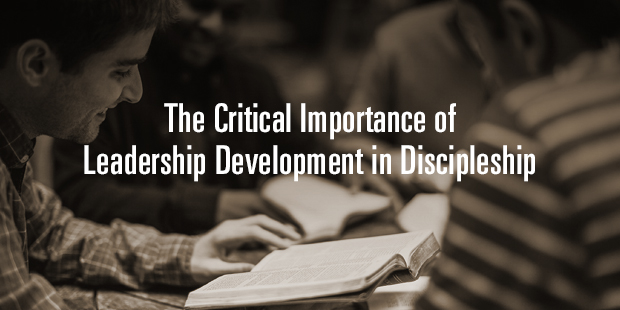
The Critical Importance of Leadership Development in Discipleship

“Your church is designed to lead, designed to disciple leaders who are, by God’s grace, commanded to disciple people in all spheres of life.”

That sentence is near the beginning of Eric Geiger and Kevin Peck’s excellent book on leadership development in the local church. This is the kind of book that pastors and church leaders will use and discuss for many years because it provides an important framework for considering these issues: Convictions, Culture, and Constructs.  I wanted to introduce this book to you by reiterating the importance of keeping discipleship and leadership together.


3 REASONS WE MUST NEVER DIVORCE LEADERSHIP DEVELOPMENT FROM DISCIPLESHIP

by Eric Geiger and Kevin Peck

Consumption is focused on the masses and for the short-term payoff. Discipleship is focused on the person for the long run, for fruit that will last.

Churches will drift without a consistent and constant conviction for discipleship, to disciple people and develop leaders. We must not settle for consumption. Though much more challenging and difficult, we must insist on discipleship. And we must view leadership development as part of discipleship, not as distinct or divorced from it. Here is why:

1. Discipleship is the only means.

God has designed the end and the means. The end is people from every tribe, tongue, and nation gathered around the throne worshipping Him because they were purchased with the blood of Christ (Rev. 5:9-10). Regardless of what happens this week, what unfolds in the news, the ending has already been made clear: God is redeeming for Himself a people from all peoples.

The end was made clear in the beginning. God preached the gospel to Abraham saying, “All the nations will be blessed through you” (Gal. 3:8). God told Abraham that people from every nation would have God’s righteousness credited to them. At the beginning of the Bible, we find that God is going to pursue all peoples through His chosen people, Israel. At the end of the Bible, we find that God has gathered worshippers from every people group.

In the middle of the Bible is the means, the command Jesus gave us: “Go, therefore, and make disciples of all nations” (Matt. 28:19). We live in the middle. The means to the glorious end is not leadership development apart from Jesus. The means is not leadership development divorced from discipleship. The means is discipleship. He has commanded us to make disciples of all nations, disciples who will obey everything He commanded.

2. Discipleship impacts all of life.

As Christ is more fully formed in people, the totality of their lives is impacted. Those who are overwhelmed with how Christ has served them will serve others. Those in awe of God’s generosity will be generous. Those who are captivated by God’s mission to rescue and redeem join Him in pursuing people who are far from God. Their serving, generosity, and sense of mission impacts their relationships, their approach to their careers, and their view of life. Their growth as a disciple shapes how they lead at home, in their profession, and through all of life.

Discipleship is the only way to produce leaders that serve and bless the world. If leaders are created apart from Jesus-focused discipleship, they are created without grace-motivated service, generosity, and mission.

To view discipleship as distinct from leadership development is to propose that discipleship does not impact all of one’s life. If a church approaches leadership development as distinct from discipleship, the church unintentionally communicates a false dichotomy—that one’s leadership can be divorced form one’s faith. Being a Christian leader must not be positioned as disconnected from living a godly life in Christ Jesus.

3. Leadership development apart from discipleship becomes overly skill-based.

If leaders are developed apart from Jesus, the emphasis is inevitably on skills and not the heart transformed through Christ. Divorcing leadership development from discipleship can leave people more skilled and less sanctified. And when competency and skill outpace character, leaders are set up for a fall. We don’t serve people well if we teach them how to lead without teaching them how to follow Him. We don’t serve leaders well if we develop their skills without shepherding their character.

It is difficult to say this humbly, but maturing Christ-followers make better leaders. Even authors not writing from a distinctly Christian worldview articulate this truth without realizing it. For example, in his popular books Emotional Intelligence and Primal Leadership, researcher and author Daniel Goleman builds the case that the most effective leaders are emotionally intelligent. More than a high IQ (intelligence quotient), great leaders have a high EQ (emotional quotient), and are able to create environments and cultures that are highly effective. Effective leaders, Goleman contends, have the ability to manage their emotions, genuinely connect with people, offer kindness and empathy, lead with joy and inspiration, and display the master skill of patience. Sounds a lot like the fruit of the Spirit in the life of a believer (Gal. 5:22-23).

Yet all pushes for integrity and all the instructions on character development from leadership gurus won’t transform a leader’s heart. Inevitably after these authors reveal their findings that “character matters,” their challenges and their writings quickly degenerate into futile attempts to change our own hearts. We can’t change our own hearts. We can’t pep-talk ourselves into transformation. Only Jesus can transform our character. We must develop leaders who are consistently led and fed by Him before they attempt to lead and feed others.

Leadership development apart from being a disciple of Jesus always results in skills apart from character, in performance apart from transformation.

For more information, check out Eric Geiger and Kevin Peck’s Designed to Lead: The Church and Leadership Development.


Talk with an Auxano Navigator about the leadership-discipleship connection.

Download PDF

Tags: , , , , ,

| What is MyVisionRoom? > | Back to Discipleship >

ABOUT THE AUTHOR

Trevin Wax

Trevin Wax

My name is Trevin Wax. I am a follower of Jesus Christ. My wife is Corina, and we have two children: Timothy (7) and Julia (3). Currently, I serve the church by working at LifeWay Christian Resources as managing editor of The Gospel Project, a gospel-centered small group curriculum for all ages that focuses on the grand narrative of Scripture. I have been blogging regularly at Kingdom People since October 2006. I frequently contribute articles to other publications, such as Christianity Today. I also enjoy traveling and speaking at different churches and conferences. My first book, Holy Subversion: Allegiance to Christ in an Age of Rivals, was published by Crossway Books in January 2010. (Click here for excerpts and more information.) My second book, Counterfeit Gospels: Rediscovering the Good News in a World of False Hope(Moody Publishers) was released in April 2011.

See more articles by >

COMMENTS

What say you? Leave a comment!

Recent Comments
comment_post_ID); ?> Thank you for this information. I'm going to use this article to improve my work with the Lord.
 
— Abel Singbeh
 
comment_post_ID); ?> Thank you Ed for sharing your insights into the Church Growth Movement. I have my reservations with Church Growth models because it has done more damage than good in the Body of Christ. Over the years, western churches are more focused on results, formulas and processes with little or no emphasis on membership and church discipline. Pastors and vocational leaders are burnt out because they're overworked. I do believe that the Church Growth model is a catalyst to two destructive groups: The New Apostolic Reformation and the Emerging Church. Both groups overlap and have a very loose definition. They're both focus on contemporary worship, expansion of church brand (franchising), and mobilizing volunteering members as 'leaders' to grow their ministry. Little focus on biblical study, apologetics and genuine missional work with no agenda besides preaching of the gospel.
 
— Dave
 
comment_post_ID); ?> Thank you for sharing such a good article. It is a great lesson I learned from this article. I am one of the leaders in Emmanuel united church of Ethiopia (A denomination with more-than 780 local churches through out the country). I am preparing a presentation on succession planning for local church leaders. It will help me for preparation If you send me more resources and recommend me books to read on the topic. I hope we may collaborate in advancing leadership capacity of our church. God Bless You and Your Ministry.
 
— Argaw Alemu
 

Clarity Process

Three effective ways to start moving toward clarity right now.