The Art of Vision

VISION = a preferred future – everybody has vision = HOPE

What vision can do for you

  • it gives you a clear picture of what you want and what not.
  • the clearer the vision, the easier to say yes or no.

What vision can do for people around you

  • it gives purpose
  • it gives belonging
  • it gives meaning
  • it gives direction

Creating a vision

  • keep it simple (it takes time to make it simple)
  • it needs to be memorable = portable
  • it can’t be complete (the larger the audience the simpler the vision)

Communicating a Vision

  • repeat it (everybody needs to know the vision in order to have every job motivated)

Careful If you want to create a complete vision statement, it will be too long. If you say everything you say nothing. Here are two good examples

  • Bono: make poverty history!

As a rock star, I have two instincts, I want to have fun, and I want to change the world. I have a chance to do both. Bono

  • Obama: Yes we can!

Change will not come if we wait for some other person or some other time. We are the ones we’ve been waiting for. We are the change that we seek. Barak Obama

I often hear leader say: “my people are not motivated, not committed”. It’s only because vision is not comunnicated clearly and often enough.

A vision needs to be emotional

  • what is the problem?
  • what could the future look like?

Practical

  • produce a 120 sec. video with your vision
  • stand in front of people and say what you see (again and again)
  • live your vision (smoke what you sell)

Read more from ND here.

Download PDF

Tags: , ,

| What is MyVisionRoom? > | Back to Vision >

ABOUT THE AUTHOR

ND Strupler

ND Strupler

I was born in Zurich, Switzerland 1973 and lived in Switzerland and the USA. I am married since 1994 with Sophal Strupler. Proud father of 2 beautiful kids. (Noa Noëmi 2000, Kimo 2002). I love to inspire & maximize leaders. I like photography, social media + communication. I am creative, innovative and enjoy life with God. I have a clear vision to change culture. The most effective way to change culture is through healthy communities that reflect the love of God in everyday life. And that’s why I love to help leaders plant new life-giving churches. (ICF Movement)

See more articles by >

COMMENTS

What say you? Leave a comment!

Recent Comments
comment_post_ID); ?> Thank you for this information. I'm going to use this article to improve my work with the Lord.
 
— Abel Singbeh
 
comment_post_ID); ?> Thank you Ed for sharing your insights into the Church Growth Movement. I have my reservations with Church Growth models because it has done more damage than good in the Body of Christ. Over the years, western churches are more focused on results, formulas and processes with little or no emphasis on membership and church discipline. Pastors and vocational leaders are burnt out because they're overworked. I do believe that the Church Growth model is a catalyst to two destructive groups: The New Apostolic Reformation and the Emerging Church. Both groups overlap and have a very loose definition. They're both focus on contemporary worship, expansion of church brand (franchising), and mobilizing volunteering members as 'leaders' to grow their ministry. Little focus on biblical study, apologetics and genuine missional work with no agenda besides preaching of the gospel.
 
— Dave
 
comment_post_ID); ?> Thank you for sharing such a good article. It is a great lesson I learned from this article. I am one of the leaders in Emmanuel united church of Ethiopia (A denomination with more-than 780 local churches through out the country). I am preparing a presentation on succession planning for local church leaders. It will help me for preparation If you send me more resources and recommend me books to read on the topic. I hope we may collaborate in advancing leadership capacity of our church. God Bless You and Your Ministry.
 
— Argaw Alemu
 

Clarity Process

Three effective ways to start moving toward clarity right now.

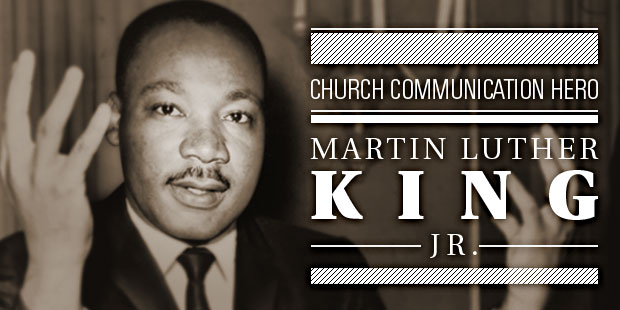
Church Communication Hero: Martin Luther King, Jr.

Martin Luther King Jr. is perhaps the greatest champion for social change in 20th century America. He was also a Baptist minister.

He led a congregation, like many of you.

He sat through church business meetings, like many of you.

He worked to share the story of the gospel with his community, like many of you.

It’s somewhat revisionist and a little demeaning to call his work marketing, but in some small ways it was. He shared a message with his community and nation that ultimately spoke of the gospel story of freedom and redemption. He obviously didn’t use postcards and Facebook and sermon graphics, but he did use marches and rallies and non-violent protest.

More the rest of the story here.

Read more from Kevin here.

Download PDF

Tags: , , , ,

| What is MyVisionRoom? > | Back to Communication >

ABOUT THE AUTHOR

Kevin Hendricks

Kevin Hendricks

Kevin D. Hendricks lives in St. Paul, Minn., with his wife, three kids and two dogs. He runs his own freelance writing and editing company, Monkey Outta Nowhere. He’s been blogging since 1998, tweeting since 2007 and generally enjoys being a web geek. After growing up in the distant suburbs of Detroit he moved to St. Paul, Minn., to attend Bethel College (now University). He graduated in 2000 with a degree in writing and a minor in art, got married and started a job with the Billy Graham Evangelistic Association—all in the span of two weeks. In 2004 he began his journey of self-employment, which nicely complements his introverted nature.

See more articles by >

COMMENTS

What say you? Leave a comment!

Recent Comments
comment_post_ID); ?> Thank you for this information. I'm going to use this article to improve my work with the Lord.
 
— Abel Singbeh
 
comment_post_ID); ?> Thank you Ed for sharing your insights into the Church Growth Movement. I have my reservations with Church Growth models because it has done more damage than good in the Body of Christ. Over the years, western churches are more focused on results, formulas and processes with little or no emphasis on membership and church discipline. Pastors and vocational leaders are burnt out because they're overworked. I do believe that the Church Growth model is a catalyst to two destructive groups: The New Apostolic Reformation and the Emerging Church. Both groups overlap and have a very loose definition. They're both focus on contemporary worship, expansion of church brand (franchising), and mobilizing volunteering members as 'leaders' to grow their ministry. Little focus on biblical study, apologetics and genuine missional work with no agenda besides preaching of the gospel.
 
— Dave
 
comment_post_ID); ?> Thank you for sharing such a good article. It is a great lesson I learned from this article. I am one of the leaders in Emmanuel united church of Ethiopia (A denomination with more-than 780 local churches through out the country). I am preparing a presentation on succession planning for local church leaders. It will help me for preparation If you send me more resources and recommend me books to read on the topic. I hope we may collaborate in advancing leadership capacity of our church. God Bless You and Your Ministry.
 
— Argaw Alemu
 

Clarity Process

Three effective ways to start moving toward clarity right now.

7 Warnings for Aspiring Leaders

Almost on a weekly basis I hear from a young pastor who wants to grow as a leader. He feels the pressure placed upon him and knows that others are looking to him to steer the church on a healthy course. Most of these leaders are humble, knowing that ultimately Christ is the head of the church. What they also know is that there are expectations of their position, decisions that have to be made which are not clearly defined in Scripture, and that seminary didn’t train them to make.

Sometimes it seems I’ve given the same advice many times; either reminding myself or to another pastor. The more times I share the same concept, the more it becomes a short, paradigm shaping idea that summarizes the basic issue the leader is facing. What isn’t always clear is that I’ve learned these concepts mostly by living these concepts. I’ve made more mistakes in leadership than I’ve had success. That’s what this post is about. These are some warnings I’ve observed first hand in leadership positions I’ve held. I’m trying not to continue to live them and I’d love to help other leaders avoid them.

Here are 7 warnings for aspiring leaders:

  • What you “settle for” becomes the culture.
  • Mediocrity isn’t created. It’s accepted.
  • Your actions determine their reactions.
  • Don’t assume they agree because they haven’t said anything.
  • You’ll never get there just “thinking about it”.
  • If you’re the leader, they are likely waiting on you to lead or release the right to lead.
  • What the team values becomes apparent by your actions, not your words, no matter how well spoken they might be.

What warnings would you share with aspiring leaders?

Read more from Ron here.


Download PDF

Tags: , , ,

| What is MyVisionRoom? > | Back to Leadership >

ABOUT THE AUTHOR

Ron Edmondson

Ron Edmondson

As pastor at Immanuel Baptist Church a church leader and the planter of two churches, I am passionate about planting churches, but also helping established churches thrive. I thrive on assisting pastors and those in ministry think through leadership, strategy and life. My specialty is organizational leadership, so in addition to my role as a pastor, as I have time, I consult with church and ministry leaders. (For more information about these services, click HERE.)

See more articles by >

COMMENTS

What say you? Leave a comment!

Recent Comments
comment_post_ID); ?> Thank you for this information. I'm going to use this article to improve my work with the Lord.
 
— Abel Singbeh
 
comment_post_ID); ?> Thank you Ed for sharing your insights into the Church Growth Movement. I have my reservations with Church Growth models because it has done more damage than good in the Body of Christ. Over the years, western churches are more focused on results, formulas and processes with little or no emphasis on membership and church discipline. Pastors and vocational leaders are burnt out because they're overworked. I do believe that the Church Growth model is a catalyst to two destructive groups: The New Apostolic Reformation and the Emerging Church. Both groups overlap and have a very loose definition. They're both focus on contemporary worship, expansion of church brand (franchising), and mobilizing volunteering members as 'leaders' to grow their ministry. Little focus on biblical study, apologetics and genuine missional work with no agenda besides preaching of the gospel.
 
— Dave
 
comment_post_ID); ?> Thank you for sharing such a good article. It is a great lesson I learned from this article. I am one of the leaders in Emmanuel united church of Ethiopia (A denomination with more-than 780 local churches through out the country). I am preparing a presentation on succession planning for local church leaders. It will help me for preparation If you send me more resources and recommend me books to read on the topic. I hope we may collaborate in advancing leadership capacity of our church. God Bless You and Your Ministry.
 
— Argaw Alemu
 

Clarity Process

Three effective ways to start moving toward clarity right now.

Aligning New Ministries Within Established Churches

If you have ever designed a room or redecorated a house, you know that it is much easier to work with new furniture. You buy furniture with the room in mind. If it does not fit into the design of the room, you do not get it. The challenging part is figuring out where your existing furniture and pictures fit.

The same is true for alignment.

The most challenging aspect of alignment is pulling existing ministries and existing staff in the same direction, especially if they have been moving in opposite directions. It is much easier to align new people and new ministries to the overall direction.

If they do not fit, you simply do not allow them to begin.

According to the research we gathered for Simple Church, we found it is vital that you make sure new ministries fit into the simple process before they begin. Finding out afterwards is always too late.

We asked vibrant and comparison church leaders to state their level of agreement with the following statement: “Before we begin a new ministry, we ensure that it fits within our process.” Of the vibrant churches, 68 percent strongly agreed or agreed compared to 40 percent of the comparison churches. The vibrant church leaders tend to ensure new ministries understand their place in the process prior to their launch.

Checking the Fit

Before you purchase a new pair of shoes, you wear them in the store. You walk around in them. It would be unwise to buy them without knowing if they fit right. Shoes that do not fit are found at the bottom of your closet. They create more clutter. Checking the fit is essential.

Simple church leaders check the fit. Before a new ministry is launched, they ensure it is a viable part of the simple ministry process. They clarify specifically how the new ministry will move people through the process. And they ensure that the leaders of the new ministry understand how the ministry is part of the big picture.

We are drawing a distinction between a program and a ministry. Ministries are different from programs. Ministries are either entire departments (ministry expansions) or specific groups (see ministry additions) that help move people through one aspect of the process.

In a simple church new ministries can be divided into two broad categories: ministry expansions and ministry additions. Checking the fit prior to inception is critical for both.

Ministry expansions are new ministries that are geared toward a specific age group or life stage. The church ministry is expanding to focus intentionally on a specific group of people. The new ministry is going to be a new department within the church such as a new middle-school ministry department or young couples department. In both of these cases, these groups were formerly a part of a different ministry. Now they will have their own identity. For ministry expansions, begin the new ministry with the same simple process. Be sure the programs within this ministry are placed to move people through the process. Ministry expansions are a great opportunity to highlight the simple process. You can begin them without the clutter. You can use these new ministries to show existing ministries the benefits of a streamlined approach.

Ministry additions are new ministries that fulfill a specific function within the simple process. These ministries must be set up to help move people through the process of transformation. For example, the baptism ministry team makes it easy for people to move to baptism. The guest reception ministry helps move guests into the life of the church. If it is unclear how a ministry addition will move people through the simple process, do not launch it.

In either case, whether you are expanding or adding a ministry, always ensure the ministry fits within the larger church process and vision.


If you’re interested in evaluating the clarity, movement, alignment, and focus of your church, you can take a free online Process Design Survey at EricGeiger.com.

Adapted from Simple Church (B&H Publishing Group, 2006)

Read more from Thom here.

Download PDF

Tags: , , ,

| What is MyVisionRoom? > | Back to Process >

ABOUT THE AUTHOR

Thom Rainer

Thom Rainer

Thom S. Rainer is the founder and CEO of Church Answers, an online community and resource for church leaders. Prior to founding Church Answers, Rainer served as president and CEO of LifeWay Christian Resources. Before coming to LifeWay, he served at The Southern Baptist Theological Seminary for twelve years where he was the founding dean of the Billy Graham School of Missions and Evangelism. He is a 1977 graduate of the University of Alabama and earned his Master of Divinity and Ph.D. degrees from The Southern Baptist Theological Seminary.

See more articles by >

COMMENTS

What say you? Leave a comment!

Recent Comments
comment_post_ID); ?> Thank you for this information. I'm going to use this article to improve my work with the Lord.
 
— Abel Singbeh
 
comment_post_ID); ?> Thank you Ed for sharing your insights into the Church Growth Movement. I have my reservations with Church Growth models because it has done more damage than good in the Body of Christ. Over the years, western churches are more focused on results, formulas and processes with little or no emphasis on membership and church discipline. Pastors and vocational leaders are burnt out because they're overworked. I do believe that the Church Growth model is a catalyst to two destructive groups: The New Apostolic Reformation and the Emerging Church. Both groups overlap and have a very loose definition. They're both focus on contemporary worship, expansion of church brand (franchising), and mobilizing volunteering members as 'leaders' to grow their ministry. Little focus on biblical study, apologetics and genuine missional work with no agenda besides preaching of the gospel.
 
— Dave
 
comment_post_ID); ?> Thank you for sharing such a good article. It is a great lesson I learned from this article. I am one of the leaders in Emmanuel united church of Ethiopia (A denomination with more-than 780 local churches through out the country). I am preparing a presentation on succession planning for local church leaders. It will help me for preparation If you send me more resources and recommend me books to read on the topic. I hope we may collaborate in advancing leadership capacity of our church. God Bless You and Your Ministry.
 
— Argaw Alemu
 

Clarity Process

Three effective ways to start moving toward clarity right now.

Creating a Great Experience at Your Church

It’s been a while since I last read Joe Pine and Jim Gilmore’s book The Experience Economy. If you haven’t read this book, trust me. Go buy it and start reading it right now. If you have a product or service that you offer (we all do, whether in business, church, entrepreneur, or the non profit arena), it is imperative that you grasp the context of the Experience Economy.

I am reminded of it because in a conversation recently someone asked me how I would recommend they keep their product from becoming a commodity. From just being lumped in with all the other similar products in their space, and being seen as just an option instead of the only option, the best option, and the option that is always recommended. Where price determines what the consumer chooses vs. other factors like emotionconnection, and memories.

In the book, Pine and Gilmore lay out the four levels of economic value : commoditiesgoodsservices, and experiences. Progression happens by moving from commodity to experience. Think about coffee. Coffee beans are a commodity, ground coffee is a good, a cup of coffee at dinner is a service, and a latte at a trendy cafe in Manhattan is an experience.

Or about birthday parties for kids- a cake is a commodity, a customized cake is a good, a birthday party with friends is a service, and a full fledged laser tag birthday celebration is an experience. Think about Apple stores. Disney World. You get the point.

The question is how are you creating an experience with the product or service that you offer? How are you allowing your customer to be so engaged with your product that they connect emotionally? Does your product or service creates memories for your customer? Do they want to tell their friends? Is your tribe willing to purchase or buy from you above all others?

There is also a fifth level of economic value, which is transformation. Incredibly hard to reach this level, but our goal should be to get there. Which correlates to our personal and spiritual lives, where transformation and being conformed to the image of Christ should be our goal.

Read more from Brad here.

Download PDF

Tags: , ,

| What is MyVisionRoom? > | Back to Environments >

ABOUT THE AUTHOR

Brad Lomenick

Brad Lomenick

In a nutshell, I’m an Oklahoma boy now residing in the South. I am a passionate follower of Christ, and have the privilege of leading and directing a movement of young leaders called Catalyst. We see our role as equipping, inspiring, and releasing the next generation of young Christian leaders, and do this through events, resources, consulting, content and connecting a community of like-minded Catalysts all over the world. I appreciate the chance to continually connect with and collaborate alongside leaders.

See more articles by >

COMMENTS

What say you? Leave a comment!

Recent Comments
comment_post_ID); ?> Thank you for this information. I'm going to use this article to improve my work with the Lord.
 
— Abel Singbeh
 
comment_post_ID); ?> Thank you Ed for sharing your insights into the Church Growth Movement. I have my reservations with Church Growth models because it has done more damage than good in the Body of Christ. Over the years, western churches are more focused on results, formulas and processes with little or no emphasis on membership and church discipline. Pastors and vocational leaders are burnt out because they're overworked. I do believe that the Church Growth model is a catalyst to two destructive groups: The New Apostolic Reformation and the Emerging Church. Both groups overlap and have a very loose definition. They're both focus on contemporary worship, expansion of church brand (franchising), and mobilizing volunteering members as 'leaders' to grow their ministry. Little focus on biblical study, apologetics and genuine missional work with no agenda besides preaching of the gospel.
 
— Dave
 
comment_post_ID); ?> Thank you for sharing such a good article. It is a great lesson I learned from this article. I am one of the leaders in Emmanuel united church of Ethiopia (A denomination with more-than 780 local churches through out the country). I am preparing a presentation on succession planning for local church leaders. It will help me for preparation If you send me more resources and recommend me books to read on the topic. I hope we may collaborate in advancing leadership capacity of our church. God Bless You and Your Ministry.
 
— Argaw Alemu
 

Clarity Process

Three effective ways to start moving toward clarity right now.

Make a Relationship Investment Plan This Year

Yesterday in my disciple-making class, we focused on developing a relationships investment plan for the new year. We plan for a lot of things. There’s financial planning, educational planning, vacation planning, retirement planning, etc. But one of the most important plans you could make as a disciple of Jesus is planning your relationships.

Jesus planned his relationships. He entered into relationships with a specific group of people with a purpose in mind. Those relationships were meaningful and intentional. Those relationships also had a stewardship to them, meaning that the exchange (giving and receiving) of life would carry on into the lives of others. Just a cursory look, for example, in the life of the Apostle Paul you see how sweet and endearing his relationships were with the people of whom he invested his life.

Relationships are the interconnected superhighway for gospel advance. The stronger the relationships in gospel community, the greater the success of the mission. When relationships are not strong (or nonexistent), substitutes attempt to fill in, such as programs, events, or classes. I am not saying those are bad things in and of themselves, but they are inadequate replacements for life on life and handicap the mission of the church when they do.

When making your relational investment plan, I am not talking about adding a superstructure to your life and schedule. Rather, the goal is to integrate your life in the fabric of community so that your relational investments can be intentionally leveraged for gospel growth and missional advance. It is living skillfully (walking with wisdom as Paul puts it) and seeing all of life along as a classroom to make, mature, and multiply disciples of Jesus.

One way of beginning the planning process is to know who the Paul’s, Timothy’s, and Barnabas’ are in your life.

The Paul’s are the spiritual pacesetters in your life. They are the people who coach, mentor, or disciple you. They are the life templates you want to follow and emulate, who press you and challenge you to greater pursuit of God and practical usefulness in His kingdom. You need the Paul’s who go before you to give counsel, direction, and guidance.

The Timothy’s are the people with whom you serve as a Paul. You pour into them, teaching them, training them, walking with them through everyday life with the aim of applying the gospel and God’s Word to all of life. In terms of parenting, you are like a spiritual father and mother and take personal ownership in their spiritual growth and maturity. You need the Timothy’s who come after you to transfer the gospel to the next spiritual generation in the family (by that, I’m not talking about time but the next new believers who will need someone to train them).

The Barnabas’ are the people who partner with you in gospel ministry. They work alongside you to bring encouragement and edification as you together seek to learn from one another and mutual benefit from the lessons and experiences you have in the process. Opening your life to messes, struggles, disappointments, and challenges is real spiritual warfare, and you need Barnabas’ around you who will encourage you to keep pressing into the lives of others for the good of the gospel and their advance in it.

Another way to assess your relational investment planning is to begin with the relationships closest to you. Begin with your family. In my case, I am investing my time in strengthening my relationship with my wife and two boys (and girl on the way). From there, I think about my covenant community (local church). God will open doors and create opportunities to invest and be invested in through the fellow believers he has placed in your life. Next is your neighborhood and community. Look for ways to invest in neighbors, to build relationships with them. Finally, work to develop rhythms in your daily life where relationships are forged through a life on mission. You will get to know people quite well after repeated efforts in an intentional plan to press into the lives of people you encounter, whether they be a waitress, a clerk, or anyone else you likely see in the rhythm you have developed.

As a disciple of Jesus, you need to be discipled by somebody (Paul), be discipling somebody (Timothy), and be surrounded by disciple-making disciples (Barnabas). Your relationship investment plan should include unbelievers who are seeking to win to Christ, new believers you are seeking to establish in the gospel, and maturing Christians you are seeking to grow in the gospel.

Do you have meaningful relationships with unbelievers in your community with the intention of seeing them brought to Christ? If not, now is a great time to start. It is very unhealthy for Christians to be disconnected from the world they are called to reach. If the gospel is going to run through the streets of your city, it will happen not through a blimp but beautiful feet. Knock on your neighbor’s door. Invite them for dinner. Invite folks in your community to share prayer requests and commit to pray for them. Who else should care more for their soul than rescued sinners like you and me?

Do you have strategic relationships with new believers in your church community? If not, now is a great time to start. Find someone you could spiritually parent and share life together. Don’t just teach them how to pray and read the Bible. Show them how you read and pray, and how God is using that to change your life. God is our father, and the church is our family. You are put in this family to become like our elder brother (Jesus) and help others do the same. Make the time to meaningful contribute to that glorious goal.

Remember: relational investments is the pipeline for gospel transformation. To close your life off to others and hold them at a distance is to undermine the change God intends to bring in your life trough the gospel and sideline you from being useful for the very purposes God redeemed for you to play a vital role. May the portrait of our lives be deeply stamped by the fingerprints of others as we are conformed into the image of Jesus, and may we as in instrument in the Potter’s hands be used to help others become healthy, holy, and happy children of God.

Read more from Tim here.

Download PDF

Tags: , ,

| What is MyVisionRoom? > | Back to Process >

ABOUT THE AUTHOR

Timmy Brister

In the “real world,” I am the founder and president of Gospel Systems, Inc, a 501(c)(3) non-profit organization focused on creating and sustaining delivery systems for the advancement of the gospel around the world. In 2010, I started a delivery system called PLNTD – a network for church planting and revitalization focusing on resourcing, relational community, residencies in local churches, and regional networks. In 2012, I started an international delivery system call The Haiti Collective which focuses on equipping indigenous churches through church partnerships in order to care for orphans, make disciples, train leaders, and plant churches in Haiti. In addition to serving as the executive director of these organizations, I have served for 12 years in pastoral ministry with churches in Alabama, Kentucky, and Florida. My passion is to see healthy, growing churches take ownership of the Great Commission to the end that disciples are making disciples, leaders are developed and deployed, and churches are planting churches here and around the world. This is the driving passion of my life and prayer that God would be so glorified in making His name great in our generation.

See more articles by >

COMMENTS

What say you? Leave a comment!

Recent Comments
comment_post_ID); ?> Thank you for this information. I'm going to use this article to improve my work with the Lord.
 
— Abel Singbeh
 
comment_post_ID); ?> Thank you Ed for sharing your insights into the Church Growth Movement. I have my reservations with Church Growth models because it has done more damage than good in the Body of Christ. Over the years, western churches are more focused on results, formulas and processes with little or no emphasis on membership and church discipline. Pastors and vocational leaders are burnt out because they're overworked. I do believe that the Church Growth model is a catalyst to two destructive groups: The New Apostolic Reformation and the Emerging Church. Both groups overlap and have a very loose definition. They're both focus on contemporary worship, expansion of church brand (franchising), and mobilizing volunteering members as 'leaders' to grow their ministry. Little focus on biblical study, apologetics and genuine missional work with no agenda besides preaching of the gospel.
 
— Dave
 
comment_post_ID); ?> Thank you for sharing such a good article. It is a great lesson I learned from this article. I am one of the leaders in Emmanuel united church of Ethiopia (A denomination with more-than 780 local churches through out the country). I am preparing a presentation on succession planning for local church leaders. It will help me for preparation If you send me more resources and recommend me books to read on the topic. I hope we may collaborate in advancing leadership capacity of our church. God Bless You and Your Ministry.
 
— Argaw Alemu
 

Clarity Process

Three effective ways to start moving toward clarity right now.

Building Your Company’s Vision

A leadership classic – the following is the 1996 Harvard Business Review article that was the seed for Jim Collins’ Good to Great, arguably one of the most influential business books in leadership circles of the church.

Companies that enjoy enduring success have core values and a core purpose that remain fixed while their business strategies and practices endlessly adapt to a changing world. The dynamic of preserving the core while stimulating progress is the reason that companies such as Hewlett-Packard, 3M, Johnson & Johnson, Procter & Gamble, Merck, Sony, Motorola, and Nordstrom became elite institutions able to renew themselves and achieve superior long-term performance. Hewlett-Packard employees have long known that radical change in operating practices, cultural norms, and business strategies does not mean losing the spirit of the HP Way—the company’s core principles. Johnson & Johnson continually questions its structure and revamps its processes while preserving the ideals embodied in its credo. In 1996, 3M sold off several of its large mature businesses—a dramatic move that surprised the business press—to refocus on its enduring core purpose of solving unsolved problems innovatively. We studied companies such as these in our research for Built to Last: Successful Habits of Visionary Companies and found that they have outperformed the general stock market by a factor of 12 since 1925.

Truly great companies understand the difference between what should never change and what should be open for change, between what is genuinely sacred and what is not. This rare ability to manage continuity and change—requiring a consciously practiced discipline—is closely linked to the ability to develop a vision. Vision provides guidance about what core to preserve and what future to stimulate progress toward. But vision has become one of the most overused and least understood words in the language, conjuring up different images for different people: of deeply held values, outstanding achievement, societal bonds, exhilarating goals, or motivating forces. We recommend a conceptual framework to define vision, add clarity and rigor to the vague and fuzzy concepts swirling around that trendy term, and give practical guidance for articulating a coherent vision within an organization. It is a prescriptive framework rooted in six years of research and refined and tested by our ongoing work with executives from a great variety of organizations around the world.

A well-conceived vision consists of two major components: core ideology and envisioned future. (See the exhibit “Articulating a Vision.”) Core ideology, the yin in our scheme, defines what we stand for and why we exist. Yin is unchanging and complements yang, the envisioned future. The envisioned future is what we aspire to become, to achieve, to create—something that will require significant change and progress to attain.

Core Ideology

Core ideology defines the enduring character of an organization—a consistent identity that transcends product or market life cycles, technological breakthroughs, management fads, and individual leaders. In fact, the most lasting and significant contribution of those who build visionary companies is the core ideology. As Bill Hewlett said about his longtime friend and business partner David Packard upon Packard’s death not long ago, “As far as the company is concerned, the greatest thing he left behind him was a code of ethics known as the HP Way.” HP‘s core ideology, which has guided the company since its inception more than 50 years ago, includes a deep respect for the individual, a dedication to affordable quality and reliability, a commitment to community responsibility (Packard himself bequeathed his $4.3 billion of Hewlett-Packard stock to a charitable foundation), and a view that the company exists to make technical contributions for the advancement and welfare of humanity. Company builders such as David Packard, Masaru Ibuka of Sony, George Merck of Merck, William McKnight of 3M, and Paul Galvin of Motorola understood that it is more important to know who you are than where you are going, for where you are going will change as the world around you changes. Leaders die, products become obsolete, markets change, new technologies emerge, and management fads come and go, but core ideology in a great company endures as a source of guidance and inspiration.

Core ideology provides the glue that holds an organization together as it grows, decentralizes, diversifies, expands globally, and develops workplace diversity. Think of it as analogous to the principles of Judaism that held the Jewish people together for centuries without a homeland, even as they spread throughout the Diaspora. Or think of the truths held to be self-evident in the Declaration of Independence, or the enduring ideals and principles of the scientific community that bond scientists from every nationality together in the common purpose of advancing human knowledge. Any effective vision must embody the core ideology of the organization, which in turn consists of two distinct parts: core values, a system of guiding principles and tenets; and core purpose, the organization’s most fundamental reason for existence.

Core Values

Core values are the essential and enduring tenets of an organization. A small set of timeless guiding principles, core values require no external justification; they have intrinsic value and importance to those inside the organization. The Walt Disney Company’s core values of imagination and wholesomeness stem not from market requirements but from the founder’s inner belief that imagination and wholesomeness should be nurtured for their own sake. William Procter and James Gamble didn’t instill in P&G’s culture a focus on product excellence merely as a strategy for success but as an almost religious tenet. And that value has been passed down for more than 15 decades by P&G people. Service to the customer—even to the point of subservience—is a way of life at Nordstrom that traces its roots back to 1901, eight decades before customer service programs became stylish. For Bill Hewlett and David Packard, respect for the individual was first and foremost a deep personal value; they didn’t get it from a book or hear it from a management guru. And Ralph S. Larsen, CEO of Johnson & Johnson, puts it this way: “The core values embodied in our credo might be a competitive advantage, but that is not why we have them. We have them because they define for us what we stand for, and we would hold them even if they became a competitive disadvantage in certain situations.”

The point is that a great company decides for itself what values it holds to be core, largely independent of the current environment, competitive requirements, or management fads. Clearly, then, there is no universally right set of core values. A company need not have as its core value customer service (Sony doesn’t) or respect for the individual (Disney doesn’t) or quality (Wal-Mart Stores doesn’t) or market focus (HP doesn’t) or teamwork (Nordstrom doesn’t). A company might have operating practices and business strategies around those qualities without having them at the essence of its being. Furthermore, great companies need not have likable or humanistic core values, although many do. The key is not what core values an organization has but that it has core values at all.

Companies tend to have only a few core values, usually between three and five. In fact, we found that none of the visionary companies we studied in our book had more than five: most had only three or four.  And, indeed, we should expect that. Only a few values can be truly core—that is, so fundamental and deeply held that they will change seldom, if ever.

Read the rest of the article here.

Read more from Jim here.

Download PDF

Tags: , , ,

| What is MyVisionRoom? > | Back to Vision >

ABOUT THE AUTHOR

Jim Collins

See more articles by >

COMMENTS

What say you? Leave a comment!

LaToursha Ezell — 01/23/13 11:16 pm

it appears that not to many companies have a lot of values today

Recent Comments
comment_post_ID); ?> Thank you for this information. I'm going to use this article to improve my work with the Lord.
 
— Abel Singbeh
 
comment_post_ID); ?> Thank you Ed for sharing your insights into the Church Growth Movement. I have my reservations with Church Growth models because it has done more damage than good in the Body of Christ. Over the years, western churches are more focused on results, formulas and processes with little or no emphasis on membership and church discipline. Pastors and vocational leaders are burnt out because they're overworked. I do believe that the Church Growth model is a catalyst to two destructive groups: The New Apostolic Reformation and the Emerging Church. Both groups overlap and have a very loose definition. They're both focus on contemporary worship, expansion of church brand (franchising), and mobilizing volunteering members as 'leaders' to grow their ministry. Little focus on biblical study, apologetics and genuine missional work with no agenda besides preaching of the gospel.
 
— Dave
 
comment_post_ID); ?> Thank you for sharing such a good article. It is a great lesson I learned from this article. I am one of the leaders in Emmanuel united church of Ethiopia (A denomination with more-than 780 local churches through out the country). I am preparing a presentation on succession planning for local church leaders. It will help me for preparation If you send me more resources and recommend me books to read on the topic. I hope we may collaborate in advancing leadership capacity of our church. God Bless You and Your Ministry.
 
— Argaw Alemu
 

Clarity Process

Three effective ways to start moving toward clarity right now.

The Death of the Mall and the Future of Church Buildings

I remember the first time I went to a mall. Raised in a small town in the southeastern section of Alabama, I was amazed when I went to the “big city” mall in Montgomery. All the stores were under one roof. They were new and shiny. The venture became an adventure for me.

But that was fifty years ago. Things have changed. Things have changed significantly.

As Jeff Jordan notes in The Atlantic Cities, the future of American shopping malls is tenuous.

The Plight of the American Shopping Mall

As Jordan says in his prescient article, the trends are gloomy for malls. Sales are down. Numbers of malls have closed or they are on the precipice of closing. Vacancy rates are up. Jordan notes “there are more than 200 malls with over 250,000 square feet that have vacancy rates of 35 percent or higher, a clear marker for shopping center distress.” He further provides data that indicate over 10 percent of malls will close in the next five years.

Of course, the declaration of the death of American malls is an overstatement or, at the very least, a premature obituary. Many malls will remain open; a number will remain viable and growing. Still, the trends are unmistakable and unavoidable. Only those who deny reality will fail to note the implications of this issue.

The Relationship to Church Facilities

Is it then fair to suggest any relationship between the decline of the malls and the future of the church buildings? I think so. To be sure, most malls are adversely affected by the growth of online shopping. There are not too many brick and mortar stores that don’t feel the impact of the Internet.

But there is more to the decline of the malls than the rise of the digital world. The Boomer generation has been the generation of bigness and sprawl. Their parents, in the aftermath of World War II, moved numbers of them to the new and massive suburbia. Large malls would soon follow. Most large megachurch buildings were constructed primarily for the favor of the Boomers.

But the children of the Boomers, Generation X and, even more, the Millennials, have been pushing for more intimacy and smallness. They triggered the unprecedented growth of Starbucks. They have been the key movers in social media, which has fostered a new online intimacy.

Among the Christian Millennials there is a desire for greater intimacy in church. They are in many ways triggering a new small group revolution. And though they may not have an explicit aversion to large church facilities, neither are they attracted to them.

The Future Size of Church Facilities

As there will still be large malls twenty years from now, so will there be large church facilities whose worship centers can accommodate 2,000 or more in one service. But you will also see a discernible difference in megachurches in ten or twenty years. Fewer of these large churches will have large facilities. More will have smaller worship centers and multiple venues, many with multiple gathering times and days.

The trend in smaller facilities will not be limited to just the largest of churches. Churches of all sizes will “downsize.” Or, as an alternative, they will not build larger the first moment the capacity feels challenged in their worship services.

A Boomer church leader looks at a small building and limited acreage and sees challenges. He sees the limitations of size and space. A Millennial leader looks at the same building and acreage and sees opportunity. He immediately thinks multiple venues, multiple services, and multiple days.

It will be fascinating to watch these trends unfold. Large malls will yield to online shopping and smaller and more intimate shopping villages. And large church buildings will yield to smaller church buildings and other venues that aren’t “churchy” at all. The result may be that we will see our church facilities actually utilized more; greater facility stewardship could result. After all, only college football stadiums are utilized less than church facilities.

Read more from Thom here.

Download PDF

Tags: , , ,

| What is MyVisionRoom? > | Back to Environments >

ABOUT THE AUTHOR

Thom Rainer

Thom Rainer

Thom S. Rainer is the founder and CEO of Church Answers, an online community and resource for church leaders. Prior to founding Church Answers, Rainer served as president and CEO of LifeWay Christian Resources. Before coming to LifeWay, he served at The Southern Baptist Theological Seminary for twelve years where he was the founding dean of the Billy Graham School of Missions and Evangelism. He is a 1977 graduate of the University of Alabama and earned his Master of Divinity and Ph.D. degrees from The Southern Baptist Theological Seminary.

See more articles by >

COMMENTS

What say you? Leave a comment!

Recent Comments
comment_post_ID); ?> Thank you for this information. I'm going to use this article to improve my work with the Lord.
 
— Abel Singbeh
 
comment_post_ID); ?> Thank you Ed for sharing your insights into the Church Growth Movement. I have my reservations with Church Growth models because it has done more damage than good in the Body of Christ. Over the years, western churches are more focused on results, formulas and processes with little or no emphasis on membership and church discipline. Pastors and vocational leaders are burnt out because they're overworked. I do believe that the Church Growth model is a catalyst to two destructive groups: The New Apostolic Reformation and the Emerging Church. Both groups overlap and have a very loose definition. They're both focus on contemporary worship, expansion of church brand (franchising), and mobilizing volunteering members as 'leaders' to grow their ministry. Little focus on biblical study, apologetics and genuine missional work with no agenda besides preaching of the gospel.
 
— Dave
 
comment_post_ID); ?> Thank you for sharing such a good article. It is a great lesson I learned from this article. I am one of the leaders in Emmanuel united church of Ethiopia (A denomination with more-than 780 local churches through out the country). I am preparing a presentation on succession planning for local church leaders. It will help me for preparation If you send me more resources and recommend me books to read on the topic. I hope we may collaborate in advancing leadership capacity of our church. God Bless You and Your Ministry.
 
— Argaw Alemu
 

Clarity Process

Three effective ways to start moving toward clarity right now.

4 Reasons Your Change Effort Lacks Urgency

Leading change is difficult work. Helping walk an organization through a transformation effort is a complex thing. There are lots of moving parts and a variety of ways the change could go sideways on you as you navigate it. One of those potential potholes on the path toward a desired change is when a leadership team, as well as the rest of the organization, lack a real sense of urgency about the change.

This urgency is really important, because any change effort or organizational shift requires the proactive, passionate, commitment of a lot of people and groups. While the urgency may have its genesis with just one or two folks who are the initial catalysts and proponents of the change, it eventually needs to be felt on a larger scale.

There could be a number of reasons that the urgency just isn’t there. Here are a few I’ve seen or heard about most often.

1. Leadership can underestimate how difficult it’s going to be to convince folks to rally around the change. Even though a change may make perfect sense in your mind, and perhaps even the minds of your leadership team, it may not resonate the same way with others across the organization. Others may think things are just fine the way they are, or perhaps they’d agree with you that a change is needed but think your solution is off base. There could be any number of reasons some people aren’t convinced (like lack of trust, for example), but it’s almost always going to be harder than you think.

2. Leadership thinks they’re better off or further along than they really are. Sometimes leaders are under the impression that things “aren’t that bad,” or that the organization is much closer to the desired state than it actually is. Again, this happens for any number of reasons. One possibility is that it can be difficult for leaders to say something needs to change, because that can feel an awful lot like you’re admitting that you might not have gotten everything right to this point. (Why else would you need to change?) It’s almost a tacit admission that you’re not perfect.

3. Leadership can be impatient. Change can be, and usually is, a lengthy process. Culture doesn’t shift overnight, or in a few weeks, or even in a couple of months. If leaders aren’t in it for the long haul, and don’t have the patient focus necessary, they can become distracted and move on to other things.

4. Leadership becomes overwhelmed by the possibility of failure and freezes up. This is related to the analysis paralysis we hear so much about. There are so many things that could potentially go wrong during a shift that it can be easy to feel like the best thing to do is nothing at all.

Do you sense a lack of urgency on your team? Is there a change effort within your organization that just seems to be stalled? Perhaps it’s because of one or more of the factors mentioned above.

Have you seen these in action? What happened? How’d you overcome it?

Download PDF

Tags: , ,

| What is MyVisionRoom? > | Back to Leadership >

ABOUT THE AUTHOR

Matt Monge

Matt Monge

Matt is a cancer survivor who’s dead set on making the world a better place by helping organizations be better places to work. He’s currently Chief Culture Officer at Mazuma Credit Union, and also does speaking and consulting work to help other organizations with culture, development, recruiting, and leadership. He has been recognized as one of Credit Union Times’ “Trailblazers 40 Below,” and has spoken at national conferences for CUNA and NAFCU in addition to other events. He has written articles for Training magazine, the Credit Union Times, the Credit Union Executives Society, is a contributor for CU Insight, and an editor for CU Water Cooler. He is also a Training magazine Top 125 Award winner. Matt is earning his Master’s degree in Organizational Leadership from Gonzaga University.

See more articles by >

COMMENTS

What say you? Leave a comment!

Recent Comments
comment_post_ID); ?> Thank you for this information. I'm going to use this article to improve my work with the Lord.
 
— Abel Singbeh
 
comment_post_ID); ?> Thank you Ed for sharing your insights into the Church Growth Movement. I have my reservations with Church Growth models because it has done more damage than good in the Body of Christ. Over the years, western churches are more focused on results, formulas and processes with little or no emphasis on membership and church discipline. Pastors and vocational leaders are burnt out because they're overworked. I do believe that the Church Growth model is a catalyst to two destructive groups: The New Apostolic Reformation and the Emerging Church. Both groups overlap and have a very loose definition. They're both focus on contemporary worship, expansion of church brand (franchising), and mobilizing volunteering members as 'leaders' to grow their ministry. Little focus on biblical study, apologetics and genuine missional work with no agenda besides preaching of the gospel.
 
— Dave
 
comment_post_ID); ?> Thank you for sharing such a good article. It is a great lesson I learned from this article. I am one of the leaders in Emmanuel united church of Ethiopia (A denomination with more-than 780 local churches through out the country). I am preparing a presentation on succession planning for local church leaders. It will help me for preparation If you send me more resources and recommend me books to read on the topic. I hope we may collaborate in advancing leadership capacity of our church. God Bless You and Your Ministry.
 
— Argaw Alemu
 

Clarity Process

Three effective ways to start moving toward clarity right now.

How to Disciple Students at Your Church

Every year my wife and I sit at high school graduations and watch our students walk across the stage as they transition into another phase of life. Every year I wonder, Will this student be swept away by the culture of the world in college, or will he/she change the culture around them as they live out the gospel? That’s the job God has called us to. So how do we present these students mature in Christ? You already know the answer (discipleship), but how? Such faith-spurring relationships don’t just happen. As much as we want to be organic, leaders must have a plan to make sure discipleship happens on a ministry- or church-wide basis.

Here are five ways of how to implement a culture of discipleship in your student ministry.

#1: Don’t run solo.

Jesus didn’t just say it, he showed it. If not for Jesus pouring his time into just 12 men on the other side of the world, you and I wouldn’t follow him today. You probably can’t disciple every student under your care. You need to gather and pour into the right kind of leaders who can go and do likewise. Imagine a whole group of leaders who share the same passion and vision as you scatter around town discipling students. Do not open the door of your ministry to every volunteer in the church. Instead, gather the ones that are teachable, humble, and love the gospel. These are the ones who will follow and disciple.

#2: Don’t assume people know what discipleship actually means.

I will never forget the time I sat down with a student pastor from my hometown over lunch and watched him shed tears because for six years he failed to disciple his small group of guys. He was just glad they showed up and laughed at his jokes. He didn’t even know how to disciple. The church doesn’t need a surge of people without a plan. Many parents and youth leaders have the desire to disciple but don’t know where to begin. That’s okay, but make sure as you lead them forward that they know what to do and how to do it. Be specific. Give them a list of examples of how they can take simple steps in discipling their students.

At my church, we ask our leaders to view their Sunday school class or small group as their own little flock. The tech guy has his flock of techies, and the worship leader has his musician flock. Together we are daily praying for our flock of students. If I show up at the hospital because a student is sick, I can count on their small group leader being there, too. Most of the time our small group leaders first inform me about problems with a student. These leaders pray for their students daily, Facebook their students weekly, and—yes—even go to their activities.

#3: Meet regularly with your leaders.

If you are not meeting at least once a month with your leaders and talking over the vision in detail, more than likely your leaders are not making disciples. Or even worse, they are creating a different goal for themselves and implementing it. Communicate regularly and clearly. In my first meeting with the leaders at my current church, I told them that they would be able to walk out of the room that night knowing what we were doing and how we were doing it. All subsequent meetings would be spent talking about the same thing with some loving accountability. Some folks chuckled, but they were encouraged to know not only the vision but also the plan, which was clear, concise, and compelling.

#4: Be smart, and ask for help.

The best disciple-making churches don’t necessarily spend their time writing new curriculum. Discipleship is nothing new, but understanding your specific flock and discerning how best to minister to them can be tricky. Read your Bible, read some books, make some phone calls to other student pastors, and put together a small guide for your staff and leaders. Make sure they see on paper the goal, plan, and small practical steps they can take to disciple their students. In the last 12 years, most leaders I talk to overlook the simple details. Most of my leaders hear me ask one question on a weekly basis: “Are you praying for your students daily?”

 #5: Build relationships with parents.

If you want to thrive in discipleship and not just survive, then you must talk to parents. Spending time with students comes naturally to student pastors, but parents require a different approach. Take dads out for breakfast or lunch and chat about home life. Ask how you can pray and how you can serve. Never forget parents are the primary disciple makers of their children. Learn to serve the parents if you really want to get to the heart of a child.

There is a massive difference between a youth group and a student ministry. Too many youth groups search for new ways of making kids vomit and wear matching hoodies with cool logos at Six Flags. As a student pastor, if you feel like an after-school care worker, you are not alone. However, it is your job to obey Scripture and make disciples. Yes, you should attract students to your ministry, but is there gospel depth in your students?
Download PDF

Tags: , , ,

| What is MyVisionRoom? > | Back to Process >

ABOUT THE AUTHOR

John Pond

John Pond

John was born in Cincinnati, Ohio but lived most of his life in Birmingham, Alabama. John went to Southestern Bible College and is finishing up his maters studies at Southern Seminary. John has been serving in ministry for the last 13 years as a Student Pastor and Church Planter. John's heart is to preach and communicate the Gospel to the world by serving the church and making disciples. John is the Student Pastor at West Jackson Baptist Church in Jackson, TN next door to Union Univeristy. John is married to Devin and is a huge Auburn fan! John also speaks around the country to both students and adults and is available for speaking engagements. Please email speaking requests to john.pond@wjbc.org.

See more articles by >

COMMENTS

What say you? Leave a comment!

Recent Comments
comment_post_ID); ?> Thank you for this information. I'm going to use this article to improve my work with the Lord.
 
— Abel Singbeh
 
comment_post_ID); ?> Thank you Ed for sharing your insights into the Church Growth Movement. I have my reservations with Church Growth models because it has done more damage than good in the Body of Christ. Over the years, western churches are more focused on results, formulas and processes with little or no emphasis on membership and church discipline. Pastors and vocational leaders are burnt out because they're overworked. I do believe that the Church Growth model is a catalyst to two destructive groups: The New Apostolic Reformation and the Emerging Church. Both groups overlap and have a very loose definition. They're both focus on contemporary worship, expansion of church brand (franchising), and mobilizing volunteering members as 'leaders' to grow their ministry. Little focus on biblical study, apologetics and genuine missional work with no agenda besides preaching of the gospel.
 
— Dave
 
comment_post_ID); ?> Thank you for sharing such a good article. It is a great lesson I learned from this article. I am one of the leaders in Emmanuel united church of Ethiopia (A denomination with more-than 780 local churches through out the country). I am preparing a presentation on succession planning for local church leaders. It will help me for preparation If you send me more resources and recommend me books to read on the topic. I hope we may collaborate in advancing leadership capacity of our church. God Bless You and Your Ministry.
 
— Argaw Alemu
 

Clarity Process

Three effective ways to start moving toward clarity right now.