6 Non-Threatening Ways to Talk to First Time Guests

Q: 

When I spot a guest in the lobby that I don’t recognize, how can I approach them without coming right out and asking “Is this your first time?

A:

Hats off to you for recognizing that the “Is this your first time?” question can have a negative nuance associated with it. True, on the list of icebreaker question hills we should die on, this one is admittedly low on the list (“I don’t know who you are or who you think you are, but you’re sitting in my pew” is probably a much bigger deal.)

Here’s why I say it’s negative: I’ve found that “Is this your first time?” can put a first-time guest on the defensive. It’s a knee-jerk reaction to a question that makes them feel like an outsider and scramble to build a narrative that bridges the gap between you and them.

We should do all we can to absorb the awkwardness on behalf of our guests. That means we take the burden of weirdness off of their shoulders and place it onto ours. And that translates even into the small details of beginning a conversation.

So let’s say you’ve spotted that first-timer across the lobby (see six tips here for how to do just that). How do you kick off the convo? Here are a few of my favorite practices:

Walk slowly through the crowd. Making a beeline toward a first-time guest can make them feel like they’ve been put on the spot. It may be better to warm them up by letting them see you talking to lots of people, not just targeting them.

Start with generics, move to specifics. Eye contact, a smile, and a “good morning” always serves as a good kickoff. You don’t have to go in for the kill from the first moment.

“I’m not sure we’ve met.” This is my personal favorite line to use. You’re shouldering the responsibility for knowing them, acknowledging that you may have met before (which is great for forgetful folks like me), and giving them an opportunity to open up in conversation.

Assess their longevity. Now is the time to figure out how long they’ve been around, so that you can best help them. After initial small talk, you can ask, “How long have you been attending?” If they answer a few months or more, you have the opportunity to see how their connection process is going. If they say a few weeks or less or – even better! – this is my first day, you get to play the hero by being genuinely excited to meet them and suggest a simple next step.

Don’t assume their desire for proximity. Some guests may prefer to fly solo on their first visit. Others may really be looking for a friend. You can help with this by asking if they have someone to sit with, someone to go to lunch with, someone they’re meeting, etc.

Find a way to follow up. Remember their name and make a point to find them after the service just to check in. If appropriate, give them your contact info or swap for theirs. The first visit is a big deal, yes, but it’s often what happens just after the first visit (like a personal note) that will determine whether a guest comes back.

How do you start conversations on the weekend?

> Read more from Danny.


Want to know more about Guest Experiences at your church? Let’s talk! Connect with an Auxano Navigator here.

Download PDF

Tags: , , ,

| What is MyVisionRoom? > | Back to Execution >

ABOUT THE AUTHOR

Danny Franks

Danny Franks

Danny Franks makes his living as a Connections Pastor at the Summit Church in Raleigh-Durham, North Carolina. He also makes a life as the husband of an out-of-his-league hottie and the dad of three cool sons and one sweet princess. His blog, dfranks.com, is a reflection of how he interacts with all of these.

See more articles by >

COMMENTS

What say you? Leave a comment!

Russell C — 08/27/19 9:23 pm

I ask: “How long have you been coming here?” It’s works in every situation.

Recent Comments
comment_post_ID); ?> Thank you for this information. I'm going to use this article to improve my work with the Lord.
 
— Abel Singbeh
 
comment_post_ID); ?> Thank you Ed for sharing your insights into the Church Growth Movement. I have my reservations with Church Growth models because it has done more damage than good in the Body of Christ. Over the years, western churches are more focused on results, formulas and processes with little or no emphasis on membership and church discipline. Pastors and vocational leaders are burnt out because they're overworked. I do believe that the Church Growth model is a catalyst to two destructive groups: The New Apostolic Reformation and the Emerging Church. Both groups overlap and have a very loose definition. They're both focus on contemporary worship, expansion of church brand (franchising), and mobilizing volunteering members as 'leaders' to grow their ministry. Little focus on biblical study, apologetics and genuine missional work with no agenda besides preaching of the gospel.
 
— Dave
 
comment_post_ID); ?> Thank you for sharing such a good article. It is a great lesson I learned from this article. I am one of the leaders in Emmanuel united church of Ethiopia (A denomination with more-than 780 local churches through out the country). I am preparing a presentation on succession planning for local church leaders. It will help me for preparation If you send me more resources and recommend me books to read on the topic. I hope we may collaborate in advancing leadership capacity of our church. God Bless You and Your Ministry.
 
— Argaw Alemu
 

Clarity Process

Three effective ways to start moving toward clarity right now.

Great Church Hospitality Starts Here

Editor’s Note: During our August focus on Guest Experiences, we are honored to have some of the best voices in the world of Customer Experience provide guest posts for the Vision Room. As you read the content below, simply think “Guest” in terms of the “customer” the author is talking about – and you will benefit from the knowledge and expertise of these great minds.


If you don’t know by now, customer understanding is the cornerstone of customer-centricity.

Customer-centricity means putting the customer at the center; customer understanding is how you’ll achieve that.

What is customer-centricity?

A lot of people talk about being customer-centric, but it’s one thing to say that and another to be it! Customer-centricity is about putting the customer at the center of all you do.

Customer-centric companies ensure that they make no decisions, design no products and services, and implement no processes without first thinking of the customer and the impact that the decision or the design has on the customer. They ask, “How will this impact the customer? How will it make her feel? Does it add value, or does it create pain?”

In customer-centric companies, decisions are always made with the customer’s best interests in mind. The customer’s voice is brought into meetings and into conversations; the customer is always represented. Jeff Bezos’ empty chair concept is a great example of this and has been widely adopted by other brands.

It’s important to note that a customer experience transformation can only happen when there is a commitment to change the culture to one that is customer-centric, even customer-obsessed.

Being customer-centric happens by design. Customer-centric companies do the following to ensure the organization knows its reason for being, i.e., the customer, and to embed the customer into the DNA of the organization. They…

  • Have visible (and visibly) customer-centric leadership, demonstrating a customer commitment from the top down
  • Develop and socialize customer personas
  • Speak and think in the customer’s language
  • Use customer feedback and data to better understand their customers
  • Are engaged in continuous improvement as a result of the customer understanding efforts
  • Focus on products and services that deliver value for their customers, i.e., solving their problems and helping them with jobs to be done
  • Have a commitment to customer success
  • Engage with customers from the beginning
  • Walk in the customer’s shoes to understand today’s experience in order to design a better experience for tomorrow
  • Foster a customer-centric culture
  • Empower the frontline to do what’s right for the customer
  • Ensure all employees (front line and back office) understand how they impact the customer and her experience
  • Recognize the customer across all channels
  • Design processes and policies from the customer’s point of view
  • Measure what matters to customers
  • Encourage customer innovation
  • Include customer-driven values in their core values
  • Recruit and hire employees passionate about customers and about helping customers
  • Incorporate the customer and the customer experience into their onboarding processes
  • Train employees on how to deliver the experience that customers expect
  • Establish a customer room that is open to employees 24/7 so that they can learn more about their customers and the customer experience
  • Rewards and recognition reinforce employee behaviors that align with customer-centricity
  • Have a C-suite executive who champions the customer across the entire organization
  • Customers before metrics, i.e., every meeting begins with and includes customer stories
  • Invest in the latest technology to support and deliver the experience customers expect

As you can see, becoming a customer-centric organization is a commitment that requires a mindset shift and a behavior shift. And, especially, some investments – financial, human, time, resources, technology, and more.

What is customer understanding?

Customer understanding is all about learning everything you need to know about your customers, i.e., their needs, their painpoints, the jobs they are trying to do, etc., and their current experiences in order to deliver the experience they expect going forward.

There are really three ways to achieve that understanding. The problem with these approaches is that, if not done correctly, you’ll be no further ahead in terms of understanding than if you hadn’t done them.

The three approaches are:

  1. Listen. Don’t just ask customers about the experience, listen, as well. There are a lot of different channels and ways for customers to tell you about their needs and desired outcomes and how well you are performing against their expectations. Understanding these expectations and identifying key drivers of a great customer experience are important outcomes of this exercise.
  2. Characterize. Research your customers. Identify the jobs they are trying to do. Compile key personas that represent the various types of prospects and customers that (might) buy from you or that use your products or services.
  3. Empathize. Walk in your customers’ shoes to get a clear understanding of the steps they take to do whatever job it is they are trying to do with your organization.  Map their journeys to understand the current state of the experience.

These are all learning exercises. We walk away from them with a lot of knowledge about customers, but we need to make sure we truly understand what we’ve heard about customers, their needs, and their expectations. Without that understanding, the exercises have failed. Make sure they’re done right.

And then make sure you do something with what you learn! This is where customer understanding manifests into customer-centricity and becomes the cornerstone for it. Make sure to put the customer front and center.
Here are just a  few things you can do to infuse the customer into everything the organization does. Key to this is to start at the beginning, i.e., start with the first day an employee starts working for your company. (Even better: start with the first day you start your company.)

  • Onboarding: Showcase your customer-centric culture during the onboarding process so that new employees know what that means. This is a great time for them to learn what it means to be a part of your organization, i.e., knowing your brand promise, values and commitment, what it means to live the brand, where the priorities lie, and how to deliver a great customer experience. This is a great time to set the tone for employees.
  • Ongoing training: You can’t expect that, as both the business and customer expectations evolve, employees will automatically know what to do and adapt/evolve, too. You need to train employees regularly to ensure they are kept abreast of new customer insights and new approaches to delivering a great experience. Be sure to provide updates on anything you’ve learned about customers, the jobs they are trying to do, and their expectations.
  • Communication: What gets shared and communicated regularly is viewed as important to your employees. Not only does communication lend clarity, it is critical to a clear line of sight to the goal. Communication needs to be open and ongoing. Share customer feedback with employees; don’t keep it from them. Tell customer stories and stories of great experiences to teach and to inspire employees to deliver the experience they need to deliver.
  • Rewards and recognition: When you recognize and reward those who consistently delight customers, you are reinforcing the behavior you expect from your employees, further confirming and solidifying the importance of putting the customer at the center of all you do.

Other ways to ensure the customer is always front and center, include:

  • Personas on every wall: these help to remind employees who the customer is, what she’s trying to do, her pain points, what delights her, etc. – again, keeping her front and center in all you do
  • Customer cut-outs: place these around the office – and especially in meeting rooms –  to keep the attention on who really matters; they should include details of who the customer is and what she thinks and feels about the current experience
  • CCO/CX professionals: in key decision-making meetings, especially, there needs to be a representative from the CX team present to represent the customer voice and perspective
  • A real customer: imagine that! ask a customer (or multiple customers) to attend a meeting in which you’ll be making decisions critical to the customer experience
  • Customer feedback: have you gotten feedback about the product or the touchpoint you’ll be discussing; share it with meeting attendees so they understand how customers feel about the current experience
  • Journey maps: this might seem like a stretch, but if you can show executives/employees how the changes they plan to make impact the experience through truly walking in customers’ shoes, then that’s a powerful tool to have at your disposal, too

As you can see, all of the tools to facilitate and drive customer-centricity are rooted in customer understanding. In case there was any doubt, customer understanding really is the cornerstone of customer-centricity!

> Read more from Annette.


Want to know more about Guest Experiences at your church? Let’s talk! Connect with an Auxano Navigator here.

Download PDF

Tags: , , ,

| What is MyVisionRoom? > | Back to Execution >

ABOUT THE AUTHOR

Annette Franz

Annette Franz

Annette Franz is an internationally recognized customer experience thought leader, coach, consultant, and speaker. She’s on the verge of publishing her first book about putting the “customer” into customer experience. Stay tuned for that! Annette is active in the Customer Experience Professionals Association (CXPA), as: an Executive Officer on the Board of Directors, a CX Expert, and a CX Mentor. And she is a Certified Customer Experience Professional (CCXP). She is also an official member of the Forbes Coaches Council, an invitation-only community for successful business and career coaches. Members are selected based on their depth and diversity of experience.

See more articles by >

COMMENTS

What say you? Leave a comment!

Recent Comments
comment_post_ID); ?> Thank you for this information. I'm going to use this article to improve my work with the Lord.
 
— Abel Singbeh
 
comment_post_ID); ?> Thank you Ed for sharing your insights into the Church Growth Movement. I have my reservations with Church Growth models because it has done more damage than good in the Body of Christ. Over the years, western churches are more focused on results, formulas and processes with little or no emphasis on membership and church discipline. Pastors and vocational leaders are burnt out because they're overworked. I do believe that the Church Growth model is a catalyst to two destructive groups: The New Apostolic Reformation and the Emerging Church. Both groups overlap and have a very loose definition. They're both focus on contemporary worship, expansion of church brand (franchising), and mobilizing volunteering members as 'leaders' to grow their ministry. Little focus on biblical study, apologetics and genuine missional work with no agenda besides preaching of the gospel.
 
— Dave
 
comment_post_ID); ?> Thank you for sharing such a good article. It is a great lesson I learned from this article. I am one of the leaders in Emmanuel united church of Ethiopia (A denomination with more-than 780 local churches through out the country). I am preparing a presentation on succession planning for local church leaders. It will help me for preparation If you send me more resources and recommend me books to read on the topic. I hope we may collaborate in advancing leadership capacity of our church. God Bless You and Your Ministry.
 
— Argaw Alemu
 

Clarity Process

Three effective ways to start moving toward clarity right now.

What a Baseball Game Can Teach Us About Church Welcoming

I dare you to read about the Savannah Banana success story and not smile…

…and by the way, you will learn some EXCELLENT Guest Experience tips along the way.

Recently, I turned to the Donald Miller “Building a Storybrand” podcast, and it only took about 20 seconds into the interview until I was captivated by the story of Jesse Cole and the Savannah Bananas.

In that short interview, and after about 1 minute on the website, I was hooked.

The story of Jesse Cole and the Savannah Bananas is only marginally about a baseball team. It’s really about the SHOW that goes on before, during, and after every game. Which has lead to a long sellout streak in the past, a waitlist in the thousands, and for the 2019 season – (at the time, six months away), a sellout.

I checked with some friends who live in Savannah, and it was true – the ENTIRE 2019 season is already sold out. That’s a 4,000 seat ball park for a summer college ball league. If you don’t know anything about baseball, that is literally the bottom of the totem pole. Fans aren’t coming to see a baseball game…

…they’re coming for the experience.

How can you translate that into the Guest Experience at your location?

A few articles from Jesse to pump you up:

His book, Find Your Yellow Tux, has amazing stories about the experience at a Savanna Bananas game. You  go to the website, scroll down, and download a free copy of “Secrets of the Yellow Tux Playbook.”

Better yet, watch this video.

You’ll be hooked, too, and want to learn more about how you can make your Guest Experience STAND OUT.

> Read more from Bob.


Want to know more about Guest Experiences at your church? Let’s talk! Connect with an Auxano Navigator here.

Download PDF

Tags: , , ,

| What is MyVisionRoom? > | Back to Execution >

ABOUT THE AUTHOR

Bob Adams

Bob Adams

Bob is an absolute fanatic about Guest Experiences, growing up watching his father serve customers at the gas station he built and operated for 44 years. Bob is continually connecting with corporate leaders in the customer experience world, learning and then translating practices for ChurchWorld. He writes, speaks, and consults on the topic frequently. Vocationally, Bob has a dual role at Auxano, a clarity first consulting firm serving the church. As Vision Room Curator and Digital Engagement Leader he researches, edits, writes and publishes online content. As Guest Experience Navigator, he leverages his passion, providing Guest Perspective Evaluations and Guest Experience Blueprints. Bob and his wife Anita have been married for 40 years. They have 4 children, 3 daughters-in-law, 1 son-in-law, and 5 grandchildren.

See more articles by >

COMMENTS

What say you? Leave a comment!

Recent Comments
comment_post_ID); ?> Thank you for this information. I'm going to use this article to improve my work with the Lord.
 
— Abel Singbeh
 
comment_post_ID); ?> Thank you Ed for sharing your insights into the Church Growth Movement. I have my reservations with Church Growth models because it has done more damage than good in the Body of Christ. Over the years, western churches are more focused on results, formulas and processes with little or no emphasis on membership and church discipline. Pastors and vocational leaders are burnt out because they're overworked. I do believe that the Church Growth model is a catalyst to two destructive groups: The New Apostolic Reformation and the Emerging Church. Both groups overlap and have a very loose definition. They're both focus on contemporary worship, expansion of church brand (franchising), and mobilizing volunteering members as 'leaders' to grow their ministry. Little focus on biblical study, apologetics and genuine missional work with no agenda besides preaching of the gospel.
 
— Dave
 
comment_post_ID); ?> Thank you for sharing such a good article. It is a great lesson I learned from this article. I am one of the leaders in Emmanuel united church of Ethiopia (A denomination with more-than 780 local churches through out the country). I am preparing a presentation on succession planning for local church leaders. It will help me for preparation If you send me more resources and recommend me books to read on the topic. I hope we may collaborate in advancing leadership capacity of our church. God Bless You and Your Ministry.
 
— Argaw Alemu
 

Clarity Process

Three effective ways to start moving toward clarity right now.

Giving Your Guests Your Best

Editor’s Note: During our August focus on Guest Experiences, we are honored to have some of the best voices in the world of Customer Experience provide guest posts for the Vision Room. As you read the content below, simply think “Guest” in terms of the “customer” the author is talking about – and you will benefit from the knowledge and expertise of these great minds.


When I was a young boy, I imagined I was Wild Bill Hickock a lot of the time…or sometimes I was Hopalong Cassidy.  We watched the great cowboys on black and white television and then rushed to the back yard to replicate their antics.  I now live on the 13th hole of a PGA golf course designed by Jack Nicholas about an hour from the Augusta National golf course.  My golf-playing buddies would watch golfing greats at the Master’s on color television and then rush to the nearby links to replicate their moves.  The mimicking behavior looks the same to me.

So, what if you watched great service in action and then rushed to the marketplace to replicate what you experienced.  I have a friend who is the CEO of a company.  She gives her new hires a night at the nearby Ritz-Carlton hotel followed by lunch at a nearby Chick-fil-A.  All she asks is that they come back and catalog actions they observed in the two establishments and how they could use those same actions at the company she leads.

But, here is one for those of you who lead a customer-facing unit or organization.  What would it take to deliver a customer experience so profound your customers would be moved to serve others in the way they are served by your employees?  What would it require for your service to be a poignant role model of greatness to everyone?

Touch-your-heart service has a magnetic impact on customers.  It attracts them because it conveys to a customer the kind of unconditional positive regard that characterizes a relationship at its best.  Customers like the way they feel when dealing with service providers who have such a greatness orientation.  They feel valued, not used.  They enjoy relationships with value and substance far more than encounters that are functional but hollow.  Give to your customers the best that you have and the best will come back to you and to others.

> Read more from Chip.


Want to know more about Guest Experiences at your church? Let’s talk! Connect with an Auxano Navigator here.

Download PDF

Tags: , , ,

| What is MyVisionRoom? > | Back to Execution >

ABOUT THE AUTHOR

Chip Bell

Chip Bell

Chip R. Bell is the author of several best-selling books including his newest: Sprinkles: Creating Awesome Experiences Through Innovative Service. He can be reached at www.chipbell.com.

See more articles by >

COMMENTS

What say you? Leave a comment!

Recent Comments
comment_post_ID); ?> Thank you for this information. I'm going to use this article to improve my work with the Lord.
 
— Abel Singbeh
 
comment_post_ID); ?> Thank you Ed for sharing your insights into the Church Growth Movement. I have my reservations with Church Growth models because it has done more damage than good in the Body of Christ. Over the years, western churches are more focused on results, formulas and processes with little or no emphasis on membership and church discipline. Pastors and vocational leaders are burnt out because they're overworked. I do believe that the Church Growth model is a catalyst to two destructive groups: The New Apostolic Reformation and the Emerging Church. Both groups overlap and have a very loose definition. They're both focus on contemporary worship, expansion of church brand (franchising), and mobilizing volunteering members as 'leaders' to grow their ministry. Little focus on biblical study, apologetics and genuine missional work with no agenda besides preaching of the gospel.
 
— Dave
 
comment_post_ID); ?> Thank you for sharing such a good article. It is a great lesson I learned from this article. I am one of the leaders in Emmanuel united church of Ethiopia (A denomination with more-than 780 local churches through out the country). I am preparing a presentation on succession planning for local church leaders. It will help me for preparation If you send me more resources and recommend me books to read on the topic. I hope we may collaborate in advancing leadership capacity of our church. God Bless You and Your Ministry.
 
— Argaw Alemu
 

Clarity Process

Three effective ways to start moving toward clarity right now.

The Gospel Lives in “Good Morning”

It’s fairly easy for volunteers on your team to state what they do. It’s also pretty easy for most volunteers to talk about how they do what they do. However, few volunteers can actually articulate WHY they do what they do.

The reason? Stating WHY goes to values, and values are often talked about but more often misunderstood.

A church without values is like a river without banks – just a large puddle.

Values are the shared convictions that guide the actions and reveal the strength of the church. They are the values that represent the conscious and collective soul of your church because they express your most deeply held ideals. They define your ministry’s ethos.

Values are filters for decision-making and springboards for daily action. They are the constant reminder of what is most important to your church.

As with any organization, your church has a set of shared values underneath the surface of everyday activity. The problem is that they stay weak because they are unidentified and unharnessed in guiding the future.

The role of the leader is to identify the most important values and pull them above the waterline of people’s perception. Once they are in clear view, the leader can nurture their development, enabling the church to do more of what it does best.

What is true of your church as a whole is also true of individual ministries in your church.

THE QUICK SUMMARYPeople Are The Mission by Danny Franks

Danny Franks, Guest Services Pastor at Summit Church, shows church leaders how to take a more balanced approach to the design and implementation of a guest services ministry. He introduces a new model for welcoming people to your church that is both guest-friendly and gospel-centric.

Your church’s preaching and worship styles may draw a crowd, but to keep a crowd, people must sense that you love them, that you expected them, and that you can’t wait for them to return. Finally, here is a book that tells you how to make that happen.

A SIMPLE SOLUTION

It’s easy to give a volunteer a job description and then point them in the right direction. Anyone can assign a task. And for the most part, just about anyone can execute most tasks.

However, a good leader does not just assign a task. A good leader starts with creating a compelling vision for the task. A great leader continually casts this compelling vision so there is no doubt why a ministry exists.

The main thing of the church – our why for existing – should be defined by God’s Word. And the primary message of Scripture is Jesus and that Jesus changes everything.

The good news that Jesus brought – real forgiveness of our sins and reconciliation with our Creator – does indeed change everything. It changes the way we live, work, and play. And it changes the way we structure our worship services and our annual budgets. When the gospel is the main thing, it will change everything. It will renovate our curriculum and reengineer our business meetings.

So rather than adapt to a formula, cut and paste a few principles, or tackle a list of action steps, take just one action step: imitate Jesus. Let’s remember that the one who sought us is still seeking others. Let’s keep in mind that the one who sought us is still seeking others. Let’s keep in mind that the Great Commission doesn’t just challenge us to make disciples at the ends of the earth but in our backyards. Let’s be salt and light, love people well, and set our weekend services up for great hospitality.

We need to keep reminding people that though we pour coffee, we are not there primarily to pour coffee. We direct traffic, but we are not traffic cops. We want a smooth, error-free service, but we don’t show up so that the weekend service will run more smoothly.

We do all that we do as a living, breathing, example of the grace of God, our small acts of service serving as a witness to God’s goodness in the life of an unbeliever.

Danny Franks, People Are The Mission

A NEXT STEP

People Are The Mission author Danny Franks writes, “We need to remind our teams that hospitality is a catalyst.” He continues, “That’s why it’s important to push the vision for serving guests at every opportunity.”

One of the best ways to communicate vision is through stories. As a leader, you should build up and maintain a “story repository” of at least ten great stories that relate volunteer heroics, ministry wins, and life change in action.

If you don’t currently do this, here’s a way to start. At your next team meeting, conduct this exercise:

You are in charge of a space expedition. Your purpose is to establish a colony on a distant planet. This colony must replicate the very best characteristics of your church’s hospitality ministry – but your spaceship only has ten seats. Uncover the heart of your hospitality ministry by selecting volunteers who will fill these seats.

Discuss among your team individuals to go on the journey. Who represents the “best of” your hospitality ministry? Use these questions to help you with your decision:

  1. What values do they live by, regardless of recognition?
  2. How do they demonstrate the values?
  3. Will their values be valid 100 years from now?
  4. What’s their “story” of serving on the hospitality ministry?

The resulting ten people and their “stories” should be the start of helping people connect the dots between the way the people served and how Jesus saved. They can demonstrate how the work they did helped pave the road toward a gospel awakening that a guest experienced.

Excerpt taken from SUMS Remix #99-1, released August 2018.


This is part of a weekly series posting excerpts from one of the most innovative content sources in the church world: SUMS Remix book excerpts for church leaders.

Each issue SUMS Remix takes a practical problem in the church and looks at it with three solutions; each solution is taken from a different book. Additionally, a practical action step is included with each solution.

As a church leader you get to scan relevant books based on practical tools and solutions to real ministry problems, not just by the cover of the book. Each post will have the edition number which shows the year and what number it is in the overall sequence. (SUMS Remix provides 26 issues per year, delivered every other week to your inbox). 

> > Subscribe to SUMS Remix <<

Download PDF

Tags: , , , , ,

| What is MyVisionRoom? > | Back to Execution >

ABOUT THE AUTHOR

VRcurator

VRcurator

Bob Adams is Auxano's Vision Room Curator. His background includes over 23 years as an associate/executive pastor as well as 8 years as the Lead Consultant for a church design build company. He joined Auxano in 2012.

See more articles by >

COMMENTS

What say you? Leave a comment!

Recent Comments
comment_post_ID); ?> Thank you for this information. I'm going to use this article to improve my work with the Lord.
 
— Abel Singbeh
 
comment_post_ID); ?> Thank you Ed for sharing your insights into the Church Growth Movement. I have my reservations with Church Growth models because it has done more damage than good in the Body of Christ. Over the years, western churches are more focused on results, formulas and processes with little or no emphasis on membership and church discipline. Pastors and vocational leaders are burnt out because they're overworked. I do believe that the Church Growth model is a catalyst to two destructive groups: The New Apostolic Reformation and the Emerging Church. Both groups overlap and have a very loose definition. They're both focus on contemporary worship, expansion of church brand (franchising), and mobilizing volunteering members as 'leaders' to grow their ministry. Little focus on biblical study, apologetics and genuine missional work with no agenda besides preaching of the gospel.
 
— Dave
 
comment_post_ID); ?> Thank you for sharing such a good article. It is a great lesson I learned from this article. I am one of the leaders in Emmanuel united church of Ethiopia (A denomination with more-than 780 local churches through out the country). I am preparing a presentation on succession planning for local church leaders. It will help me for preparation If you send me more resources and recommend me books to read on the topic. I hope we may collaborate in advancing leadership capacity of our church. God Bless You and Your Ministry.
 
— Argaw Alemu
 

Clarity Process

Three effective ways to start moving toward clarity right now.

Carrot vs Stick: It’s More About You than Them

Editor’s Note: During our August focus on Guest Experiences, we are honored to have some of the best voices in the world of Customer Experience provide guest posts for the Vision Room. As you read the content below, simply think “Guest” in terms of the “customer” the author is talking about – and you will benefit from the knowledge and expertise of these great minds.


In almost every book I’ve ever written — and there have been quite a few at this point — I quote the best business advice I have ever heard.  It’s from my friend, Dr. Michael LeBoeuf, from his work that was originally titled, “The Greatest Management Principle in the World.”  Here it is:

“Behavior rewarded is behavior repeated.”

The problem — and wisdom — in this phrase is that it’s so much more profound than it originally appears.  Of course, it means that our customers and employees will repeat the activities that we compensate them for executing.

However, more subtle is that it also challenges us to question: What actions are we rewarding?

For example — we want sales professionals to establish relationships with customers rather than pressuring them into a solitary closing. Yet, when we examine their compensation structure, we find there’s no additional incentives for future purchases.

In other words, we give lip service to how important that on-going loyalty is from our customers. However, when we examine what we reward, it appears our focus is on closing (through any means available and ethical) a single transaction.

My friend, former Chief Customer Officer at Microsoft and Lands End, Jeanne Bliss, often mentions in her presentations the story of the hospital that posted every physician’s evaluation from patients and their families. The result was that malpractice suits dropped by 43%. When receiving high marks from patients and families was rewarded, doctors responded — to the benefit of hospital, physician, and (most importantly) customers that are called “patients.”

That’s the challenge that I make to you. Take a bit to re-evaluate what you’re rewarding and examine if it’s congruent with your goals and aspirations for the future.  My guess is that you’ll find some disconnection.

If you resolve it, you’ll be rewarding the behavior and activity that your desire.  It’s an important step to creating distinction!

> Read more from Scott.


Want to know more about Guest Experiences at your church? Let’s talk! Connect with an Auxano Navigator here.

Download PDF

Tags: , , ,

| What is MyVisionRoom? > | Back to Execution >

ABOUT THE AUTHOR

Scott McKain

Scott McKain

Scott McKain is an internationally known authority who helps organizations create distinction in every phase of business and teaches the “Ultimate Customer Experience.” His keynote presentations benefit from three decades of experience, combined with his innate talent for articulating successful ideas. McKain has spoken before and consulted for the world’s most influential corporations. Scott McKain creates captivating presentations and bestselling books which clearly reveal how to create more compelling connections between you and your customers and how to stand out and move up, regardless of the economic climate in your industry.

See more articles by >

COMMENTS

What say you? Leave a comment!

Recent Comments
comment_post_ID); ?> Thank you for this information. I'm going to use this article to improve my work with the Lord.
 
— Abel Singbeh
 
comment_post_ID); ?> Thank you Ed for sharing your insights into the Church Growth Movement. I have my reservations with Church Growth models because it has done more damage than good in the Body of Christ. Over the years, western churches are more focused on results, formulas and processes with little or no emphasis on membership and church discipline. Pastors and vocational leaders are burnt out because they're overworked. I do believe that the Church Growth model is a catalyst to two destructive groups: The New Apostolic Reformation and the Emerging Church. Both groups overlap and have a very loose definition. They're both focus on contemporary worship, expansion of church brand (franchising), and mobilizing volunteering members as 'leaders' to grow their ministry. Little focus on biblical study, apologetics and genuine missional work with no agenda besides preaching of the gospel.
 
— Dave
 
comment_post_ID); ?> Thank you for sharing such a good article. It is a great lesson I learned from this article. I am one of the leaders in Emmanuel united church of Ethiopia (A denomination with more-than 780 local churches through out the country). I am preparing a presentation on succession planning for local church leaders. It will help me for preparation If you send me more resources and recommend me books to read on the topic. I hope we may collaborate in advancing leadership capacity of our church. God Bless You and Your Ministry.
 
— Argaw Alemu
 

Clarity Process

Three effective ways to start moving toward clarity right now.

Four Disney Secrets that Make Your Welcome Amazing

Editors Note: During our August focus on Guest Experiences, we are honored to have some of the best voices in the world of Customer Experience provide guest posts for the Vision Room. As you read the content below, simply think “Guest” in terms of the “customer” the author is talking about – and you will benefit from the knowledge and expertise of these great minds.


The Disney University—a name that carries clout and evokes images of excellence. Mention this highly-regarded institution to any business leader and the question that often follows is:

“How do they develop the world’s most engaged, loyal and customer-centric employees, year after year?”

Although the word “University” is invariably embodied in the title of corporate and organizational training departments around the world, very few of these “universities” have matched Disney University’s level of success for at least two reasons:

  1. Many don’t enjoy the levels of leadership support enjoyed by Disney University founder, Van France.
  2. Many don’t understand training cannot be limited to ‘Here’s what you need to do, now go do it.’ That’s not good enough. Training needs to instill a spirit, a feeling, an emotional connection.

Van France and his team of strong-willed visionaries created a corporate culture and an organizational DNA well before these words were ever in vogue. They didn’t just go to the store, buy pixie dust and start throwing it around. Their tireless devotion to perpetuate Walt Disney’s dream, plus the game-changing business concepts they created, helped build an organizational culture that is respected around the world.

Secrets of the Disney University
What does it take to create legions of amazingly motivated employees, year after year? How does a training organization, any organization for that matter, thrive well beyond the honeymoon period? The message from Van, and the many who worked with him to create the Disney University, is unwavering. Success is predicated on:

• Having a seat at the leadership table.
• Being a valued part of the organizational culture.
• Moving well beyond providing merely short-lived programs.
• Being incessantly creative and willing to try new approaches to keep the message relevant, fresh and engaging.

Many who worked with Van describe his style in the following ways: “Van kept people focused. He kept us from making training programs too esoteric and academic by keeping us focused on practical application, using simple concepts such as, we create happiness, and we know the answers.”

Who keeps you focused?

Excerpt from Disney U: How Disney University Develops the World’s Most Engaged, Loyal and Customer-Centric Employees  Publisher: McGraw-Hill

> Read more from Doug.


Want to know more about Guest Experiences at your church? Let’s talk! Connect with an Auxano Navigator here.

Download PDF

Tags: , , , ,

| What is MyVisionRoom? > | Back to Execution >

ABOUT THE AUTHOR

Doug Lipp

Doug Lipp

Doug enjoyed a unique career with Disney, beginning in 1978. He achieved recognition as a college intern in the Disneyland Marketing Department in Anaheim, where his natural speaking and leadership skills caught the eye of Disney’s executive leadership. After graduate school, he was fast-tracked into an exclusive Disney management-training program, where he was quickly promoted to a leadership role in the prestigious Disney University. During this time,Tokyo Disneyland (TDL) was in its initial stages of development. It was vital that the “Disney Way” be implemented in its first theme park overseas. Doug was selected to help train visiting Japanese executives in this philosophy before TDL opened. For two years, Doug helped manage both the construction and operations phases of TDL, including hiring and training more than 4,000 Japanese employees. After completion of TDL in 1983, Doug returned to Disney’s headquarters to lead corporate training initiatives. At the time, Disney was undergoing tumultuous change. Doug continued to work at Disney’s corporate office during this period of new leadership and strategic growth. In 1993, Doug’s life-long, entrepreneurial spirit led him to establish his own training and consulting firm, G. Douglas Lipp & Associates. Since 1995, Doug has delivered many thousands of keynote presentations to well over one million attendees around the world. He is a passionate champion for building great and enduring organizations through the development of loyal, engaged and customer-focused employees.

See more articles by >

COMMENTS

What say you? Leave a comment!

Recent Comments
comment_post_ID); ?> Thank you for this information. I'm going to use this article to improve my work with the Lord.
 
— Abel Singbeh
 
comment_post_ID); ?> Thank you Ed for sharing your insights into the Church Growth Movement. I have my reservations with Church Growth models because it has done more damage than good in the Body of Christ. Over the years, western churches are more focused on results, formulas and processes with little or no emphasis on membership and church discipline. Pastors and vocational leaders are burnt out because they're overworked. I do believe that the Church Growth model is a catalyst to two destructive groups: The New Apostolic Reformation and the Emerging Church. Both groups overlap and have a very loose definition. They're both focus on contemporary worship, expansion of church brand (franchising), and mobilizing volunteering members as 'leaders' to grow their ministry. Little focus on biblical study, apologetics and genuine missional work with no agenda besides preaching of the gospel.
 
— Dave
 
comment_post_ID); ?> Thank you for sharing such a good article. It is a great lesson I learned from this article. I am one of the leaders in Emmanuel united church of Ethiopia (A denomination with more-than 780 local churches through out the country). I am preparing a presentation on succession planning for local church leaders. It will help me for preparation If you send me more resources and recommend me books to read on the topic. I hope we may collaborate in advancing leadership capacity of our church. God Bless You and Your Ministry.
 
— Argaw Alemu
 

Clarity Process

Three effective ways to start moving toward clarity right now.

What Guests Are Really Experiencing

Editors Note: During our August focus on Guest Experiences, we are honored to have some of the best voices in the world of Customer Experience provide guest posts for the Vision Room. As you read the content below, simply think “Guest” in terms of the “customer” the author is talking about – and you will benefit from the knowledge and expertise of these great minds.


You may have heard the expression, “Take a walk in your customer’s shoes.” The idea is that you put yourself in the customer’s position and see the situation through their eyes. This is good advice for those who have customer-facing responsibilities.

You may have heard other versions of this expression. One of the more humorous versions is, “Walk a mile in your customer’s shoes, and once you’re a mile away, you can say anything you want about the customer and they can’t hear you.”

I said it was humorous. I didn’t say it was right.

Recently, I was speaking at a convention in Philadelphia, where I heard another version of the phrase. This one’s a good one. “Before you walk in the customer’s shoes, take off your own shoes.”

What this means is that even though we try to see the experience through the customer’s eyes, we sometimes don’t – or can’t – because we know too much from being on the inside of the company. It’s hard to separate ourselves from what we think the customer perceives versus what the customer actually experiences.

Years ago I came up with a short poem: Think like the buyer, not like the supplier. That’s it. It’s just one line. I would have used the word customer instead of buyer, but I couldn’t come up with a good rhyme. The point of the poem is similar to the idea of walking in the customer’s shoes. We need to get inside the heads and hearts of our customers and step away from our company roles before we can truly understand what the customer is thinking about us.

However you say it, there’s only one way to do it. You can’t talk about it in a conference room with your colleagues. You must become the customer. Depending on your type of business, there are different ways to do so. Call your company from the outside and experience what it’s really like to go through the phone tree or be put on hold. Make a call to the sales department or go visit a store as a customer. Experience all you can from the customer’s perspective.

We want our customers to have a great experience. The only person who can really judge your success is the customer. The customer is the judge and jury on that one.

Do your perceptions of the customer’s experience align with the customer’s reality? Take a walk in your customer’s shoes – after taking yours off – and find out.

> Read more from Shep.


Want to know more about Guest Experiences at your church? Let’s talk! Connect with an Auxano Navigator here.

Download PDF

Tags: , , , ,

| What is MyVisionRoom? > | Back to Execution >

ABOUT THE AUTHOR

Shep Hyken

Shep Hyken

Shep Hyken, CSP, CPAE is a customer service expert, hall-of-fame speaker and New York Times and Wall Street Journal bestselling author. He works with organizations to build loyal relationships with their customers and employees. He is also the creator of The Customer Focus, a customer service training program that helps organizations develop a customer service culture and loyalty mindset. For more information contact (314) 692-2200 or www.Hyken.com.

See more articles by >

COMMENTS

What say you? Leave a comment!

Recent Comments
comment_post_ID); ?> Thank you for this information. I'm going to use this article to improve my work with the Lord.
 
— Abel Singbeh
 
comment_post_ID); ?> Thank you Ed for sharing your insights into the Church Growth Movement. I have my reservations with Church Growth models because it has done more damage than good in the Body of Christ. Over the years, western churches are more focused on results, formulas and processes with little or no emphasis on membership and church discipline. Pastors and vocational leaders are burnt out because they're overworked. I do believe that the Church Growth model is a catalyst to two destructive groups: The New Apostolic Reformation and the Emerging Church. Both groups overlap and have a very loose definition. They're both focus on contemporary worship, expansion of church brand (franchising), and mobilizing volunteering members as 'leaders' to grow their ministry. Little focus on biblical study, apologetics and genuine missional work with no agenda besides preaching of the gospel.
 
— Dave
 
comment_post_ID); ?> Thank you for sharing such a good article. It is a great lesson I learned from this article. I am one of the leaders in Emmanuel united church of Ethiopia (A denomination with more-than 780 local churches through out the country). I am preparing a presentation on succession planning for local church leaders. It will help me for preparation If you send me more resources and recommend me books to read on the topic. I hope we may collaborate in advancing leadership capacity of our church. God Bless You and Your Ministry.
 
— Argaw Alemu
 

Clarity Process

Three effective ways to start moving toward clarity right now.

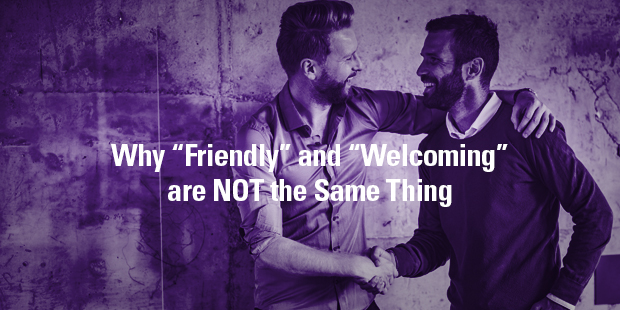
Why “Friendly” and “Welcoming” are NOT the Same Thing

The goal of excellent church hospitality teams should be to communicate “we are expecting Guests” every Sunday morning. 

However, this does not happen without intentionality. Every congregation, both healthy and unhealthy, tends to drift inward relationally over time. A strong Sunday morning welcome reminds everyone at the church of the presence of first-time Guests.

Remember, there is a difference between a friendly church and a welcoming church.

Without trained leadership and developed systems, a church welcome moves from the healthy expectation of Guests to one of three accidental mindsets. We know this because the team of Navigators at Auxano have experienced these non-verbal communications  in our 15+ years of performing Guest Perspective Evaluations:

“We think you can figure out where to go and sit because we are only tolerating your presence until we approve your theology.”

“We desperately want you to come back again because we need you to help us survive another week around here.”

“We are surprised you actually showed up because most of us have been looking for a good reason to leave for years.”

None of the three will result in a second time Guest visit.

> Read more from Bryan.


Want to know more about Guest Experiences at your church? Let’s talk! Connect with an Auxano Navigator here.

Interested in bringing your team (up to 5 people) to Auxano’s Guest Experience Boot Camp coming to West Palm Beach, FL on February 26-27? Find out more here.

Download PDF

Tags: , , ,

| What is MyVisionRoom? > | Back to Execution >

ABOUT THE AUTHOR

Bryan Rose

Bryan Rose

As Lead Navigator for Auxano, Bryan Rose has a strong bias toward merging strategy and creativity within the vision of the local church and has had a diversity of experience in just about every ministry discipline over the last 12 years. With his experience as a multi-site strategist and campus pastor at a 3500 member multi-campus church in the Houston Metro area, Bryan has a passion to see “launch clarity” define the unique Great Commission call of developing church plants and campus, while at the same time serving established churches as they seek to clarify their individual ministry calling. Bryan has demonstrated achievement as a strategic thinker with a unique ability to infuse creativity into the visioning process while bringing a group of people to a deep sense of personal ownership and passion.

See more articles by >

COMMENTS

What say you? Leave a comment!

Recent Comments
comment_post_ID); ?> Thank you for this information. I'm going to use this article to improve my work with the Lord.
 
— Abel Singbeh
 
comment_post_ID); ?> Thank you Ed for sharing your insights into the Church Growth Movement. I have my reservations with Church Growth models because it has done more damage than good in the Body of Christ. Over the years, western churches are more focused on results, formulas and processes with little or no emphasis on membership and church discipline. Pastors and vocational leaders are burnt out because they're overworked. I do believe that the Church Growth model is a catalyst to two destructive groups: The New Apostolic Reformation and the Emerging Church. Both groups overlap and have a very loose definition. They're both focus on contemporary worship, expansion of church brand (franchising), and mobilizing volunteering members as 'leaders' to grow their ministry. Little focus on biblical study, apologetics and genuine missional work with no agenda besides preaching of the gospel.
 
— Dave
 
comment_post_ID); ?> Thank you for sharing such a good article. It is a great lesson I learned from this article. I am one of the leaders in Emmanuel united church of Ethiopia (A denomination with more-than 780 local churches through out the country). I am preparing a presentation on succession planning for local church leaders. It will help me for preparation If you send me more resources and recommend me books to read on the topic. I hope we may collaborate in advancing leadership capacity of our church. God Bless You and Your Ministry.
 
— Argaw Alemu
 

Clarity Process

Three effective ways to start moving toward clarity right now.

Why Prayer is Essential to Hospitality

I could not be more grateful that my prayer life has gotten both thicker (deep) and thinner (ongoing) as I move through my post Sabbatical world. It has produced some new practices in my assimilation ministry, galvanized some old ones, and given me new passion for others that Gene (our Lead Pastor) leads us in.

Here are 9 ways that thicker and thinner prayer is permeating our church and its assimilation ministry:

1.  5:08 Prayer

Over a year ago, Gene Appel invited everyone at our church to set the alarm on their phones to 5:08pm. This was to remind us to pray that we would reach 1% of the 5.8 million people who live in a 20 mile radius of our hub campus with the message of Jesus. We call this our “Go Beyond Vision” and we have been sharing it in Next Steps with new people God is adding to our church for 5 years. Gene asked us to pray daily at 5:08pm for the fulfillment of this vision for a full year. It was fun to hear phone alarms go off in the middle of the message or in Next Steps during the Saturday service (even when it was my own phone as I hosted Next Steps…which prompted me to lead everyone in 5:08 prayer on the spot!). There is a power to this kind of “thin prayer” when it’s daily, and includes everyone for a 365-day streak. I could go on and on about the unprecidented things God brought about during this concerted daily prayer effort, but let me share just three of them here:

  • We were given the largest donation Eastside has ever received: a 4.5 million dollar church property in Bellflower that enabled us to launch our 4th campus.
  • The number of guests who gave us their contact info at Guest Central increased by 90% year over year and Next Steps grew by 26% as a result.
  • We became the 2nd fastest growing church in the U.S.

2. Car prayer

Like many of you, I pray in the car on the way to church that God will defeat the forces that are opposing guests as they attempt to make it to church and to Next Steps. I also pray that the Hosts and Table Hosts at every campus will be empowered by God to help guests experience their connection to the Body of Christ. This regular practice of “thin prayer” not only makes a difference in things unseen, but it makes a difference inside me as I remember whose battle this is and what my role is (and isn’t).

3. Phone prayer

We do a lot of phone follow up when guests make decisions to follow Jesus or are baptized. When a need is shared in one of these phone conversations, I have learned to ask if I can prayer for them right now. They are always surprised and grateful to have me pray for them over the phone. Many of them have never heard a person pray for them before and it has an impact on guests in multiple ways. I try to practice this in person as well when a guest shares a prayer request with me. They are consistently so appreciative that I paused to let them hear me pray for them or their loved one.

4. Pre-game prayer

One way of expressing a thin but powerful prayer is by circling up with the Table Hosts and Assistants just prior to “game time” in Next Steps. I do this with any of them that are present before the guests arrive, spontaneously. When we do this, we can sense our dependence shift internally from ourselves to God. We also observe breakthroughs together that we credit to God and our asking Him for them specifically.

5. Table prayer  

At the end of every session, we have Table Hosts pray that the assignments of the week at Next Steps will make a powerful difference in their growth as a Christ follower that week. Though they do not have time to ask for prayer requests, they usually include in this prayer anything that an individual may have shared in discussion that could use prayer support. Sometimes, they even email that guest during the week to see how that issue is progressing.

6. POC prayer

POC stands for Pastor On Call. We always have at least one available during and after services. The cool thing is that they are not just ordained staff, but Next Steppers who have graduated who have the gift of pastoring. I am so proud of these people when they serve in this role. We are in the habit of referring people to POCs from Guest Central and Next Steps when we sense someone needs a level of conversation and “thicker” prayer that can best be experienced in a pastoral moment in a room we have dedicated for this purpose.

David Sotelo is one of our interns and also a young adult. He is not a ministry major or necessarily pursuing vocational ministry. Recently he received a card that a guest sent to our office addressed to “Pastor David”, thanking him for taking the time to listen and pray for them. Whether it takes place in our office on weekdays or in the church at weekend services, there is nothing quite like this kind of prayer for helping guests feel connected to God and our church.

7. Big weekend prayer

Before Christmas and Easter services, Gene will have the entire staff meet him in the auditorium to hear him share specific prayer targets surrounding these high-outreach weekends. He then sends us for 20 to 30 minutes to anywhere a guest might appear that weekend: Every seat in the auditorium, Guest Central, the parking lot, restrooms, Kidside, and more. All are covered with “thick prayer” from the perspective of guests who we want to see connect with God and others at our church in these services. It gives us as staff the conviction that our property is now set apart for a holy purpose and we are ready for it, come what may.

8. Diploma prayer

This is one of my favorites moments of thin prayer and a real privilege. Whenever someone has completed all 4 sessions of Next Steps, they are given a Certificate of Completion (Diploma) for graduating from the training. I am always amazed at how much they value these certificates. On all campuses, they are printed out with guest’s names on them so that they are ready for the guest’s final session. They have Gene’s signature printed on them as well and a wet signature from either myself at the Anaheim campus or a Campus Pastor at our other Campuses. We sign each one individually so that we can pray for each person being added to our church by name as they are being added. This not only gives us name recognition for guests joining our church, but it also gives us the ability to say to each Next Step Grad, “I have prayed for you by name”. This just feels right.

9. 21 days of prayer

This is a time to thicken the prayer life of everyone at our church in a way that those new to our church can easily connect with. Inspired by Church of the Highlands in Birmingham AL, we do this one to two times a year to rally people around who they are as followers of Jesus in our community in this generation. This year, it will be attached to Gene’s series on the book of Acts entitled “The Deep”. The online prayer guide breaks Acts into 21 readings, gives a key thought for prayer each day fueled by a daily video prayer request from an Eastside staff person released through social media. To thicken the prayer even more, we have Wednesday evening Nights of Worship during the 21 Days to help the church members new and old experience prayer in community. Rocket fuel for the climb.

Since returning from my Sabbatical, my prayer life has become an ongoing tapestry of thicker and thinner conversations with God throughout my day. It has also been permeating the lives of our guests in ways they don’t even realize. My challenge to you as a Sherpa is to not take any guests on the climb without taking prayer along with you as a key piece of equipment for reaching the summit.

> Read more from Greg.


Want to know more about Guest Experiences at your church? Let’s talk! Connect with an Auxano Navigator here.

Interested in bringing your team (up to 5 people) to Auxano’s Guest Experience Boot Camp coming to West Palm Beach, FL on February 26-27? Find out more here.

Download PDF

Tags: , , , , ,

| What is MyVisionRoom? > | Back to Execution >

ABOUT THE AUTHOR

Greg Curtis

Greg Curtis

I came to the church I serve, Eastside Christian Church, when I was 14 years old. I never saw anything like it. I saw so many changed lives (including my own), that it changed my career trajectory. I choose to not attend the college I planned on and choose instead to go to Bible college to pursue a degree in ministry. Gene Appel came back to Eastside in 2008, this time as Senior Pastor. Gene had interned at Eastside when I was a Senior in high school and stayed at my home during part of that season in his education. Both churches now were facing critical facility issues. The short story: both churches remerged after 27 years at a new location half way between the two. Gene gave me pretty much a blank slate for creating an assimilation environment to connect the guests that were arriving in large numbers due to our relocation and outreach strategy after the churches merged back together. 3-plus decades of leading in the local church. my journey has brought me here. That's who I am and what I am about.

See more articles by >

COMMENTS

What say you? Leave a comment!

Mike Taylor — 02/04/20 10:57 am

Great work Bubba! Its exciting to see how God has blessed your faithfulness over your lifetime into remarkable, fruitful, Kingdom expansion! Jesus DID say, "without Me you can do nothing!" (John 15:5). No surprise that He rewards "thick and thin" prayer with great fruitfulness! :)

Recent Comments
comment_post_ID); ?> Thank you for this information. I'm going to use this article to improve my work with the Lord.
 
— Abel Singbeh
 
comment_post_ID); ?> Thank you Ed for sharing your insights into the Church Growth Movement. I have my reservations with Church Growth models because it has done more damage than good in the Body of Christ. Over the years, western churches are more focused on results, formulas and processes with little or no emphasis on membership and church discipline. Pastors and vocational leaders are burnt out because they're overworked. I do believe that the Church Growth model is a catalyst to two destructive groups: The New Apostolic Reformation and the Emerging Church. Both groups overlap and have a very loose definition. They're both focus on contemporary worship, expansion of church brand (franchising), and mobilizing volunteering members as 'leaders' to grow their ministry. Little focus on biblical study, apologetics and genuine missional work with no agenda besides preaching of the gospel.
 
— Dave
 
comment_post_ID); ?> Thank you for sharing such a good article. It is a great lesson I learned from this article. I am one of the leaders in Emmanuel united church of Ethiopia (A denomination with more-than 780 local churches through out the country). I am preparing a presentation on succession planning for local church leaders. It will help me for preparation If you send me more resources and recommend me books to read on the topic. I hope we may collaborate in advancing leadership capacity of our church. God Bless You and Your Ministry.
 
— Argaw Alemu
 

Clarity Process

Three effective ways to start moving toward clarity right now.