The Theology of Christmas Songs in Your Church

It’s quite possible that non-Christians hear more Christian theology around Christmas-time than any other time of the year. A number of Christmas songs are filled with rich theological truths.

Take the popular “Hark! the Herald Angels Sing.” It’s chock-full of robust truths from God’s Word.

But I wonder how many non-Christians really understand what they’re singing. Or even how many Christians understand these lyrics!

Take, for example, the line “Veiled in flesh the Godhead see.” That simply means “Look and see God, hidden in human flesh,” see God in the Person of Jesus.

Then comes “Hail the incarnate Deity.” Deity, of course, means divine One, God Himself. Incarnate means “enfleshed.”

Look at the next two lines: “Pleased as man with men in flesh to dwell, Jesus, our Emmanuel.” There’s that word again—”Emmanuel,” God with us. Jesus is our “God with us.” We know who God is because of Jesus. We know what God is like because of Jesus.

This verse is supposed to set up the miracle of the incarnation by letting you see Christ in all His glory coming as baby Jesus in that humble stable.

Look at the pure, sinless Jesus being born to a mother under questionable circumstances.

Look at the Maker of the universe being denied space in the inn, having to occupy the space of a stable.

Look at Christ being adored by all of heaven, and then see Him in a stinky feeding trough flanked by animals.

Part of the glory of the incarnation is holding that tension in your mind. It gives you a window into how great God’s love is, that He would take on human flesh for us and our salvation.

Pause and Reflect

What do the humble circumstances of Christ’s birth tell us about the nature and character of God?

How should our exercise of power and authority change in light of the humility of Christ?

– from one of the devotionals I contributed to The Gospel Project Christmas

Download PDF

Tags: , ,

| What is MyVisionRoom? > | Back to Culture >

ABOUT THE AUTHOR

Trevin Wax

Trevin Wax

My name is Trevin Wax. I am a follower of Jesus Christ. My wife is Corina, and we have two children: Timothy (7) and Julia (3). Currently, I serve the church by working at LifeWay Christian Resources as managing editor of The Gospel Project, a gospel-centered small group curriculum for all ages that focuses on the grand narrative of Scripture. I have been blogging regularly at Kingdom People since October 2006. I frequently contribute articles to other publications, such as Christianity Today. I also enjoy traveling and speaking at different churches and conferences. My first book, Holy Subversion: Allegiance to Christ in an Age of Rivals, was published by Crossway Books in January 2010. (Click here for excerpts and more information.) My second book, Counterfeit Gospels: Rediscovering the Good News in a World of False Hope(Moody Publishers) was released in April 2011.

See more articles by >

COMMENTS

What say you? Leave a comment!

Recent Comments
comment_post_ID); ?> Thank you for this information. I'm going to use this article to improve my work with the Lord.
 
— Abel Singbeh
 
comment_post_ID); ?> Thank you Ed for sharing your insights into the Church Growth Movement. I have my reservations with Church Growth models because it has done more damage than good in the Body of Christ. Over the years, western churches are more focused on results, formulas and processes with little or no emphasis on membership and church discipline. Pastors and vocational leaders are burnt out because they're overworked. I do believe that the Church Growth model is a catalyst to two destructive groups: The New Apostolic Reformation and the Emerging Church. Both groups overlap and have a very loose definition. They're both focus on contemporary worship, expansion of church brand (franchising), and mobilizing volunteering members as 'leaders' to grow their ministry. Little focus on biblical study, apologetics and genuine missional work with no agenda besides preaching of the gospel.
 
— Dave
 
comment_post_ID); ?> Thank you for sharing such a good article. It is a great lesson I learned from this article. I am one of the leaders in Emmanuel united church of Ethiopia (A denomination with more-than 780 local churches through out the country). I am preparing a presentation on succession planning for local church leaders. It will help me for preparation If you send me more resources and recommend me books to read on the topic. I hope we may collaborate in advancing leadership capacity of our church. God Bless You and Your Ministry.
 
— Argaw Alemu
 

Clarity Process

Three effective ways to start moving toward clarity right now.

Why Jesus Would Go to Vegas if He Came to America

Vince Antonucci says Vegas is the place Jesus would go if he came to America.

If you’re looking for a great example of how to love people outside the church and what it means to be mission oriented, you need to meet Vince Antonucci, pastor of Verve in Las Vegas. Their tagline is “Stripping Church. Seeking Life.” These guys have an amazingly clear of how to love people who hate the church!

The title of this blog was almost Vince and Jesus love strippers, pimps, and Nazis because I keep hearing stories about how Verve is overwhelming people with God’s love for them. Not just lost people, but people Christians typically write-off as unreachable or far too intimidating – like say…Nazis.
redemption enacted
One story of redemption that impacts me poignantly is the story of Warren. Warren plays an evil, fire-breathing clown – literally. He is someone who hates God and anyone associated with church. Warren came into contact with Verve because he heard about a new church starting up, and was determined to sabotage it. Vince tells the story so powerfully, as he lays out Warren’s plan to disrupt the services by spewing profanity and violence throughout it.

When Warren showed up, though, what he found going on there in the music, the speaking and the ambiance was so surprising, that he was distracted into hearing the message. Verve is living out their core value of Irreverence TO Reverence with clarity so powerful that it captivated Warren immediately. They state the value as We do anything outside of sin to uncross the arms of unbelieving people to lead them to the cross so Jesus can remove their sin. The service reached an end, and Warren snapped out of his amazement thinking, “*$%@!, its over. I didn’t get around to wrecking it!”

Showing up again the next week, he sent Vince an email saying the service was strangely addictive. But he expressed quite clearly that he HATED Vince and everyone at the church. It wasn’t long before he was driving 45 minutes to come to all three services. After one of them Vince saw him and commented that surely Warren had figured out by now that all three services are identical. Warren’s reply shocked me…

“Man, I know…I just can’t get enough of Jesus.”

Wow! What a powerful and convicting statement from someone who had not even given their life to Christ yet. I want to sincerely say that with as much desperation as Warren. A man who was dedicated to hating God and destroying His church is so thirsty for Jesus that he can’t get enough. Vince and Verve are living out the unique identity and mission God has planted in them with such compelling clarity that they showcase the irresistible grace and beauty of Jesus.

measures of success
I love how they creatively and succinctly express the essence of how they measure success in their church. Let these sink in a little:

God Stalkers
1. Intimacy with God: How have I passionately pursued meaningful time with God?
2. Identity in Christ: How have I allowed God to love me just the way I am, and how have I allowed Him to show me where He loves me too much to leave me that way?
3. Obedience to the Holy Spirit’s direction: How have I been inviting God into all my decisions?

Grace Wholesalers
1. Intimacy with Others: How have I passionately pursued deeper relationships with those closest to me?
2. Authentic Relationships: Have I allowed God and a few friends to see and deal with my hurts and hang-ups this week?
3. Evangelism: Who have I invited to church this week?

Guerrilla Lovers
1. Influence for God: How have I passionately pursued opportunities to ambush a few people with God’s love?
2. Contribution: How have I allowed God to show me where I can generously invest my time, talent, and treasure into His Kingdom?
3. Multiplication: Who am I inviting to serve with me?

What is going on at Verve is a powerful expression of how God’s clear vision and focus expands influence and effectiveness. I encourage you to check out more of what’s going on, and hear the outrageous stories of God’s impact in people’s lives. You can find Verve on the web here.

You can see more of Warren’s amazing story of transformation on YouTube here

What is the unique identity in your church just waiting to be unleashed?

Read more from Tony here.


Download PDF

Tags: , ,

| What is MyVisionRoom? > | Back to Vision >

ABOUT THE AUTHOR

Tony Bowick

See more articles by >

COMMENTS

What say you? Leave a comment!

Recent Comments
comment_post_ID); ?> Thank you for this information. I'm going to use this article to improve my work with the Lord.
 
— Abel Singbeh
 
comment_post_ID); ?> Thank you Ed for sharing your insights into the Church Growth Movement. I have my reservations with Church Growth models because it has done more damage than good in the Body of Christ. Over the years, western churches are more focused on results, formulas and processes with little or no emphasis on membership and church discipline. Pastors and vocational leaders are burnt out because they're overworked. I do believe that the Church Growth model is a catalyst to two destructive groups: The New Apostolic Reformation and the Emerging Church. Both groups overlap and have a very loose definition. They're both focus on contemporary worship, expansion of church brand (franchising), and mobilizing volunteering members as 'leaders' to grow their ministry. Little focus on biblical study, apologetics and genuine missional work with no agenda besides preaching of the gospel.
 
— Dave
 
comment_post_ID); ?> Thank you for sharing such a good article. It is a great lesson I learned from this article. I am one of the leaders in Emmanuel united church of Ethiopia (A denomination with more-than 780 local churches through out the country). I am preparing a presentation on succession planning for local church leaders. It will help me for preparation If you send me more resources and recommend me books to read on the topic. I hope we may collaborate in advancing leadership capacity of our church. God Bless You and Your Ministry.
 
— Argaw Alemu
 

Clarity Process

Three effective ways to start moving toward clarity right now.

A Seven-Step Program for Innovating Right Now

You can’t wait for permission to innovate – you’ll never get it.

You need to start changing things on your own – right now.

Innovation is a powerful tool, and it’s in your possession – so what do you do?

Here’s my prescription:

  • Think about how much you can get away with – if you manage a budget, how much discretion to you have? If you don’t have a budget, what are the parts of your job that you control?
  • Make a list of 10 things that you can do within the current scope of your work that will make things better for the people with whom you interact – customers, co-workers, bosses, whoever.
  • Do those things.
  • Figure out which ones worked, and do those more.
  • Figure out which ones didn’t work, learn why not, then forget about them.
  • Apply what you learned to the next set of ideas.
  • Do it all again.

Focus on the ideas that went well – even if only one of them works, you just made your work a better place.

The point with this is to just get started with innovation. Try things that are cheap experiments. Learn from failures, amplify successes. Try a lot of ideas at once so that you don’t get too attached to them – if you only have one idea, the stakes are much higher, even for a cheap and quick experiment.  And remember what English says about serving a higher purpose – that’s just as important for innovation as it is for art.

That’s how you can start to get the future out of your head, and out into the world where it will do some good.

Read more from Tim here.

Download PDF

Tags: , ,

| What is MyVisionRoom? > | Back to Leadership >

ABOUT THE AUTHOR

Tim Kastelle

Tim Kastelle

Tim Kastelle is a Lecturer in Innovation Management in the University of Queensland Business School. He blogs about innovation at the Innovation Leadership Network.

See more articles by >

COMMENTS

What say you? Leave a comment!

Recent Comments
comment_post_ID); ?> Thank you for this information. I'm going to use this article to improve my work with the Lord.
 
— Abel Singbeh
 
comment_post_ID); ?> Thank you Ed for sharing your insights into the Church Growth Movement. I have my reservations with Church Growth models because it has done more damage than good in the Body of Christ. Over the years, western churches are more focused on results, formulas and processes with little or no emphasis on membership and church discipline. Pastors and vocational leaders are burnt out because they're overworked. I do believe that the Church Growth model is a catalyst to two destructive groups: The New Apostolic Reformation and the Emerging Church. Both groups overlap and have a very loose definition. They're both focus on contemporary worship, expansion of church brand (franchising), and mobilizing volunteering members as 'leaders' to grow their ministry. Little focus on biblical study, apologetics and genuine missional work with no agenda besides preaching of the gospel.
 
— Dave
 
comment_post_ID); ?> Thank you for sharing such a good article. It is a great lesson I learned from this article. I am one of the leaders in Emmanuel united church of Ethiopia (A denomination with more-than 780 local churches through out the country). I am preparing a presentation on succession planning for local church leaders. It will help me for preparation If you send me more resources and recommend me books to read on the topic. I hope we may collaborate in advancing leadership capacity of our church. God Bless You and Your Ministry.
 
— Argaw Alemu
 

Clarity Process

Three effective ways to start moving toward clarity right now.

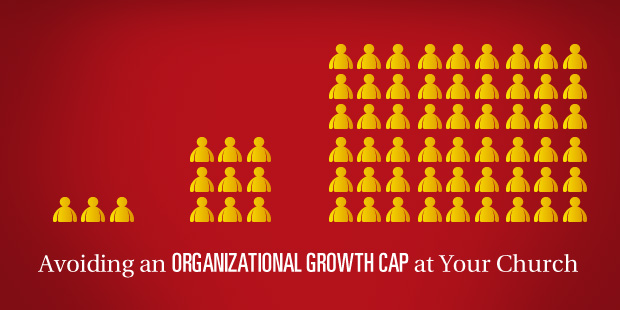
Avoiding an Organizational Growth Cap at Your Church

When I consider companies like Apple, Facebook, Google and Amazon, the one constant I think of is change. Interestingly, after I typed that first sentence, I Googled “Most Innovative Companies” and found Fast’s list for 2012. How close do you think I got to their list? See for yourself HERE. But, don’t be impressed with my guesswork. You could have done the same thing, because it’s obvious to us that these companies are all about change.

Then I think of churches I know…some of the most growing, Kingdom-impacting churches I know are also the most innovative…the most open to continual change. I think of LifeChurch.tv, for example. Not only have they impacted many with their vision for multi-site/video venues, but they’ve also helped us discover or been a part of YouVersion and Open, a resource website for churches and ministries. I also think of Andy Stanley’s North Point and how their version of doing church and Andy’s preaching style has impacted so many others. Both LifeChurch and North Point appear to be a culture of change. From what I read about their culture, change is continually being introduced.

Let me be clear. I’m not advocating that either of the church models is the right one for every church. Neither are they the exact right model for the church I pastor. I am interested in church growth. I do like to see progress. I do want to avoid capping Kingdom growth.

I am suggesting that there may be something about growth we can learn from the two examples…business and church. My personal experience, and watching other organizations succeed, has led me to believe that there is something about continual change that produces continual growth.

In fact, I wonder if:

The level of growth an organization can experience may be determined by its level of tolerance or resistance to change.

I’m still processing that thought.

Read more from Ron here.

Download PDF

Tags: , , ,

| What is MyVisionRoom? > | Back to Leadership >

ABOUT THE AUTHOR

Ron Edmondson

Ron Edmondson

As pastor at Immanuel Baptist Church a church leader and the planter of two churches, I am passionate about planting churches, but also helping established churches thrive. I thrive on assisting pastors and those in ministry think through leadership, strategy and life. My specialty is organizational leadership, so in addition to my role as a pastor, as I have time, I consult with church and ministry leaders. (For more information about these services, click HERE.)

See more articles by >

COMMENTS

What say you? Leave a comment!

Recent Comments
comment_post_ID); ?> Thank you for this information. I'm going to use this article to improve my work with the Lord.
 
— Abel Singbeh
 
comment_post_ID); ?> Thank you Ed for sharing your insights into the Church Growth Movement. I have my reservations with Church Growth models because it has done more damage than good in the Body of Christ. Over the years, western churches are more focused on results, formulas and processes with little or no emphasis on membership and church discipline. Pastors and vocational leaders are burnt out because they're overworked. I do believe that the Church Growth model is a catalyst to two destructive groups: The New Apostolic Reformation and the Emerging Church. Both groups overlap and have a very loose definition. They're both focus on contemporary worship, expansion of church brand (franchising), and mobilizing volunteering members as 'leaders' to grow their ministry. Little focus on biblical study, apologetics and genuine missional work with no agenda besides preaching of the gospel.
 
— Dave
 
comment_post_ID); ?> Thank you for sharing such a good article. It is a great lesson I learned from this article. I am one of the leaders in Emmanuel united church of Ethiopia (A denomination with more-than 780 local churches through out the country). I am preparing a presentation on succession planning for local church leaders. It will help me for preparation If you send me more resources and recommend me books to read on the topic. I hope we may collaborate in advancing leadership capacity of our church. God Bless You and Your Ministry.
 
— Argaw Alemu
 

Clarity Process

Three effective ways to start moving toward clarity right now.

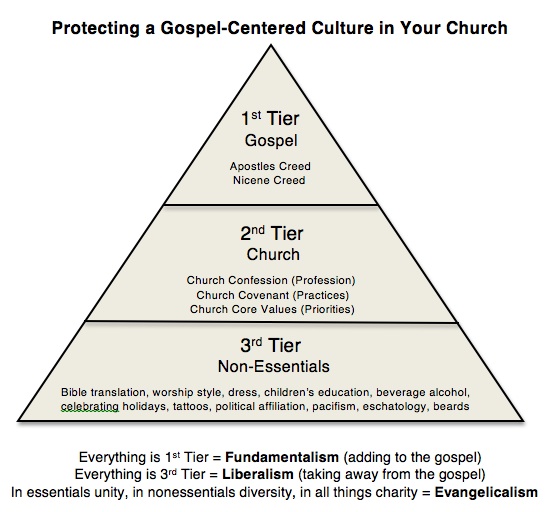
Protecting a Gospel-Centered Culture in Your Church

One of the biggest lessons I’ve learned about leadership in the local church has to do with creating, cultivating, and contending for a gospel-centered culture in the church. This past weekend, I led a discussion in our “Introduction to Grace” membership class on this very thing. I began with Albert Mohler’s well-known case for theological triage. Membership interviews and membership classes are important to the life and health of a church for several reasons, not the least of which is the need to protect/content for a gospel-centered culture in your church.

Here’s what I mean by that. If Christians are looking to join your church (via transfer growth), it could very well be that there are 3rd Tier issues that they want to make 2nd Tier or even 1st Tier issues. Some people call them “single issue Christians.” There are others that are not so obvious and can sometimes be discerned by their approach to church being a “What do you have to offer me?” kind of attitude. Either way, they want to push upward their 3rd Tier preferences and make them 2nd Tier principles. Some of these preferential non-essentials are listed in the chart below.

So here’s the deal. If at any point you as a leader allow for 3rd Tier issues to advance upward in the culture of the church, then members will become centered on something other than the gospel and factions will ensue. If passions drive preferences, and preferences are not 2nd Tier issues, then church leaders must be clear that the passion to lead the church with a gospel-centered focus is greater than their passion to drive their preferences into the culture of the church. This is protecting the unity of the flock with a gracious spirit of saying, “That’s not going to happen among us. I’m sorry.”

This is why I believe it is important to be clear with the 2nd Tier. If your church is not clear on what defines you in what you believe (confession), how you live (covenant), and what you value most (core values), then you are living in the land of assumptions with an open invitation for any member to more explicit about their preferences than you are your principles. Without those gospel-guiding principles in place as filters to protect the unity of the church, the health and welfare of the church is in a vulnerable state.

Gospel-centered leaders do not have the luxury of being accepting of personal preferences as anything more than personal preferences. They have to front with the gospel explicitly and consistently and back that up with a godly intolerance for members to be united by any greater than the good news of Jesus Christ. They themselves must exhibit by their life and actions that the greatest common denomination in the fellowship of the saints is that our names are written in the heaven as blood-bought children of God.

For some churches, gospel-centered churches must guard against liberalism, which is the neglect or dismissal of 1st Tier doctrines. On the other hand, I believe in most cases leaders must guard against fundamentalism, which is the treatment as if all matters are 1st Tier issues. A real test of the diversity we are to enjoy is whether we can experience genuine fellowship with other Christians who see 3rd Tier issues differently than us.

Here’s how I like to think about it. The 3rd Tier issues ought always be in subjection to the 2nd Tier. The 2nd Tier issues ought always be in subjection to the 1st Tier. Gospel-centered churches major on the gospel (1st Tier), and members who care deeply about the unity of the church care about the 2nd Tier (and by virtue of that, the 1st as well). If that kind of order is not functional in the church, then what you are left with sadly will look similar to this…

Download PDF

Tags: ,

| What is MyVisionRoom? > | Back to Culture >

ABOUT THE AUTHOR

Timmy Brister

In the “real world,” I am the founder and president of Gospel Systems, Inc, a 501(c)(3) non-profit organization focused on creating and sustaining delivery systems for the advancement of the gospel around the world. In 2010, I started a delivery system called PLNTD – a network for church planting and revitalization focusing on resourcing, relational community, residencies in local churches, and regional networks. In 2012, I started an international delivery system call The Haiti Collective which focuses on equipping indigenous churches through church partnerships in order to care for orphans, make disciples, train leaders, and plant churches in Haiti. In addition to serving as the executive director of these organizations, I have served for 12 years in pastoral ministry with churches in Alabama, Kentucky, and Florida. My passion is to see healthy, growing churches take ownership of the Great Commission to the end that disciples are making disciples, leaders are developed and deployed, and churches are planting churches here and around the world. This is the driving passion of my life and prayer that God would be so glorified in making His name great in our generation.

See more articles by >

COMMENTS

What say you? Leave a comment!

Recent Comments
comment_post_ID); ?> Thank you for this information. I'm going to use this article to improve my work with the Lord.
 
— Abel Singbeh
 
comment_post_ID); ?> Thank you Ed for sharing your insights into the Church Growth Movement. I have my reservations with Church Growth models because it has done more damage than good in the Body of Christ. Over the years, western churches are more focused on results, formulas and processes with little or no emphasis on membership and church discipline. Pastors and vocational leaders are burnt out because they're overworked. I do believe that the Church Growth model is a catalyst to two destructive groups: The New Apostolic Reformation and the Emerging Church. Both groups overlap and have a very loose definition. They're both focus on contemporary worship, expansion of church brand (franchising), and mobilizing volunteering members as 'leaders' to grow their ministry. Little focus on biblical study, apologetics and genuine missional work with no agenda besides preaching of the gospel.
 
— Dave
 
comment_post_ID); ?> Thank you for sharing such a good article. It is a great lesson I learned from this article. I am one of the leaders in Emmanuel united church of Ethiopia (A denomination with more-than 780 local churches through out the country). I am preparing a presentation on succession planning for local church leaders. It will help me for preparation If you send me more resources and recommend me books to read on the topic. I hope we may collaborate in advancing leadership capacity of our church. God Bless You and Your Ministry.
 
— Argaw Alemu
 

Clarity Process

Three effective ways to start moving toward clarity right now.

4 Systems Every Church Needs

You may or may not be a systems person. You may lead a large or very small church. Regardless the context, systems need to be in place or success will always elude you.

Every church needs to ask and answer these questions in the context of a measurable system they have put in place.

#1 Attraction

When are we attracting people to the Kingdom?

If we never attract people to us, they will never experience the Jesus in us. So we need a system that allows those on the outside to see what we have on the inside. When do we do that….intentionally?

  • Sunday morning? How?
  • Missional communities? How?
  • Personally? How?
  • Outreach? How?

#2 Assimilation

How are we keeping those God sends us?

We are very poor stewards of the Kingdom, if God brings us people and we don’t do everything possible to keep them. If a new person is introduced to our church, then what?

  • Once someone gets to know us or the church what is the next place? Where?
  • Do we know how many we have seeking? How do we record it, Where?
  • What is our definition of the person who is “committed?”

#3 Action

What are we challenging people to do?

We must have a system that takes people from their first steps to equipping them to be productive missionaries in a lost world. If the church doesn’t train them, then Who?

  • What do we consider our “roads to outreach?”
  • Is a lifestyle of living out our mission expected?
  • How do we record new additions? Who contributed to that action?

#4 Activation

Where are we sending people?

Once a follower is fully trained, they should be like their teacher, i.e., Jesus. Jesus went from town to town, from person to place demonstrating and communicating the Kingdom. When our people are trained, what opportunities do we provide or encourage them to engage in. Where?

  • How are our groups working toward our mission?
  • Where do we encourage individuals to make contact with those outside the Kingdom?
  • How do we measure how effective our strategy is in accomplishing our mission

These are some questions we have had to answer recently. Can you add any to the list?

Download PDF

Tags: , , , , ,

| What is MyVisionRoom? > | Back to Vision >

ABOUT THE AUTHOR

Artie Davis

See more articles by >
COMMENTS

What say you? Leave a comment!

Recent Comments
comment_post_ID); ?> Thank you for this information. I'm going to use this article to improve my work with the Lord.
 
— Abel Singbeh
 
comment_post_ID); ?> Thank you Ed for sharing your insights into the Church Growth Movement. I have my reservations with Church Growth models because it has done more damage than good in the Body of Christ. Over the years, western churches are more focused on results, formulas and processes with little or no emphasis on membership and church discipline. Pastors and vocational leaders are burnt out because they're overworked. I do believe that the Church Growth model is a catalyst to two destructive groups: The New Apostolic Reformation and the Emerging Church. Both groups overlap and have a very loose definition. They're both focus on contemporary worship, expansion of church brand (franchising), and mobilizing volunteering members as 'leaders' to grow their ministry. Little focus on biblical study, apologetics and genuine missional work with no agenda besides preaching of the gospel.
 
— Dave
 
comment_post_ID); ?> Thank you for sharing such a good article. It is a great lesson I learned from this article. I am one of the leaders in Emmanuel united church of Ethiopia (A denomination with more-than 780 local churches through out the country). I am preparing a presentation on succession planning for local church leaders. It will help me for preparation If you send me more resources and recommend me books to read on the topic. I hope we may collaborate in advancing leadership capacity of our church. God Bless You and Your Ministry.
 
— Argaw Alemu
 

Clarity Process

Three effective ways to start moving toward clarity right now.

10 Metrics to Evaluate Your Church Before the End of 2012

Over the past year, our team at Church Community Builder has had conversation with hundreds of pastors about what their churches track and measure. Because so many churches evaluate their ministries at year end, I thought it would be helpful to highlight the metrics we saw most frequently in the churches we serve who are growing and healthy.

I don’t think it’s a coincidence that these things matter to churches making an impact. By assessing these areas of ministry, you should be able to gain some valuable insight on how much momentum you have going into the New Year.

With a nod to David Letterman, here is our Top 10 Church Metrics list with some helpful links to break down what you should be gleaning from each one.

1. First-time Gifts: What are you doing to connect with first-time givers?

2. Online Giving: Who is giving online? What page are they navigating from to get to the online giving portal?

3. Discipleship: Who is actually showing up in their small groups? Where are they in the growth process?

4. Financial: How is your church’s financial health? Do you have “margin” or are you maxed out?

5. Engagement: What do your numbers look like for relatively new members who have gotten plugged into service and discipleship?

6. Assimilation: Who is now missing? Do you know why?

7. Overall Growth: What is your data telling you about the growth pattern of your congregation?

8. Impact: How are your decisions validated by data you are collecting? What is worth tracking?

9. Depth of Community: How deeply are people connected?

10. “The Numbers”: Are your numbers higher than last year’s?

Read more from Steve here.

Download PDF

Tags: , , ,

| What is MyVisionRoom? > | Back to Process >

ABOUT THE AUTHOR

Steve Caton

Steve Caton

Steve Caton is part of the Leadership Team at Church Community Builder. He leverages a unique background in technology, fundraising and church leadership to help local churches decentralize their processes and equip their people to be disciple makers. Steve is a contributing author on a number of websites, including the Vision Room, ChurchTech Today, Innovate for Jesus and the popular Church Community Builder Blog. He also co-wrote the eBook “Getting Disciple Making Right”. While technology is what Steve does on a daily basis, impacting and influencing the local church is what really matters to him……as well as enjoying deep Colorado powder with his wife and two sons!

See more articles by >

COMMENTS

What say you? Leave a comment!

Recent Comments
comment_post_ID); ?> Thank you for this information. I'm going to use this article to improve my work with the Lord.
 
— Abel Singbeh
 
comment_post_ID); ?> Thank you Ed for sharing your insights into the Church Growth Movement. I have my reservations with Church Growth models because it has done more damage than good in the Body of Christ. Over the years, western churches are more focused on results, formulas and processes with little or no emphasis on membership and church discipline. Pastors and vocational leaders are burnt out because they're overworked. I do believe that the Church Growth model is a catalyst to two destructive groups: The New Apostolic Reformation and the Emerging Church. Both groups overlap and have a very loose definition. They're both focus on contemporary worship, expansion of church brand (franchising), and mobilizing volunteering members as 'leaders' to grow their ministry. Little focus on biblical study, apologetics and genuine missional work with no agenda besides preaching of the gospel.
 
— Dave
 
comment_post_ID); ?> Thank you for sharing such a good article. It is a great lesson I learned from this article. I am one of the leaders in Emmanuel united church of Ethiopia (A denomination with more-than 780 local churches through out the country). I am preparing a presentation on succession planning for local church leaders. It will help me for preparation If you send me more resources and recommend me books to read on the topic. I hope we may collaborate in advancing leadership capacity of our church. God Bless You and Your Ministry.
 
— Argaw Alemu
 

Clarity Process

Three effective ways to start moving toward clarity right now.

Three New Trends in an Outward-Focused Church

In a previous post, I recalled the decline of traditional outreach ministries in many churches. I further noted that most churches no longer try to connect with people through “cold call” visits in their homes. These churches, more often than not, begin to see declines in their attendance if they did not replace the traditional approach with something else.

In simple terms, churches without any ongoing outreach approach were likely to decline. The ethos of the church changed from other-focused to self-centered.

Churches That Made Positive Changes

A relatively small number of churches, however, did not leave the void of outwardly focused ministries unfilled. They, like the declining churches, stopped doing traditional outreach ministries. But, unlike the declining churches, they replaced the traditional approach with something new.

Though my research is more anecdotal at this point, I did review several dozens churches that have transitioned well. Thus far I have noted three major new approaches toward an outward focus.

Three Successful and Relevant Outreach Approaches

My research to this point is by no means exhaustive, so I will likely have more approaches in the future. For now, here are three outwardly focused ministries that have filled the void left by the abandonment of more traditional approaches.

  1. Additional worship venue. In the 1960s and 1970s many congregations moved to multiple worship services on Sunday mornings. Such transitions were not without their critics and detractors. Today a number of churches are adding a worship service on a different day; or adding a new campus in close proximity to the church; or adding a different venue in the same facility; or moving to video venues. These new starts tend to grow faster and reach unchurched persons more effectively than existing services. While churches above 500 in attendance were more likely to add a venue, many smaller churches are moving in this direction as well.
  2.  Ongoing community ministries. Some churches regularly send their members into the community to minister to those who live and work there. Typically they find the greatest needs and seek to fill two or three of those needs. This approach is not to be confused with the community ministries that require people to come to the church facilities. While those ministries are vitally needed, the members must be going into the community on a regular basis for the church as a whole to become outwardly focused.
  3. Inviting with accountability. Still other churches have developed ministries that encourage and equip members to invite persons to church on an ongoing basis. Those that have proved successful have some type of accountability built into the process. It is not a simple exhortation from the pastor to invite someone to church. It is rather an organized system that can account for the number of people invited to church each week.

The Research Continues

It appears that many churches began to decline when they abandoned traditional outreach programs but did not replace them with anything else. And it appears that the churches that continued to grow made certain that such a void was filled. For that reason, I will continue to research the different approaches of congregations toward keeping an outward focus.

I could use your help in this process. If your church is growing, I would love to hear what outreach methodologies you are using. I have already heard from several church members and their contributions are invaluable. I have even heard from some church leaders where they have continued with the more traditional approaches with great success.

This one thing is clear: If your church does not have some ongoing approach to reach those outside the walls of the congregation, it is likely to be in decline.

I look forward to interacting with many of you on this vital issue. And thanks for the way you love the bride of Christ.

Read more from Thom here.

Download PDF

Tags: , ,

| What is MyVisionRoom? > | Back to Process >

ABOUT THE AUTHOR

Thom Rainer

Thom Rainer

Thom S. Rainer is the founder and CEO of Church Answers, an online community and resource for church leaders. Prior to founding Church Answers, Rainer served as president and CEO of LifeWay Christian Resources. Before coming to LifeWay, he served at The Southern Baptist Theological Seminary for twelve years where he was the founding dean of the Billy Graham School of Missions and Evangelism. He is a 1977 graduate of the University of Alabama and earned his Master of Divinity and Ph.D. degrees from The Southern Baptist Theological Seminary.

See more articles by >

COMMENTS

What say you? Leave a comment!

Recent Comments
comment_post_ID); ?> Thank you for this information. I'm going to use this article to improve my work with the Lord.
 
— Abel Singbeh
 
comment_post_ID); ?> Thank you Ed for sharing your insights into the Church Growth Movement. I have my reservations with Church Growth models because it has done more damage than good in the Body of Christ. Over the years, western churches are more focused on results, formulas and processes with little or no emphasis on membership and church discipline. Pastors and vocational leaders are burnt out because they're overworked. I do believe that the Church Growth model is a catalyst to two destructive groups: The New Apostolic Reformation and the Emerging Church. Both groups overlap and have a very loose definition. They're both focus on contemporary worship, expansion of church brand (franchising), and mobilizing volunteering members as 'leaders' to grow their ministry. Little focus on biblical study, apologetics and genuine missional work with no agenda besides preaching of the gospel.
 
— Dave
 
comment_post_ID); ?> Thank you for sharing such a good article. It is a great lesson I learned from this article. I am one of the leaders in Emmanuel united church of Ethiopia (A denomination with more-than 780 local churches through out the country). I am preparing a presentation on succession planning for local church leaders. It will help me for preparation If you send me more resources and recommend me books to read on the topic. I hope we may collaborate in advancing leadership capacity of our church. God Bless You and Your Ministry.
 
— Argaw Alemu
 

Clarity Process

Three effective ways to start moving toward clarity right now.

Using a Strategy Canvas in Your Small Groups

A couple of weeks ago we had the last session of our Externally Focused Small Groups (EFSGs) InnovationLab. Here are a few ideas behind the power of EFSGs:

1. Although good deeds create good will which often leads to good news, it is good friends who help turn good intentions into good deeds which create good will…. In other words people are more likely to do things they don’t even want to do with people they like being with than they are to ever discover that one place of service by themselves.

2. Service needs to be built into the charter of each small group…not just as a value but part of the structure. We have to create systems to operationalize our values or these are not values, they are merely sentiments. This is where the principles in “Change Anything” come in. In the book the authors talk about 3 levels of change:

  • Personal motivation and ability—Everyone seems to have the “want-to” to make a difference in the world but most folks, by themselves, rarely do—maybe 5%
  • Social motivation and ability—We become like the people (in habit and lifestyle) we hang out with. It’s called “regression to the mean.” So if everyone in the small group is serving, there is a good chance (50%) that you will be serving
  • Structural motivation and ability—If every small group, by design, has service built into its structure, meaning, every 4-8 times that you meet, instead of meeting, you go serve together, this increases the odds to 95-100%

This is what our friends at Chase Oaks Church in Plano, Texas have discovered. Every small group has a leader and 3 other “champions” under that leader:

  • A content champion—the person that is passionate about the Bible input
  • A community champion—the person who takes responsibility for seeing that the needs inside the group are met—that people feel loved, heard and cared for
  • A bridge champion—the person who leads the service between the small group and the organization they serve

Pastors Glenn Brechner and Jason Williams do a phenomenal job of giving folks the opportunity to live missionally.

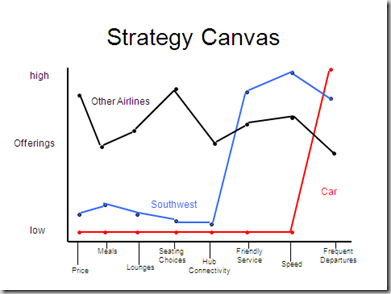
Many of you have read the book “Blue Ocean Strategy.” One of the good take-aways for me was the idea of having a Strategy Canvas where one can do a comparison between the attributes of several enterprises. So for instance Southwest Airlines can compare itself to other airlines as well as an automobile. Points of comparison are price, meals, lounges, frequency of departure. By plotting out the offering of the three entities, one can conclude that Southwest has more in common with an automobile than with other airlines. Very interesting.


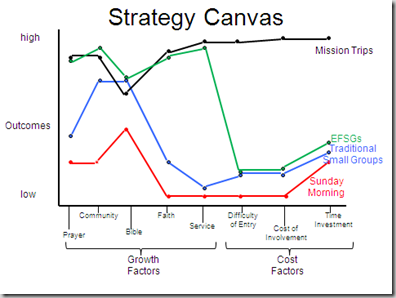
Now, how about EFSGs compared to other offerings the church has to help people grow—Sunday morning services, traditional small groups, and mission trips.

What can we conclude? That EFSGs are have the growth benefits / results that are more like a missions trip with the cost being similar to a worship service or regular small group.

So try out the strategy canvas on projects you are working on to discover the value of what you are doing.

Download PDF

Tags: , , ,

| What is MyVisionRoom? > | Back to Process >

ABOUT THE AUTHOR

Eric Swanson

See more articles by >

COMMENTS

What say you? Leave a comment!

Recent Comments
comment_post_ID); ?> Thank you for this information. I'm going to use this article to improve my work with the Lord.
 
— Abel Singbeh
 
comment_post_ID); ?> Thank you Ed for sharing your insights into the Church Growth Movement. I have my reservations with Church Growth models because it has done more damage than good in the Body of Christ. Over the years, western churches are more focused on results, formulas and processes with little or no emphasis on membership and church discipline. Pastors and vocational leaders are burnt out because they're overworked. I do believe that the Church Growth model is a catalyst to two destructive groups: The New Apostolic Reformation and the Emerging Church. Both groups overlap and have a very loose definition. They're both focus on contemporary worship, expansion of church brand (franchising), and mobilizing volunteering members as 'leaders' to grow their ministry. Little focus on biblical study, apologetics and genuine missional work with no agenda besides preaching of the gospel.
 
— Dave
 
comment_post_ID); ?> Thank you for sharing such a good article. It is a great lesson I learned from this article. I am one of the leaders in Emmanuel united church of Ethiopia (A denomination with more-than 780 local churches through out the country). I am preparing a presentation on succession planning for local church leaders. It will help me for preparation If you send me more resources and recommend me books to read on the topic. I hope we may collaborate in advancing leadership capacity of our church. God Bless You and Your Ministry.
 
— Argaw Alemu
 

Clarity Process

Three effective ways to start moving toward clarity right now.

What Happens When Your Church Slows?

I was talking with a young pastor recently. He is battling the leadership of the church to make changes he feels he was called to the church to make, but because they have experienced some difficult years recently, they are resisting any efforts he makes. He’s questioning if he should give into them or push forward with more changes.

Of course, the way change is introduced is incredibly important, but after years of decline, change is certainly needed if they expect to see any new growth. As the saying goes, “More of the same will not produce change.”

It reminded me, however, of some common characteristics I have observed in organizations, whether the church or in business, when growth begins to slow or future progress appears to be in question. In uncertain times, probably because both the church and businesses involve people, each has a tendency to react similarly.

During times of difficulty, organizations:

  • Resist taking risks
  • Avoid change
  • Cling to tradition
  • Think inward
  • Control everything
  • Become selfish

Granted, I’ve been in both sides of the equation. I’ve been in the times of fast growth and the times of steady (even rapid) decline. I’ve even contributed to each of these reactions at one time or another. Unfortunately, I’ve never seen them work. They feel needed, even more comfortable for a time, but they fail to produce that for which they were intended.

In my experience, these are the exact opposite reactions that spur growth and progress.

Here is why I’m writing this post:

If you are in a time of decline, perhaps it’s time to think differently than your natural, even understandable emotions would lead you to act.

Perhaps you need to:

  • Take new risks
  • Embrace change
  • Hold tradition loosely
  • Think outward
  • Empower others
  • Become generous

To the church leader, I would say this: Walk by faith. Keep walking by faith. I know it is natural to react in fear and hold on to what you can easily understand when circumstances become difficult…I’ve been there…but if you want to grow again…you’ll have to walk by faith again.

Have you seen an organization react this way in times of decline?

Read more from Ron here.

Download PDF

Tags: , ,

| What is MyVisionRoom? > | Back to Leadership >

ABOUT THE AUTHOR

Ron Edmondson

Ron Edmondson

As pastor at Immanuel Baptist Church a church leader and the planter of two churches, I am passionate about planting churches, but also helping established churches thrive. I thrive on assisting pastors and those in ministry think through leadership, strategy and life. My specialty is organizational leadership, so in addition to my role as a pastor, as I have time, I consult with church and ministry leaders. (For more information about these services, click HERE.)

See more articles by >

COMMENTS

What say you? Leave a comment!

Recent Comments
comment_post_ID); ?> Thank you for this information. I'm going to use this article to improve my work with the Lord.
 
— Abel Singbeh
 
comment_post_ID); ?> Thank you Ed for sharing your insights into the Church Growth Movement. I have my reservations with Church Growth models because it has done more damage than good in the Body of Christ. Over the years, western churches are more focused on results, formulas and processes with little or no emphasis on membership and church discipline. Pastors and vocational leaders are burnt out because they're overworked. I do believe that the Church Growth model is a catalyst to two destructive groups: The New Apostolic Reformation and the Emerging Church. Both groups overlap and have a very loose definition. They're both focus on contemporary worship, expansion of church brand (franchising), and mobilizing volunteering members as 'leaders' to grow their ministry. Little focus on biblical study, apologetics and genuine missional work with no agenda besides preaching of the gospel.
 
— Dave
 
comment_post_ID); ?> Thank you for sharing such a good article. It is a great lesson I learned from this article. I am one of the leaders in Emmanuel united church of Ethiopia (A denomination with more-than 780 local churches through out the country). I am preparing a presentation on succession planning for local church leaders. It will help me for preparation If you send me more resources and recommend me books to read on the topic. I hope we may collaborate in advancing leadership capacity of our church. God Bless You and Your Ministry.
 
— Argaw Alemu
 

Clarity Process

Three effective ways to start moving toward clarity right now.