Don’t Let the Screen Strangle Your Soul, Part 1

The first time I really became aware of the full intensity of the problem was in a conversation with a couple students training for the ministry.

I was speaking at one of our top seminaries when after the class two men came up to me in private to ask a question. I could tell by the way they were speaking quietly and shifting their eyes that they had something awkward to say. I was sure they were going to talk about pornography. And sure enough, they wanted to talk about their struggles with the internet. But it wasn’t porn they were addicted to. It was social media. They told me they couldn’t stop looking at Facebook; they were spending hours on blogs and mindlessly surfing the web.

This was several years ago, and I didn’t know how to help them. I hadn’t encountered this struggle before, and I wasn’t immersed in it myself. Five years later: I have, and I am.

I used to make fun of bloggers. I used to lampoon Facebook. I used to laugh at Twitter. In my life I’ve never been an early adopter with technology. I’ve never cared what Steve Jobs was up to. I used to roll my eyes at technophiles.

Until I became one.

Now I have a blog, a Facebook page, a Twitter handle, a Bluetooth headset, an iPhone, an iPad, wifi at work and at home, cable t.v., a Wii, a Blu-ray player, multiple email accounts, and unlimited texting. Pride comes before a fall.

I was born in 1977 so I can remember life before the digital revolution. In college we had to go to a computer lab to get on the internet, which wasn’t a big deal because nothing happened on email and I didn’t see anything interesting online. By the time I was in seminary, however, things had changed. Email was a vital way to communicate and the internet was how my friends and I were getting our news (and doing Fantasy Football). But even then (in the late 90s and early 2000s) life was far less connected. I only got an internet connection in my room part way through seminary–one of those loud, lumbering ack-ack dial-up monstrosities. I didn’t have a cell phone in high school, college, or graduate school. As little as four or five years ago I didn’t do anything on my phone and barely accessed the internet at home. I’m not suggesting those days were purer and nobler, but my life felt less scattered and less put upon. Something has changed. A lot, actually.

What Are the Threats?

Much has been written and will be written about our insatiable appetite for the screen. I’ll leave it to others to decide if Google makes us stupid and whether young people are more or less relational than ever before. Let me simply suggest three ways in which the digital revolution, for all its benefits, is also an accomplice to our experience of being hassled, frazzled, and crazy busy. For if we understand the threats, we may have some hope of finding a way forward.

First, there is the threat of addiction. That may sound like too strong a word, but that’s what it is. Could you go a whole day without looking at Facebook? Could you go an afternoon without looking at your phone? What about two days away from email? Even if someone promised there would be no emergencies and no new work would come in, we’d still have a hard time staying away from screen. The truth is many of us can’t not click. We can’t step away, even for a few hours, let alone a few days or weeks.

In his bestselling book The Shallows, Nicholas Carr reflects on how his attitude toward the web has changed. In 2005—the year he says the “Web went 2.0″—he found the digital experience exhilarating. He loved how blogging junked the traditional publishing apparatus. He loved the speed of the internet, the ease, the hyperlinks, the search engines, the sound, the videos, everything.

But then, he recalls, “a serpent of doubt slithered into my infoparadise” (15). He realized that the Net had control over his life in a way his traditional PC never did. His habits were changing, morphing to accommodate a digital way of life. He became dependent on the internet for information and stimulation. He found his ability to pay attention declining. “At first I’d figured that the problem was a symptom of middle-age mind rot. But my brain, I realized, wasn’t just drifting. It was hungry. It was demanding to be fed the way the Net fed it—and the more it was fed, the hungrier it became. Even when I was away from my computer, I yearned to check e-mail, click links, do some Googling. I wanted to be connected” (16).

I’ve noticed the same thing happening to me for the past few years. Unless I’m really in a groove, I can’t seem to work for more than twenty minutes without getting the urge to check my email, glance at a blog, or get caught up on Twitter. It’s a terrible feeling. In a postscript to The Shallows, Carr explains that after his book came out he heard from dozens of people (usually by email) who wanted to share their own stories of how the Web had “scattered their attention, parched their memory, or turned them into compulsive nibblers of info-snacks.” One college senior sent Carr a long note describing how he had struggled “with a moderate to major form of Internet addiction” since the third grade. “I am unable to focus on anything in a deep or detailed manner” the student wrote. “The only thing my mind can do, indeed the only thing it wants to do, is plug back into that distracted frenzied blitz of online information.” He confessed this, even thought he was sure that “the happiest and most fulfilled times of my life have all involved a prolonged separation from the Internet” (226). Many of us are simply overcome—hour after hour, day after day—by the urge to connect online. And as Christians we know that “whatever overcomes a person, to that he is enslaved” (2 Peter 2:19).

Read Part 2 here.

Read more from Kevin here.

Download PDF

Tags: , , ,

| What is MyVisionRoom? > | Back to Communication >

ABOUT THE AUTHOR

Kevin DeYoung

I am the Senior Pastor at University Reformed Church(RCA) in East Lansing, Michigan, near Michigan State University. I’ve been the pastor there since 2004. I was born in Chicagoland, but grew up mostly in the Grand Rapids, Michigan area. I root for da Bears, da Bulls, da Blackhawks, the White Sox, and the Spartans. I have been married to Trisha since January 2002. We live in East Lansing and have five young children.

See more articles by >

COMMENTS

What say you? Leave a comment!

Recent Comments
comment_post_ID); ?> Thank you for this information. I'm going to use this article to improve my work with the Lord.
 
— Abel Singbeh
 
comment_post_ID); ?> Thank you Ed for sharing your insights into the Church Growth Movement. I have my reservations with Church Growth models because it has done more damage than good in the Body of Christ. Over the years, western churches are more focused on results, formulas and processes with little or no emphasis on membership and church discipline. Pastors and vocational leaders are burnt out because they're overworked. I do believe that the Church Growth model is a catalyst to two destructive groups: The New Apostolic Reformation and the Emerging Church. Both groups overlap and have a very loose definition. They're both focus on contemporary worship, expansion of church brand (franchising), and mobilizing volunteering members as 'leaders' to grow their ministry. Little focus on biblical study, apologetics and genuine missional work with no agenda besides preaching of the gospel.
 
— Dave
 
comment_post_ID); ?> Thank you for sharing such a good article. It is a great lesson I learned from this article. I am one of the leaders in Emmanuel united church of Ethiopia (A denomination with more-than 780 local churches through out the country). I am preparing a presentation on succession planning for local church leaders. It will help me for preparation If you send me more resources and recommend me books to read on the topic. I hope we may collaborate in advancing leadership capacity of our church. God Bless You and Your Ministry.
 
— Argaw Alemu
 

Clarity Process

Three effective ways to start moving toward clarity right now.

Is It Ok for a Church Leader to be Excited About Their Church?

One of the things that a few church leaders have questioned me about recently is my repetitiveness in regards to saying “the best is yet to come,” or that the next Sunday or event is going to be “the best ever!”

Honestly, I’m glad people have talked with me about it because it has allowed me to reflect on why I am always saying those things.  There are several reasons…

#1 – Enthusiasm and the belief that things were going to get better is one of THE MAJOR things that pulled me out of my depression!  From 2008 – 2011 I was in the darkest period of my life and yet nearly every single day I woke up thinking and believing that “this is the day that I could get better, this is the day that I could break out of this!”  If I had began to believe that I needed to just accept the way things were then it is highly likely that I would not be here today!!!  Optimism is a powerful weapon against depression!

#2 – Some have asked me if what I am doing is “hype?”  My response is that it is only hype if you don’t believe it!!!  At the end of the day I am smoking what I’m selling.  I really do believe that the best series is going to be “the best ever!”  I really do believe that the next conference is going to be “the best ever.”  And, what I’ve noticed is that belief has impacted my staff in a positive way.  Staff members would much rather follow leadership who has way more dreams for the future than memories of the past.

#3 – I believe that if I do not believe in greater things then I will not put forth a greater effort.  I believe one of the reasons that churches grow cold, apathetic and hit a wall is because leaders all too often choose to be lazy and fall in love with personal comfort instead of progress…because progress always has a price.  Followers of JESUS should NEVER just accept status quo!!!  (The leader who always says “that’s just the way things are” is basically saying, “I’m too lazy or fearful to actually solve that problem!”)

If you are a church leader don’t you EVER apologize for being excited about your church.  Don’t ever apologize because you have big dreams of seeing people rescued from darkness and brought into light.  Don’t you EVER apologize for having a vision so huge that you know you can only get there if God gets involved.  Don’t you EVER allow those who have no enthusiasm make you feel bad for your excitement and belief that greater things are coming.

Contrary to beliefs on the internet it is NOT A SIN for a church leader to be excited, hopeful and positive about their church and/or ministry.  (In fact, I would actually argue that it’s a sin for a leader to NOT be excited about it!)

Church leaders, my prayer for all of us is that 2013 would be THE BEST YEAR EVER for THE CHURCH!  I honestly believe that the church has more potential for a worldwide revival than it EVER HAS.  AND…Jesus (who is always true to His Word) said in Matthew 16:18 that HE will build HIS church!!!  That is a promise!!!

SO…let’s dream big, let’s be excited about it…and let’s believe that God has way more in store!!!

WOO-HOO…I’m pumped about THIS SUNDAY at NewSpring Church, it’s going to be THE BEST EVER!!!

Read Perry’s full post here.
Read more from Perry here.
Download PDF

Tags: , ,

| What is MyVisionRoom? > | Back to Leadership >

ABOUT THE AUTHOR

Perry Noble

Perry Noble

Perry Noble is the founding and senior pastor of NewSpring Church in South Carolina. The church averages 16,000 people during weekend services at multiple campuses throughout the state. Perry is a gifted communicator and teacher, convicted about speaking the truth as plainly as possible. God has given him a vision and a passion for helping people meet Jesus, and each week he shares God’s word and its practical application in our daily lives. Perry, his wife Lucretia and their daughter, Charisse, live in Anderson, South Carolina. You can read all of Perry’s unfiltered thoughts about life and leadership here on the site. Don’t worry, he holds nothing back.

See more articles by >

COMMENTS

What say you? Leave a comment!

Recent Comments
comment_post_ID); ?> Thank you for this information. I'm going to use this article to improve my work with the Lord.
 
— Abel Singbeh
 
comment_post_ID); ?> Thank you Ed for sharing your insights into the Church Growth Movement. I have my reservations with Church Growth models because it has done more damage than good in the Body of Christ. Over the years, western churches are more focused on results, formulas and processes with little or no emphasis on membership and church discipline. Pastors and vocational leaders are burnt out because they're overworked. I do believe that the Church Growth model is a catalyst to two destructive groups: The New Apostolic Reformation and the Emerging Church. Both groups overlap and have a very loose definition. They're both focus on contemporary worship, expansion of church brand (franchising), and mobilizing volunteering members as 'leaders' to grow their ministry. Little focus on biblical study, apologetics and genuine missional work with no agenda besides preaching of the gospel.
 
— Dave
 
comment_post_ID); ?> Thank you for sharing such a good article. It is a great lesson I learned from this article. I am one of the leaders in Emmanuel united church of Ethiopia (A denomination with more-than 780 local churches through out the country). I am preparing a presentation on succession planning for local church leaders. It will help me for preparation If you send me more resources and recommend me books to read on the topic. I hope we may collaborate in advancing leadership capacity of our church. God Bless You and Your Ministry.
 
— Argaw Alemu
 

Clarity Process

Three effective ways to start moving toward clarity right now.

Why Your Church Needs Clarity of Purpose

Organizations beloved by their customers, those that are true and authentic, work hard every day to resist the pull of “normal” business practices to create a powerful human connection with their customers.

They are able to do this because they have something that binds everyone together, moving them toward a common goal: clarity of purpose.

Beloved companies take the time to be clear about what their unique promise is for their customers’ lives. They use this clarity when they make decisions so they align to this purpose, to this promise.

Clarity of purpose guides choices and unites the organization. It elevates people’s work from executing tasks to delivering experiences customers will want to repeat and tell others about.

  • Apple’s clarity for creating its in-store experience has built a cult following. Apple stores wouldn’t have become the gathering place they are today without the time, angst, and thought that went into deciding what those stores would and would not be.
  • Trader Joe’s, a grocery store so clearly focused on personal interaction with customers, obsessed over the decision to buy scanning equipment. They worried that the scanning equipment’s “pinging” sound would get in the way of their employees’ chatty conversations with customers.
  • Newegg.com, banned pop-up ads after checkout. They won’t abdicate their well-orchestrated customer experience and final memory to a third-party partner’s pop-up ad, even though pop-up ads bring in extra revenue.
  • For Genentech (one of the world’s fastest-growing and admired bio-tech companies), clarity of purpose fuels their growth. The personal knowledge of patients, and the details of the lives they are saving, motivates employees to make the right decisions for the customers they serve. It elevates their decisions from science . . . to saving lives.

Each beloved company makes key decisions to mark its place in the universe with customers. Beloved companies begin with a notion, an idea fueled by passion about their greater purpose for improving customers’ lives. It doesn’t matter if they are selling electronics or food, or saving lives; conviction helps them stay the course. Even in the face of sacrifice and, yes, sometimes pain, beloved companies press on for customers. They persevere until they get it right.

Read more from Jeanne here.

Download PDF

Tags: , ,

| What is MyVisionRoom? > | Back to Vision >

ABOUT THE AUTHOR

Jeanne Bliss

Jeanne Bliss

Jeanne Bliss is not an evangelist or observer of companies; she is a customer experience expert. As the Customer Leadership Executive for five large U.S. market leaders, Jeanne fought valiantly to get the customer on the strategic agenda, redirecting priorities and creating transformational changes to the brands’ customer loyalty. She has driven achievement of 95 percent loyalty rates, changing customer experiences across 50,000-person organizations. Jeanne developed her passion for customer loyalty at Lands’ End, Inc., where she reported to the company’s founder and executive committee as leader for the Lands’ End customer experience. She was Senior Vice President of Franchise Services for Coldwell Banker Corporation. Jeanne served Allstate Corporation as its chief officer for customer loyalty & retention. She was Microsoft Corporation’s General Manager of Worldwide Customer & Partner Loyalty. At Mazda Motor of America she initiated the brand’s retention effort. After 25 years as the Customer Experience Executive in five major US Corporations, Jeanne founded CustomerBliss in order to create clarity and an actionable path for driving the customer loyalty commitment into business operations.

See more articles by >

COMMENTS

What say you? Leave a comment!

Recent Comments
comment_post_ID); ?> Thank you for this information. I'm going to use this article to improve my work with the Lord.
 
— Abel Singbeh
 
comment_post_ID); ?> Thank you Ed for sharing your insights into the Church Growth Movement. I have my reservations with Church Growth models because it has done more damage than good in the Body of Christ. Over the years, western churches are more focused on results, formulas and processes with little or no emphasis on membership and church discipline. Pastors and vocational leaders are burnt out because they're overworked. I do believe that the Church Growth model is a catalyst to two destructive groups: The New Apostolic Reformation and the Emerging Church. Both groups overlap and have a very loose definition. They're both focus on contemporary worship, expansion of church brand (franchising), and mobilizing volunteering members as 'leaders' to grow their ministry. Little focus on biblical study, apologetics and genuine missional work with no agenda besides preaching of the gospel.
 
— Dave
 
comment_post_ID); ?> Thank you for sharing such a good article. It is a great lesson I learned from this article. I am one of the leaders in Emmanuel united church of Ethiopia (A denomination with more-than 780 local churches through out the country). I am preparing a presentation on succession planning for local church leaders. It will help me for preparation If you send me more resources and recommend me books to read on the topic. I hope we may collaborate in advancing leadership capacity of our church. God Bless You and Your Ministry.
 
— Argaw Alemu
 

Clarity Process

Three effective ways to start moving toward clarity right now.

Telltale Signs of Being Out of Alignment

You’ve probably had the experience of driving a car that is out-of-alignment. At slow speeds, the wobble may be just bothersome. But when you get up to highway speeds or faster, that wobble becomes violent enough that you think your car is going to come apart. In most cases, it’s a trip to the auto repair shop and it’s smooth sailing.

Churches can be out of alignment, too.

When it comes to churches who are in a visioning process, alignment is the critical work that must be done early in the rollout of vision. You don’t just hit the gas pedal when you see where God wants you to drive. You must work on the front end before you put the pedal to the medal. Unfortunately, some leaders don’t have the patience.

But consider the alternative: a car out of alignment limits your top speed and may be dangerous. For the church, being out of alignment means severe limitations to missional effectiveness and efficiency.

How do you know if your church is out of alignment?

Watch to this brief video as Kotter International consultants Randy Ottinger and Dennis Goin discuss some telltale signs of organizational misalignment.


See additional thoughts about organizational alignment here.

Download PDF

Tags: , ,

| What is MyVisionRoom? > | Back to Vision >

ABOUT THE AUTHOR

VRcurator

VRcurator

Bob Adams is Auxano's Vision Room Curator. His background includes over 23 years as an associate/executive pastor as well as 8 years as the Lead Consultant for a church design build company. He joined Auxano in 2012.

See more articles by >

COMMENTS

What say you? Leave a comment!

Recent Comments
comment_post_ID); ?> Thank you for this information. I'm going to use this article to improve my work with the Lord.
 
— Abel Singbeh
 
comment_post_ID); ?> Thank you Ed for sharing your insights into the Church Growth Movement. I have my reservations with Church Growth models because it has done more damage than good in the Body of Christ. Over the years, western churches are more focused on results, formulas and processes with little or no emphasis on membership and church discipline. Pastors and vocational leaders are burnt out because they're overworked. I do believe that the Church Growth model is a catalyst to two destructive groups: The New Apostolic Reformation and the Emerging Church. Both groups overlap and have a very loose definition. They're both focus on contemporary worship, expansion of church brand (franchising), and mobilizing volunteering members as 'leaders' to grow their ministry. Little focus on biblical study, apologetics and genuine missional work with no agenda besides preaching of the gospel.
 
— Dave
 
comment_post_ID); ?> Thank you for sharing such a good article. It is a great lesson I learned from this article. I am one of the leaders in Emmanuel united church of Ethiopia (A denomination with more-than 780 local churches through out the country). I am preparing a presentation on succession planning for local church leaders. It will help me for preparation If you send me more resources and recommend me books to read on the topic. I hope we may collaborate in advancing leadership capacity of our church. God Bless You and Your Ministry.
 
— Argaw Alemu
 

Clarity Process

Three effective ways to start moving toward clarity right now.

Midnight Lunch: The 4 Phases of Team Collaboration Success

According to Sarah Miller Caldicott, great grand niece of Thomas Edison, Edison viewed true collaboration as a value creation continuum. If one were to find a single notebook entry capturing Edison’s definition of true collaboration, Caldicott believes it would read something like this:

Applying discovery learning within a context of complexity, inspired by a common goal or a shared purpose.

True collaboration for Edison operated like an invisible glue that fused learning, insight, purpose, complexity and results together in one continuous effort.

Translating Edison’s decades of groundbreaking practices into language for the 21st Century leader, Caldicott has developed a four-phase model of the collaboration process.

  • How do we create the foundation for true collaboration to flourish?

Phase 1 – Capacity: Select small, diverse teams of two to eight people who will thrive in an environment of discovery learning and collegiality.

  • How can our collaboration team reframe the problem at hand, driving the greatest range of creativity and breakthrough solutions?

Phase 2 – Context: Focus the outlook of the team toward development of new context that broadly frames the problem or challenge under consideration. Use a combination of individual learning plus hands-on activities to drive perspectives for potential solutions.

  • Can the collaboration team stay the course and continue forward despite disagreements?

Phase 3 – Coherence: Maintain collaboration momentum, creating frameworks for progress through inspiration, and inspirational leadership even though disagreements may exist. Newly discover, or re-emphasize, the shared purpose that binds the team together.

  • How can our collaboration team leverage internal and external networked resources nimbly and with speed?

Phase 4 – Complexity: Equip and reskill teams to implement new ideas or new solutions using internally and externally networked resources, rapidly accessing or managing complex data streams the team must navigate. Leave a footprint that contributes to a broader collective intelligence.

Caldicott has developed a series of worksheets so your team can integrate its project work with true collaboration concepts in her new book, Midnight Lunch: The 4 Phases of Team Collaboration Success, from Thomas Edison’s Lab.

Why not integrate these worksheets into a weekly learning exercise with your team?

In honor of Edison’s achievements not only through his inventions but also in the area of collaboration, today begins a 12 week series of downloads you can use with your team. Each Monday beginning today and continuing for 12 weeks, a new download will be available for your team’s use.

You can download worksheet #1 here.

Edison leaves us a legacy we can return to over and over again as we newly shape a future that embraces the highest and best of our collaborative spirit.

If we did all the things we are capable of doing, we would literally astound ourselves.    –Thomas Edison

Go Aheadastound yourself…

Download PDF

Tags: , , ,

| What is MyVisionRoom? > | Back to Leadership >

ABOUT THE AUTHOR

VRcurator

VRcurator

Bob Adams is Auxano's Vision Room Curator. His background includes over 23 years as an associate/executive pastor as well as 8 years as the Lead Consultant for a church design build company. He joined Auxano in 2012.

See more articles by >

COMMENTS

What say you? Leave a comment!

Recent Comments
comment_post_ID); ?> Thank you for this information. I'm going to use this article to improve my work with the Lord.
 
— Abel Singbeh
 
comment_post_ID); ?> Thank you Ed for sharing your insights into the Church Growth Movement. I have my reservations with Church Growth models because it has done more damage than good in the Body of Christ. Over the years, western churches are more focused on results, formulas and processes with little or no emphasis on membership and church discipline. Pastors and vocational leaders are burnt out because they're overworked. I do believe that the Church Growth model is a catalyst to two destructive groups: The New Apostolic Reformation and the Emerging Church. Both groups overlap and have a very loose definition. They're both focus on contemporary worship, expansion of church brand (franchising), and mobilizing volunteering members as 'leaders' to grow their ministry. Little focus on biblical study, apologetics and genuine missional work with no agenda besides preaching of the gospel.
 
— Dave
 
comment_post_ID); ?> Thank you for sharing such a good article. It is a great lesson I learned from this article. I am one of the leaders in Emmanuel united church of Ethiopia (A denomination with more-than 780 local churches through out the country). I am preparing a presentation on succession planning for local church leaders. It will help me for preparation If you send me more resources and recommend me books to read on the topic. I hope we may collaborate in advancing leadership capacity of our church. God Bless You and Your Ministry.
 
— Argaw Alemu
 

Clarity Process

Three effective ways to start moving toward clarity right now.

Who You Influence: 5 Types of Followers

Either people are on board with your leadership or not, right? Nope.

There are degrees of influence and different types of followers. The mantra of “get on board or get off” does not take into account the numerous types of followers and differing levels of leadership influence.

Most definitions of leadership allude to influence as the key driver. But I do not believe leadership and influence are synonymous—leader and follower exchanges are more complex than mere influence. However, leaders do influence followers. And the influencing process is made complex because followers are not a monolithic group.

Knowing how to influence begins with an understanding of who is following you. In her work, Followership, Barbara Kellerman identifies five types of followers based upon their level of engagement with the leader.

The isolate is completely detached. No influence exists between leader and follower. A formal relationship of power may be in place, such as between a congressman and constituent, but an isolate does not know or care about the leader.

The bystander observes the leader but does not participate in any interaction. These followers make a decision to stand on the sidelines. A small amount of influence occurs in this type of relationship. The bystander’s decision to withdraw, however, points to a position of neutrality about the leader.

The participant is more engaged and clearly favors or disfavors the leader. These followers are willing to invest time and resources in support or opposition of the current leadership.

The activist has strong emotional feelings about the leader. They act on these emotions and work hard to support the leader (or to undermine the leader). These followers are highly engaged with leadership and are often closely connected to many of the activities in which leaders are involved.

The diehard is the most engaged with leaders. These followers are willing to die for the cause of their leaders, often exhibiting deep devotion. Conversely, diehards who oppose the leader would die in order to remove the leader. A diehard forms an all-consuming identity around the leader and his or her causes.

As a leader, I would like to think most of my followers are supportive diehards. But it’s not the case. Most likely, it is not the case in your leadership role either. Understanding the types of followers (and who is in each camp) is critical to knowing how to influence. Believing people are simply on board or not will cause you to place too much distance between bystanders and participants. Focusing too much time on supportive or opposing diehards causes a leader to lose sight of the masses. Good leaders understand that knowing how to influence includes understanding the complexities of who to influence.

Read more from Sam here.

Download PDF

Tags: , , ,

| What is MyVisionRoom? > | Back to Leadership >

ABOUT THE AUTHOR

Sam Rainer III

Sam serves as lead pastor of West Bradenton Baptist Church. He is also the president of Rainer Research, and he is the co-founder/co-owner of Rainer Publishing. His desire is to provide answers for better church health. Sam is author of the book, Obstacles in the Established Church, and the co-author of the book, Essential Church. He is an editorial advisor/contributor at Church Executive magazine. He has also served as a consulting editor at Outreach magazine. He has written over 150 articles on church health for numerous publications, and he is a frequent conference speaker. Before submitting to the call of ministry, Sam worked in a procurement consulting role for Fortune 1000 companies. Sam holds a B.S. in Finance and Marketing from the University of South Carolina, an M.A. in Missiology from Southern Seminary, and a Ph.D. in Leadership Studies at Dallas Baptist University.

See more articles by >

COMMENTS

What say you? Leave a comment!

James Wheeler — 02/11/13 5:26 pm

Sam you said, "But I do not believe leadership and influence are synonymous—leader and follower exchanges are more complex than mere influence. " I'm so glad someone is starting to clearly articulate this truth. It discovers a basic flaw that permeates so many books on leadership. I have experienced this complexity over years in ministry and I've seen leaders fail when trying to lead out of the "playbooks" written on influence. I've found greater success as a leader by intuitively operating in a way that keeps bystanders a part of the group. Unfortunately it can create disgruntled loyalists and that sometimes creates a whole new challenge. But overall I think this approach is ultimately more rewarding and effective. Thanks for writing on this, it has been an encouragement to me!

Recent Comments
comment_post_ID); ?> Thank you for this information. I'm going to use this article to improve my work with the Lord.
 
— Abel Singbeh
 
comment_post_ID); ?> Thank you Ed for sharing your insights into the Church Growth Movement. I have my reservations with Church Growth models because it has done more damage than good in the Body of Christ. Over the years, western churches are more focused on results, formulas and processes with little or no emphasis on membership and church discipline. Pastors and vocational leaders are burnt out because they're overworked. I do believe that the Church Growth model is a catalyst to two destructive groups: The New Apostolic Reformation and the Emerging Church. Both groups overlap and have a very loose definition. They're both focus on contemporary worship, expansion of church brand (franchising), and mobilizing volunteering members as 'leaders' to grow their ministry. Little focus on biblical study, apologetics and genuine missional work with no agenda besides preaching of the gospel.
 
— Dave
 
comment_post_ID); ?> Thank you for sharing such a good article. It is a great lesson I learned from this article. I am one of the leaders in Emmanuel united church of Ethiopia (A denomination with more-than 780 local churches through out the country). I am preparing a presentation on succession planning for local church leaders. It will help me for preparation If you send me more resources and recommend me books to read on the topic. I hope we may collaborate in advancing leadership capacity of our church. God Bless You and Your Ministry.
 
— Argaw Alemu
 

Clarity Process

Three effective ways to start moving toward clarity right now.

Is Your Church in the Wrong Business?

What is the core mission of the local church? I think we can learn something by looking at Peter Drucker’s two pivotal questions for business leaders:

  • What is your business?
  • How’s business?

These have always been difficult questions for the church to answer. In the middle ages through the Renaissance the church was in the Architecture Business. Cardinals and Popes built larger and more ornate cathedrals culminating in the massive St Peter’s Basilica in the Vatican. The church was measured by the beauty of the art produced.

The question continued into the Sunday School years when we thought we were in the Education Business. We created classrooms and curriculum and attempted to teach the masses. The measure was knowledge.

Eventually we left the Education Business and moved into the Warehouse Business. The goal shifted from educating the masses to accumulating the masses. We built larger and larger facilities to store more and more members. The answer to question one was, “More!” and the answer to question two was, “Really good (for an ever growing number of mega-churches).

The Warehouse Business morphed into the Entertainment Business. To maximize our storage facilities we had to draw larger crowds with a better product. We created a cottage industry of professional videographers, graphic artists, sound engineers, musicians and lighting technicians around the need for an ever improving show. The artists guilds of the Renascence were reborn as worship schools. Business was now measured by both quantity and quality.

Recently another shift has begun as leaders discover their warehoused and entertained members live lives tragically similar to those outside the church. They are shackled by divorce, addiction and materialism just like their non-church attending neighbors. Architecture, Education, Warehousing and Entertainment have all fallen short of the goal of making biblical disciples, little Christs.

I think all of the past phases have a place in the overall purpose of the church. I believe in education, and artist development, and reaching as many people as possible with the Gospel. I believe that most leaders are sincere in their efforts to make disciples even if the outcome isn’t what they had hoped. I think the fundamental challenge is that we still haven’t answered Drucker’s questions.

  • I think we are in the Moving Business.
  • I think business is poor but improving.

I think our fundamental call as church leaders is to assist people in moving from where they are to where God is calling them. Every building, every program, every paid staff member engaged in the Moving Business. “How will this activity, this ministry, this sound system move people from where they are to where God is calling them?”

If we are in the Moving Business, then we probably need to stop simply measuring the beauty of our buildings, the education of our members, the number of people in our warehouses, or the awesomeness of our product. If we are in the Moving Business then our primary measure is movement; are our people moving from where they are to where God is calling them?

How would you answer Drucker’s questions? What business are you in? How’s business?

 Read more from Geoff here.
Download PDF

Tags: , ,

| What is MyVisionRoom? > | Back to Vision >

ABOUT THE AUTHOR

Geoff Surratt

Geoff Surratt

Geoff lives in Denver, Colorado with his wife Sherry (CEO of MOPS International). Geoff and Sherry have two awesome kids (Mike and Brittainy), a wonderful daughter-in-law (Hilary) and the most beautiful granddaughter on earth (Maggie Claire) Geoff has served on staff at Seacoast Church and Saddleback Church. He is now the Director of Exponential and a freelance Church Catalyst and Encourager.

See more articles by >

COMMENTS

What say you? Leave a comment!

Recent Comments
comment_post_ID); ?> Thank you for this information. I'm going to use this article to improve my work with the Lord.
 
— Abel Singbeh
 
comment_post_ID); ?> Thank you Ed for sharing your insights into the Church Growth Movement. I have my reservations with Church Growth models because it has done more damage than good in the Body of Christ. Over the years, western churches are more focused on results, formulas and processes with little or no emphasis on membership and church discipline. Pastors and vocational leaders are burnt out because they're overworked. I do believe that the Church Growth model is a catalyst to two destructive groups: The New Apostolic Reformation and the Emerging Church. Both groups overlap and have a very loose definition. They're both focus on contemporary worship, expansion of church brand (franchising), and mobilizing volunteering members as 'leaders' to grow their ministry. Little focus on biblical study, apologetics and genuine missional work with no agenda besides preaching of the gospel.
 
— Dave
 
comment_post_ID); ?> Thank you for sharing such a good article. It is a great lesson I learned from this article. I am one of the leaders in Emmanuel united church of Ethiopia (A denomination with more-than 780 local churches through out the country). I am preparing a presentation on succession planning for local church leaders. It will help me for preparation If you send me more resources and recommend me books to read on the topic. I hope we may collaborate in advancing leadership capacity of our church. God Bless You and Your Ministry.
 
— Argaw Alemu
 

Clarity Process

Three effective ways to start moving toward clarity right now.

The Missing Element in Your Organizational Strategy

In a cover story for a recent issue of Harvard Business Review, Professor John Kotter described a new type of organization that combines speed of execution with agility to seize new opportunities quickly. “Speed plus agility” is the holy grail that leaders of organizations seek to achieve. Many don’t. There are two big missing pieces that are overlooked by a majority of leaders. This blog describes one of them.

Recently, I was presenting to a group of senior executives from 40 different companies. They represented many different industries and were from different parts of the world. I asked them to work collectively to design the perfect, high-speed, fast-executing organization. What would it look like? What would it feel like? What processes would it have in place? I kept gathering ideas until they had exhausted all of their thoughts and insights.

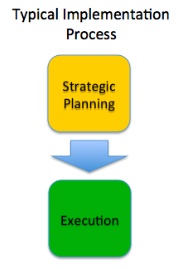
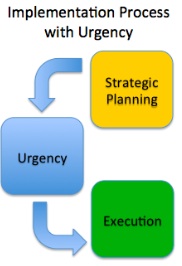
What they came up with was an organization with a clear strategy, where everyone is urgent and aligned toward a common goal, and where execution of those strategies flowed smoothly with all of the management processes you would expect in place. They had designed the typical process most people think successful companies use to implement new strategies.

“So what is missing,” I asked? “Nothing,” they responded. “Let me ask you all a question,” I continued, “Tell me how well this model works at seizing new opportunities or going after new strategies that require a lot of change?” They scratched their heads as they thought about this, but they came up with an answer that is confirmed by research, that only about 30 percent of organizations are good at seizing new, strategic opportunities. Put another way, 70 percent fail trying to do so. So I asked again, “What is missing?” Silence.

One answer that we have uncovered in our work — and it’s something John Kotter learned a long time ago — is that a missing piece required for speed and agility is an “urgency process.” When I say an “urgency process,” I mean including an actual process — as essential as your strategic planning and execution processes — that is dedicated to creating urgency.


When I mention an “urgency process” to groups of executives, I’ll often hear things like, “What is an urgency process?” and “We did not learn this in business school.” Well, here’s one way of defining it: An urgency process is a quantifiable and repeatable way to generate alignment, urgency, and engagement in a majority of employees in a company, division, functional area, or large team. Some of the elements it contains are:

  • Senior leadership team alignment around a market opportunity
  • An urgency team
  • Urgency initiatives to create alignment, urgency, and engagement
  • A way to capture names of urgent employees that want to volunteer to help
  • A means of measuring urgency to ensure at least 50 percent of the organization is urgent

To be clear, an urgency process is not a communications plan. A communications plan is typically a one-way set of activities designed to inform and create awareness. It is not typically designed to align and engage employees as volunteers to take action.

So what do you do when you have 50 percent of your employees in your team, division, or organization urgent and raising their hand to help? How do you put them productively to use?

Read more from Kotter International here.

Download PDF

Tags: , , , ,

| What is MyVisionRoom? > | Back to Vision >

ABOUT THE AUTHOR

Randy Ottinger

Randy Ottinger

Randy Ottinger is an Executive Vice President at Kotter International, a firm that helps leaders accelerate strategy implementation in their organizations.

See more articles by >

COMMENTS

What say you? Leave a comment!

Recent Comments
comment_post_ID); ?> Thank you for this information. I'm going to use this article to improve my work with the Lord.
 
— Abel Singbeh
 
comment_post_ID); ?> Thank you Ed for sharing your insights into the Church Growth Movement. I have my reservations with Church Growth models because it has done more damage than good in the Body of Christ. Over the years, western churches are more focused on results, formulas and processes with little or no emphasis on membership and church discipline. Pastors and vocational leaders are burnt out because they're overworked. I do believe that the Church Growth model is a catalyst to two destructive groups: The New Apostolic Reformation and the Emerging Church. Both groups overlap and have a very loose definition. They're both focus on contemporary worship, expansion of church brand (franchising), and mobilizing volunteering members as 'leaders' to grow their ministry. Little focus on biblical study, apologetics and genuine missional work with no agenda besides preaching of the gospel.
 
— Dave
 
comment_post_ID); ?> Thank you for sharing such a good article. It is a great lesson I learned from this article. I am one of the leaders in Emmanuel united church of Ethiopia (A denomination with more-than 780 local churches through out the country). I am preparing a presentation on succession planning for local church leaders. It will help me for preparation If you send me more resources and recommend me books to read on the topic. I hope we may collaborate in advancing leadership capacity of our church. God Bless You and Your Ministry.
 
— Argaw Alemu
 

Clarity Process

Three effective ways to start moving toward clarity right now.

5 Cs That Help Shape a Missional Culture in Your Ministry

Changing the culture in any ministry is difficult work.

How do you help shape a missional culture in your ministry?  How are you creating an environment in which mature Jesus-followers “live in the world without being of the world, for the sake of their neighborhood?”

Here are 5 C’s to help put it a little more within reach.

Change Your Language

If you want to shape a missional culture, the words you choose should inspire people to act and live as missionaries right where they live.   Your language should be catalytic.  If it’s not, change it.  Be relentless in finding the right words that catalyze missional living in your people.  For example:

We are taking a fresh look at our Value Statements at the Church because we want our values as missional motives to propel every Jesus-follower to take action as missionaries right where they live.  We want them to be more than cool phrases that we teach people in our new members class.  For example:

We refer to our hub administrative staff as our “Mission Support Team” because we want every Jesus-follower at the Church to have the support they need “out in the mission field.”

What language do you sense you need to change?

Celebrate Stories of People on Mission

If you want to shape a missional culture where you lead, then celebrate missional activity.  Makes sense, doesn’t it?  Pay attention to what gets the attention in your local ministry.  Catch people living out their missional calling, then broadcast it in every way possible.  For example:

We created a web-site where we gather missional stories. I periodically interview people on mission in the message on Sunday mornings.

What are some ways you can celebrate the missional activity of your people?

Conduct a Campaign

There are times in ministry when we rally the troops and focus our energies for a season to accomplish a congregational sized goal.  We do it for capital needs all the time.  Is there anything more crucial to a ministry than helping people come to grips with their baptismal identity as missionaries?  Then why not launch a campaign?

Figure out the BIG ISSUES or KEY HIGHLIGHTS that are needing attention in this season of your ministry, rally the troops, and focus your energies there for a season.  For example:

We are on year three of our 3-year Vision Campaign called “1impact”.  This was an intentional season of focus as we pursued our vision “One Church, Regional Impact.”

Even as we close this season, we are beginning to rally the troops again as we consider the BIG ISSUES/ KEY HIGHLIGHTS we will be facing in the next 12-36 months at the Church.  Here’s my Top 10 at the Church:

  • Realizing Growth while embracing a “Low Cost-Low Risk Model” (Low Cost Building and Staffing Solutions)
  • Funding the Vision (Growing Generosity)
  • Multiplying Missionaries
  • Multiplying Discipling Relationships
  • Raising the Bar on Service (Inside and Out)  lifeServe is our weakest strategy component
  • Getting Fitchburg Fired Up to live as a Site
  • Releasing Dependency on Staff/Pastors
  • Multiplying lifeGroups as vibrantly functioning “missional communities”
  • Fully integrating a communication’s strategy that effectively engages everyone
  • Finding our niche and celebrating our approach to Children’s Ministry that is home-centered, community supported, and non-programmatic

What do you need to focus on over these next 12-36 months?  Could a strategic partner like Auxano Campaigns help you focus?

Create Opportunities and Tools for People

People need their local church to support them as they live out their missional calling in the world.  For example:

We created a simple, yet helpful piece called “Cultivating Spiritual Friendship Guide.”  It has surprised me how a simple tool like this can actually help someone be more confident in living the missional life.

Our Sunday morning “Bible Class” at our Fitchburg Site is called faithBuilders.  We use it as a time to equip and challenge Jesus-followers to live missionally.  We’ve used tools like “I Once Was Lost“, to help people in their relationships with those who are far from God.  We have found that our members don’t really need more information about the Bible as much as they need support to live out in obedience what they have already been given.

What tools would really help your people live on mission?

Capture Your Church’s Uniqueness

You need to stop trying to copy other ministries.  Are you conferenced out, growing weary of attempting to plug-in other leaders’ approaches?  Are you ready to do the exhilarating work of figuring out your mission in your community?   Ready to be set free to live out all that God has designed you to be?

We captured our uniqueness by answering five questions.  You can too!

  • What‘s our unique calling in this community? What are we doing?  What have we been uniquely designed to do?
  • Why are we doing this?  What’s our motivation?  What unique core practices demonstrate those motivations?
  • How are we going to fulfill our unique calling?  What’s our methodology for carrying out our unique calling?
  • When are we successful?  How do we know we have accomplished our unique calling?
  • Where is God leading us?  What is the vivid and compelling picture of our future, and what milestones must we pursue to get there?

How would you answer these 5 questions?  

Read more from Jeff here.


Download PDF

Tags: , , ,

| What is MyVisionRoom? > | Back to Culture >

ABOUT THE AUTHOR

Jeff Meyer

Jeff Meyer

I am Jeff Meyer, and I start fires. Ever since that basketball game in college when I came off the bench and lit a spark for my team, I have carried the nickname "Fire Meyer." (Until that point in my career my jersey #22 never saw the floor in an actual game. Perhaps the #22 was a symbol of my life calling: 2 Timothy 2:2?) I live to see sparks ignited and connections made. I long to see the church wake up and live. I long to see Jesus-followers display passionate commitment to Jesus. Jesus' invitation to follow Him was an adventure of epic proportions. Can we recapture that today? I long to see communities transformed into healthy places of wholeness. I believe that communities are transformed when Jesus-followers are stoked and respond. Perhaps you've heard it said that the church is the hope of the world. I believe that a responsive Jesus-follower is the hope of the world. "Igniting connections" is my way of setting off some inspirational sparks; sparks that ignite a passionate response to the call of Jesus.

See more articles by >

COMMENTS

What say you? Leave a comment!

Recent Comments
comment_post_ID); ?> Thank you for this information. I'm going to use this article to improve my work with the Lord.
 
— Abel Singbeh
 
comment_post_ID); ?> Thank you Ed for sharing your insights into the Church Growth Movement. I have my reservations with Church Growth models because it has done more damage than good in the Body of Christ. Over the years, western churches are more focused on results, formulas and processes with little or no emphasis on membership and church discipline. Pastors and vocational leaders are burnt out because they're overworked. I do believe that the Church Growth model is a catalyst to two destructive groups: The New Apostolic Reformation and the Emerging Church. Both groups overlap and have a very loose definition. They're both focus on contemporary worship, expansion of church brand (franchising), and mobilizing volunteering members as 'leaders' to grow their ministry. Little focus on biblical study, apologetics and genuine missional work with no agenda besides preaching of the gospel.
 
— Dave
 
comment_post_ID); ?> Thank you for sharing such a good article. It is a great lesson I learned from this article. I am one of the leaders in Emmanuel united church of Ethiopia (A denomination with more-than 780 local churches through out the country). I am preparing a presentation on succession planning for local church leaders. It will help me for preparation If you send me more resources and recommend me books to read on the topic. I hope we may collaborate in advancing leadership capacity of our church. God Bless You and Your Ministry.
 
— Argaw Alemu
 

Clarity Process

Three effective ways to start moving toward clarity right now.

The Danger in a “Mostly Aligned” Team

My two worlds collided one recent weekend. I introduced my young daughters to the classic film, The Princess Bride. I also had just completed a number of interviews with executives and stakeholders of a client I’m working with on Leading Change in these remarkable times. These things may seem unrelated, but watch how this comes together.

My girls loved Billy Crystal as Miracle Max. The minute the credits ended, they began quoting him. “Girls, come down to dinner,” was met with, “Why don’t you give me a paper cut and rub some lemon juice in it?” My youngest daughter punctuated her kiss goodnight with, “Bye bye boys, have fun storming the castle!” When I asked the girls to retrieve a book for me, they responded with, “It will take a miracle!”

“It will take a miracle” — this is how many business leaders feel as they try to rally their organizations around a big opportunity. After the girls went to sleep, I started reviewing my interview notes from earlier in the week. During these interviews, we always ask about strategy, opportunities and challenges. We also ask how aligned the leadership team is around where they are going, how they want to get there and how quickly and boldly they are planning to move. As I read their responses, I kept hearing Miracle Max. The most common response for this client, as with many of our clients, was “mostly aligned.” Miracle Max had a great line about “mostly”: “Mostly dead is slightly alive.”

I believe executive alignment—really, any alignment—is binary: you either are or you are not. I think about the wheels on my car being “mostly aligned” and what that would feel like. Yet most leadership teams stop at “mostly aligned” and accept it as sufficient. They tend to forget that “mostly aligned” is amplified exponentially further down in the organization, creating more and more distance among an organization’s members. By the time you’ve reached the rank-and-file, the organization is only slightly alive.

One interview answer particularly caught my eye: “ We are aligned on the things we need to be aligned on. The other stuff … we don’t play in each others’ sandboxes.” We talked to the people who worked for this interviewee. They too, recognized this leaders’ attitude, which they translated as, “They do their best to not work together with others or have us coordinate our efforts.”

This may seem trivial, but here are the downstream and long-term effects of this lack of alignment:

  1. Inconsistent instructions based on different interpretations of a new strategy;
  2. Conflicting priorities across silos and departments;
  3. Performance metrics and expectations that reward silo performance and individual achievement over organization-wide results and customer satisfaction;
  4. Vastly different content, focus and messages from meetings.

So, what will it take for these executives to get from “mostly aligned” to aligned? It won’t take a miracle, or even a really big (though chocolate-covered) pill. It will demand the courage to create the time and space to have a conversation about what needs to change so they can accelerate their strategies toward success. Often executives will say they are too busy to make that kind of space. Later, they recognize the turbulence, lost opportunities and wasted energy they’ve caused, and how it has crippled their strategic efforts.

But with a little effort—no magic required—an organization can go from “slightly alive” to thriving.

Read more from Kotter International here.

Download PDF

Tags: , , ,

| What is MyVisionRoom? > | Back to Vision >

ABOUT THE AUTHOR

Ken Perlman

Ken Perlman

Ken Perlman is an engagement leader at Kotter International, a firm that helps leaders accelerate strategy implementation in their organizations. Ken is the father of Ruby and Sadie and lives in southern California with his wife Anastasia.

See more articles by >

COMMENTS

What say you? Leave a comment!

Recent Comments
comment_post_ID); ?> Thank you for this information. I'm going to use this article to improve my work with the Lord.
 
— Abel Singbeh
 
comment_post_ID); ?> Thank you Ed for sharing your insights into the Church Growth Movement. I have my reservations with Church Growth models because it has done more damage than good in the Body of Christ. Over the years, western churches are more focused on results, formulas and processes with little or no emphasis on membership and church discipline. Pastors and vocational leaders are burnt out because they're overworked. I do believe that the Church Growth model is a catalyst to two destructive groups: The New Apostolic Reformation and the Emerging Church. Both groups overlap and have a very loose definition. They're both focus on contemporary worship, expansion of church brand (franchising), and mobilizing volunteering members as 'leaders' to grow their ministry. Little focus on biblical study, apologetics and genuine missional work with no agenda besides preaching of the gospel.
 
— Dave
 
comment_post_ID); ?> Thank you for sharing such a good article. It is a great lesson I learned from this article. I am one of the leaders in Emmanuel united church of Ethiopia (A denomination with more-than 780 local churches through out the country). I am preparing a presentation on succession planning for local church leaders. It will help me for preparation If you send me more resources and recommend me books to read on the topic. I hope we may collaborate in advancing leadership capacity of our church. God Bless You and Your Ministry.
 
— Argaw Alemu
 

Clarity Process

Three effective ways to start moving toward clarity right now.