Going Old School with Church Communication

Is your church leveraging chatbots to reach people? Are you leveraging a social media listening tool to understand the sentiment towards your church? What’s your Instagram story strategy to engage people in your community? Is your church ready for augmented reality and the impact that will have people attending your services?

STOP!

Too many church leaders are running too quickly to optimize the latest communication tools to reach people in their community while they are ignoring “low hanging” fruit with “old school” technologies with proven abilities to do the same. Before your church figures out the latest tool or trend, you need to make sure that you are leveraging existing channels.

In January, Facebook announced its latest changes to the news feed which means organizations like ours are going to see even less “organic” reach on that channel. In fact, many brands are reporting a 50% drop in traffic from the social media behemoth in just a matter of weeks. [ref] This underlines that no church communications strategy can be single source dependent but needs to employ a wide variety of channels to reach your people and your community.

3 Reasons Church Leaders Are Drawn to the Latest Communication Technologies

  • Shiny Object Syndrome // Too many of us are drawn towards the “latest” thing because it’s the latest thing. We hear some tech blogger talk about the latest whiz-bang service and we’re convinced that will solve our communication issues. The act of jumping from one shiny object to the next means that we don’t take time to dig deep and optimize any given channel.
  • FREE is in our Budget // Most of us are trying to figure out how to reach more people with little or no financial investment. Lots of digital marketing solutions start out using “free” as a marketing tactic to get businesses using their platforms, and we’re drawn to that pricing! Over time, these platforms end up charging for what they were giving away, which means, we need to move on.
  • We’re Aware Consumers // Lots of church leaders I know are actively engaged in the world around us. We spend time not just floating through life but are curious individuals. This is a great way to be! We see other organizations and businesses communicating with their communities and wonder what would happen if we applied those lessons to what we do in our church. In the end, we can be left bolting on one new strategy after another and ignoring legacy approaches that are still highly effective.

Your Church Should Be Sending More Emails

The industry’s average open rates for email for churches is 25.62%, and average rate that people will click on links in those emails is almost 8%. In fact, in a recent study it was found that as an industry, religious organizations have the highest open rates among dozens of tested industries. [ref] In a world where less than 1 in 100 people will see a post on Facebook that your church publishes, the fact that 1 in 4 people will open an email you send them starts to seem like a great opportunity!

Most of us have a love/hate relationship with email. In fact, if we’re honest most days we hate email. However, don’t allow your stress around managing your inbox drive assumptions about how your people think about receiving emails from your church. Well-crafted emails need to be at the core of your communications strategy. Regardless of how many emails your church sends on a regular basis, you need to increase the frequency. Email isn’t going anywhere and continues to be the go-to channel for driving engagement with people.

6 Emails Every Church Should Be Sending on a Regular Basis

  • “New Here” Guest Welcome // When guests arrive at your church, you need to acknowledge that and send a quick email to them. Ideally, this email is received within hours of them visiting your church.
  • Saturday Emails Before Series Launch // In my book, Church Growth Flywheel, we talked about using email in some ways to grow your church. One important way is through sending an email to your people the day before you launch every new series.
  • Donor Acknowledgements // When people give to your church they are doing an incredibly special thing. Ensure the emails you send to them not only thanks them for giving to the mission of the church but also point towards how their giving is fueling the mission of the church.
  • Volunteer Reminders // Send your people a reminder about the fact that they are serving with your team. Use this email to reinforce the vision of why they are serving and give them vital information so they know what to expect.
  • Sunday Recap Emails // Not everyone attends your church every weekend so why not tell them what they missed. Give them insights about what the message was about. Tell them what the big “call to action” announcement was.
  • Year-End Giving Email // 10% of all charitable giving is done in the last 48 hours of the year. You need to leverage that opportunity through a well-crafted email asking people to give to the mission of the church. Read more about this here.

4 Ways to Increase Open Rates on Your Church’s Emails

  • Pay Attention to the “Sender” // Experiment with who the emails are sent from to see what increases open rates. People are more likely to open emails from the Lead Pastor than a generic inbox.
  • Write to Real People // Don’t overdo the graphics and fancy stuff. Lots of studies show that the best responding emails are underwritten as if they are going out to just individual people.
  • Ask Questions in Subject Line // As a rule of thumb, when you use a question as the subject of an email it will see higher open rates. Humans can’t help but click on that to see the answer.
  • Email is a Mobile Tool // Remember that most of the people who open your emails will do so on a phone or other mobile device. Keep your email short and to the point!

What’s the open rate on a postcard mailed to someone’s house?

Your church isn’t leveraging the postal service enough. This is about as “old school” as it gets to when it comes to communication strategies. However, there is a great opportunity here because there are only two types of mails that most people get at home anymore:

  • Junk Mail – stuff they don’t want.
  • Bills – bad news they wish didn’t exist.

When you send any form of direct mail to your people, it’s received as an oasis amid that desert. Your direct mail gets their attention and can drive deep engagement with your church. Often the mail that you send to people’s homes has long lasting staying power as people will put it up on the fridge or the coffee table.

5 Direct Mail Pieces Your Church Could Try This Year

  • Series Invite Cards // Instead of just handing out invites to the next series coming at your church you could mail two copies to all your people and ask them to invite two friends.
  • Volunteer Thank You Cards // Everyone loves a handwritten note. It brings a smile to people’s face when we take a minute to write out a few kind words to people who serve in our ministry.
  • First Time Donor Gift // A tool something like “What Happens When You Give” is a perfect way to acknowledge people who choose to fuel the mission at your church.
  • Recall Letter // If someone comes as a “first-time guest” at your church but you don’t see any evidence that they’ve been back in the last two months … send them a letter with a coffee shop gift card and ask them to join you again!
  • Annual Report // Taking time to celebrate what is happening through an annual vision report is a perfect thing to mail out to your community. A well-crafted vision report reinforces that people are making the right decision being a part of your community.

Like most forms of communication, direct mail needs to be regular and high quality. You won’t see an immediate response from one single print piece that you send to people’s home. However, over time as you submit pieces to people’s homes, you’ll notice that your people will respond to what you’re sending their way.

Calling People Still Works

Perhaps one of the greatest ironic twists of technology’s fate is that as the “phone” became ubiquitous and went from being used for calling the homes that people live in, to calling people directly, we call people a lot less than we used to. In fact, lots of people seem to be allergic to talking on the phones that they carry around in their pockets all the time. The availability of this technology is a tremendous opportunity for churches.

… like really calling people.

Your church could organize a small team to ask people who they are inviting to the upcoming “big day.” A few years ago, we assembled a team to call 2,500 people connected to our church to ask them to come to our Easter services, and in the end, it was part of us setting an attendance record that year. [ref] With a little organization and motivation your team can make hundreds of connections at scale and see people more plugged in with what God is doing at your church!

… or at least texting people.

The “open rates” on texting are nearly 100% because people are reflexively answering those little notifications that happen when someone texts them. A well-timed text can be received by your community as a small gift on their phone. Texting is also a perfect tool to drive “call to actions” like registrations because you know it’s being received on a phone that can open online forms and registration systems.

… the 1% factor.

Experience shows that about 1% of your audience will be annoyed by this personal approach to communication. Be ready for a tiny group of people that will think you’ve stepped over some line and are invading their privacy. You have just reached into their pocket or purse and asked them to pay attention for a moment, so it’s somewhat understandable. Don’t be put off by this group though … the clear majority of people you reach out to will be thankful that you reached out to them!

Why don’t more churches blog?

This one baffles me. Why doesn’t your church have a blog where you’re communicating with your people and your community regularly? This free communication channel continues to provide considerable benefits to churches who invest the time to make content and share it on a regular basis.

5 Benefits to Churches Who Blog

  • Google Sees You // We all know that if people can’t find you when they search online, you practically don’t exist. Regularly and thoughtful blogging makes your church more “search engine friendly” and ultimately makes it easy for guests to connect with you.
  • Content for Social // Rather than another graphic square that tells people your service times for this weekend, your blog content is a fantastic fuel to feed your social media channels.
  • Make Your People “Famous” // People love seeing their names in print, posts like “volunteer of the week” and “small group profiles” are great ways to celebrate people in your church.
  • Test Content // Blogging is a fantastic channel to work on ideas that you are going deal with in other venues in your church. This could be through passive channels of merely sharing ideas that you’re thinking about or effective methods like polling & surveys.
  • Extend Learning // Prevailing churches are looking for ways to extend the learning beyond just the weekend and into rest of their people’s lives. Blogging gives the church an opportunity to take what you’re talking about on Sunday and push those lessons into the rest of the week.

NewSpring is probably the most beautiful example of church blogging around. They provide helpful articles on a wide variety of topics and are committed to creating regular compelling content. In Church Growth Flywheel, we pulled their strategy apart and looked at how you can apply lessons to your church.

Maybe it’s time to go old school?

When it’s all said and done it’s about being effective. Rather than jumping just to the latest trend, you should be looking for what is an effective approach to ensuring that the right message is getting to the right people at the right time at your church. As we’ve shown above, oftentimes the solution is right under our nose and we just need to apply it. I’d love to hear from you about what you’ve done that seems kind of “old school” but has worked well in your community!

> Read more from Rich.


Learn more about the effectiveness of “old school” communication – connect with an Auxano Navigator today!

Download PDF

Tags: , , , , ,

| What is MyVisionRoom? > | Back to Communication >

ABOUT THE AUTHOR

VRcurator

VRcurator

Bob Adams is Auxano's Vision Room Curator. His background includes over 23 years as an associate/executive pastor as well as 8 years as the Lead Consultant for a church design build company. He joined Auxano in 2012.

See more articles by >

COMMENTS

What say you? Leave a comment!

Recent Comments
comment_post_ID); ?> Thank you for this information. I'm going to use this article to improve my work with the Lord.
 
— Abel Singbeh
 
comment_post_ID); ?> Thank you Ed for sharing your insights into the Church Growth Movement. I have my reservations with Church Growth models because it has done more damage than good in the Body of Christ. Over the years, western churches are more focused on results, formulas and processes with little or no emphasis on membership and church discipline. Pastors and vocational leaders are burnt out because they're overworked. I do believe that the Church Growth model is a catalyst to two destructive groups: The New Apostolic Reformation and the Emerging Church. Both groups overlap and have a very loose definition. They're both focus on contemporary worship, expansion of church brand (franchising), and mobilizing volunteering members as 'leaders' to grow their ministry. Little focus on biblical study, apologetics and genuine missional work with no agenda besides preaching of the gospel.
 
— Dave
 
comment_post_ID); ?> Thank you for sharing such a good article. It is a great lesson I learned from this article. I am one of the leaders in Emmanuel united church of Ethiopia (A denomination with more-than 780 local churches through out the country). I am preparing a presentation on succession planning for local church leaders. It will help me for preparation If you send me more resources and recommend me books to read on the topic. I hope we may collaborate in advancing leadership capacity of our church. God Bless You and Your Ministry.
 
— Argaw Alemu
 

Clarity Process

Three effective ways to start moving toward clarity right now.

One Big Communication Thought that Keeps Your Mission In Focus

Most churches communicate as though getting people to attend events is the primary goal. And when they do, they create all sorts of problems … and even end up, at times, working against the purpose of the mission they are trying to serve.

In our culture, most organizations have what I would call a lower purpose and a higher purpose. In the for-profit world, the lower purpose is always making money. The higher purpose has to do with the “why” behind the “what.” (For more on that, check out Simon Sinek’s TED talk on the topic.)

The same is true for churches, but most of them don’t realize it. For churches, the lower purpose has to do with attendance and giving. If we get people to attend our events … and if they give enough to keep the budget going, then we’re fine.

But that’s not the church’s higher purpose.

Every church is trying to serve the higher purpose of sharing the message and life of Jesus … and inviting people to experience that life. They all have unique ways that they express the life of Jesus, but at their core, the higher purpose is the same.

The problem is that most churches … and church communications … are designed around the lower purpose.

When that happens, ministries elbow each other out of the way for time on stage. The weekly bulletin has to contain every item that will take place at the church. Even more importantly, each event or program is measured as a success purely by attendance.

What happens when the higher purpose shapes the church … and church communications?

Implementing The Higher Purpose Strategy To Communication

Any announcements in the service are framed as next steps of engagement with the mission of the church. The bulletin contains a few prioritized next steps, not a menu of options. Ministry leaders are not simply concerned about getting people TO a program … they want to get people THROUGH an program.

What are inviting people to move into when they show up? And how are we making that easy for them?

If you’re answering these questions about each event or program at your church, your church (and your communications!) will remain stuck in the lower purpose.

When that happens, you won’t gain significant ground toward your mission to invite people deeper into life with Jesus, you will simply gather a crowd. You don’t want to settle for that, do you?

You’ve probably noticed something. This isn’t just about church communications. This is about every ministry leader and every ministry environment.

Your overall strategy as a church should be to move people THROUGH your different ministry environments to deeper levels of engagement with your mission. When that happens, communication becomes easy—all it has to do is clearly match the strategy and it will be exponentially more effective.

Don’t settle for the lower purpose of attendance. Strive for the higher purpose of mission engagement. That’s when lives and communities are truly changed.

> Read more from Steve.


Talk with an Auxano Navigator to learn how your communications keep your mission in focus.

Download PDF

Tags: , ,

| What is MyVisionRoom? > | Back to Communication >

ABOUT THE AUTHOR

Steve Finkill

Steve Finkill

Steve Finkill is the Chief Messaging Officer at ID Digital, a verbal, visual, and marketing company. Dream Vacation: Driving the Pacific Coast Highway with my wife. Stopping for great food and some golf along the way. Ice Cream Flavor: Vanilla with real peanut butter mixed in. Favorite Films The Shawshank Redemption, The Empire Strikes Back, and Tombstone. Surprising Personal Fact: I was the Table Tennis Champion of my middle school. Favorite Album: The Firm Soundtrack, Dave Grusin. Coffee: Never. Beverages are meant to be cold.

See more articles by >

COMMENTS

What say you? Leave a comment!

Recent Comments
comment_post_ID); ?> Thank you for this information. I'm going to use this article to improve my work with the Lord.
 
— Abel Singbeh
 
comment_post_ID); ?> Thank you Ed for sharing your insights into the Church Growth Movement. I have my reservations with Church Growth models because it has done more damage than good in the Body of Christ. Over the years, western churches are more focused on results, formulas and processes with little or no emphasis on membership and church discipline. Pastors and vocational leaders are burnt out because they're overworked. I do believe that the Church Growth model is a catalyst to two destructive groups: The New Apostolic Reformation and the Emerging Church. Both groups overlap and have a very loose definition. They're both focus on contemporary worship, expansion of church brand (franchising), and mobilizing volunteering members as 'leaders' to grow their ministry. Little focus on biblical study, apologetics and genuine missional work with no agenda besides preaching of the gospel.
 
— Dave
 
comment_post_ID); ?> Thank you for sharing such a good article. It is a great lesson I learned from this article. I am one of the leaders in Emmanuel united church of Ethiopia (A denomination with more-than 780 local churches through out the country). I am preparing a presentation on succession planning for local church leaders. It will help me for preparation If you send me more resources and recommend me books to read on the topic. I hope we may collaborate in advancing leadership capacity of our church. God Bless You and Your Ministry.
 
— Argaw Alemu
 

Clarity Process

Three effective ways to start moving toward clarity right now.

The Challenge of Conflict, Part 1: Redeeming It

No matter how you define it, conflict is a serious issue that all church leaders face – all too often. You would think that a church “family” should be able to avoid conflict. But how often does your own biological family go through conflict of various intensities?

Your church family consists of hundreds or thousands of complex human relationships, all brought together under the banner of worshipping and serving God in this particular place and time.

You’ve invested yourself heavily in these relationships – as has everyone else to varying degrees. We all have expectations of each other – and when those are not met, the seeds of conflict are planted. Left unaddressed these small seeds can grow into a garden of weeds that choke out the healthy dialog needed to restore the relationship. The longer the situation goes untended, the greater the issue(s) magnify – until the weeds have taken over the garden and any hope of bearing fruit has been squeezed out entirely.

Is it possible to avoid conflict entirely? In a word, no. We’re too “human” to hope for that.

Can we transform and redeem conflict from a destructive force to one in which all parties come through the other side, better for the experience? In a word, yes. We’re children of a loving Father, and His love can see us through any level of conflict.

THE QUICK SUMMARY – Discover Your Conflict Management Style, by Speed B. Leas

Speed B. Leas helps readers to assess their conflict response and discover options appropriate to different levels of conflict.

He draws on years of experience helping conflicted congregations to provide valuable insights on the nature of conflict and its resolution, making this an excellent tool for raising self-awareness and a practical introduction to conflict management.

This new edition contains an improved Conflict Strategy Instrument, revised to reflect new learnings and more accurately describe your conflict management style.

A SIMPLE SOLUTION

When faced with almost any situation in life, most of us will respond on the basis of how we have handled similar encounters. Our response pattern is also influenced by the issue at hand or the individuals involved. For example, an individual may find controlling the conversation during an argument works best with his spouse. That same pattern will usually be taken in similar conflicts with others.

This “conflict management style” may be intentionally or unintentionally selected. It may also change depending on the specific circumstances surrounding the conflict.

If you accept the principle that conflict is a part of life, and that, over time, we adopt specific conflict management styles, then the natural progression delivers this: Identifying and understanding our conflict management styles will usually help us work through conflicts in a quicker and more satisfactory conclusion for all parties involved.

Understanding your conflict management style will help you become more comfortable with differences and encourage open and confident sharing of differences and concerns with one another.

This instrument identifies six different styles for managing differences: Persuading, Compelling, Avoiding/Accommodating, Collaborating, Negotiating, and Supporting.

Each can be an appropriate style, and none should be thought of as “bad” or inferior. A certain style can cause a problem when it is used inappropriately, but one should not assume that Avoiding is always wrong or that all conflicts must be confronted.

Persuasion strategies are those where a person or group attempts to change another’s point of view, way of thinking, feelings, or ideas. One attempting to persuade another uses rational approaches, deductive and inductive argument, and any other verbal means she thinks will work to convince the other that her opinion is the one that should prevail.

Most of the Compelling we experience in our day-to-day lives is not through the use of physical force but that which comes through the use of authority. Authority is the right we give to a person or group to make certain decisions for us – because it is expedient or because we can’t agree. Authority comes through a tacit or explicit contract we make with others.

When one Avoids a conflict, one evades or stays away from it, attempting to skirt it or keep it from happening. Ignoring a conflict is acting as if it weren’t going on. Fleeing is actively removing yourself from the arena in which conflict might take place. When you accommodate, you go along with the other, with the opposition. Procrastination is a common strategy used to avoid, ignore, or accommodate. Putting off dealing with the conflict may be the most common way that this set of strategies is used.

Collaborative conflict strategies are frequently touted as the best or only strategy to use when dealing with conflict. When one collaborates, one co-labors, works together, with others on the resolution of the difficulties that are being experienced.

Negotiating refers to a strategy that is very similar to Collaboration, except that the expectations of the parties are lower as they enter the conflict arena. People who use Negotiation are trying to get as much as they can, assuming that they will not get everything they want.

Often called communication skills or active listening, Support strategies assume that the other is the one with the problem. It is your task NOT to take responsibility for dealing with it, but to help the other deal with the problem.

Speed B. Leas, Discover Your Conflict Management Style

A NEXT STEP

Use the following team exercise to help everyone understand the different types of conflict management styles.

Create a fictional congregational situation that has the potential for being divisive. Develop a back-story and supporting characters.

Ask each member of your team to undertake one of the six types of conflict management styles listed above. If you have more than six on your team, partner up with others so there are six groups.

With the fictional situation in mind, allow 15 minutes for each group to develop a brief presentation for the rest of their group, based on their assigned conflict management style. The presentation should include highlights or bullet points written on a chart tablet.

When everyone has completed their work, have each group present their work to the entire team.

After each team has made their presentation, enter into a team discussion, working through each of the six conflict management styles. Ask individual team members to share which of the six they are most comfortable using, and which is most uncomfortable.

In closing, challenge the team to review and keep in mind these six conflict management styles as they lead their individual teams.

Excerpt taken from SUMS Remix Issue 66-2, issued May 2017


This is part of a weekly series posting content from one of the most innovative content sources in the church world: SUMS Remix Book Summaries for church leaders.

SUMS Remix takes a practical problem in the church and looks at it with three solutions; each solution is taken from a different book. Additionally, a practical action step is included with each solution.

As a church leader you get to scan relevant books based on practical tools and solutions to real ministry problems, not just by the cover of the book. Each post will have the edition number which shows the year and what number it is in the overall sequence. (SUMS Remix provides 26 issues per year, delivered every other week to your inbox). 

Download PDF

Tags: , , ,

| What is MyVisionRoom? > | Back to Leadership >

ABOUT THE AUTHOR

VRcurator

VRcurator

Bob Adams is Auxano's Vision Room Curator. His background includes over 23 years as an associate/executive pastor as well as 8 years as the Lead Consultant for a church design build company. He joined Auxano in 2012.

See more articles by >

COMMENTS

What say you? Leave a comment!

Recent Comments
comment_post_ID); ?> Thank you for this information. I'm going to use this article to improve my work with the Lord.
 
— Abel Singbeh
 
comment_post_ID); ?> Thank you Ed for sharing your insights into the Church Growth Movement. I have my reservations with Church Growth models because it has done more damage than good in the Body of Christ. Over the years, western churches are more focused on results, formulas and processes with little or no emphasis on membership and church discipline. Pastors and vocational leaders are burnt out because they're overworked. I do believe that the Church Growth model is a catalyst to two destructive groups: The New Apostolic Reformation and the Emerging Church. Both groups overlap and have a very loose definition. They're both focus on contemporary worship, expansion of church brand (franchising), and mobilizing volunteering members as 'leaders' to grow their ministry. Little focus on biblical study, apologetics and genuine missional work with no agenda besides preaching of the gospel.
 
— Dave
 
comment_post_ID); ?> Thank you for sharing such a good article. It is a great lesson I learned from this article. I am one of the leaders in Emmanuel united church of Ethiopia (A denomination with more-than 780 local churches through out the country). I am preparing a presentation on succession planning for local church leaders. It will help me for preparation If you send me more resources and recommend me books to read on the topic. I hope we may collaborate in advancing leadership capacity of our church. God Bless You and Your Ministry.
 
— Argaw Alemu
 

Clarity Process

Three effective ways to start moving toward clarity right now.

Two Really Bad Ways to Work on Your Leadership Weakness

Just as all leaders have areas of strength, all leaders also have areas of weakness. There is no such thing as an omni-competent leader. But what should a leader do with his or her weaknesses? Books have been written and speeches have been given encouraging leaders to focus on their strengths, to leverage what they are uniquely qualified to do. And while the counsel is wise, that we should focus on our strengths and operate in our gifting, the counsel is incomplete. Our weaknesses as leaders can crush us if we do either of these things with them:

1. Ignore them.

The struggle with the counsel to focus exclusively on your strengths is that your weaknesses can crush you if they are not managed. In his book, The Leadership Code, Dave Ulrich gives four key disciplines for all leaders (strategist, executor, talent manager, and developer) and argues that leaders must be at least average in all of them. You don’t have to be excellent in all of them but if you are not at least average, your weakness becomes, according to Ulrich, a debilitating weakness. But some leaders make the mistake of ignoring their weaknesses.

  • The “super administrative leader” can be tempted to shrug off his/her lack of relational skills. And while the administrative guru does not need to be the walking epitome of “how to win friends and influence people,” if the admin guru can’t look people in the eyes and have a conversation, the leader’s weakness will thwart his/her strength.
  • The “visionary” can be tempted to shrug off execution. “Oh, those are just details; I am a high level thinker.” But if the visionary can’t answer emails and get anything done on time, people won’t listen to his/her vision indefinitely.

2. Lead in them.

It takes neglect for leaders to ignore their weaknesses and pride to lead in them. A leader who insists he/she can do everything is ignorant of the gifting in those around him/her. To lead in your weaknesses proves too high a view of yourself and too low a view of others around you. It is absolutely foolish to attempt to prove yourself as “the man” or “the top leader” by failing to admit your weaknesses and rely on others around you. Leaders who lead in their weaknesses dishonor the gifting of the men and women who surround them and limit their own effectiveness.

Both the leader who ignores weaknesses and the leader who leads in them will lose credibility. Lead in your strengths while managing your weaknesses.

> Read more from Eric.


Download PDF

Tags: , ,

| What is MyVisionRoom? > | Back to Leadership >

ABOUT THE AUTHOR

Eric Geiger

Eric Geiger

Eric Geiger is the Senior Pastor of Mariners Church in Irvine, California. Before moving to Southern California, Eric served as senior vice-president for LifeWay Christian. Eric received his doctorate in leadership and church ministry from Southern Seminary. Eric has authored or co-authored several books including the best selling church leadership book, Simple Church. Eric is married to Kaye, and they have two daughters: Eden and Evie. During his free time, Eric enjoys dating his wife, taking his daughters to the beach, and playing basketball.

See more articles by >

COMMENTS

What say you? Leave a comment!

Recent Comments
comment_post_ID); ?> Thank you for this information. I'm going to use this article to improve my work with the Lord.
 
— Abel Singbeh
 
comment_post_ID); ?> Thank you Ed for sharing your insights into the Church Growth Movement. I have my reservations with Church Growth models because it has done more damage than good in the Body of Christ. Over the years, western churches are more focused on results, formulas and processes with little or no emphasis on membership and church discipline. Pastors and vocational leaders are burnt out because they're overworked. I do believe that the Church Growth model is a catalyst to two destructive groups: The New Apostolic Reformation and the Emerging Church. Both groups overlap and have a very loose definition. They're both focus on contemporary worship, expansion of church brand (franchising), and mobilizing volunteering members as 'leaders' to grow their ministry. Little focus on biblical study, apologetics and genuine missional work with no agenda besides preaching of the gospel.
 
— Dave
 
comment_post_ID); ?> Thank you for sharing such a good article. It is a great lesson I learned from this article. I am one of the leaders in Emmanuel united church of Ethiopia (A denomination with more-than 780 local churches through out the country). I am preparing a presentation on succession planning for local church leaders. It will help me for preparation If you send me more resources and recommend me books to read on the topic. I hope we may collaborate in advancing leadership capacity of our church. God Bless You and Your Ministry.
 
— Argaw Alemu
 

Clarity Process

Three effective ways to start moving toward clarity right now.

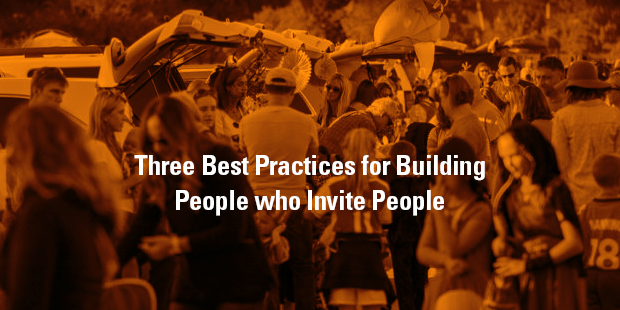
Three Best Practices for Building People who Invite People

At my church, communication and marketing is all about equipping people to represent the church in the community. This, and not advertising, is my best strategy to invite people and grow a church. It’s built in relationship, based in community, fits with the gospel and fits with best communication practices today.

WHAT IS YOUR CHURCH MARKETING STRATEGY?

A church member recently asked me about putting an ad on a billboard. It got me to thinking – what do I like and not like about this idea? This led to some clarification about our brand – what matters to us as a church, or as I have called it, what makes us burn. (If you’re trying to figure out your church’s brand, look here for a set of tips to help you explore.)

After 18 months of learning the community of St. Andrew, I realized that we have two brand distinctives as a church:

1. A STRONG COMMITMENT TO AND COMMUNITY OF RELATIONSHIPS

In most churches, a strong sense of relationship means a small community. While many large churches are perceived as being impersonal, St. Andrew senior pastor Robert Hasley’s long commitment to the people of St. Andrew has created as strong an association with relationships as you’ll find in any large church.

2. AN EXCELLENT OFFERING OF WEEKLY WORSHIP

At the same time, you’d be hard pressed to find a large congregation in north Texas that offers such high quality worship in both traditional and contemporary settings. While traditional worship at St. Andrew is long established, contemporary worship has caught the attention of many, as evidenced by its strong growth trajectory (our contemporary worship has averaged over 10% growth for two years straight, which puts it among the top churches in America.)

I like to talk about these two brand distinctives in a single phrase: Side by Side. In relationships with one another, we are one church, standing side by side, changing the world through the work of the Holy Spirit. In our matching, high quality traditional and contemporary worship styles, we stand side by side, offering a dual experience that is unique among regional churches.

EFFECTIVE COMMUNICATION IS ABOUT RELATIONSHIPS

While most marketing tries to build community, or “establish markets,” good churches already have a true community. Good communication in a local church builds on relationships.

According to Dallas-based large church research firm Leadership Network, 90% of church growth happens on the arm of a trusted friend. We have been seeing this in action at St.Andrew, where we are growing through organic spread of effective, word of mouth marketing from friend to friend and family to family.

That means the primary goal of church marketing isn’t to generate new “leads” but to galvanize and inspire the people who call St. Andrew home to invite their friends and neighbors. Churches that look to marketing to generate leads are usually not healthy, vibrant and growing.

Church marketing doesn’t drive relationships. Church marketing supports relationships.

THE HIGH BAR OF COLD CHURCH MARKETING.

The reason is that the bar for cold visits is simply too high in church now.

Consider: your brand has to be so comfortable with a prospective newcomer that they would feel no qualms about making the choice to visit. That means they must be comfortable with:

  • the people who attend – do they look like people I’d like?
  • the facility – does it look current or creepy?
  • the brand – does the church seem friendly?
  • the website – can I figure out what’s going on?
  • the campus signage – can I figure out where to go?
  • the communication within the church – what happens if I visit?

Once inside, the first word out of a greeter’s mouth may make or break it. Even if the visitor clears bars 1 – 5, often something happens in the lobby (narthex) or in the worship service that turns the visitor off, and they don’t return.

Instead, most people come and stay because of the second way – the invitation of the friend. Friends help newcomers contextualize, understand and minimize their fears.

Church marketing is about the power of personal recommendation.

INSTEAD, HELP YOUR PEOPLE INVITE PEOPLE.

Good church marketing helps to overcome the awkwardness a church community feels about discussing matters of religion and faith with those outside the walls of their church. It gives people specific handles to start and continue conversations.

As the life of faith is built on relationships, good church marketing serves as a form of strategic caring by facilitating new relationships and deepening existing ones. This is how church growth really works.

The world of business is gradually coming to the same realization. To quote marketer Seth Godin, we no longer live in an interruption economy but a permission economy. Effective communication today engages audiences, builds trust, and earns permission, rather than getting attention by sticking a foot in the door and yelling.

The beauty of St. Andrew is that we are already a church built on the power of personal recommendation. We are a church of relationships. We trust the word of a friend. Because of this, our primary goal isn’t to grab people cold, but to support and extend existing networks and organic opportunities. Our primary goal is to elevate the St. Andrew brand through the power of relationships.

3 MEASURES FOR HELPING YOUR PEOPLE INVITE PEOPLE.

In order for your people to feel comfortable inviting others, you need to make sure you’re delivering on a few basics. Rather than putting all of your attention into advertising, which is mostly a poor use of your resources, I’d suggest these three things:

1. DELIVER ON AN EXPERIENCE PROMISE.

If every fourth worship service is a clunker, with bad music or failing technology or a meandering message, your people won’t have trust that next week will be meaningful. Create a consistent excellent experience each week, so that your people feel comfortable inviting their friends.

2. DELIVER ON THE HOSPITALITY PROMISE.

Overcome the awkwardness people naturally feel when walking into a new church. Create a world-class hospitality environment, where people feel welcomed and that the church is a good “fit” for them.

3. EQUIP YOUR PEOPLE TO INVITE.

Don’t just expect people to do the work of inviting on their own. Give them resources and handles to help facilitate easy conversations. Help your people tell the story of your church community and create new and additional opportunities for invitation and hospitality.

We occasionally advertise, and we also do publicity work. But the measure of success of good marketing in your community isn’t by the cold calculus of leads but by the warmth and excitement your own people feel about your church. It is about their eagerness – not just willingness, but excitement – about sharing the power of their church experience with their co-workers, friends and family.

What efforts would you like to see your church implement to become better at inviting people?

Read more from Len.


Download PDF

Tags: ,

| What is MyVisionRoom? > | Back to Vision >

ABOUT THE AUTHOR

Len Wilson

Len Wilson

Christ follower. Storyteller. Strategist. Writer. Creative Director at St Andrew. Tickle monster. Author, Think Like a Five Year Old (Abingdon).

See more articles by >

COMMENTS

What say you? Leave a comment!

Recent Comments
comment_post_ID); ?> Thank you for this information. I'm going to use this article to improve my work with the Lord.
 
— Abel Singbeh
 
comment_post_ID); ?> Thank you Ed for sharing your insights into the Church Growth Movement. I have my reservations with Church Growth models because it has done more damage than good in the Body of Christ. Over the years, western churches are more focused on results, formulas and processes with little or no emphasis on membership and church discipline. Pastors and vocational leaders are burnt out because they're overworked. I do believe that the Church Growth model is a catalyst to two destructive groups: The New Apostolic Reformation and the Emerging Church. Both groups overlap and have a very loose definition. They're both focus on contemporary worship, expansion of church brand (franchising), and mobilizing volunteering members as 'leaders' to grow their ministry. Little focus on biblical study, apologetics and genuine missional work with no agenda besides preaching of the gospel.
 
— Dave
 
comment_post_ID); ?> Thank you for sharing such a good article. It is a great lesson I learned from this article. I am one of the leaders in Emmanuel united church of Ethiopia (A denomination with more-than 780 local churches through out the country). I am preparing a presentation on succession planning for local church leaders. It will help me for preparation If you send me more resources and recommend me books to read on the topic. I hope we may collaborate in advancing leadership capacity of our church. God Bless You and Your Ministry.
 
— Argaw Alemu
 

Clarity Process

Three effective ways to start moving toward clarity right now.

Maximize Team Effectiveness, Part One: Remote Work Starts With Your Culture

How can you maximize team effectiveness, as well as better steward Church resources, by leveraging cultural shifts in the workplace?

If you ask people where they go when they really need to get work done, very few will respond “the office.” If they do say the office, they’ll include a qualifier such as “super early in the morning before anyone gets in” or “I stay late at night after everyone’s left” or “I sneak in on the weekend.”

What they’re trying to tell you is that it is hard to actually get work done at the office. The average office has become the last place people want to be when they really want to get work done during the day. How many Pastors actually study for Sunday in their office? Most have a home-office or office-within-the-office they retreat into.

That’s because offices have become disruption factories.

Meaningful work, creative work, thoughtful work, and important work – this type of effort takes stretches of uninterrupted time to get into the zone. But in most offices, such long stretches just can’t be found. Instead, it’s just one appointment or distraction after another.

Millions of workers and thousands of companies have already discovered the joys and benefits of working remotely.

Is it time your church considered current remote working options?

THE QUICK SUMMARY – The Year Without Pants, by Scott Berkun

Fifty million websites, or 20 percent of the entire web, use WordPress software. The force behind WordPress.com is a convention-defying company called Automattic, Inc., whose 120 employees work from anywhere in the world they wish, barely use email, and launch improvements to their products dozens of times a day. With a fraction of the resources of Google, Amazon, or Facebook, they have a similar impact on the future of the Internet. How is this possible? What’s different about how they work, and what can other companies learn from their methods?

To find out, former Microsoft veteran Scott Berkun worked as a manager at WordPress.com, leading a team of young programmers developing new ideas. The Year Without Pants shares the secrets of WordPress.com’s phenomenal success from the inside. Berkun’s story reveals insights on creativity, productivity, and leadership from the kind of workplace that might be in everyone’s future.

  • Offers a fast-paced and entertaining insider’s account of how an amazing, powerful organization achieves impressive results
  • Includes vital lessons about work culture and managing creativity

The Year Without Pants shares what every organization can learn from the world-changing ideas for the future of work at the heart of Automattic’s success.

A SIMPLE SOLUTION

Culture is incredibly important when it comes to considering moving into the possibility of remote work. The stronger your culture, the less specific training and oversight is needed.

You don’t need everyone to be physically together to create a strong culture. After all, culture really isn’t found in a handbook or in a poster on a wall. Culture is about the actions and values being lived out day by day in your organization.

If your culture is strong, and is centered on your vision, then physical location of work being done toward those ends is – or should be – a minor concern. As a practical matter, most organizations today have blown past the work/personal life boundaries of prior generations.

Isn’t it time to recognize that, and bring a little common sense back into the equation?

Many people assume working remotely is a sham. It violates the bright yellow line that we pretend exists between work and home, a line shattered by laptops and mobile e-mail years ago.

The very idea of working remotely seems strange to most people until they consider how much time at traditional workplaces is spent working purely through computers. If 50 percent of your interacting with coworkers is online, perhaps through e-mail and web browsers, you’re practically working remotely.

If remote work allows location to become irrelevant, you can hire the best talent in the world, wherever they are.

Remote work will succeed or fail because of company culture, not because of the feature itself.

Self-motivated people thrive when granted independence

Managers who want better performance must provide what their staff need

Remote work is a kind of trust, and trust works two ways. If someone who works for you wants to work remotely or use a new e-mail tool or brainstorming method, little is lost in letting him or her try it out. If his or her performance stays the same or improves, you win. If it goes poorly, you still win, as you’ve demonstrated your willingness to experiment, encouraging everyone who works for you to continue looking for ways to improve their performance.

Most people doubt online meetings can work, but they somehow overlook that most in-person meetings don’t work either. Being online does mean everyone might be distracted, but plenty of meetings today are filled with people with their laptops open, messaging each other about how bored they are.

Scott Berkun, The Year Without Pants

A NEXT STEP

When considering the move to having remote work as a regular part of your organizational routine, the strength of your present culture is a huge first step. Even with a strong culture, though, you as a leader need to be prepared for comments and criticism from within your organization, from the stakeholders outside the organization, and from the people your organization serves.

To prepare for dealing with these criticisms, write potential excuses for why remote work won’t work for you. Use the ideas below as starters, and add your own unique ones.

  • We can really only work when we’re all in a room
  • If I can’t see my team, how do I know they’re working?
  • Homes, coffee shops, etc. are full of distractions
  • Sensitive information won’t be secure offsite
  • What about when someone needs something NOW?
  • I’ll lose control of my team
  • We have a lot of resources (read, money) tied up in physical spaces

After you have completed the list, review it, and counter as many of the criticisms as possible. Don’t make this a solo exercise; involve your whole team in this process.

Working remotely isn’t without complication or occasional sacrifice. It’s about making things better for more people more of the time.

Excerpt taken from SUMS Remix 67-1, issued May 2017


This is part of a weekly series posting content from one of the most innovative content sources in the church world: SUMS Remix Book Summaries for church leaders.

SUMS Remix takes a practical problem in the church and looks at it with three solutions; each solution is taken from a different book. Additionally, a practical action step is included with each solution.

As a church leader you get to scan relevant books based on practical tools and solutions to real ministry problems, not just by the cover of the book. Each post will have the edition number which shows the year and what number it is in the overall sequence. (SUMS Remix provides 26 issues per year, delivered every other week to your inbox). 

Download PDF

Tags: ,

| What is MyVisionRoom? > | Back to Vision >

ABOUT THE AUTHOR

VRcurator

VRcurator

Bob Adams is Auxano's Vision Room Curator. His background includes over 23 years as an associate/executive pastor as well as 8 years as the Lead Consultant for a church design build company. He joined Auxano in 2012.

See more articles by >

COMMENTS

What say you? Leave a comment!

Recent Comments
comment_post_ID); ?> Thank you for this information. I'm going to use this article to improve my work with the Lord.
 
— Abel Singbeh
 
comment_post_ID); ?> Thank you Ed for sharing your insights into the Church Growth Movement. I have my reservations with Church Growth models because it has done more damage than good in the Body of Christ. Over the years, western churches are more focused on results, formulas and processes with little or no emphasis on membership and church discipline. Pastors and vocational leaders are burnt out because they're overworked. I do believe that the Church Growth model is a catalyst to two destructive groups: The New Apostolic Reformation and the Emerging Church. Both groups overlap and have a very loose definition. They're both focus on contemporary worship, expansion of church brand (franchising), and mobilizing volunteering members as 'leaders' to grow their ministry. Little focus on biblical study, apologetics and genuine missional work with no agenda besides preaching of the gospel.
 
— Dave
 
comment_post_ID); ?> Thank you for sharing such a good article. It is a great lesson I learned from this article. I am one of the leaders in Emmanuel united church of Ethiopia (A denomination with more-than 780 local churches through out the country). I am preparing a presentation on succession planning for local church leaders. It will help me for preparation If you send me more resources and recommend me books to read on the topic. I hope we may collaborate in advancing leadership capacity of our church. God Bless You and Your Ministry.
 
— Argaw Alemu
 

Clarity Process

Three effective ways to start moving toward clarity right now.

4 “SHIPS” that Mark Great Leadership

Churches should be run by teams of volunteers—those committed to work together for the cause of Christ, serving one another and the world, because they have been gifted and called to do so.

Yet, this is an ongoing struggle for many churches. Perhaps it is an ongoing struggle for EVERY church.

When I was serving my church in Tennessee, I shared with them the kind of things we looked for in our ministry teams. We weren’t perfect, but we were looking for ministry teams that would be in partnership with the staff, would take ownership of areas of ministry, would be part of the fellowship of the church, and would be involved in apprenticeship to raise up new people to serve with them.

These four things—partnership, ownership, fellowship, and apprenticeship—are key for a church that is serving one another and a hurting world in the name of Christ. As such, let’s explore them one at a time.

1. Partnership

The first step to becoming a part of a ministry team is to exercise partnership.

At the beginning, most volunteers will speak of their ministry as “helping” a staff member—you want them to move beyond that and see their role as leading the ministry as a partner with the staff. They become co-laborers.

For example, at the church plant where I was teaching pastor in Tennessee, we had lay leaders who assisted with finances. They become key ministry leaders by altering their definition and expectation of their ministry. Rather than being a helper to me or the executive pastor, they became a partner with the specific staff member managing a financial area of ministry. It’s their ministry now—we are partners.

This shift in mentality will bolster leaders’ sense of responsibility and encourage forward thinking rather than simply taking orders. Partners in ministry take charge, working together to recruit other partners and to plan and oversee weekly responsibilities.

2. Ownership

The second facet of key leaders is their ability and propensity to take ownership.

When people see themselves in ministry as empowered, they eventually own their ministries. They learn about it so they can do it better (and leads others in that ministry). In order to be most effective, key leaders discuss the vision with staff members, read books about successful practices, attend conferences or training events, or contact ministry workers from other churches who have established similar ministry areas. As a result of their study, key leaders will be equipped to provide confident, informed leadership of their area.

Sometimes, lay leaders may feel uncomfortable taking ownership because they do not wish to overstep a staff member’s job description. Sometimes staff are too insecure to let a non-pastor own a ministry. However, staff members who understand the importance of raising up key leaders should express their desire for ministry partners to take ownership under their headship. Staff members and key leaders need to view their roles as partners with staff members equipping and key leaders owning.

3. Fellowship

The third important area within key leadership is that of fellowship.

Ministry team members within the church must be involved in the small group ministry of your church. Everyone who is serving needs to be in community—one is not exclusive of the other. Even pastors need to be in small groups.

Small groups are not simply a tack on to the important ministry that takes place in the worship service and preaching. Rather, people who do not move from sitting in rows on Sunday morning to sitting in circles in an authentic community will likely drop out of church, not grow spiritually, and not connect with others.

Without that connectivity, individuals can go through incredibly difficult times and remain isolated and without support. Thus, key leaders must lead the way into genuine community with other believers. Ministry teams must see it as normal to be involved in small groups. That’s the only way they’ll know the people with whom they are partnering in ministry.

4. Apprenticeship

In partnering, pastors equip lay leaders to do works of ministry. Through that partnership, ministry teams and key leaders take up ownership and say, “I will lead; I will own this area.” Ministry teams and key leaders then model and live out fellowship by being involved in community.

The final significant aspect of key leaders is apprenticeship.

As churches continue to grow, more and more ministry team members must participate in ministry and resolve to become key leaders. Otherwise, the foundational group of key leaders will be unable to sustain the growing numbers of people to whom they minister. For example, if an outreach team of three helps a church of 200 remember to do outreach by planning events and mobilizing strategies, an outreach team of five or six will be needed to minister to a church of 300. Similarly, as the number of attending families grows, so must the number of children’s ministry leaders.

Thus, churches must think in terms of multiplication of ministry teams and key leaders—more in partnership, ownership, and fellowship. As ministry team members commit to become key leaders, they should look for other individuals to come alongside and instruct in their specific ministry role. Since roles will expand as a church grows, key leaders must recruit and train new leaders to step into expanding roles.

Apprenticeship toward partnership, ownership, and fellowship will lead to a vibrant church life filled with multiplying leaders.

A Vision for Developing Leaders

Pastors, ministry teams, and key leaders must work together to create a healthy leadership culture in which ministry teams members partner with staff members to provide intentional leadership over an area of ministry.

Within that ministry, key leaders must take ownership over its implementation and its multiplication by practicing apprenticeship with promising volunteers. As key leaders engage in partnership, ownership, fellowship, and apprenticeship, they will afford their ministry area room to grow, and, as a result, do their part to ensure the continued growth of the church.

That helps us to move beyond church as a spectator sport and to look more like 1 Peter 4:10 where, “based on the gift they have received, everyone should use it to serve others as good stewards of the manifold grace of God.”

> Read more from Ed.


Connect with an Auxano Navigator to learn how your church can develop leaders.

Download PDF

Tags: , , ,

| What is MyVisionRoom? > | Back to Leadership >

ABOUT THE AUTHOR

Ed Stetzer

Ed Stetzer

Ed Stetzer, Ph.D., holds the Billy Graham Chair of Church, Mission, and Evangelism at Wheaton College and serves as Executive Director of the Billy Graham Center for Evangelism. He has planted, revitalized, and pastored churches, trained pastors and church planters on six continents, holds two masters degrees and two doctorates, and has written dozens of articles and books. Previously, he served as Executive Director of LifeWay Research. Stetzer is a contributing editor for Christianity Today, a columnist for Outreach Magazine, and is frequently cited or interviewed in news outlets such as USAToday and CNN. He serves as interim pastor of Moody Church in Chicago.

See more articles by >

COMMENTS

What say you? Leave a comment!

Recent Comments
comment_post_ID); ?> Thank you for this information. I'm going to use this article to improve my work with the Lord.
 
— Abel Singbeh
 
comment_post_ID); ?> Thank you Ed for sharing your insights into the Church Growth Movement. I have my reservations with Church Growth models because it has done more damage than good in the Body of Christ. Over the years, western churches are more focused on results, formulas and processes with little or no emphasis on membership and church discipline. Pastors and vocational leaders are burnt out because they're overworked. I do believe that the Church Growth model is a catalyst to two destructive groups: The New Apostolic Reformation and the Emerging Church. Both groups overlap and have a very loose definition. They're both focus on contemporary worship, expansion of church brand (franchising), and mobilizing volunteering members as 'leaders' to grow their ministry. Little focus on biblical study, apologetics and genuine missional work with no agenda besides preaching of the gospel.
 
— Dave
 
comment_post_ID); ?> Thank you for sharing such a good article. It is a great lesson I learned from this article. I am one of the leaders in Emmanuel united church of Ethiopia (A denomination with more-than 780 local churches through out the country). I am preparing a presentation on succession planning for local church leaders. It will help me for preparation If you send me more resources and recommend me books to read on the topic. I hope we may collaborate in advancing leadership capacity of our church. God Bless You and Your Ministry.
 
— Argaw Alemu
 

Clarity Process

Three effective ways to start moving toward clarity right now.

The Power of Brevity in Communicating for Change

We say too much.

Do you ever catch yourself talking to your child, spouse, or friend trying to get them to understand your perspective? The more you talk, the more they seem to disengage. So when you feel they’re not listening, you talk more. And it becomes self defeating. But we’ve all been in the opposite seat!

Your church is probably the same. You announce things from the stage, you put things in the bulletin, you pin posters to a bulletin board, and you post on your website and social media. And you STILL have the congregation calling the church office wondering about the information. It’s so frustrating! So you say or type more.

When you should do less. Here are 4 suggestions on how to solve the problem:

  1. Stop talking before they stop listening. We know attention spans are reduced. Be aware that most stop listening a lot sooner than we want to admit. Stories and testimonials will get people to listen longer. So… tell stories and testimonials. But don’t abuse them. Keep them short too.
  2. Stop writing in methods that few will read. Unless someone is reading a story or testimonial, people don’t prefer to read paragraphs much. That’s why most of my articles are bullet points, short paragraphs, or eye-interruptors, in order to get people to scan and “catch” the information.
  3. Learn how to give just the benefits. When giving an announcement or message, consider what the big take away will be. If some said, “I’m sorry I didn’t catch that, what did they say?” think about what your brief answer would be. Eliminate most everything else. Most don’t want to be told the details (they’ll forget them); instead people want to know a reliable place to retrieve the information when they want it. That’s your website. I hope.
  4. Tier your communications. Don’t waste everyone’s time with the information of some. Stop announcing event details to the congregation (bulletin or stage) when fewer than 80% that are listening would be interested. When the crowd stops listening, it’s near impossible to get them to start again. Every ministry and event should know when and where their information can/will be posted based on their ministry tier. This ultimately allows you to say less to a group who’ll listen more — because the information is geared to them!

Repeat after me. Say less; they’ll listen more.

> Read more from Mark.


Interested in learning how to say less? Connect with an Auxano Navigator.

Download PDF

Tags: ,

| What is MyVisionRoom? > | Back to Communication >

ABOUT THE AUTHOR

Mark MacDonald

Mark MacDonald

Mark MacDonald is a Bible Teacher, speaker, best-selling author of Be Known For Something, and communication strategist for BeKnownForSomething.com and the Florida Baptist Convention. He empowers churches to become known for something relevant (a communication thread) throughout their ministries, websites, and social media. His book is available at BeKnownBook.com and amazon.com.

See more articles by >

COMMENTS

What say you? Leave a comment!

Recent Comments
comment_post_ID); ?> Thank you for this information. I'm going to use this article to improve my work with the Lord.
 
— Abel Singbeh
 
comment_post_ID); ?> Thank you Ed for sharing your insights into the Church Growth Movement. I have my reservations with Church Growth models because it has done more damage than good in the Body of Christ. Over the years, western churches are more focused on results, formulas and processes with little or no emphasis on membership and church discipline. Pastors and vocational leaders are burnt out because they're overworked. I do believe that the Church Growth model is a catalyst to two destructive groups: The New Apostolic Reformation and the Emerging Church. Both groups overlap and have a very loose definition. They're both focus on contemporary worship, expansion of church brand (franchising), and mobilizing volunteering members as 'leaders' to grow their ministry. Little focus on biblical study, apologetics and genuine missional work with no agenda besides preaching of the gospel.
 
— Dave
 
comment_post_ID); ?> Thank you for sharing such a good article. It is a great lesson I learned from this article. I am one of the leaders in Emmanuel united church of Ethiopia (A denomination with more-than 780 local churches through out the country). I am preparing a presentation on succession planning for local church leaders. It will help me for preparation If you send me more resources and recommend me books to read on the topic. I hope we may collaborate in advancing leadership capacity of our church. God Bless You and Your Ministry.
 
— Argaw Alemu
 

Clarity Process

Three effective ways to start moving toward clarity right now.