What Pastors and Business Leaders Can Learn from Each Other

A couple of years ago Mike Myatt interviewed me and asked some great leadership questions. Not sure how good my answers were, but in any case, you can watch the entire interview here.

One of the questions he asked me was “what can Church leaders learn from Business leaders, and what can business leaders learn from church leaders?” Good question.

I thought I would provide a few more thoughts around this issue here.

Church Leaders, here are a few things you can learn from Business Leaders:

1. Collaboration– business is built around partnerships and collaboration. Many times you will see competitors in business partnering together if it makes business sense and they can create a profitable return. We have a tendency in the Church to be protective, selfish and isolated, whether it’s between denominations, associations, or other churches in our communities. Especially the pastor right down the street from us.

2. Excellence– if a business doesn’t create a great product, no one will buy from them and they will go out of business. And if you aren’t good at what you do, whether a designer or consultant or restaurant owner or UPS driver, then you won’t last. Sometimes in the church we have the tendency to make excellence a low level priority, and we don’t demand that staff members constantly get better. I’ve written several times about doing what you do with excellence. And pastors, don’t be afraid to ask your business leaders to get involved in helping you create excellence with what you do.

3. Execution– the business world is built on “getting things done on time.” Again, without this as a core value, businesses will fail. Church leaders can learn a ton regarding execution from the business leaders sitting in your seats or pews on Sunday morning.

4. Measure success– businesses measure their success mostly based on return on investment- the idea of creating a profit. There are definitely other factors, but that one is key. You have to measure your success in order to know if you’ve accomplished your mission. In the Church, many times we are not as intentional at measuring our success because we’re in the “people” business. But I believe the Church is doing the most important work in the world, and to not hold ourselves accountable and constantly measure whether we are creating “Kingdom” profit is not good stewardship.

Business Leaders, here are a few things you can learn from Church Leaders:

1. Relationships first– the currency of getting things done in the Church is through relationships. Many times in business we are so focused on execution and profit and margin that we forget about the relational currency we are building or not building.

2. Income for greater purposes– Business leaders- Look for ways to create a “triple bottom line” in your business. Meaning you find ways to give back and be generous and help those in need. This has become the new standard for many businesses- no longer are you only measured by what profit you make- but now measured by what kind of investment you give back to the community. Church leaders understand this.

3. Leadership– some of the best leaders in the world are on staff at Churches, especially those who lead volunteers every week. If you can get hundreds of volunteers motivated and excited and committed to serving, then there are all kinds of leadership lessons we can learn from you and implement in the business world.

4. Passion and calling– great ministry leaders have a sense of calling on their life that is inspiring. They do what they do with great passion, many times sacrificing a higher paying job or other opportunities because of the specific purpose God has laid on their life. Business leaders should have the same level of passion, purpose and calling for their vocation. There is NO sacred and secular. It’s all sacred. Your calling as a business professional is not second class, so run after it with a desire to truly live for God in the marketplace.

Read more from Brad here.

Download PDF

Tags: , , , , ,

| What is MyVisionRoom? > | Back to Leadership >

ABOUT THE AUTHOR

Brad Lomenick

Brad Lomenick

In a nutshell, I’m an Oklahoma boy now residing in the South. I am a passionate follower of Christ, and have the privilege of leading and directing a movement of young leaders called Catalyst. We see our role as equipping, inspiring, and releasing the next generation of young Christian leaders, and do this through events, resources, consulting, content and connecting a community of like-minded Catalysts all over the world. I appreciate the chance to continually connect with and collaborate alongside leaders.

See more articles by >

COMMENTS

What say you? Leave a comment!

Recent Comments
comment_post_ID); ?> Thank you for this information. I'm going to use this article to improve my work with the Lord.
 
— Abel Singbeh
 
comment_post_ID); ?> Thank you Ed for sharing your insights into the Church Growth Movement. I have my reservations with Church Growth models because it has done more damage than good in the Body of Christ. Over the years, western churches are more focused on results, formulas and processes with little or no emphasis on membership and church discipline. Pastors and vocational leaders are burnt out because they're overworked. I do believe that the Church Growth model is a catalyst to two destructive groups: The New Apostolic Reformation and the Emerging Church. Both groups overlap and have a very loose definition. They're both focus on contemporary worship, expansion of church brand (franchising), and mobilizing volunteering members as 'leaders' to grow their ministry. Little focus on biblical study, apologetics and genuine missional work with no agenda besides preaching of the gospel.
 
— Dave
 
comment_post_ID); ?> Thank you for sharing such a good article. It is a great lesson I learned from this article. I am one of the leaders in Emmanuel united church of Ethiopia (A denomination with more-than 780 local churches through out the country). I am preparing a presentation on succession planning for local church leaders. It will help me for preparation If you send me more resources and recommend me books to read on the topic. I hope we may collaborate in advancing leadership capacity of our church. God Bless You and Your Ministry.
 
— Argaw Alemu
 

Clarity Process

Three effective ways to start moving toward clarity right now.

Volunteer Culture: Debunking the Myth that Volunteering Takes More Time – Part 2

In our local churches we sometimes operate in a fantasy land, ignoring the reality that our people are living outside the four walls of the church. We create programs, activities, and opportunities for people to volunteer their time and talent as though our people are sitting around with nothing to do.

When we do ask them to step up and participate, we’re often vague, and sometimes shaming.

It’s as though we think people walk through the front door of our church saying, “I want my life to count. I want to make a difference. Everything I’m doing now, I’ll stop to be involved here.” I wonder if we see a blank slate in the lives of our members and attendees and think it’s our job as pastors and staff to “fill ‘er up!” Really?

None of us really thinks that. We know better. But sometimes we don’t lead like we know better.

  • The weekend bulletin/program is filled with a menu so large people are overwhelmed looking at it.
    • We forget that people already have a full menu. They work jobs that already require more from them than they feel they can give. They are the taxi service to get kids to school, soccer practice, school games, dentist appointments, shopping and over-nighters. They have their own doctors’ appointments, gym schedule, cleaning and social lives. People are busy! Aren’t you?
    • Then on top of that menu – not in place of it – we lay out an extensive array of opportunities for involvement. We tend to categorize the options: volunteer opportunities, Bible studies, group life, weekend services, etc. However, not all, but many people see the menu as a whole. “I can choose to volunteer, attend a class or be in a group. I can’t do everything.” Meanwhile the local church is communicating, “You need to be in a group, attend midweek classes, volunteer through a church ministry, be in the weekend service and spend time with your friends who need you to be Jesus in their lives. And don’t forget your family. Oh, and here’s one more all-church project we need everyone to prioritize.” Really? How’d we come to think people live a 9-day week? 
    • Trim. Trim. Trim. Here’s the simple truth: too many options on the menu means people won’t choose. It stresses them out. They’re paralyzed. Or they’ll choose and end up backing out. “Buyer’s” remorse. 
  • People can’t figure out how to volunteer.
    • People want to help. They want to be involved. They want to make a significant contribution with their time and talent. 
    • If you want them to help, you’ll need to make onramps visible and easily accessible. Host a ministry fair, a volunteer expo. a VolunTour or Backstage Pass. Make a clear pathway through your website. 
  • The what – the task – is communicated without the why. 
    • I just wrapped up a lively lunch meeting with four men from our Elkhart campus. The focus was connecting new people. The foundational conviction was people must hear and embrace the vision to make a connection at all. All four of these men spoke from their own experience. The why behind the what at Granger Community hooked them. Knowing why, the what was easy. 
    • If people are going to give up time in the middle of their work day like these men did today; if they’re going to give time on the weekends; if they’re going to stay late and show up early – they deserve to know “why.” It informs and motivates the activity of serving.

Here’s the recap…

  • Reduce the menu. Don’t overwhelm your people with too many choices.
  • Make onramps to volunteering visible and easily accessible.
  • Cast vision. Explain the why behind the what. Give context for the task.

Next post…

  • Invest in people; don’t merely expect them to invest in your ministry.

_________________________

Of course, while you’re waiting for the next post, you should pick up THE handbook on all things volunteering by Tim Stevens and Tony MorganSimply Strategic Volunteers (also here).

And then, hop over to ENGAGED (Verb), the blog of Kim Volheim, our director of volunteer involvement at Granger Community.

Oh, and I did write more about this topic in Lasting Impressions (also here).

Read Part 1 here.

Read about Mark here.

Download PDF

Tags: , ,

| What is MyVisionRoom? > | Back to Environments >

ABOUT THE AUTHOR

Mark Waltz

Mark has spent the past 25 years serving and leading people. While many of those years were focused within the local church, he brings marketplace experience from retail management, as well as career development and training. Regardless of his work or ministry context, he is about investing in people, because he believes people really matter. Think of him as a "people advocate." A sought after consultant and trainer, Mark has helped local churches of all sizes improve their guest services experience. Today Mark serves as executive pastor at Granger Community Church where for the past fourteen years he has been a unifying force, overseeing adult relational connections, including groups, guest services and volunteer strategies. As Granger’s chief guest services practitioner he still inspires teams of volunteers who make Granger Community Church a relaxed, rejuvenating and relevant experience for members and guests. Mark also oversees Granger’s multisite campuses.

See more articles by >

COMMENTS

What say you? Leave a comment!

Recent Comments
comment_post_ID); ?> Thank you for this information. I'm going to use this article to improve my work with the Lord.
 
— Abel Singbeh
 
comment_post_ID); ?> Thank you Ed for sharing your insights into the Church Growth Movement. I have my reservations with Church Growth models because it has done more damage than good in the Body of Christ. Over the years, western churches are more focused on results, formulas and processes with little or no emphasis on membership and church discipline. Pastors and vocational leaders are burnt out because they're overworked. I do believe that the Church Growth model is a catalyst to two destructive groups: The New Apostolic Reformation and the Emerging Church. Both groups overlap and have a very loose definition. They're both focus on contemporary worship, expansion of church brand (franchising), and mobilizing volunteering members as 'leaders' to grow their ministry. Little focus on biblical study, apologetics and genuine missional work with no agenda besides preaching of the gospel.
 
— Dave
 
comment_post_ID); ?> Thank you for sharing such a good article. It is a great lesson I learned from this article. I am one of the leaders in Emmanuel united church of Ethiopia (A denomination with more-than 780 local churches through out the country). I am preparing a presentation on succession planning for local church leaders. It will help me for preparation If you send me more resources and recommend me books to read on the topic. I hope we may collaborate in advancing leadership capacity of our church. God Bless You and Your Ministry.
 
— Argaw Alemu
 

Clarity Process

Three effective ways to start moving toward clarity right now.

8 Ways to Create Great Meetings

Poorly run meetings start in the wrong place and end up rushed before they’re done.

Right place:

Leave inconsequential items for the end. Deal with big items at the beginning. I’m tempted to check off a few quick agenda items before digging into the meat of meetings. It’s seductive but ineffective and inefficient.

Don’t prioritize insignificant agenda items
by placing them first.

Starting with insignificant issues raises their significance. Trivial items frequently take longer than expected. Additionally, you’re wasting your best moments on least important issues.

Better to rush through less consequential items – at the end – than substantive issues.

The top item on your agenda should be:

  1. Biggest problem.
  2. Best opportunity.
  3. Grandest goal.
  4. Greatest issue.


Meetings are dangerous because talking feels like action but it isn’t. Effective meetings result in decisions and action. If actions or decisions aren’t required, send an email, make a call, or post a report on the company’s intranet.

What if:

What if biggest problems can’t be fully solved? Take the biggest step toward best available solutions. Hit it again next time.

What if best opportunities can’t be fully leveraged? Take the best available action.

What if grandest goals can’t be immediately reached? Take the grandest steps possible.

The best action at meetings is assigning actions.

8 ways to run great meetings:

  1. Short agendas are better than long.
  2. Allow ample time to discuss substantive issues.
  3. Rush through trivial items at the end.
  4. Press for decisions.
  5. Create immediate, short-term action items.
  6. Set short-term incremental deadlines. If it’s due in six months it won’t be started for five unless you set clear, impending milestones.
  7. Identify champions – people who own action items.
  8. Follow-up with participants in between meetings. Ask, “How’s your projecting coming?”


What tips or strategies create great meetings?

Read more from Dan here.
Download PDF

Tags: , ,

| What is MyVisionRoom? > | Back to Leadership >

ABOUT THE AUTHOR

Dan Rockwell

See more articles by >

COMMENTS

What say you? Leave a comment!

Recent Comments
comment_post_ID); ?> Thank you for this information. I'm going to use this article to improve my work with the Lord.
 
— Abel Singbeh
 
comment_post_ID); ?> Thank you Ed for sharing your insights into the Church Growth Movement. I have my reservations with Church Growth models because it has done more damage than good in the Body of Christ. Over the years, western churches are more focused on results, formulas and processes with little or no emphasis on membership and church discipline. Pastors and vocational leaders are burnt out because they're overworked. I do believe that the Church Growth model is a catalyst to two destructive groups: The New Apostolic Reformation and the Emerging Church. Both groups overlap and have a very loose definition. They're both focus on contemporary worship, expansion of church brand (franchising), and mobilizing volunteering members as 'leaders' to grow their ministry. Little focus on biblical study, apologetics and genuine missional work with no agenda besides preaching of the gospel.
 
— Dave
 
comment_post_ID); ?> Thank you for sharing such a good article. It is a great lesson I learned from this article. I am one of the leaders in Emmanuel united church of Ethiopia (A denomination with more-than 780 local churches through out the country). I am preparing a presentation on succession planning for local church leaders. It will help me for preparation If you send me more resources and recommend me books to read on the topic. I hope we may collaborate in advancing leadership capacity of our church. God Bless You and Your Ministry.
 
— Argaw Alemu
 

Clarity Process

Three effective ways to start moving toward clarity right now.

Social Media is the Glue of Innovation

‘What is the role of social media in innovation? (Either inside or outside the organization)’


Social media serves an incredibly important role in innovation. Social media functions as the glue to stick together incomplete knowledge, incomplete ideas, incomplete teams, and incomplete skillsets. Social media is not some mysterious magic box. Ultimately it is a tool that serves to connect people and information.

I’m reminded of a set of lyrics from U2′s “The Fly”:

Every artist is a cannibal, every poet is a thief
All kill their inspiration and sing about their grief”

Social media can help ideas grow and thrive that would otherwise wither and die under the boot of the perfectionist in all of us.

Do you remember the saying “it takes a village to raise a child”? Well, it takes a village to create an innovation from an idea as well, and social media helps to aggregate and mobilize the people and knowledge necessary to do just that.

Read the rest of the story from Braden here.

Download PDF

Tags: , ,

| What is MyVisionRoom? > | Back to Communication >

ABOUT THE AUTHOR

Braden Kelley

Braden Kelley

Braden Kelley is a popular innovation speaker, embeds innovation across the organization with innovation training, and builds B2B pull marketing strategies that drive increased revenue, visibility and inbound sales leads. He is the creator of the Nine Innovation Roles Group Diagnostic Tool and author of Stoking Your Innovation Bonfire from John Wiley & Sons. He tweets from @innovate.

See more articles by >

COMMENTS

What say you? Leave a comment!

Recent Comments
comment_post_ID); ?> Thank you for this information. I'm going to use this article to improve my work with the Lord.
 
— Abel Singbeh
 
comment_post_ID); ?> Thank you Ed for sharing your insights into the Church Growth Movement. I have my reservations with Church Growth models because it has done more damage than good in the Body of Christ. Over the years, western churches are more focused on results, formulas and processes with little or no emphasis on membership and church discipline. Pastors and vocational leaders are burnt out because they're overworked. I do believe that the Church Growth model is a catalyst to two destructive groups: The New Apostolic Reformation and the Emerging Church. Both groups overlap and have a very loose definition. They're both focus on contemporary worship, expansion of church brand (franchising), and mobilizing volunteering members as 'leaders' to grow their ministry. Little focus on biblical study, apologetics and genuine missional work with no agenda besides preaching of the gospel.
 
— Dave
 
comment_post_ID); ?> Thank you for sharing such a good article. It is a great lesson I learned from this article. I am one of the leaders in Emmanuel united church of Ethiopia (A denomination with more-than 780 local churches through out the country). I am preparing a presentation on succession planning for local church leaders. It will help me for preparation If you send me more resources and recommend me books to read on the topic. I hope we may collaborate in advancing leadership capacity of our church. God Bless You and Your Ministry.
 
— Argaw Alemu
 

Clarity Process

Three effective ways to start moving toward clarity right now.

Leadership and the Power of Listening

Great leaders are great listeners, and therefore my message today is a simple one – talk less and listen more. The best leaders are proactive, strategic, and intuitive listeners. They recognize knowledge and wisdom are not gained by talking, but by listening.

Take a moment and reflect back on any great leader who comes to mind…you’ll find they are very adept at reading between the lines. They have the uncanny ability to understand what is not said, witnessed, or heard. In today’s post I’ll quickly examine the merits of developing your listening skills. Warning: this post isn’t going to coddle you and leave you feeling warm and fuzzy – it is rather blunt and to the point.

Want to become a better leader? Stop talking and start listening. Being a leader should not be viewed as a license to increase the volume of rhetoric. Rather astute leaders know there is far more to be gained by surrendering the floor than by dominating it. In this age of instant communication everyone seems to be in such a rush to communicate what’s on their mind, they fail to realize the value of everything that can be gleaned from the minds of others. Show me a leader who doesn’t recognize the value of listening to others and I’ll show you a train-wreck in the making.

Read 6 Principles on the power of listening here.

Read more by Mike here.


Download PDF

Tags: , ,

| What is MyVisionRoom? > | Back to Leadership >

ABOUT THE AUTHOR

Mike Myatt

Mike Myatt

Mike Myatt, is a Top CEO Coach, author of “Leadership Matters…The CEO Survival Manual“, and Managing Director of N2Growth.

See more articles by >

COMMENTS

What say you? Leave a comment!

Bolstering your Leadership Armoury-Part 2- Leadership series – Toyer M–All things testing — 06/21/19 6:51 am

[…] source: https://www.visionroom.com/leadership-and-the-power-of-listening/ […]

jewelldmoore — 04/23/14 10:14 am

ATTENTION is the currency of Leadership! -Jon F. Wergin

Recent Comments
comment_post_ID); ?> Thank you for this information. I'm going to use this article to improve my work with the Lord.
 
— Abel Singbeh
 
comment_post_ID); ?> Thank you Ed for sharing your insights into the Church Growth Movement. I have my reservations with Church Growth models because it has done more damage than good in the Body of Christ. Over the years, western churches are more focused on results, formulas and processes with little or no emphasis on membership and church discipline. Pastors and vocational leaders are burnt out because they're overworked. I do believe that the Church Growth model is a catalyst to two destructive groups: The New Apostolic Reformation and the Emerging Church. Both groups overlap and have a very loose definition. They're both focus on contemporary worship, expansion of church brand (franchising), and mobilizing volunteering members as 'leaders' to grow their ministry. Little focus on biblical study, apologetics and genuine missional work with no agenda besides preaching of the gospel.
 
— Dave
 
comment_post_ID); ?> Thank you for sharing such a good article. It is a great lesson I learned from this article. I am one of the leaders in Emmanuel united church of Ethiopia (A denomination with more-than 780 local churches through out the country). I am preparing a presentation on succession planning for local church leaders. It will help me for preparation If you send me more resources and recommend me books to read on the topic. I hope we may collaborate in advancing leadership capacity of our church. God Bless You and Your Ministry.
 
— Argaw Alemu
 

Clarity Process

Three effective ways to start moving toward clarity right now.

Interdependence Day

It may seem odd to discuss interdependence when many people are celebrating independence this week on July 4. In leadership, however, independence may be inadvisable. The reality is interdependent leaders are the ones enabling happiness in their organizations, teams, and communities.

Leading with interdependence means two or more people or things are mutually dependent upon each other. Interdependent leaders are stronger than independent ones because of the relationships built and maintained.

Here are four interdependent relationships to enable leaders to succeed more fully and purposefully.

1 – Learning Interdependence.

Good leaders learn. There is a mutual dependency on books, mentors, and other leaders to stretch our minds, our attitudes, our motivations, and our approaches. Leaders who do not have an interdependent learning relationship become stale and outdated, stuck in old ways and inadequate traditions.

It is more than the taking in of information and ideas though. It also is in the giving. Leaders who teach and share lift up all leaders within their circle of influence. It is a give-and-take relationship in learning, which energizes strong, interdependent leaders.

2 – Team Interdependence.

Teams contain all sorts of characters. The best teams are the ones where everyone brings their strengths along with their humility, best listening skills, and finest ideas. Teams that are self-managing are the most interdependent group of leaders possible. Nonetheless, even if there is a single leader designated for a team, the leader can only be successful if the team works well together.

Interdependence of human skills and insights is what will bring out the best in all team leaders.

A team of independents will lead to an entanglement of egos and a frustration of efforts. A team of interdependent leaders will lead to empowered achievement.

3 – Community Interdependence.

Interdependent leaders know community is where the next generation of leaders will spring. Leave our communities alone and the talent will slip backwards rather than upwards. Communities feed off of solid leaders, and leaders feed off of solid community. The tighter the interdependence, the higher the potential for long term advancement. The advancements come in the form of:

  • Greater involvement in activities
  • More commitment to people
  • More conversations on how to lead
  • Higher learning, raising the standards in knowledge and insights

4 – Integrity Interdependence.

Integrity translates into leadership and life values; it is the way to lead and live in a non-harmful and inspired way. Our leadership values need to be defined and then fully practiced in everyday situations. Integrity and values need to be our high standard of conduct – something to strive to and be held accountable for. Herein is the crux of integrity interdependence.

A leader without integrity is an independent, soulless one. Integrity without leaders is just a concept.

For integrity to come alive, leaders need to embrace it. For leaders to lead effectively, integrity needs to be upheld. More than the relationship between leader and integrity is the need for both to be demonstrated actively in our teams, organizations, communities, and families.

Leadership interdependence…

  • Are you ready to celebrate it and see the true joy in leadership?
  • Are you ready to embrace your leadership interdependencies?


I hope so. Happy Leadership Interdependence!

Read more from  Jon here.

Download PDF

Tags: , ,

| What is MyVisionRoom? > | Back to Leadership >

ABOUT THE AUTHOR

Jon Mertz

Jon is a vice president of marketing in the healthcare software industry. His background consists of an MBA from The University of Texas at Austin and working for companies like Deloitte, IBM, and BMC Software. Outside of his professional life, Jon explores how life choices really define who we are. Our choices define us more than words spoken or written. After all, choices lead to actions. Connect with Jon on Twitter @ThinDifference or on Facebook.

See more articles by >

COMMENTS

What say you? Leave a comment!

Recent Comments
comment_post_ID); ?> Thank you for this information. I'm going to use this article to improve my work with the Lord.
 
— Abel Singbeh
 
comment_post_ID); ?> Thank you Ed for sharing your insights into the Church Growth Movement. I have my reservations with Church Growth models because it has done more damage than good in the Body of Christ. Over the years, western churches are more focused on results, formulas and processes with little or no emphasis on membership and church discipline. Pastors and vocational leaders are burnt out because they're overworked. I do believe that the Church Growth model is a catalyst to two destructive groups: The New Apostolic Reformation and the Emerging Church. Both groups overlap and have a very loose definition. They're both focus on contemporary worship, expansion of church brand (franchising), and mobilizing volunteering members as 'leaders' to grow their ministry. Little focus on biblical study, apologetics and genuine missional work with no agenda besides preaching of the gospel.
 
— Dave
 
comment_post_ID); ?> Thank you for sharing such a good article. It is a great lesson I learned from this article. I am one of the leaders in Emmanuel united church of Ethiopia (A denomination with more-than 780 local churches through out the country). I am preparing a presentation on succession planning for local church leaders. It will help me for preparation If you send me more resources and recommend me books to read on the topic. I hope we may collaborate in advancing leadership capacity of our church. God Bless You and Your Ministry.
 
— Argaw Alemu
 

Clarity Process

Three effective ways to start moving toward clarity right now.

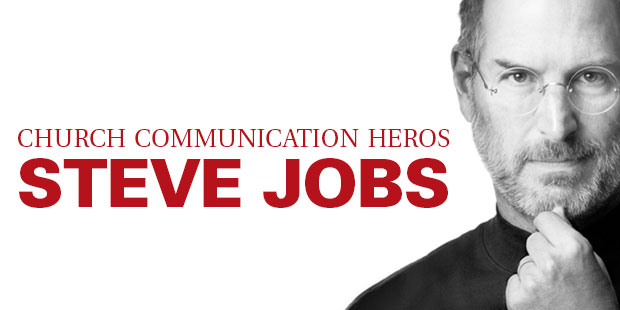
Church Communication Heros: Steve Jobs

Yes. I know what you’re thinking. How can Steve Jobs possibly be a church communications hero? As reported in the recent autobiography, Jobs was a Zen Buddhist and he was highly dysfunctional in the way he interacted with those around him. So why on earth would I choose him for being a church communications hero?

It’s simple really. I’m a firm believer that we can learn how to be better at what we do if we are willing to look outside the existing paradigms of the tiny church bubble.

Jobs understood what it meant to think differently, beyond the marketing slogan. He didn’t want to be just another carbon copy out there. Here are a few principles I’ve learned from Jobs that I think I can apply to what we do:

1. Vision: Jobs had a clear picture of what he wanted Apple to be.

It wasn’t to be like Microsoft. Or Dell.  He had clarity right down to the brushed aluminum screws on his products. He wasn’t influenced by the biggest player in the market. In fact he was very vocal about what was wrong with Microsoft and what was right about Apple. Unfortunately, too many churches have a creative and communication vision that look, feel and sound the same. Your vision for your church’s communications should distinctly represent the values and voice of your church. They should not be a carbon copy of the big church up the road. Too often we settle for the mediocre and unremarkable rather than creating something that changes peoples’ lives. What’s your vision of what your church should look and sound like? What’s the compelling story you need to tell?

Read the rest of the story here.

Download PDF

Tags: , , ,

| What is MyVisionRoom? > | Back to Communication >

ABOUT THE AUTHOR

Steve Fogg

Steve Fogg

Steve serves as the big cheese of communications at his church in Melbourne, Australia; he married way above his pay grade and has three children. Connect with him on his blog or on other social networks.

See more articles by >

COMMENTS

What say you? Leave a comment!

Recent Comments
comment_post_ID); ?> Thank you for this information. I'm going to use this article to improve my work with the Lord.
 
— Abel Singbeh
 
comment_post_ID); ?> Thank you Ed for sharing your insights into the Church Growth Movement. I have my reservations with Church Growth models because it has done more damage than good in the Body of Christ. Over the years, western churches are more focused on results, formulas and processes with little or no emphasis on membership and church discipline. Pastors and vocational leaders are burnt out because they're overworked. I do believe that the Church Growth model is a catalyst to two destructive groups: The New Apostolic Reformation and the Emerging Church. Both groups overlap and have a very loose definition. They're both focus on contemporary worship, expansion of church brand (franchising), and mobilizing volunteering members as 'leaders' to grow their ministry. Little focus on biblical study, apologetics and genuine missional work with no agenda besides preaching of the gospel.
 
— Dave
 
comment_post_ID); ?> Thank you for sharing such a good article. It is a great lesson I learned from this article. I am one of the leaders in Emmanuel united church of Ethiopia (A denomination with more-than 780 local churches through out the country). I am preparing a presentation on succession planning for local church leaders. It will help me for preparation If you send me more resources and recommend me books to read on the topic. I hope we may collaborate in advancing leadership capacity of our church. God Bless You and Your Ministry.
 
— Argaw Alemu
 

Clarity Process

Three effective ways to start moving toward clarity right now.

When Innovation Fails

In business we speak a lot about “innovation” — how to foster it, how to drive it, how to implement it. But what do we mean when we talk about “innovation”? A recent WSJ article broached the subject and, rather accurately in my opinion, revealed what we have all known for some time: even when organizations are not necessarily doing anything groundbreaking or new, they still call it “innovation.” Just because it just sounds grander.

Incremental changes are referred to as innovations. Tweaks to products are considered innovations. Reorganizations to “better serve customers and markets” or to “align internal capabilities” are intended to make companies more innovative; in fact, they are often touted as innovations in and of themselves. We have missed the point. These are not “innovations” – rather they are simply “improvements.”

Here’s what we usually see: Management decides that they need to innovate. Individuals and teams form a working group, establish a charter, and set out to work on innovation improvement initiatives. The results are usually a rehash of something they are already doing, perhaps with some improvements on the margins, all complicated by Gantt charts, red-yellow-green dashboards and issue logs. If, after some time, these “innovation” teams paused and reflected on their efforts they might even feel some sense of accomplishment — because anything other than achievement would indicate that their efforts were a colossal waste of time.

Trust me, I know firsthand.

Earlier in my career, I was appointed to an “Innovation Board.” It was a novel concept, and the aim was to find “new and innovative ways to increase revenues significantly.” The 15 people on the team were assembled because we all (supposedly) had “been around” and were known for questioning the status quo. We were also relatively senior — principals, directors, and senior managers. We brainstormed, broke into teams, and came up with the ideas that would “make the next market.” Very quickly, we also realized that a team of four (since we had broken into four smaller teams) didn’t have all the answers. Fast forward to the end result: a lot of time, some frustration, and a bunch of small improvements — but little in the way of innovation.

So where did we go wrong?

First, we lacked enthusiasm. None of us went into the process with a sense of passion that we could, or even should, find something new and different. We were appointed, and as we all know, when you are tapped on the shoulder, you don’t say no, lest you jeopardize your next promotion.

Second, we were all senior. Way too senior. Yes, a senior leader’s perspective is useful, but much more important is that of the many customer-facing people who are dealing with these issues everyday, trying to fix what is broken, seeing what others are doing, and who know (almost without thinking about it) what is wrong with how the company does what it does. They have less to lose by challenging and questioning, and it doesn’t form the basis of what made them successful. Conversely, how eager are leaders to challenge that which made them successful in the first instance?

Third, no-one knew what we were trying to do. Who cared if we had spent 100 hours working on building something new and exciting? The other 14 people, maybe. And those who did know about our little initiative? They looked at us as though we had all the answers; by being placed on the “Innovation Board,” we were seen as the innovative thinkers — and, as a result, others were left feeling that they lacked what it took to generate fresh, game-changing ideas. How wrong.

The way we tried to create innovation — organizing, prescribing, and delegating it — didn’t work. Yes, these groups may improve things — maybe even a lot of things — but rarely is this “innovation.” Producing the next product (like the iPod) or creating a new market (Instagram, without a big team) that had never existed before — that is innovation. Microsoft creating the Surface — not so much innovation, and more catch up? Thinking once an innovator, always an innovator — not a path to success.

Innovation does not come out of a controlled situation. If you want more innovation, allow more chaos. Follow these steps to create that chaos.

1) Use only volunteers. Who in your organization feels excited about trying to build that next product or market? Let THEM — the people on the front lines, who are doing their day jobs, who happen to know your business better than anyone else — into the process.  Jim Whitehurst of Red Hat figured this out. Others have too.

2) Sponsor an environment that encourages risk-taking. It’s fantastic if an employee takes initiative and risks making innovation. What do you do if they fail? Are they punished? You can be certain if an employee is punished for taking a risk toward innovation, that other employees will not be taking any risks.

3) Make time for brainstorming. It takes time, and sometimes it takes creating a particular environment to get employees into an innovative mindset.

This approach will foster some truly transformative ideas, and there will be an enthusiastic base of supporters ready to turn those ideas into action.

Now that’s a novel approach. Maybe, dare I say, an innovation.

Read more about Russell here.

Download PDF

Tags: , ,

| What is MyVisionRoom? > | Back to Leadership >

ABOUT THE AUTHOR

Russell Raath

Russell Raath

Russell Raath is a senior engagement leader at Kotter International, a firm that helps leaders accelerate strategy implementation in their organizations.

See more articles by >

COMMENTS

What say you? Leave a comment!

Recent Comments
comment_post_ID); ?> Thank you for this information. I'm going to use this article to improve my work with the Lord.
 
— Abel Singbeh
 
comment_post_ID); ?> Thank you Ed for sharing your insights into the Church Growth Movement. I have my reservations with Church Growth models because it has done more damage than good in the Body of Christ. Over the years, western churches are more focused on results, formulas and processes with little or no emphasis on membership and church discipline. Pastors and vocational leaders are burnt out because they're overworked. I do believe that the Church Growth model is a catalyst to two destructive groups: The New Apostolic Reformation and the Emerging Church. Both groups overlap and have a very loose definition. They're both focus on contemporary worship, expansion of church brand (franchising), and mobilizing volunteering members as 'leaders' to grow their ministry. Little focus on biblical study, apologetics and genuine missional work with no agenda besides preaching of the gospel.
 
— Dave
 
comment_post_ID); ?> Thank you for sharing such a good article. It is a great lesson I learned from this article. I am one of the leaders in Emmanuel united church of Ethiopia (A denomination with more-than 780 local churches through out the country). I am preparing a presentation on succession planning for local church leaders. It will help me for preparation If you send me more resources and recommend me books to read on the topic. I hope we may collaborate in advancing leadership capacity of our church. God Bless You and Your Ministry.
 
— Argaw Alemu
 

Clarity Process

Three effective ways to start moving toward clarity right now.

10 Principles for Good Design

Design is normally thought of as applying to things – which it does. But design also applies to systems, structures, and communication tools. Dieter Rams, one of the most influential designers of the last 40 years, has developed 10 principles for good design. Though they are illustrated with objects here, the principles apply to what you as a leader “design” every day.

Z > Graphics > 10 principles poster > Illustrations High Res
TP 1 radio/phono combination, 1959, by Dieter Rams for Braun

Good design is innovative

The possibilities for innovation are not, by any means, exhausted. Technological development is always offering new opportunities for innovative design. But innovative design always develops in tandem with innovative technology, and can never be an end in itself.

Z > Graphics > 10 principles poster > Illustrations High Res
MPZ 21 multipress citrus juicer, 1972, by Dieter Rams and Jürgen Greubel for Braun

Good design makes a product useful

A product is bought to be used. It has to satisfy certain criteria, not only functional, but also psychological and aesthetic. Good design emphasises the usefulness of a product whilst disregarding anything that could possibly detract from it.

Z > Graphics > 10 principles poster > Illustrations High Res
RT 20 tischsuper radio, 1961, by Dieter Rams for Braun

Good design is aesthetic

The aesthetic quality of a product is integral to its usefulness because products we use every day affect our person and our well-being. But only well-executed objects can be beautiful.

Z > Graphics > 10 principles poster > Illustrations High Res
T 1000 world receiver, 1963, by Dieter Rams for Braun

Good design makes a product understandable

It clarifies the product’s structure. Better still, it can make the product talk. At best, it is self-explanatory.

Z > Graphics > 10 principles poster > Illustrations High Res
Cylindric T 2 lighter, 1968, by Dieter Rams for Braun

Good design is unobtrusive

Products fulfilling a purpose are like tools. They are neither decorative objects nor works of art. Their design should therefore be both neutral and restrained, to leave room for the user’s self-expression.

Z > Graphics > 10 principles poster > Illustrations High Res
L 450 flat loudspeaker, TG 60 reel-to-reel tape recorder and TS 45 control unit, 1962-64, by Dieter Rams for Braun

Good design is honest

It does not make a product more innovative, powerful or valuable than it really is. It does not attempt to manipulate the consumer with promises that cannot be kept.

620 chair for 10 principles
620 Chair Programme, 1962, by Dieter Rams for Vitsœ

Good design is long-lasting

It avoids being fashionable and therefore never appears antiquated. Unlike fashionable design, it lasts many years – even in today’s throwaway society.

Z > Graphics > 10 principles poster > Illustrations High Res
ET 66 calculator, 1987, by Dietrich Lubs for Braun

Good design is thorough down to the last detail

Nothing must be arbitrary or left to chance. Care and accuracy in the design process show respect towards the user.

10 principles > 606
606 Universal Shelving System, 1960, by Dieter Rams for Vitsœ

Good design is environmentally-friendly

Design makes an important contribution to the preservation of the environment. It conserves resources and minimises physical and visual pollution throughout the lifecycle of the product.

10 principles L 2
L 2 speaker, 1958, by Dieter Rams for Braun

Good design is as little design as possible

Less, but better – because it concentrates on the essential aspects, and the products are not burdened with non-essentials.

Back to purity, back to simplicity.

Learn more about Dieter Rams here.
Download PDF

Tags: , , ,

| What is MyVisionRoom? > | Back to Communication >

ABOUT THE AUTHOR

Dieter Rams

See more articles by >

COMMENTS

What say you? Leave a comment!

Recent Comments
comment_post_ID); ?> Thank you for this information. I'm going to use this article to improve my work with the Lord.
 
— Abel Singbeh
 
comment_post_ID); ?> Thank you Ed for sharing your insights into the Church Growth Movement. I have my reservations with Church Growth models because it has done more damage than good in the Body of Christ. Over the years, western churches are more focused on results, formulas and processes with little or no emphasis on membership and church discipline. Pastors and vocational leaders are burnt out because they're overworked. I do believe that the Church Growth model is a catalyst to two destructive groups: The New Apostolic Reformation and the Emerging Church. Both groups overlap and have a very loose definition. They're both focus on contemporary worship, expansion of church brand (franchising), and mobilizing volunteering members as 'leaders' to grow their ministry. Little focus on biblical study, apologetics and genuine missional work with no agenda besides preaching of the gospel.
 
— Dave
 
comment_post_ID); ?> Thank you for sharing such a good article. It is a great lesson I learned from this article. I am one of the leaders in Emmanuel united church of Ethiopia (A denomination with more-than 780 local churches through out the country). I am preparing a presentation on succession planning for local church leaders. It will help me for preparation If you send me more resources and recommend me books to read on the topic. I hope we may collaborate in advancing leadership capacity of our church. God Bless You and Your Ministry.
 
— Argaw Alemu
 

Clarity Process

Three effective ways to start moving toward clarity right now.

The Next Logical Step…is Often the Wrong One

When are you willing to pull the plug on a strategy?  How many times does a strategy need to have the exact same results before you conclude that it is the wrong strategy?

When are you willing to rethink an assumption?  How many times are you willing to profess confusion when the outcome is not what you anticipated?

How often have you begun thinking about the next ministry season and set in motion an almost exact replica of last year’s approach because you always have a small group fair right after Labor Day (complete with a catalog of semester options) or for that matter, you always do a church-wide campaign in the fall (and your existing groups love including new people for those 6 weeks).

I can’t speak for you, but I can say that it’s normal to do again with only slight variation what you’ve done previously.  It’s normal.  It happens all the time.  And that’s the problem.  After all, didn’t Einstein persuade us when he said, “The definition of insanity is doing the same thing again and again and expecting different results?”

If you want different results you need to change the design.  And I should add, if you want significantly different results you’ll need to do more than tweak the design.  You’re going to need a different design.

Dreaming of being a church of groups but seem permanently mired in the muck of church with?  Chances are your strategy has a design flaw.  Can’t figure out how to break through the 50% connected in groups barrier?  Odds are your strategy needs a major overhaul.  Stuck at 80% adults connected in groups?  In all likelihood…your strategy has an innate limitation that prevents breakthrough.

I like Tim Brown’s analysis.  Brown, the CEO and President of IDEO and author of Change by Design, has pointed out that teams that are truly committed to developing breakthrough products “will not feel bound to take the next logical step along an ultimately unproductive path (Change by Design, p. 17).”

Read more from Mark here.

Download PDF

Tags: , , , ,

| What is MyVisionRoom? > | Back to Vision >

ABOUT THE AUTHOR

Mark Howell

Mark Howell

I’m the Pastor of Communities at Canyon Ridge Christian Church in Las Vegas, Nevada. I’m also LifeWay’s Small Group Specialist. I’m the the founder of SmallGroupResources.net, offering consulting and coaching services that help churches across North America launch, build and sustain healthy small group ministries. In addition, I’m the guy behind MarkHowellLive.com, SmallGroupResources.net, StrategyCentral.org and @MarkCHowell.

See more articles by >

COMMENTS

What say you? Leave a comment!

Recent Comments
comment_post_ID); ?> Thank you for this information. I'm going to use this article to improve my work with the Lord.
 
— Abel Singbeh
 
comment_post_ID); ?> Thank you Ed for sharing your insights into the Church Growth Movement. I have my reservations with Church Growth models because it has done more damage than good in the Body of Christ. Over the years, western churches are more focused on results, formulas and processes with little or no emphasis on membership and church discipline. Pastors and vocational leaders are burnt out because they're overworked. I do believe that the Church Growth model is a catalyst to two destructive groups: The New Apostolic Reformation and the Emerging Church. Both groups overlap and have a very loose definition. They're both focus on contemporary worship, expansion of church brand (franchising), and mobilizing volunteering members as 'leaders' to grow their ministry. Little focus on biblical study, apologetics and genuine missional work with no agenda besides preaching of the gospel.
 
— Dave
 
comment_post_ID); ?> Thank you for sharing such a good article. It is a great lesson I learned from this article. I am one of the leaders in Emmanuel united church of Ethiopia (A denomination with more-than 780 local churches through out the country). I am preparing a presentation on succession planning for local church leaders. It will help me for preparation If you send me more resources and recommend me books to read on the topic. I hope we may collaborate in advancing leadership capacity of our church. God Bless You and Your Ministry.
 
— Argaw Alemu
 

Clarity Process

Three effective ways to start moving toward clarity right now.