How to Make Crisis an Opportunity for Growth

Every crisis is a leadership opportunity.

As a pastor, you minister to people in crisis all the time. It could be a health, relational, or professional crisis. It could even be a crisis born out of a natural disaster, such as a tornado, hurricane, earthquake, or flood. In these situations, people will often turn to you first.

What should you do when they come your way?

Start with prayer. Don’t use it as a last resort, after you’ve done everything else. Even though there are a variety of actions you should take when ministering to people in a crisis, always pray first.

Daniel is a great model for how to pray during a time of crisis. Near the end of his life, 70 years after he and his friends were exiled into captivity in Babylon, Daniel faced a crisis of confidence. Daniel wanted to go home before he died. He knew the prophet Jeremiah had promised that the Israelites would return home after 70 years—and that time period was finally coming to an end. So Daniel prayed.

His prayer is a great model for believers who find themselves in a period of crisis. Here is how Daniel prayed:

Daniel listened to God.

How do you listen to God? You study his Word. That’s what Daniel did. At the beginning of chapter 9, he is reading God’s promise from Jeremiah to bring back the Israelites to Jerusalem.

When our people are in a crisis, we must help them focus on God’s promises. God gives us thousands and thousands of promises in the Bible. These promises provide a great foundation for prayer during a crisis.

Daniel focused his attention on God.

Daniel did this physically. Daniel 9:3 says, “I turned to the Lord” (NLT). One of the reasons a crisis causes us so much pain is we often take our eyes off God in the middle of it. Instead, we desperately need to focus on God during difficult times.

When you turn toward your family and friends, you focus your attention on them. The same is true in your relationship with God. Many people do this by bowing their heads and folding their hands. Personally, I like to look up when I pray because it helps me focus on God.

During a crisis, teach people how to focus on God—not their circumstances—and on what he is doing in their lives.

Daniel expressed his desires with emotion.

The Bible says that Daniel did more than just make his requests known to God. Daniel “pleaded with him.” Your passion and intensity often reveal how much something matters to you. Show God that your request is more than just a whim, that it’s a strong desire on your part.

The Hebrew word Daniel uses to describe his pleading means “begging.” Daniel wasn’t just asking God to let him go back to Jerusalem. He was begging. Teach your people that it’s okay to fully express themselves to God while in a crisis. When a person doesn’t feel like praying, it’s because they aren’t praying their feelings. Encourage your people to pray with emotion.

Daniel demonstrated his seriousness.

First, he fasted. Most of our congregations are familiar with this spiritual discipline. Then Daniel prayed wearing sackcloth and ashes. No one does this today, but for hundreds of years in the Middle East, this practice showed a person’s seriousness.

Jesus said some miracles can only happen through prayer and fasting, not by prayer alone. Fasting showed how serious a person was about the request. You see the importance of this over and over in the Bible. During a crisis, we need to help people demonstrate their seriousness before God.

Daniel thanked God for his love and promises.

The Bible says that when you give your requests to God, ask with thanksgiving. Daniel prayed: “Lord, you are great and deserve respect as the only God. You keep your promise and show mercy to those who love you and obey your commandments” (Daniel 9:4 GW). Daniel told God he was grateful for him, and he recognized the Lord’s faithfulness to fulfill his promises.

As we help people through a crisis, we need to encourage them to express their gratitude to God. It’s easy to forget this aspect of prayer, but it’s important because it’s God calls us to be grateful people—this is what we see illustrated in Daniel’s life. Thankfulness helps us see beyond our problems.

Daniel humbly confessed his sin.

God doesn’t want to hear prideful complaining, but he does listen to humble confessing. God never responds to our confession of sin with punishment. Instead, he blesses us when we’re honest about our sin.

“We have sinned, done wrong, acted wickedly, rebelled, and turned away from your commandments and laws” (Daniel 9:5 GW).

Daniel didn’t just give a general confession. He specifically mentioned what the people of Israel had done wrong. He knew that God’s help would only come because of his grace—not because the people deserved it.

You and the people you lead will face all kinds of crises. As a pastor, one of the most important things you can do is help them to pray during this time.

> Read more from Rick.


Download PDF

Tags: , , ,

| What is MyVisionRoom? > | Back to Leadership >

ABOUT THE AUTHOR

Rick Warren

Rick Warren

Rick Warren is the founding pastor of Saddleback Church in Lake Forest, Calif., one of America's largest and most influential churches. Rick is author of the New York Times bestseller The Purpose Driven Life. His book, The Purpose Driven Church, was named one of the 100 Christian books that changed the 20th century. He is also founder of Pastors.com, a global Internet community for pastors.

See more articles by >

COMMENTS

What say you? Leave a comment!

Recent Comments
comment_post_ID); ?> Thank you for this information. I'm going to use this article to improve my work with the Lord.
 
— Abel Singbeh
 
comment_post_ID); ?> Thank you Ed for sharing your insights into the Church Growth Movement. I have my reservations with Church Growth models because it has done more damage than good in the Body of Christ. Over the years, western churches are more focused on results, formulas and processes with little or no emphasis on membership and church discipline. Pastors and vocational leaders are burnt out because they're overworked. I do believe that the Church Growth model is a catalyst to two destructive groups: The New Apostolic Reformation and the Emerging Church. Both groups overlap and have a very loose definition. They're both focus on contemporary worship, expansion of church brand (franchising), and mobilizing volunteering members as 'leaders' to grow their ministry. Little focus on biblical study, apologetics and genuine missional work with no agenda besides preaching of the gospel.
 
— Dave
 
comment_post_ID); ?> Thank you for sharing such a good article. It is a great lesson I learned from this article. I am one of the leaders in Emmanuel united church of Ethiopia (A denomination with more-than 780 local churches through out the country). I am preparing a presentation on succession planning for local church leaders. It will help me for preparation If you send me more resources and recommend me books to read on the topic. I hope we may collaborate in advancing leadership capacity of our church. God Bless You and Your Ministry.
 
— Argaw Alemu
 

Clarity Process

Three effective ways to start moving toward clarity right now.

What Happens When You Can’t Pass the Plate?

Coronavirus Concerns in the Church

The last stat I heard about digital giving in the Church was that about 75% of churches have the option, but only 25% of giving actually happens via electronic means.

Even if this statistic is slightly askew, the reality is that many churches are facing some hair-raising days. If we don’t gather for a few weeks, it could present some serious challenges to many of the nation’s churches. It is highly probable that churches will collect significantly less money than they are used to collecting over the next 3-8 weeks.

This is a time that calls for proactivity and faith. 

Proactivity will drive us to consider what we must in light of a quickly altered reality. Everything just changed – and for many churches, it may drive decisions about rethinking what we can afford to do in the short run. If I were in your congregation, I would be much more at ease if my pastors and leaders were trying to get ahead of the game and not just wait for the sky to fall.

At the same time, we have to bank on the faith we profess and the idea that God will continue to provide for the Church. Our churches may actually change as a result of the days ahead. But maybe this is an opportunity to wake up to a new day God has for all of us. Sometimes a crisis causes us to see more clearly… 

Here are a few thoughts for church leaders to consider:

  1. Your first calling is to care for the people in your congregation. Find out where people are suffering, alone, or scared and deploy help when you can. 
  2. Continue to follow best practice as outlined by healthcare professionals. Defying that advice is not a sign of suffering for Christ, it is a sign of bravado that may lead people to become very ill and shows disrespect to the broader community. Our reputation as good citizens is on the line.
  3. Find ways to link people to each other in homes and via virtual or digital means if possible. Reaching out to each other via an old-fashioned phone call may be the most caring thing you can do.
  4. Begin creating contingency plans A, B, and C if the church revenue decreases by 10%, 20% or 30%. What would you suspend, stop or change? And how can you communicate this proactively as opposed to creating doomsday negativity?
  5. Send a letter or email to the congregation that does not communicate desperation but the reality of your financial situation in light of the suspension of services. Get ahead of this – people need to know the reality of the situation, your plans to address the challenge, and your care about the people more than church budgets.
  6. Pray for physical healing and the eradication of this virus for all of the people of your city. And also pray that this pandemic will cause all of us to think about the truly important priorities in life once again. Spiritual awakening may be right around the corner.

May the Heavenly Father, God of Creation keep and sustain us in all ways and at all times, including the next few weeks of uncertainty. May the Savior Jesus Christ, in whom all things hold together, grant us healing by His miraculous power to bring life and health out of what is intended for death and suffering. May the Holy Spirit soak us with the peace that passes understanding. And may the Church recommit to dependence on God’s provision in all things and at all times. Amen.


Download PDF

Tags: , , ,

| What is MyVisionRoom? > | Back to Resourcing >

ABOUT THE AUTHOR

Greg Gibbs

Greg Gibbs

Greg Gibbs is a coffee roaster, consultant and author, and regularly tries to convince his wife that he is an Organizational Communication guru. After 30 years and raising four children together, she is still not quite convinced. Greg has spent decades in the church world, advising leadership on vision clarity, fundraising process, and communication effectiveness. He and his wife reside in the suburbs of Detroit.

See more articles by >

COMMENTS

What say you? Leave a comment!

Recent Comments
comment_post_ID); ?> Thank you for this information. I'm going to use this article to improve my work with the Lord.
 
— Abel Singbeh
 
comment_post_ID); ?> Thank you Ed for sharing your insights into the Church Growth Movement. I have my reservations with Church Growth models because it has done more damage than good in the Body of Christ. Over the years, western churches are more focused on results, formulas and processes with little or no emphasis on membership and church discipline. Pastors and vocational leaders are burnt out because they're overworked. I do believe that the Church Growth model is a catalyst to two destructive groups: The New Apostolic Reformation and the Emerging Church. Both groups overlap and have a very loose definition. They're both focus on contemporary worship, expansion of church brand (franchising), and mobilizing volunteering members as 'leaders' to grow their ministry. Little focus on biblical study, apologetics and genuine missional work with no agenda besides preaching of the gospel.
 
— Dave
 
comment_post_ID); ?> Thank you for sharing such a good article. It is a great lesson I learned from this article. I am one of the leaders in Emmanuel united church of Ethiopia (A denomination with more-than 780 local churches through out the country). I am preparing a presentation on succession planning for local church leaders. It will help me for preparation If you send me more resources and recommend me books to read on the topic. I hope we may collaborate in advancing leadership capacity of our church. God Bless You and Your Ministry.
 
— Argaw Alemu
 

Clarity Process

Three effective ways to start moving toward clarity right now.

Leaders Never Stop Learning

Our capacity for learning is a part of being a human being. From birth, we are on a fast track of learning – movement, speech, understanding, and so forth. Unfortunately, many people equate “learning” with “schooling,” and when you’re done with school, you’re done with learning.

We are uniquely endowed with the capacity for learning, creating, and growing intellectually – and it doesn’t have an expiration date tied to an event, like graduation.

The practice of lifelong learning has never been more important to leaders than it is today. The necessity of expanding your knowledge through lifelong learning is critical to your success.

Take reading, for example. Many of the most successful people in today’s organizations read an average of 2-3 hours per day. No longer limited to books, reading is a lifelong learning activity that can be done online anywhere at anytime.

Learning is the minimum requirement for success as a leader. Because information and knowledge on everything is increasing every day, your knowledge must also increase to keep up.

Learning how to learn is more important than ever. Dedicate yourself to trying and learning new ideas, tasks, and skills. You don’t need to be aware of everything all the time but learning new skills faster and better – that in itself is a tough skill to master.

THE QUICK SUMMARY – Never Stop Learning by Bradley R. Statts

Keep learning, or risk becoming irrelevant.

It’s a truism in today’s economy: the only constant is change. Technological automation is making jobs less routine and more cognitively challenging. Globalization means you’re competing with workers around the world. Simultaneously, the Internet and other communication technologies have radically increased the potential impact of individual knowledge. The relentless dynamism of these forces shaping our lives has created a new imperative: we must strive to become dynamic learners. In every industry and sector, dynamic learners outperform their peers and realize higher impact and fulfillment by learning continuously and by leveraging that learning to build yet more knowledge.

In Never Stop Learning, behavioral scientist and operations expert Bradley R. Staats describes the principles and practices that comprise dynamic learning and outlines a framework to help you become more effective as a lifelong learner. The steps include:

  • Valuing failure
  • Focusing on process, not outcome, and on questions, not answers
  • Making time for reflection
  • Learning to be true to yourself by playing to your strengths
  • Pairing specialization with variety
  • Treating others as learning partners

Replete with the most recent research about how we learn as well as engaging stories that show how real learning happens, Never Stop Learning will become the operating manual for leaders, managers, and anyone who wants to keep thriving in the new world of work.

A SIMPLE SOLUTION

Today, the world moves much faster than it did even five to 10 years ago, and there’s more competition than ever. A vast majority of people will inevitably find themselves feeling like they’re falling behind if they’re not constantly investing in themselves. Or they might even feel unemployable at one point or another in their careers. This is true for many professions. A feeling of staleness can encroach as new technologies continue to be developed and implemented in the workplace, and the younger generation comes in with new skills, reshaping the modern workplace.

Learning isn’t a moment in time, nor is it just about acquiring a set of skills or generalized knowledge. It’s not specific to a certain domain you function in.

To succeed in this rapidly changing environment requires continual learning – how to do existing tasks better and how to do entirely new things.

Failing to learn and adapt means being left behind. This creates meaningful risk for our organizations, ourselves, and our children. It’s not just knowledge that’s necessary – it’s using that knowledge to build more knowledge. In other words, to learn.

Key Elements to Becoming a Dynamic Learner

Valuing failure – Dynamic learners are willing to fail in order to learn.

Process rather than outcome – Dynamic learners recognize that focusing on the outcome is misguided, because we don’t know how we got there, whereas a process focus frees us to learn.

Asking questions rather than rushing to answers – Dynamic learners recognize that “I don’t know” is a fair place to start – as long as we quickly follow with a question.

Reflection and interaction – Dynamic learners fight the urge to act for the sake of acting and recognize that when the going gets tough, the tough are rested, take time to recharge, and stop to think.

Being yourself – Dynamic learners don’t try to conform; they’re willing to stand out.

Playing to strengths – Dynamic learners don’t try to fix irrelevant weaknesses; they play to their strengths.

Specialization and variety – Dynamic learners build a T-shaped portfolio of experiences – deep in one area (or more) and broad in others.

Learning from others –Dynamic learners recognize that learning is not a solo exercise.

Bradley R. Statts, Never Stop Learning

A NEXT STEP

To succeed in this new environment requires continual, lifelong learning. At its simplest, lifelong learning requires learning how to do existing tasks better and how to do entirely new things.

In order to risk becoming irrelevant, create a plan to become a lifelong learner.

Set aside some time where you can be undisturbed for at least two hours. Draw a line in the middle of four chart tablets, and write two of the key elements listed above on each half.

Without a lot of processing, proceed to list activities and ideas that you are currently practicing in each area in one color marker. Step back and reflect on what you have written.

Now, using a different color marker, list activities and ideas that you aspire to in each of the eight areas.

When you have completed this task, read what you have written down aloud. In each of the eight areas, circle two activities and ideas that you will focus on improving or developing in the next 90 days.

Before you end this time, look ahead on your calendar 90 days, and block some time out to repeat this exercise.

Excerpt taken from SUMS Remix 113-1, released March 2019.


This is part of a weekly series posting excerpts from one of the most innovative content sources in the church world: SUMS Remix book excerpts for church leaders.

SUMS Remix takes a practical problem in the church and looks at it with three solutions; each solution is taken from a different book. Additionally, a practical action step is included with each solution.

As a church leader you get to scan relevant books based on practical tools and solutions to real ministry problems, not just by the cover of the book. Each post will have the edition number which shows the year and what number it is in the overall sequence. (SUMS Remix provides 26 issues per year, delivered every other week to your inbox). 

>> Subscribe to SUMS Remix <<

>> Purchase prior issues of SUMS Remix<<

Download PDF

Tags: , , , ,

| What is MyVisionRoom? > | Back to Leadership >

ABOUT THE AUTHOR

VRcurator

VRcurator

Bob Adams is Auxano's Vision Room Curator. His background includes over 23 years as an associate/executive pastor as well as 8 years as the Lead Consultant for a church design build company. He joined Auxano in 2012.

See more articles by >

COMMENTS

What say you? Leave a comment!

Recent Comments
comment_post_ID); ?> Thank you for this information. I'm going to use this article to improve my work with the Lord.
 
— Abel Singbeh
 
comment_post_ID); ?> Thank you Ed for sharing your insights into the Church Growth Movement. I have my reservations with Church Growth models because it has done more damage than good in the Body of Christ. Over the years, western churches are more focused on results, formulas and processes with little or no emphasis on membership and church discipline. Pastors and vocational leaders are burnt out because they're overworked. I do believe that the Church Growth model is a catalyst to two destructive groups: The New Apostolic Reformation and the Emerging Church. Both groups overlap and have a very loose definition. They're both focus on contemporary worship, expansion of church brand (franchising), and mobilizing volunteering members as 'leaders' to grow their ministry. Little focus on biblical study, apologetics and genuine missional work with no agenda besides preaching of the gospel.
 
— Dave
 
comment_post_ID); ?> Thank you for sharing such a good article. It is a great lesson I learned from this article. I am one of the leaders in Emmanuel united church of Ethiopia (A denomination with more-than 780 local churches through out the country). I am preparing a presentation on succession planning for local church leaders. It will help me for preparation If you send me more resources and recommend me books to read on the topic. I hope we may collaborate in advancing leadership capacity of our church. God Bless You and Your Ministry.
 
— Argaw Alemu
 

Clarity Process

Three effective ways to start moving toward clarity right now.

Pastoral Succession is a Family Matter

I was recently on the phone with a pastor that wants to start the process of succession planning. Our time on the phone was another reminder of how personal the issue of succession planning is.

Our call started out like so many others. He and the Executive Pastor gave me the background of the church. They listed some of the issues they think need to be addressed over the next five to seven years. They asked for my initial thoughts and other questions related to how I go about helping churches like theirs. We talked for about 45 minutes before his Executive Pastor had to leave for another appointment.

Once it was just Bob, the Sr. Pastor, on the line I took the opportunity to get a little more personal. I asked a simple question…

“How are you and your wife handling the idea of your eventual retirement?”

The tone completely changed!! The initial part of the call was all about organizational priorities. Now, we were able to start digging into his personal motivations.  Here is a summary of what we talked about:

  • He wants to stay involved with the church after he retires
  • The fear of hurting people by not transitioning well is a significant motivation
  • What will he do next?
  • His wife’s transition is just as important as his
  • He is wondering what their financial future will look like

Succession Planning is bigger than hiring the right person, developing leaders or making sure the organization doesn’t lose momentum.  Don’t get me wrong – these things are important. But in the process of addressing the organizational side of succession planning we must be careful not lose sight of our opportunity to help the retiring leader wrestle through their personal fears and concerns.


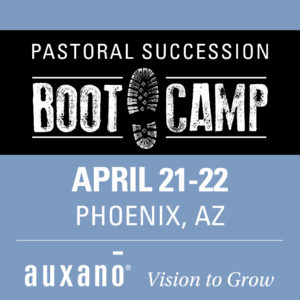
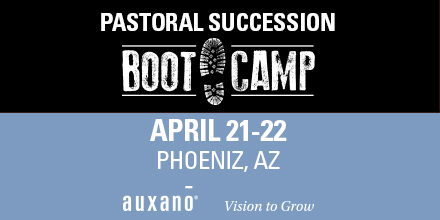
Learn about this and other important topics involved in Pastoral Succession at our Pastoral Succession Boot Camp coming to Phoenix, AZ, April 21-22.


Let me know if there is any way we can serve you in this season. Let’s start a conversation.

Download PDF

Tags: , , ,

| What is MyVisionRoom? > | Back to Leadership >

ABOUT THE AUTHOR

Will Heath

Will Heath

Will Heath helps leaders and organizations navigate seasons of transition.

See more articles by >

COMMENTS

What say you? Leave a comment!

Recent Comments
comment_post_ID); ?> Thank you for this information. I'm going to use this article to improve my work with the Lord.
 
— Abel Singbeh
 
comment_post_ID); ?> Thank you Ed for sharing your insights into the Church Growth Movement. I have my reservations with Church Growth models because it has done more damage than good in the Body of Christ. Over the years, western churches are more focused on results, formulas and processes with little or no emphasis on membership and church discipline. Pastors and vocational leaders are burnt out because they're overworked. I do believe that the Church Growth model is a catalyst to two destructive groups: The New Apostolic Reformation and the Emerging Church. Both groups overlap and have a very loose definition. They're both focus on contemporary worship, expansion of church brand (franchising), and mobilizing volunteering members as 'leaders' to grow their ministry. Little focus on biblical study, apologetics and genuine missional work with no agenda besides preaching of the gospel.
 
— Dave
 
comment_post_ID); ?> Thank you for sharing such a good article. It is a great lesson I learned from this article. I am one of the leaders in Emmanuel united church of Ethiopia (A denomination with more-than 780 local churches through out the country). I am preparing a presentation on succession planning for local church leaders. It will help me for preparation If you send me more resources and recommend me books to read on the topic. I hope we may collaborate in advancing leadership capacity of our church. God Bless You and Your Ministry.
 
— Argaw Alemu
 

Clarity Process

Three effective ways to start moving toward clarity right now.

Are You Developing Leaders in These Key Places?

Where does leadership development happen? What environments are beneficial to leaders in their development? From a Christian perspective, leadership development is not constrained to one environment. Because the whole world is His, leadership development can happen in a plethora of places. Because He continually matures His people, God will use anything to conform us more to the image of His Son.

Here are six places leaders are developed:

  1. The Athletic Field

Several leaders I know enjoy hiring former athletes because they are used to corrective feedback, the discipline of practice, and playing on a team. For many years, high school athletes were encouraged to focus on one sport, but coaches like Urban Meyer, head coach of the Ohio State Buckeyes, prefer to recruit athletes who play multiple sports. They like how the additional sports develop the athlete. Not only are multiple skills developed, but players also learn how to take on new challenges, to work with new teammates, and to fight through the difficulties that come from playing more than one sport.

  1. The Library

John Maxwell coined the phrase “leaders are readers,” and he is right. Reading widely can help leaders grow mentally through exposure to new disciplines and new ideas. Mentally stretching to understand a new discipline can help a leader find new solutions to existing problems. If the last book you read was one on a syllabus, you are not taking your development seriously.

  1. The Classroom

The relationship with professors, the community with other students, and the focused time committed to learn are the reason many leaders go back to school for advanced degrees and executive education. Much more important than the certificate or diploma is the learning that comes from a disciplined and systematic approach to development.

  1. The Job

Experience develops you more than any classroom or book can. The job is where you test the learning from the books and classrooms. The job is where you learn what needs to improve.

  1. The Home

Marriage is sanctifying. Parenting is sanctifying. Siblings are sanctifying. Roommates are sanctifying. The home can help develop leaders relationally. The home can help leaders grow in love, forgiveness, service, and placing the needs of others ahead of their own.

  1. The Church

Long before Robert Greenleaf’s seminal work Servant Leadership, which challenged leaders to view themselves as servants, the Church taught believers to serve others because our Savior-King has served us. Long before Jim Collins, in Good to Great, identified “level five leaders” as leaders who are filled with humility, the Church challenged believers to humbly view others as better than themselves. Long before Daniel Goleman, in Primal Leadership, identified emotionally intelligent leaders as ones filled with joy, peace, patience, and compassion, the apostle Paul challenged the Church to walk in the Spirit and display the fruit of the Spirit: love, joy, peace, patience, kindness, goodness, faithfulness, gentleness, and self-control.

The Church excels at developing leaders because the Church lifts up Jesus—the One who gave Himself for our sin, the One who transforms our character, the One who empowers us to serve others. Much of what is called “leadership” eventually won’t matter. In the end, everything done apart from Him will be worth absolutely nothing. The Church helps leaders remain in Him, keep an eternal vantage point, and offer themselves to what really matters. 

> Read more from Eric.


Connect with an Auxano Navigator to learn more about developing leaders.

Download PDF

Tags: , , ,

| What is MyVisionRoom? > | Back to Leadership >

ABOUT THE AUTHOR

Eric Geiger

Eric Geiger

Eric Geiger is the Senior Pastor of Mariners Church in Irvine, California. Before moving to Southern California, Eric served as senior vice-president for LifeWay Christian. Eric received his doctorate in leadership and church ministry from Southern Seminary. Eric has authored or co-authored several books including the best selling church leadership book, Simple Church. Eric is married to Kaye, and they have two daughters: Eden and Evie. During his free time, Eric enjoys dating his wife, taking his daughters to the beach, and playing basketball.

See more articles by >

COMMENTS

What say you? Leave a comment!

Recent Comments
comment_post_ID); ?> Thank you for this information. I'm going to use this article to improve my work with the Lord.
 
— Abel Singbeh
 
comment_post_ID); ?> Thank you Ed for sharing your insights into the Church Growth Movement. I have my reservations with Church Growth models because it has done more damage than good in the Body of Christ. Over the years, western churches are more focused on results, formulas and processes with little or no emphasis on membership and church discipline. Pastors and vocational leaders are burnt out because they're overworked. I do believe that the Church Growth model is a catalyst to two destructive groups: The New Apostolic Reformation and the Emerging Church. Both groups overlap and have a very loose definition. They're both focus on contemporary worship, expansion of church brand (franchising), and mobilizing volunteering members as 'leaders' to grow their ministry. Little focus on biblical study, apologetics and genuine missional work with no agenda besides preaching of the gospel.
 
— Dave
 
comment_post_ID); ?> Thank you for sharing such a good article. It is a great lesson I learned from this article. I am one of the leaders in Emmanuel united church of Ethiopia (A denomination with more-than 780 local churches through out the country). I am preparing a presentation on succession planning for local church leaders. It will help me for preparation If you send me more resources and recommend me books to read on the topic. I hope we may collaborate in advancing leadership capacity of our church. God Bless You and Your Ministry.
 
— Argaw Alemu
 

Clarity Process

Three effective ways to start moving toward clarity right now.

Commit to Generosity Now By Starting Wherever You Are

A huge difference exists between a legacy and an inheritance. Anyone can leave an inheritance. An inheritance is something you leave to your family or loved ones. A legacy is something you leave in your family and loved ones. While hard work and success may lead to an inheritance, it takes courage through a lifetime to live a legacy.

Inheritance

  • Something tangible you give to others
  • Temporarily brings them happiness
  • Eventually fades as it is spent
  • Your activity may or not may pay off 

Legacy

  • Something tangible you place in others
  • Permanently transforms them
  • Lives on long after you die
  • Your activity becomes achievement

What would you rather leave: an inheritance or a legacy?

THE QUICK SUMMARY – Giving It All Away…and Getting It All Back Again by David Green

David Green believes that generosity and building a legacy based on giving can lead to getting back what you really want: a family that stays together, prays together, and shares life joyfully.

Green tells the story of caring for the small things and starting Hobby Lobby in their garage. He shares the difference between the worlds of “having and hoarding” and a world of “giving and generosity,” the principle of working for God and not for men, and that now is not too soon to consider what you want your legacy to be.

As proof of how living by those principles can change your life, Green shares that when Hobby Lobby came close to bankruptcy in 1986 and when the Supreme Court challenged the Hobby Lobby’s right to life beliefs in 2014, the company emerged with its integrity intact.

Green sees the life of giving as a life of adventure. But it’s a life that pays the best rewards personally, offers a powerful legacy to your family, and changes those you touch.

A SIMPLE SOLUTION – Commit to starting now wherever you are

An often-used sports metaphor, taken from the relay race, is the handing off of the baton from one runner to the next. A relay race is a track and field event in which athletes run a pre-set distance carrying a baton before passing it onto the next runner. The two standard relays are the 4×100 meter relay and the 4×400 meter relay, though there are long-distance relays as well.

The shorter distance relays are exciting to watch as the four participants for each time execute their leg of the race with speed and precision – until they don’t.

The rules vary, but runners typically have a specified distance to accelerate, hand off or receive the baton, and a specific lane to stay in. The strategy varies, but a team of the fastest athletes isn’t guaranteed to win. There is a strategy to a relay race, involving knowing the strengths and weakness of each team member, and ordering them accordingly.

Our “financial race” is often the same way. We have to understand our strengths and weaknesses, and plan accordingly.

My journey into generosity has shown me that generosity has a starting point. You don’t just wake up one day and poof, you’re generous. It begins with a decision to steward your resources with a heavenly mindset.

I want my grandchildren to grow up understanding that generosity begins with an attitude that extends into every aspect of life, not just money. I want them to understand that today begins their legacy. Because if there’s one thing I’ve discovered, it’s that true wealth encompasses all of life.

That’s the big idea. I believe we can chart a course for our lives and our families that allows us to think beyond one generation. We can outline our vision, mission, and values. And we can live that out through our generosity. These ideas will allow us to stay rich for generations – not just in a monetary sense but in a values sense.

Some of you are nearing the end of your life, wondering how to finish well and leave a legacy that will bless your family and those that interact with you for generations to come. Some of you are just starting out in life, taking your first steps toward those dreams and plans.

Whether you’re at the end or the beginning of life, I want to challenge you to do three things:

  1. Work with all your heart, for God and not for men.
  2. Hold those plans lightly, because you really have no idea what the Lord has in store.
  3. Consider now what you want your legacy to be. It is not too early to begin.

The decisions you make today will affect the legacy you leave behind. Today is the right day to make your decisions in light of the truth that God owns it all. Live your life in this world while investing your wealth in the next.

David Green, Giving It All Away…and Getting It All Back Again

A NEXT STEP

David Green and Bill High have developed an extensive “Reader’s Guide” as a part of Giving It All Away. Found in the back of the book, it will help your questions, ideas, and actions. Listed below is one section from that guide addressing the material quoted above.

First, set aside a two-hour time to think, reflect, and pray about the questions in the “Reflection” section. Then, use the questions in the “Discussion” section as helps or starters for a discussion of this topic with your friends.

Reflection

  1. Why has God put you on this earth? Have you really thought about it? To what end? Why this job? Why that opportunity?
  2. We were created to work, to cultivate the world and its resources. God is a worker and a creator. We were made in his image. We’re hardwired for work and creativity. But when work and creativity become the goal, things can quickly go sideways. In what ways are you safeguarding your career and legacy from the dark side of ambition?
  3. What does it mean for you to do things with an eternal perspective? How will that reality change the way you go about your day-to-day activities?

Discussion

  1. What does it mean to live with an eternal mindset? Share your thoughts with friends and either discuss how this concept challenged you to rethink some things, or share how you do this already and suggest some tips that might help others.
  2. List the things you would like for your children and grandchildren to possess and pass on even five generations from now. How will you pass those items on to them?
  3. When you consider your life today, what are the things and people that you are invested in that will last for eternity?

Excerpt taken from SUMS Remix 112-1, released February 2019.


This is part of a weekly series posting excerpts from one of the most innovative content sources in the church world: SUMS Remix book excerpts for church leaders.

SUMS Remix takes a practical problem in the church and looks at it with three solutions; each solution is taken from a different book. Additionally, a practical action step is included with each solution.

As a church leader you get to scan relevant books based on practical tools and solutions to real ministry problems, not just by the cover of the book. Each post will have the edition number which shows the year and what number it is in the overall sequence. (SUMS Remix provides 26 issues per year, delivered every other week to your inbox). 

>> Subscribe to SUMS Remix <<

>> Purchase prior issues of SUMS Remix<<

Download PDF

Tags: , , , ,

| What is MyVisionRoom? > | Back to Resourcing >

ABOUT THE AUTHOR

VRcurator

VRcurator

Bob Adams is Auxano's Vision Room Curator. His background includes over 23 years as an associate/executive pastor as well as 8 years as the Lead Consultant for a church design build company. He joined Auxano in 2012.

See more articles by >

COMMENTS

What say you? Leave a comment!

Recent Comments
comment_post_ID); ?> Thank you for this information. I'm going to use this article to improve my work with the Lord.
 
— Abel Singbeh
 
comment_post_ID); ?> Thank you Ed for sharing your insights into the Church Growth Movement. I have my reservations with Church Growth models because it has done more damage than good in the Body of Christ. Over the years, western churches are more focused on results, formulas and processes with little or no emphasis on membership and church discipline. Pastors and vocational leaders are burnt out because they're overworked. I do believe that the Church Growth model is a catalyst to two destructive groups: The New Apostolic Reformation and the Emerging Church. Both groups overlap and have a very loose definition. They're both focus on contemporary worship, expansion of church brand (franchising), and mobilizing volunteering members as 'leaders' to grow their ministry. Little focus on biblical study, apologetics and genuine missional work with no agenda besides preaching of the gospel.
 
— Dave
 
comment_post_ID); ?> Thank you for sharing such a good article. It is a great lesson I learned from this article. I am one of the leaders in Emmanuel united church of Ethiopia (A denomination with more-than 780 local churches through out the country). I am preparing a presentation on succession planning for local church leaders. It will help me for preparation If you send me more resources and recommend me books to read on the topic. I hope we may collaborate in advancing leadership capacity of our church. God Bless You and Your Ministry.
 
— Argaw Alemu
 

Clarity Process

Three effective ways to start moving toward clarity right now.

The Main Reason Your Strategic Plans Are Failing

Stop me if you’ve heard this before… but it seems like the more plans church leadership teams create, the less church ministry actually happens.

Is this because you shouldn’t plan and just follow the Holy Spirit’s leading? Is this because you have a bad team who cannot execute and everyone should be fired? Is this because you’re a poor leader and it’s time to find another church? No, no, and NO!

Most strategic plans fail because church leadership teams are attempting to do too much and they set too many goals. In this post, Auxano co-founder Will Mancini unpacks the 10 reasons to ONLY purse one goal at a time.

Here are the first three:

#1 One goal at a time focuses the attention of staff and leaders. No goal = little focus. Too many goals = playing for different teams.

#2 One goal at a time creates greater energy among the congregation. No goal = unactivated potential. Too many goals = depleted energy.

#3 One goal at a time directs everyone’s prayers as a concert of dependence on God. No goal = random prayers. Too many goals = low likelihood of any goal-directed prayers at all.

Take a look at the full list and then discuss with your team: 

What could be your one “mid-ground” horizon for the entire church the rest of this year?

If you’re stuck, we may be able to help… get a visionary plan here.

——–

Are you an Executive Pastor or denominational leader looking to add new leadership tools to your toolbox?

The upcoming God Dreams Certification may be for you. Join Auxano co-founders, Jim Randall & Will Mancini, as they unpack the entire Horizon Storyline toolbox and equip you to lead teams to new levels of alignment and accomplishment.

Learn more about the God Dreams Certification event here.

Download PDF

Tags: , , , ,

| What is MyVisionRoom? > | Back to Vision >

ABOUT THE AUTHOR

Bryan Rose

Bryan Rose

As Lead Navigator for Auxano, Bryan Rose has a strong bias toward merging strategy and creativity within the vision of the local church and has had a diversity of experience in just about every ministry discipline over the last 12 years. With his experience as a multi-site strategist and campus pastor at a 3500 member multi-campus church in the Houston Metro area, Bryan has a passion to see “launch clarity” define the unique Great Commission call of developing church plants and campus, while at the same time serving established churches as they seek to clarify their individual ministry calling. Bryan has demonstrated achievement as a strategic thinker with a unique ability to infuse creativity into the visioning process while bringing a group of people to a deep sense of personal ownership and passion.

See more articles by >

COMMENTS

What say you? Leave a comment!

Recent Comments
comment_post_ID); ?> Thank you for this information. I'm going to use this article to improve my work with the Lord.
 
— Abel Singbeh
 
comment_post_ID); ?> Thank you Ed for sharing your insights into the Church Growth Movement. I have my reservations with Church Growth models because it has done more damage than good in the Body of Christ. Over the years, western churches are more focused on results, formulas and processes with little or no emphasis on membership and church discipline. Pastors and vocational leaders are burnt out because they're overworked. I do believe that the Church Growth model is a catalyst to two destructive groups: The New Apostolic Reformation and the Emerging Church. Both groups overlap and have a very loose definition. They're both focus on contemporary worship, expansion of church brand (franchising), and mobilizing volunteering members as 'leaders' to grow their ministry. Little focus on biblical study, apologetics and genuine missional work with no agenda besides preaching of the gospel.
 
— Dave
 
comment_post_ID); ?> Thank you for sharing such a good article. It is a great lesson I learned from this article. I am one of the leaders in Emmanuel united church of Ethiopia (A denomination with more-than 780 local churches through out the country). I am preparing a presentation on succession planning for local church leaders. It will help me for preparation If you send me more resources and recommend me books to read on the topic. I hope we may collaborate in advancing leadership capacity of our church. God Bless You and Your Ministry.
 
— Argaw Alemu
 

Clarity Process

Three effective ways to start moving toward clarity right now.

100% of Pastors Will Stop Pastoring at Some Point

On April 21-22, Auxano will be leading a Pastoral Succession Boot Camp in Phoenix, AZ. Churches can bring up to five team members for this groundbreaking, full two-day learning experience that will be ministry shaping and a tool-rich environment.

Pastoral Succession Boot Camp

Mountain Park Church

Tuesday, April 21 and Wednesday, April 22

9 a.m. – 4 p.m. each day

$1,995 per church (up to 5 team members)

The Succession Boot Camp equips ministry leaders to implement a healthy, wholistic, and effective succession planning strategy. During the two-day workshop, your team will evaluate:

– Four Continuity Factors – In total, your team will assess 23 key organizational areas. The goal of the initial assessment process is to predict the areas that will most likely cause disruption during the transition process. Naming these areas in advance minimizes the likelihood they will cause significant harm.

– Three Process Pathways – There are three primary pathways leaders and churches will use to navigate transition. We will assess key reasons why each is selected and traps to avoid in their implementation. The goal is to follow the pathway that best fits your unique situation.

– Five Essential Signposts – There are five key areas that need to be accounted for as you manage transition. Churches that fail to account for one or more of these areas tend to struggle with the implementation of their transition plan. Knowing these five areas will help ensure a more effective process.

The Boot Camp includes:

  • Two full days of training with your team (9 a.m. – 4 p.m.)
  • Pastoral Succession Workbook for each team member
  • Customized Pastoral Succession Implementation Plan for your church
  • Training tools for your team
  • Lunches and breaks throughout the Boot Camp
  • One virtual coaching follow-up session for your church

Transportation, lodging, breakfast, and evening meals are NOT included

100% of Boot Camp fee is refundable through March 31, 2020. 25% is non-refundable after April 1, 2020.

Facilitators

Mike Gammill has created a collaborative learning environment that will introduce practical tools designed to help your team effectively steward a season of Pastoral Succession.

And remember, succession planning isn’t the last great thing a leader does. It is the gateway to a leader’s greatest season of influence!

To register, visit this page.


Download PDF

Tags: , ,

| What is MyVisionRoom? > | Back to Vision >

ABOUT THE AUTHOR

VRcurator

VRcurator

Bob Adams is Auxano's Vision Room Curator. His background includes over 23 years as an associate/executive pastor as well as 8 years as the Lead Consultant for a church design build company. He joined Auxano in 2012.

See more articles by >

COMMENTS

What say you? Leave a comment!

Recent Comments
comment_post_ID); ?> Thank you for this information. I'm going to use this article to improve my work with the Lord.
 
— Abel Singbeh
 
comment_post_ID); ?> Thank you Ed for sharing your insights into the Church Growth Movement. I have my reservations with Church Growth models because it has done more damage than good in the Body of Christ. Over the years, western churches are more focused on results, formulas and processes with little or no emphasis on membership and church discipline. Pastors and vocational leaders are burnt out because they're overworked. I do believe that the Church Growth model is a catalyst to two destructive groups: The New Apostolic Reformation and the Emerging Church. Both groups overlap and have a very loose definition. They're both focus on contemporary worship, expansion of church brand (franchising), and mobilizing volunteering members as 'leaders' to grow their ministry. Little focus on biblical study, apologetics and genuine missional work with no agenda besides preaching of the gospel.
 
— Dave
 
comment_post_ID); ?> Thank you for sharing such a good article. It is a great lesson I learned from this article. I am one of the leaders in Emmanuel united church of Ethiopia (A denomination with more-than 780 local churches through out the country). I am preparing a presentation on succession planning for local church leaders. It will help me for preparation If you send me more resources and recommend me books to read on the topic. I hope we may collaborate in advancing leadership capacity of our church. God Bless You and Your Ministry.
 
— Argaw Alemu
 

Clarity Process

Three effective ways to start moving toward clarity right now.