3 Reminders that Get People Moving

How do human beings make decisions?
What is it that causes us to move from a prospective buyer to a loyal customer?

Is it understanding certain features and benefits? Maybe.
Is it price? That certainly plays into it.

What many people don’t realize is that the decision-making part of the brain is the emotional part of the brain. While some people certainly process more logically than others, the final buying decision is much more closely tied to emotion than anything else.

“I read through the brochure and it just felt like the right fit.”
“I looked at their website and knew in my gut that they were the right company for us.”

Those are the kinds of things we say when we’ve made a decision … because our final decision is based on “feeling good” about something. The question is, what does it takes to get your buyers to the point where they are “feeling good”?

If we understand this, then our marketing messages should both begin and end with more emotive language. The features and benefits descriptions still need to be included, but they should come in the middle, not at the end.

When we’re ready to make the call to action, we need to appeal to the emotional part of the brain. Here are 3 things to keep in mind when writing your call to action.

  1. Be clear.
    No one feels good about a fuzzy decision. So make your ask direct and clear.
  2. Be concise.
    The call to action, the final ask, can’t be long and drawn out. “Buy Now!” “Get Started!” “Learn More.”
  3. Use emotional language if possible.
    The lead-up to the call to action needs to address any fears and invite the audience to get moving … and that means emotion. This is why scarcity (“Only 3 more left!”) and urgency (“Sign Up Today!”) can work effectively if used well. They’re tapping into the emotional side of the brain.

Features and benefits are important. Getting people the right information matters. But ultimately, the thing that will move people into action is an emotion.

> Read more from Steve and the ID Digital Team here.


Download PDF

Tags: , , , ,

| What is MyVisionRoom? > | Back to Communication >

ABOUT THE AUTHOR

Steve Finkill

Steve Finkill

Steve Finkill is the Chief Messaging Officer at ID Digital, a verbal, visual, and marketing company. Dream Vacation: Driving the Pacific Coast Highway with my wife. Stopping for great food and some golf along the way. Ice Cream Flavor: Vanilla with real peanut butter mixed in. Favorite Films The Shawshank Redemption, The Empire Strikes Back, and Tombstone. Surprising Personal Fact: I was the Table Tennis Champion of my middle school. Favorite Album: The Firm Soundtrack, Dave Grusin. Coffee: Never. Beverages are meant to be cold.

See more articles by >

COMMENTS

What say you? Leave a comment!

Recent Comments
comment_post_ID); ?> Thank you for this information. I'm going to use this article to improve my work with the Lord.
 
— Abel Singbeh
 
comment_post_ID); ?> Thank you Ed for sharing your insights into the Church Growth Movement. I have my reservations with Church Growth models because it has done more damage than good in the Body of Christ. Over the years, western churches are more focused on results, formulas and processes with little or no emphasis on membership and church discipline. Pastors and vocational leaders are burnt out because they're overworked. I do believe that the Church Growth model is a catalyst to two destructive groups: The New Apostolic Reformation and the Emerging Church. Both groups overlap and have a very loose definition. They're both focus on contemporary worship, expansion of church brand (franchising), and mobilizing volunteering members as 'leaders' to grow their ministry. Little focus on biblical study, apologetics and genuine missional work with no agenda besides preaching of the gospel.
 
— Dave
 
comment_post_ID); ?> Thank you for sharing such a good article. It is a great lesson I learned from this article. I am one of the leaders in Emmanuel united church of Ethiopia (A denomination with more-than 780 local churches through out the country). I am preparing a presentation on succession planning for local church leaders. It will help me for preparation If you send me more resources and recommend me books to read on the topic. I hope we may collaborate in advancing leadership capacity of our church. God Bless You and Your Ministry.
 
— Argaw Alemu
 

Clarity Process

Three effective ways to start moving toward clarity right now.

The Truly Digital Church

Earlier this year, LifeWay made the announcement that it had decided to close all 170 of its physical stores. The Christian bookstore will instead move all of its efforts online.

They are not alone in their decision.

Retail banking is experiencing a steep decline in branch visits. In 2017 alone, 1,700 branches closed.

The older model for books and banks was bricks. Banks, for example, put their stock in physical branches, which is why there are (were) so many of them. The idea was that the means for expanding customer base was branch location and convenience. Putting a branch every 3-5 miles was the key to customer attraction and retention.

No longer.

Think… when you want to buy a book, where do you turn?

Amazon. 

When you have banking needs, do you think branch?

No, you think phone.

Banks aren’t stupid. They are realizing that when they eliminate a branch, they eliminate high costs (brick and mortar buildings are expensive, not to mention staffing them). Further, they can then re-invest those resources into cheaper and more efficient online services. They are even able to make the digital experience more convenient and personalized.

Win-win for both the bank and the customer.

So what does the future hold?

Let’s stick with banks.

Analysts are pointing to five powerful paths to connect with customers:

1.   Online and mobile for secure electronic transfers on all tech platforms and for nearly all transaction types, including payments and trading.

2.   Telephonic services for information, problem solving and help. Artificial intelligence offers a great way to support this channel.

3.   Enhanced ATMs with private, secure enclosures for large cash deposits, cashier’s checks, money orders, bonds and/or video chats. This personalizes service in more locations for customers while lowering overhead.

4.   House calls and business calls for investments, loans, notary services and new customer contacts. Think “Geek Squad” for banks, where bankers visit consumers. Customers consider it a tremendous positive when met on their terms and turf.

5.   A redefined in-branch experience that accounts for the other four connections.

So what should banks do?

Again, analysts have their suggestions:

  • Leave the branch alone if your customers resist change and prefer traditional experiences.
  • Keep the branch location but downsize and/or redesign it to better serve needs. This might work well with diversified customers in high-density, high-touch or high-service locations. Redefine the experience as you go; forge partnerships with food and beverage or other service businesses to split costs and reimagine customer care.
  • Close the location—sublease or sell it. Know the main types of branch transactions and fill voids to retain current customers. You could replace branches with enhanced ATMs or position house-call bankers for regular area coverage.
  • Create connections customers value most. The days when customers met banks on their terms have turned around. Bankers must connect whenever and wherever customers have questions, post transactions or need financial services.

It doesn’t take a bank analyst to choose the option that holds the most potential: it’s creating connections that customers value most. And this realization is not just for books and banks. As a recent Fox News report chronicled:

Church, as we’ve known it for the past few generations, is over. Every church you’ve ever attended, or that you drive by on your way to a Sunday sporting event, was built on a physical attendance model that is location-centric.

As a result, church leaders and pastors have spent time every week encouraging, inviting and pleading with people to come to a specific place at a specific time on Sundays. This approach has created church staffing models, systems and ministry strategies focused on improving attendance. It’s also why there is an annual Top 100 list of America’s most-attended churches.

But that way of doing church is dead.

That may be an overstatement, but the sentiment is correct. Our culture has shifted from the physical to the digital, and church growth based on the physical must be rethought in light of the digital. There is a clear place for the physical – there is no escaping the biblical and theological mandate to gather and worship and practice the “one-anothers” – but the future of the growth of the church will not be realized through physical means as much as digital means. Meaning, it will be the digital that fuels the physical.

I won’t even attempt to lay-out the implications of this for various tactics.

Suffice it to say, the implications are staggering.

The bottom line is that we can no longer do “physical” church in a “digital” world.

> Read more from James Emery White.


Download PDF

Tags: , , ,

| What is MyVisionRoom? > | Back to Vision >

ABOUT THE AUTHOR

James Emery White

James Emery White

James Emery White is the founding and senior pastor of Mecklenburg Community Church in Charlotte, NC, and the ranked adjunctive professor of theology and culture at Gordon-Conwell Theological Seminary, which he also served as their fourth president. He is the founder of Serious Times and this blog was originally posted at his website www.churchandculture.org.

See more articles by >

COMMENTS

What say you? Leave a comment!

Recent Comments
comment_post_ID); ?> Thank you for this information. I'm going to use this article to improve my work with the Lord.
 
— Abel Singbeh
 
comment_post_ID); ?> Thank you Ed for sharing your insights into the Church Growth Movement. I have my reservations with Church Growth models because it has done more damage than good in the Body of Christ. Over the years, western churches are more focused on results, formulas and processes with little or no emphasis on membership and church discipline. Pastors and vocational leaders are burnt out because they're overworked. I do believe that the Church Growth model is a catalyst to two destructive groups: The New Apostolic Reformation and the Emerging Church. Both groups overlap and have a very loose definition. They're both focus on contemporary worship, expansion of church brand (franchising), and mobilizing volunteering members as 'leaders' to grow their ministry. Little focus on biblical study, apologetics and genuine missional work with no agenda besides preaching of the gospel.
 
— Dave
 
comment_post_ID); ?> Thank you for sharing such a good article. It is a great lesson I learned from this article. I am one of the leaders in Emmanuel united church of Ethiopia (A denomination with more-than 780 local churches through out the country). I am preparing a presentation on succession planning for local church leaders. It will help me for preparation If you send me more resources and recommend me books to read on the topic. I hope we may collaborate in advancing leadership capacity of our church. God Bless You and Your Ministry.
 
— Argaw Alemu
 

Clarity Process

Three effective ways to start moving toward clarity right now.

3 Ways to Keep People Listening to Your Sermon

Preaching is tougher than ever these days. For one thing, we can’t assume that people come to our churches with a basic understanding of the Bible like they may have in the past.

But it’s also tougher because of all the media we interact with on a daily basis—from television to email to social media. It seems like someone is always trying to sell us something or convince us about a new idea.

Just open your email, and you’ll likely see a full selection of pitches asking you to buy anything from lunch to a new fishing pole to a vacation. Turn on the television, and the pitching from commercials continues.

Because of this, when unchurched people hear you preach, they assume you’re trying to sell them something. They believe you’re trying to sell them on religion.

That’s not your purpose, but your listeners often don’t know that.

Every week you’re preaching to people who are more skeptical than ever before.

You used to be able to turn up the volume when you had a weak point and keep people’s interest that way. But you can’t do that anymore. It won’t work.

People don’t want you to preach at them. They want you to talk to them. That’s how you keep their attention.

Here are three ways to keep people listening to your sermon:

1. Be open about your struggles and weaknesses.

Don’t try to hide the pain you’ve experienced—or are experiencing right now. Be transparent.

It’s called confessional preaching, and it can increase your credibility. Your confessions will encourage others when they’re going through tough times.

I remember one time, as I preached on anger, I told the church, “You know, it bothers me that sometimes I say the most hurtful things to the people I love the most, such as my wife and kids. Does that bother anyone else?”

Now, I could have just told people that they should be nicer to the people closest to them. I could have made it a command, but that would have immediately put my listeners on the defensive.

When you start with a confession, people will follow along because they see you as someone like them. Your confession will help your message resonate with authenticity and authority.

One key to effective communication is the ability to drop your mask and share real emotions. People will catch your heart. You don’t get this when you yell at them. You get it when your preaching allows others to see what’s going on in your life.

2. Share how you’re making progress.

People grow best through models. Several times in the New Testament, Paul tells readers, “Follow me as I follow Christ.” I used to read that and think I could never do it. It sounded egotistical.

Paul wasn’t saying he was perfect. If you have to be perfect to be a model, we wouldn’t have any models in the world. Frankly, I’d rather have people following me than following someone who isn’t honestly trying to follow Jesus. And so now, I don’t apologize for trying to be a model for others.

We need to follow Jesus’ example in incarnational preaching—where the Word becomes flesh. The way we communicate has changed. Our message isn’t validated by the text alone. It’s validated by the messenger.

Most of the people you’re preaching to aren’t asking, “Is the Bible believable?” They’re asking, “Are you believable?” They want to know whether you have any credibility because if you don’t, they won’t listen to you even if you’re holding up a Bible as you preach.

Our message, on a weekly basis, should be something like this: “Here’s how God got me through another week.”

If you’re not ready to model your message, you’re not ready to preach it.

3. Say it in an interesting way. 

I actually work hard on preaching in an interesting manner. The Bible says, “When wise people speak, they make knowledge attractive” (Proverbs 15:2 GNT). It’s foolish to bore people with the Bible.

Too many preachers get stressed out about the idea of entertaining people as they preach. Do you know what the definition of entertainment is? Capturing and holding the attention for a period of time.Do you want your preaching to do that? Of course you do—and you shouldn’t apologize for it! Making your sermons interesting doesn’t mean you have to do a song and dance; rather, it means you help people understand that the Bible is relevant to every little detail of their lives.

To the unchurched, dull preaching is unforgivable, and there is no reason for it. Our message is too important to deliver with a take-it-or-leave-it attitude.

The problem with a boring message is that your hearers won’t just think you’re boring. They’ll think God is boring.

How do you preach in a more interesting way? It’s not about your charisma. You can learn to do it. Start with these three practices.

– Vary your delivery. Nothing is more boring than a monotone preacher who gets stuck on one speed and volume and never comes up for air. Vary the speed and volume of your preaching to make your sermons more interesting.

– Don’t make a point without a picture. People love stories. Pull them from your life. Pull them from the people in your congregation. Pull them from the news.

– Make people laugh. Humor is good for people. It makes a painful truth more palatable. It creates positive emotions like joy and happiness. By the way, you don’t have to tell jokes to be funny. The best humor is usually found in real-life stories.

Every week you get the opportunity to preach God’s Word to people. It’s an extraordinary opportunity. Keeping people engaged in your sermon is how you can get God’s Word into the lives of your listeners, and God’s Word will transform their lives.

That’s certainly worth the effort.

> Read more from Rick.


Download PDF

Tags: , , ,

| What is MyVisionRoom? > | Back to Communication >

ABOUT THE AUTHOR

Rick Warren

Rick Warren

Rick Warren is the founding pastor of Saddleback Church in Lake Forest, Calif., one of America's largest and most influential churches. Rick is author of the New York Times bestseller The Purpose Driven Life. His book, The Purpose Driven Church, was named one of the 100 Christian books that changed the 20th century. He is also founder of Pastors.com, a global Internet community for pastors.

See more articles by >

COMMENTS

What say you? Leave a comment!

Recent Comments
comment_post_ID); ?> Thank you for this information. I'm going to use this article to improve my work with the Lord.
 
— Abel Singbeh
 
comment_post_ID); ?> Thank you Ed for sharing your insights into the Church Growth Movement. I have my reservations with Church Growth models because it has done more damage than good in the Body of Christ. Over the years, western churches are more focused on results, formulas and processes with little or no emphasis on membership and church discipline. Pastors and vocational leaders are burnt out because they're overworked. I do believe that the Church Growth model is a catalyst to two destructive groups: The New Apostolic Reformation and the Emerging Church. Both groups overlap and have a very loose definition. They're both focus on contemporary worship, expansion of church brand (franchising), and mobilizing volunteering members as 'leaders' to grow their ministry. Little focus on biblical study, apologetics and genuine missional work with no agenda besides preaching of the gospel.
 
— Dave
 
comment_post_ID); ?> Thank you for sharing such a good article. It is a great lesson I learned from this article. I am one of the leaders in Emmanuel united church of Ethiopia (A denomination with more-than 780 local churches through out the country). I am preparing a presentation on succession planning for local church leaders. It will help me for preparation If you send me more resources and recommend me books to read on the topic. I hope we may collaborate in advancing leadership capacity of our church. God Bless You and Your Ministry.
 
— Argaw Alemu
 

Clarity Process

Three effective ways to start moving toward clarity right now.

Lessons in Leadership from the U.S. Military: Lead Yourself First

Following the 9/11 attacks, the U.S. military accelerated the ongoing and gradual process of searching for the best people available to lead – regardless of sex. As a result, female career military officers began to advance into very visible leadership roles: the first female combat pilot in the U.S. Navy, the first female in U.S. history to command in combat at the strategic level, and the first woman in U.S. military history to assume the rank of a four-star general.

They didn’t want to be “female leaders”—they just wanted to lead.

These women were wives, daughters, mothers and sisters. But they were also military leaders, warriors, academics and mentors in their own right.

As the military has evolved to develop an appreciation for the potential of women to serve in the most challenging of positions, it is also time for the American public to see these women for what they bring to the fight: brains, strength and courage.

They are leaders.

No one does leader development better than the military. Behind winning our nation’s wars, its primary purpose is to develop leaders. This happens through organized leader development programs, like institutional schooling and courses, but mostly through personal interaction and example. It’s the unit-level leaders out there who are making the critical impact in our armed forces.

Falling between Armed Forces Day (the third Saturday in May) and Memorial Day (the last Monday in May), this SUMS Remix honors three female leaders who demonstrated principles of leadership development that all leaders will find helpful in leading their own organizations.

THE QUICK SUMMARY – 24/7: The First Person You Must Lead is You by Rebecca Halstead

The real-life experiences portrayed in 24/7: The First Person You Must Lead is YOU are told with a combination of introspective humor and heart-wrenching candor that will inspire you to consider your approach to leadership from a new perspective—you.

The stories author Becky Halstead, retired Brigadier General, United States Army, shares in this book illustrate leadership principles that transcend age, gender, race, and profession. Her personal leadership journey will capture your attention and cause you to re-evaluate how you define leadership – whether you are a corporate CEO or a high school student.

The book presents the author’s five fundamental leadership truths, followed by her key leadership principles, which ultimately lead you to her inspirational definition of leadership. The principles and supporting personal stories cover a lifetime of leadership lessons: from playing sports in high school to taking responsibility for over 20,000 soldiers and civilians in combat as a general officer in Iraq.

This book is a much-needed guide that reminds you what is really important when you are in a position of leadership. Becky has effectively translated lessons learned as a child growing up in small town USA, as a member of the second class of women to attend the United States Military Academy, and as the first female general to command at the strategic level, to a practical guide for use in the civilian world.

A SIMPLE SOLUTION

A mental picture of “leadership” in the context of the military probably includes rows and rows of soldiers standing at attention in front of their commander. While that is correct, it doesn’t start there.

You can’t effectively lead others until you know how to lead yourself.

Envisioning a better future, setting worthy goals, and following through with sustainable impact first and foremost requires leading yourself. Often leadership is a lonely road. And to keep ourselves inspired, motivated, and energized we need to lead ourselves with our heart, purpose, and devotion.

 The first person I must lead is me.

Each of us must set the example first, before we demand it of others. Rising up the officer ranks, including as a general, I would never ask my Soldiers to do something I was not willing to do myself. I had to “talk the talk” and “walk the walk.”

Many people have asked me why I think I was successful. As I’ve reflected on my own leadership journey, I believe it boils down to having the foresight and discipline to lead myself first. If I’m not willing to be the example, then I should not be in a leadership position.

How are you doing? Are you an example of the change you wish to see in the world? Are you part of the problem or part of the solution? Do you come to work with a positive attitude and an expression on your face that communicates “Yes!” and “Let’s make it happen!”? Are you a bridge or a wall to others? Are you leading yourself?

Leadership is a choice we make every day.

Rebecca Halstead, 24/7: The First Person You Must Lead is You

A NEXT STEP

In order to first lead yourself, create regular space in your schedule for a time when you can reflect on the following questions:

  • Where do I find focus?
  • How am I defining success today, this week, this month?
  • Who am I looking to for leadership? Why?
  • What qualities do I admire in a leader?
  • Who do I trust?
  • What do I do when things seem impossible?
  • How am I building my network?
  • How do I understand where we’re going before we’re there?

Excerpt taken from SUMS Remix 93-1, released May 2018.


This is part of a weekly series posting excerpts from one of the most innovative content sources in the church world: SUMS Remix book excerpts for church leaders.

Each issue SUMS Remix takes a practical problem in the church and looks at it with three solutions; each solution is taken from a different book. Additionally, a practical action step is included with each solution.

As a church leader you get to scan relevant books based on practical tools and solutions to real ministry problems, not just by the cover of the book. Each post will have the edition number which shows the year and what number it is in the overall sequence. (SUMS Remix provides 26 issues per year, delivered every other week to your inbox). 

> > Subscribe to SUMS Remix <<

Download PDF

Tags: , , ,

| What is MyVisionRoom? > | Back to Leadership >

ABOUT THE AUTHOR

VRcurator

VRcurator

Bob Adams is Auxano's Vision Room Curator. His background includes over 23 years as an associate/executive pastor as well as 8 years as the Lead Consultant for a church design build company. He joined Auxano in 2012.

See more articles by >

COMMENTS

What say you? Leave a comment!

Recent Comments
comment_post_ID); ?> Thank you for this information. I'm going to use this article to improve my work with the Lord.
 
— Abel Singbeh
 
comment_post_ID); ?> Thank you Ed for sharing your insights into the Church Growth Movement. I have my reservations with Church Growth models because it has done more damage than good in the Body of Christ. Over the years, western churches are more focused on results, formulas and processes with little or no emphasis on membership and church discipline. Pastors and vocational leaders are burnt out because they're overworked. I do believe that the Church Growth model is a catalyst to two destructive groups: The New Apostolic Reformation and the Emerging Church. Both groups overlap and have a very loose definition. They're both focus on contemporary worship, expansion of church brand (franchising), and mobilizing volunteering members as 'leaders' to grow their ministry. Little focus on biblical study, apologetics and genuine missional work with no agenda besides preaching of the gospel.
 
— Dave
 
comment_post_ID); ?> Thank you for sharing such a good article. It is a great lesson I learned from this article. I am one of the leaders in Emmanuel united church of Ethiopia (A denomination with more-than 780 local churches through out the country). I am preparing a presentation on succession planning for local church leaders. It will help me for preparation If you send me more resources and recommend me books to read on the topic. I hope we may collaborate in advancing leadership capacity of our church. God Bless You and Your Ministry.
 
— Argaw Alemu
 

Clarity Process

Three effective ways to start moving toward clarity right now.

The Vital Need to be a Church Unique

Have you noticed? Products and services are dropping from existence regularly. Toys”R”Us have closed their doors entirely and more than 5000 individual stores closed across the country as major retailers decide it’s best for their bottom line. What’s happening?!?

Even worse, 4000 evangelical churches disappeared from the United States. I wonder if many even notice?

Why all the closings? Because another organization started to supply the community’s needs in a similar or better way. Toys”R”Us used to be “the” place to go for toys. Kids would see it as a fun destination where they could dream and wish. Parents knew if they wanted something entertaining for their kids you could find it in one of the aisles. Plus they were local and easy to get to.

Then competition arrived and offered similar benefits. Followed by the internet allowing you to search for toys in the comfort of your home. Then Amazon promised quick shipping. Then people stopped going to the physical stores that were riddled with personnel and inventory issues. Oh, and we won’t even talk about pricing. Toy”R”Us was simply an option that didn’t stand out anymore. They weren’t different.

If you have a local church that are like all the other community’s churches, offering similar ministries, then you’re setting yourself up for comparison and eventually closing. Your community will simply decide where to go based on proximity, denomination, leadership personality, and maybe how your buildings look. It may even be your landscaping that becomes the issue.

There’s a better way.

You can create a different kind of church and become known for something very different and bold apart from the others in town. People will overlook most other things and drive great distances for something that’s different.

You need to be different.

But for the church; be sure that your difference is biblically sound, and most importantly, needed by enough people. Be known for being relevant and an essential benefit to your community. Then your church will be around for a long time.

You just have to effectively communicate your unique thread. Be different. Be needed. Be relevant.

> Read more from Mark.


Download PDF

Tags: , ,

| What is MyVisionRoom? > | Back to Communication >

ABOUT THE AUTHOR

Mark MacDonald

Mark MacDonald

Mark MacDonald is a Bible Teacher, speaker, best-selling author of Be Known For Something, and communication strategist for BeKnownForSomething.com and the Florida Baptist Convention. He empowers churches to become known for something relevant (a communication thread) throughout their ministries, websites, and social media. His book is available at BeKnownBook.com and amazon.com.

See more articles by >

COMMENTS

What say you? Leave a comment!

Recent Comments
comment_post_ID); ?> Thank you for this information. I'm going to use this article to improve my work with the Lord.
 
— Abel Singbeh
 
comment_post_ID); ?> Thank you Ed for sharing your insights into the Church Growth Movement. I have my reservations with Church Growth models because it has done more damage than good in the Body of Christ. Over the years, western churches are more focused on results, formulas and processes with little or no emphasis on membership and church discipline. Pastors and vocational leaders are burnt out because they're overworked. I do believe that the Church Growth model is a catalyst to two destructive groups: The New Apostolic Reformation and the Emerging Church. Both groups overlap and have a very loose definition. They're both focus on contemporary worship, expansion of church brand (franchising), and mobilizing volunteering members as 'leaders' to grow their ministry. Little focus on biblical study, apologetics and genuine missional work with no agenda besides preaching of the gospel.
 
— Dave
 
comment_post_ID); ?> Thank you for sharing such a good article. It is a great lesson I learned from this article. I am one of the leaders in Emmanuel united church of Ethiopia (A denomination with more-than 780 local churches through out the country). I am preparing a presentation on succession planning for local church leaders. It will help me for preparation If you send me more resources and recommend me books to read on the topic. I hope we may collaborate in advancing leadership capacity of our church. God Bless You and Your Ministry.
 
— Argaw Alemu
 

Clarity Process

Three effective ways to start moving toward clarity right now.

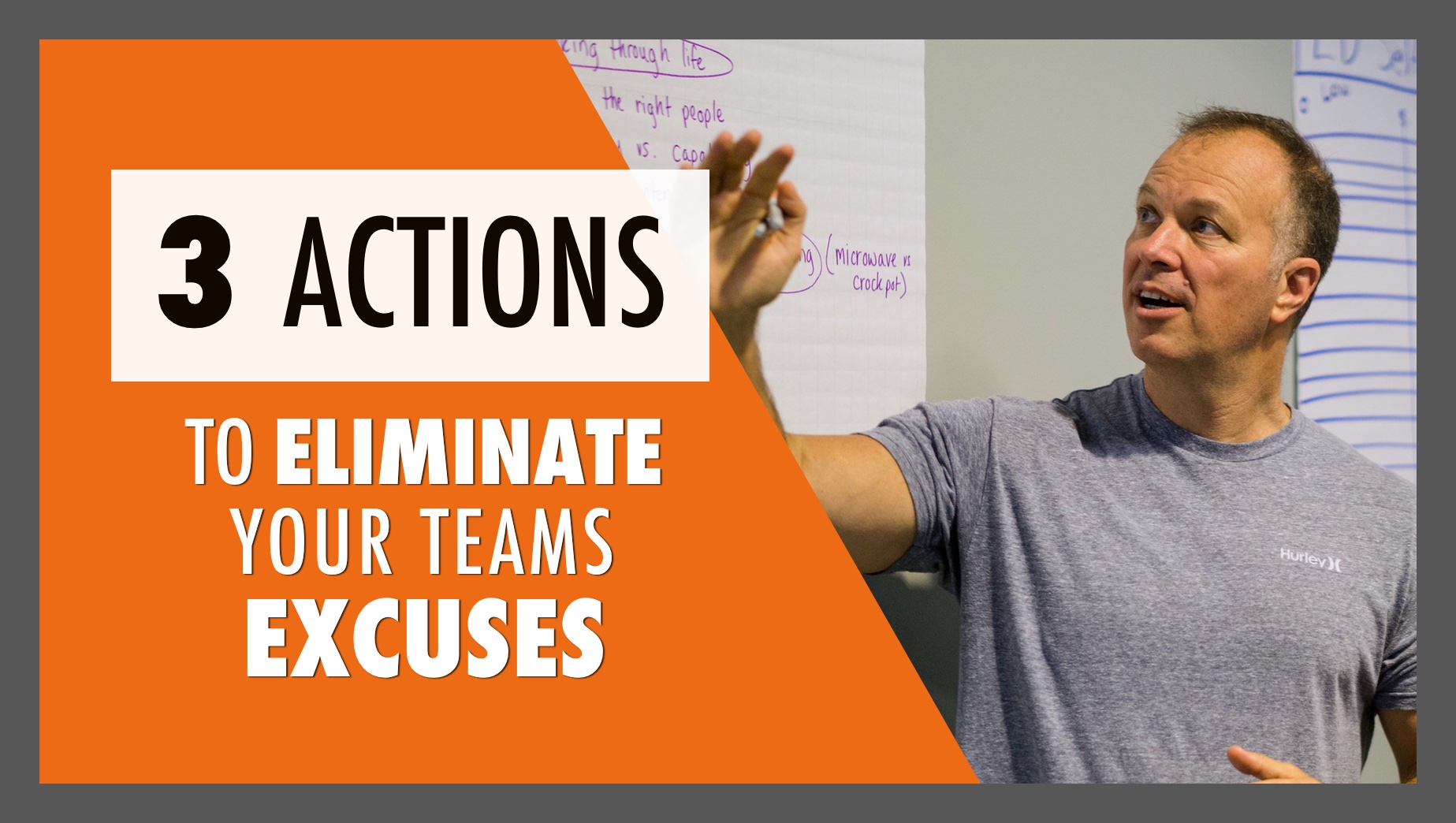
3 Actions to Eliminate Your Team’s Excuses

When your team members are not reproducing new leaders it won’t be long until your leadership pipeline begins to run dry.

It’s not that they don’t know leadership development is important, they just have excuses for not making leadership development a priority. When your team is not reproducing leaders, it’s your role to take the lead and help eliminate the excuses. As long as the excuses remain you will never have a culture of leadership development.

These three actions will help you develop your team as developers, see them engage in leadership development more and result in more new leaders flowing into your leadership pipeline.

Share this video with your team and discuss the questions below.

LINK: https://youtu.be/YDEmHqOv32Q

Discussion Questions

  • What are the most common challenges our team faces in developing leaders? (Make a list on a whiteboard)
  • Which challenge is the biggest for us? What steps can we take to eliminate this excuse?
  • What happens over time when a team continues to make excuses and fails to have a constant flow of new leaders? (Make a list of consequences)
  • How healthy is our leadership pipeline (leadership bench depth). Would you say it’s: On life support, Anemic, Slight fever or Healthy?
  • What action steps do we need to take to overcome excuses and improve the health of our leadership pipeline?

Read more from Mac here; subscribe to more free videos here.


Download PDF

Tags: , , ,

| What is MyVisionRoom? > | Back to Leadership >

ABOUT THE AUTHOR

Mac Lake

Mac Lake

Mac is a pioneering influence in the church planting movement. In 1997, he planted Carolina Forest Community Church (Myrtle Beach, South Carolina). In 2004, he began serving as Leadership Development Pastor at Seacoast Church (Charleston, South Carolina) where he served for over six years. In July 2010, Mac Lake joined with West Ridge Church to become the Visionary Architect for the LAUNCH Network. In 2015 Mac begin working with Will Mancini and Auxano to develop the Leadership Pipeline process. He joined Auxano full time in 2018. Mac and his wife, Cindy, live in Charleston, South Carolina and have three children, Brandon, Jordan and Brianna.

See more articles by >

COMMENTS

What say you? Leave a comment!

Recent Comments
comment_post_ID); ?> Thank you for this information. I'm going to use this article to improve my work with the Lord.
 
— Abel Singbeh
 
comment_post_ID); ?> Thank you Ed for sharing your insights into the Church Growth Movement. I have my reservations with Church Growth models because it has done more damage than good in the Body of Christ. Over the years, western churches are more focused on results, formulas and processes with little or no emphasis on membership and church discipline. Pastors and vocational leaders are burnt out because they're overworked. I do believe that the Church Growth model is a catalyst to two destructive groups: The New Apostolic Reformation and the Emerging Church. Both groups overlap and have a very loose definition. They're both focus on contemporary worship, expansion of church brand (franchising), and mobilizing volunteering members as 'leaders' to grow their ministry. Little focus on biblical study, apologetics and genuine missional work with no agenda besides preaching of the gospel.
 
— Dave
 
comment_post_ID); ?> Thank you for sharing such a good article. It is a great lesson I learned from this article. I am one of the leaders in Emmanuel united church of Ethiopia (A denomination with more-than 780 local churches through out the country). I am preparing a presentation on succession planning for local church leaders. It will help me for preparation If you send me more resources and recommend me books to read on the topic. I hope we may collaborate in advancing leadership capacity of our church. God Bless You and Your Ministry.
 
— Argaw Alemu
 

Clarity Process

Three effective ways to start moving toward clarity right now.

Three Personality Traits You Need for Clear Communication

Many local churches function as if the primary communicator is also the single vision caster. It’s true that the senior pastor is the lead vision caster, but that only paints a part of the picture.

It is also an insufficient way to view how a good vision is shaped, sustained and continually communicated to more and more people.

You’ve heard the phrase, “vision leaks.” It’s true. And, because it’s true, the vision of your church must be said over and over again, including one to one, small group huddles and meetings, and from the main stage.

Before I list the three traits, here’s a perspective of communicating the vision in your church.

There are three roles in leading and communicating the vision:

  • Vision Creators
  • Vision Castors
  • Vision Carriers

The vision creators typically consist of a small group of senior staff leaders (or volunteer leaders in a smaller church) along with the church board, who follow the senior pastor’s lead and prompts from God. Together, they seek clarity, alignment and begin to secure buy-in from the rest of the leaders.

The vision castors are a slightly larger group who stand on a stage of various sizes and communicate the vision in a public way. This would include, for example, groups like Campus Pastors, Student Pastors, Worship Leaders, etc.

The vision carriers are a massive group and often underutilized. In fact, nearly anyone in your church can be a vision carrier – and often are, depending on their level of enthusiasm, buy-in, and participation.

Or, another way to say it is, the further it will be carried.

A vision is carried relationally to far more people than any one vision castor can take it, regardless of how gifted a primary communicator is.

After an inspiring talk from the senior pastor; people will sit in homes, coffee shops and where they work saying something like, “So, what did you think about what Pastor said?”

That’s when the vision carriers kick into gear.

3 Traits of Your Best Vision Carriers:

1) They speak up positively

The people who love your church speak enthusiastically and positively to far more people than the pastor or church staff will ever reach. They answer questions and encourage others to join in their enthusiasm. The help put out fires and help others understand the vision.

2) They contribute generously

Vision attracts the resources needed to advance the mission. The people who have bought in at a heart-level contribute financially, and often at a generous level. They have either personally experienced life-change because of your church, or they see life-change in your church, and their spiritual maturity allows them to make Kingdom investments.

3) They serve joyfully

The opportunities to serve as part of a local church are nearly endless. The number of ministry options within the church should be limited, but the opportunities to carry the love of Christ into the community are endless. Your best vision carriers serve with joy, and their enthusiasm is contagious!

3 Quick tips on strengthening your army of vision carriers:

Make it clear
Make sure your vision is simple to understand, fresh, and captivating. If it can’t be said in a minute, it’s too complicated.

Invest
Always endeavor to want more for your people than from them. Your people are not tools to grow the church; they are the church. Grow your people, and they will reach more people.

Give them tools
From brief training sessions to window clings, give your people tools to help them communicate. Most importantly, give them a reason to tell others.

___

Here’s how to know it’s working:

Vision carriers invite people!

You can measure how well you’re doing by the number of guests and the retention rate of those guests.

> Read more by Dan.

Download PDF

Tags: , ,

| What is MyVisionRoom? > | Back to Communication >

ABOUT THE AUTHOR

Dan Reiland

Dan Reiland

Dr. Dan Reiland serves as Executive Pastor at 12Stone Church in Lawrenceville, Georgia. He previously partnered with John Maxwell for 20 years, first as Executive Pastor at Skyline Wesleyan Church in San Diego, then as Vice President of Leadership and Church Development at INJOY. He and Dr. Maxwell still enjoy partnering on a number of church related projects together. Dan is best known as a leader with a pastor's heart, but is often described as one of the nations most innovative church thinkers. His passion is developing leaders for the local church so that the Great Commission is advanced.

See more articles by >

COMMENTS

What say you? Leave a comment!

Recent Comments
comment_post_ID); ?> Thank you for this information. I'm going to use this article to improve my work with the Lord.
 
— Abel Singbeh
 
comment_post_ID); ?> Thank you Ed for sharing your insights into the Church Growth Movement. I have my reservations with Church Growth models because it has done more damage than good in the Body of Christ. Over the years, western churches are more focused on results, formulas and processes with little or no emphasis on membership and church discipline. Pastors and vocational leaders are burnt out because they're overworked. I do believe that the Church Growth model is a catalyst to two destructive groups: The New Apostolic Reformation and the Emerging Church. Both groups overlap and have a very loose definition. They're both focus on contemporary worship, expansion of church brand (franchising), and mobilizing volunteering members as 'leaders' to grow their ministry. Little focus on biblical study, apologetics and genuine missional work with no agenda besides preaching of the gospel.
 
— Dave
 
comment_post_ID); ?> Thank you for sharing such a good article. It is a great lesson I learned from this article. I am one of the leaders in Emmanuel united church of Ethiopia (A denomination with more-than 780 local churches through out the country). I am preparing a presentation on succession planning for local church leaders. It will help me for preparation If you send me more resources and recommend me books to read on the topic. I hope we may collaborate in advancing leadership capacity of our church. God Bless You and Your Ministry.
 
— Argaw Alemu
 

Clarity Process

Three effective ways to start moving toward clarity right now.

Three Keys to Avoiding Failure When A Change Must Come

Nothing frustrates great leaders more than watching a project crucial to their church’s growth and missional effectiveness stall prior to completion. Hours of effort and dreaming often disappear in the span of one congregational meeting.

A misunderstanding of the Iron Triangle often leads to progress dying on the vine.

The Iron Triangle is a principle of project management that states this: there are three, independent, yet inter-dependent objectives in any initiative that, when applied, also become constraints. An increase in any of the two will necessarily result in a decrease in the other one.

A desire for each of these objectives results in three questions that are asked of every project:

Can it be great? Based on a desire for the highest quality.

Can it be quick? Based on a desire for the promptest delivery.

Can it be cheap? Based on a desire for the lowest cost.

People want all three objectives: a product that is good, fast and cheap.

The Principle of the Iron Triangle states that you can only ever achieve two of the three objectives at any one time.

It can be good and fast, but your project will not be very cheap.

It can be fast and cheap, but your project will not be very good.

It can be cheap and good, but your project will not be very fast.

It is not a question of style or experience, but of economy. There are only so many resources available at any one time. Effective leaders understand this reality and can prioritize the two resources that matter the most, as well as set appropriate expectations for their team.

The Iron Triangle is highly applicable to leading change in the church as well.

When it comes to leading effective change in the church, you can only have two of those three resources in any initiative:

Positive change that most everyone will receive without hesitation.

Expedient change that is responsive to immediately pressing matters.

Inexpensive change that is not dependent on significant resources.

A positive and expedient change will require higher financial and volunteer resources to realize.

An expedient and inexpensive change will require more significant relational capital, and concessions of personal preference, to realize.

An inexpensive and positive change will require a more extended season and more considerable investment of time to realize.

The Leader’s real secret lies in knowing how to set congregational expectations around which resources are being maximized and which will be missing. Setting appropriate expectations within the Iron Triangle often becomes the difference maker of success when change is required.

If you are facing a significant change in your church, your first step is to decide which pathway that you desire the most:

  1. A change that everyone will like and that can happen quickly.
  2. A change that can happen soon and will not cost a lot.
  3. A change that will not cost a lot and everyone will be happy about.

Next, based on the pathway above, set everyone’s expectations for the resource that will be required:

  1. This type of change will take significant financial and volunteer resources.
  2. This type of change will bring sideways energy dealing with unhappy people.
  3. This type of change will take time to implement and integrate across the body.

Finally, lead confidently knowing that you are pursuing God’s better future for your church and the Kingdom. Always remember that refusing to change is deciding to decline.

> Read more from Bryan.


Download PDF

Tags: ,

| What is MyVisionRoom? > | Back to Leadership >

ABOUT THE AUTHOR

Bryan Rose

Bryan Rose

As Lead Navigator for Auxano, Bryan Rose has a strong bias toward merging strategy and creativity within the vision of the local church and has had a diversity of experience in just about every ministry discipline over the last 12 years. With his experience as a multi-site strategist and campus pastor at a 3500 member multi-campus church in the Houston Metro area, Bryan has a passion to see “launch clarity” define the unique Great Commission call of developing church plants and campus, while at the same time serving established churches as they seek to clarify their individual ministry calling. Bryan has demonstrated achievement as a strategic thinker with a unique ability to infuse creativity into the visioning process while bringing a group of people to a deep sense of personal ownership and passion.

See more articles by >

COMMENTS

What say you? Leave a comment!

Recent Comments
comment_post_ID); ?> Thank you for this information. I'm going to use this article to improve my work with the Lord.
 
— Abel Singbeh
 
comment_post_ID); ?> Thank you Ed for sharing your insights into the Church Growth Movement. I have my reservations with Church Growth models because it has done more damage than good in the Body of Christ. Over the years, western churches are more focused on results, formulas and processes with little or no emphasis on membership and church discipline. Pastors and vocational leaders are burnt out because they're overworked. I do believe that the Church Growth model is a catalyst to two destructive groups: The New Apostolic Reformation and the Emerging Church. Both groups overlap and have a very loose definition. They're both focus on contemporary worship, expansion of church brand (franchising), and mobilizing volunteering members as 'leaders' to grow their ministry. Little focus on biblical study, apologetics and genuine missional work with no agenda besides preaching of the gospel.
 
— Dave
 
comment_post_ID); ?> Thank you for sharing such a good article. It is a great lesson I learned from this article. I am one of the leaders in Emmanuel united church of Ethiopia (A denomination with more-than 780 local churches through out the country). I am preparing a presentation on succession planning for local church leaders. It will help me for preparation If you send me more resources and recommend me books to read on the topic. I hope we may collaborate in advancing leadership capacity of our church. God Bless You and Your Ministry.
 
— Argaw Alemu
 

Clarity Process

Three effective ways to start moving toward clarity right now.

Generosity Killers, Part Two: Debt

Many of us want to do more and be more. We want to make a difference in the world. We want our lives to count for something significant.

But our finances are wrecked, sometimes caused by our own doing and sometimes caused by things completely beyond our control. We need to clean up our financial mess, but we don’t want to do it just so we can be rich.

We’ve all seen people that seem to have everything, but in reality they have nothing. They are miserable.

Being “rich” isn’t the answer. Financial health is not even the final answer. What are the Generosity Killers in your life that need to be discovered, owned, and eliminated?

THE QUICK SUMMARY – The Total Money Makeover by Dave Ramsey

If you will live like no one else, later you can live like no one else. Build up your money muscles with America’s favorite finance coach. Okay, folks, do you want to turn those fat and flabby expenses into a well-toned budget? Do you want to transform your sad and skinny little bank account into a bulked-up cash machine? Then get with the program, people.

There’s one sure way to whip your finances into shape, and that’s with The Total Money Makeover: Classic Edition. By now, you’ve heard all the nutty get-rich-quick schemes, the fiscal diet fads that leave you with a lot of kooky ideas but not a penny in your pocket. If you’re tired of the lies and sick of the false promises, take a look at this. It’s the simplest, most straightforward game plan for completely making over your money habits. And it’s based on results, not pie-in-the-sky fantasies.

With The Total Money Makeover: Classic Edition, you’ll be able to design a sure-fire plan for paying off all debt (meaning cars, houses, everything) and recognize the 10 most dangerous money myths (these will kill you).

A SIMPLE SOLUTION

Debt can be a terrible thing. It can put us in the position of always living on the verge of financial ruin. Debt hinders our ability to move forward in our finances, and debt kills our generosity.

Of course, debt is not your real issue. Debt is a symptom of a larger issue. It may be trying to keep up with the Joneses. It may result from attempting to achieve life satisfaction through stuff. Or it may simply be the result of lack of planning and discipline.

In the U.S., we really love our debt. Total household debt rose to an all-time high of $13.15 trillion at year-end 2017, according to the Federal Reserve Bank of New York’s Center for Microeconomic Data. The report said it was the fifth consecutive year of annual household debt growth with increases in the mortgage, student, auto and credit card categories.

Debt is so ingrained into our culture that most Americans can’t envision a car without a payment, a house without a mortgage, a student without a loan, and credit without a card.

Debt has been sold to us so aggressively, so loudly, and so often that to imagine living without debt requires myth busting. We have to systematically destroy the inner workings of the myths. We have been sold debt with such repetition and with such fervor that most folks cannot conceive what it would be like to have no payments.

I want to expose the inner workings of the Debt Myth by looking at some of the sub-myths.

Myth:  Debt is a tool and should be used to create prosperity.

Truth: Debt adds considerable risk, most often doesn’t bring prosperity, and isn’t used by wealthy people nearly as much as we are led to believe.

Myth:  “Ninety days same as cash” equals using other people’s money for free.

Truth:  Ninety days is not the same as cash.

Myth: Car payments are a way of life; you will always have one.

Truth:  Staying away from car payments by driving reliable used cars is what the average millionaire does; that is how he or she became a millionaire.

Myth: Leasing a car is what sophisticated people do. You should lease things that go down in value and take the tax advantage.

Truth: Consumer advocates, noted experts, and a good calculator will confirm that the car lease is the most expensive way to operate a vehicle.

Myth:  If you pay off your credit card every month, you get the free use of someone else’s money.

Truth: Industry standards report that 60 percent of people don’t pay off their credit cards every month.

These myths and others like them have been spread far and wide. Remember, debt is not a tool; it is a method to make banks wealthy, not you.

Your largest wealth-building asset is your income. When you tie up your income, you lose. When you invest your income, you become wealthy and can do anything you want.

Dave Ramsey, The Total Money Makeover

A NEXT STEP

Review each of the above myth/truth pairs. Be honest with yourself in your review and evaluation of each. If you find yourself in one of the myth situations, what actions do you need to take in order to move to the truth side?

How can you change your spending habits and determine to live on less than you earn so you can create financial margin?

Commit to undertaking no additional debt.

Create a debt snowball by paying off your smallest debt first. When that debt is paid off, add the amount of the payment to your next largest debt. Keep doing it until all the debt is paid off.

Save as much as you can, whenever you can. Budget for savings every month.

Getting out of debt will take patience, planning, and perseverance. You didn’t get into debt overnight, so you can’t expect to get out of it overnight, either.

Excerpt taken from SUMS Remix 91-2, released April 2018.


This is part of a weekly series posting excerpts from one of the most innovative content sources in the church world: SUMS Remix book excerpts for church leaders.

Each issue SUMS Remix takes a practical problem in the church and looks at it with three solutions; each solution is taken from a different book. Additionally, a practical action step is included with each solution.

As a church leader you get to scan relevant books based on practical tools and solutions to real ministry problems, not just by the cover of the book. Each post will have the edition number which shows the year and what number it is in the overall sequence. (SUMS Remix provides 26 issues per year, delivered every other week to your inbox). 

> > Subscribe to SUMS Remix <<

Download PDF

Tags: , ,

| What is MyVisionRoom? > | Back to Resourcing >

ABOUT THE AUTHOR

VRcurator

VRcurator

Bob Adams is Auxano's Vision Room Curator. His background includes over 23 years as an associate/executive pastor as well as 8 years as the Lead Consultant for a church design build company. He joined Auxano in 2012.

See more articles by >

COMMENTS

What say you? Leave a comment!

Recent Comments
comment_post_ID); ?> Thank you for this information. I'm going to use this article to improve my work with the Lord.
 
— Abel Singbeh
 
comment_post_ID); ?> Thank you Ed for sharing your insights into the Church Growth Movement. I have my reservations with Church Growth models because it has done more damage than good in the Body of Christ. Over the years, western churches are more focused on results, formulas and processes with little or no emphasis on membership and church discipline. Pastors and vocational leaders are burnt out because they're overworked. I do believe that the Church Growth model is a catalyst to two destructive groups: The New Apostolic Reformation and the Emerging Church. Both groups overlap and have a very loose definition. They're both focus on contemporary worship, expansion of church brand (franchising), and mobilizing volunteering members as 'leaders' to grow their ministry. Little focus on biblical study, apologetics and genuine missional work with no agenda besides preaching of the gospel.
 
— Dave
 
comment_post_ID); ?> Thank you for sharing such a good article. It is a great lesson I learned from this article. I am one of the leaders in Emmanuel united church of Ethiopia (A denomination with more-than 780 local churches through out the country). I am preparing a presentation on succession planning for local church leaders. It will help me for preparation If you send me more resources and recommend me books to read on the topic. I hope we may collaborate in advancing leadership capacity of our church. God Bless You and Your Ministry.
 
— Argaw Alemu
 

Clarity Process

Three effective ways to start moving toward clarity right now.

12 Ways to Connect with Your Community

Okay, content marketing might be a new term for you. Here’s a definition from Joe Pulizzi, Founder of the Content Marketing Institute:

“Content marketing is a strategic marketing approach focused on creating and distributing valuable, relevant, and consistent content to attract and retain a clearly-defined audience — and, ultimately, to drive profitable customer action.”

Two Observations About the Church and Content Marketing

Let me make two observations about the relationship between the church and content marketing.

First, I believe that the church was the first great content marketing institution. How do I know? As I pointed out in my book, Rewired, the early church used papyrus for publishing, the Roman roads for traveling, and the Greek language (almost universally used for written communication) to get the Good News about Jesus out to the ends of the earth.

Then, the church used the printing press to distribute Bibles. The Bible was the first book printed, and is the most widely published book in history for a reason.

My second observation isn’t quite so positive… we’ve fallen behind.

Where once the church was innovative in finding new means of spreading the gospel, now we’re skeptical of technology, scared to engage the world around us, and our view of “secular” culture is flawed. Instead of creating culture, we’re hiding from it.

So I believe we ought to get back to our roots and become leaders in the field of content marketing, not to combat everything secular, but rather to influence the secular with sacred truth.

Two Big Truths We Need to Believe In

Let’s acknowledge two other big truths about content marketing and the church.

One, we have the world’s best content.

We’ve been handed the very revelation of God’s mind and heart in the form of the Bible, the written Word. It’s printed and bound in leather, sold in dozens of translations and study editions, and available in digital formats.

LifeChurch.tv has done an amazing, Kingdom-minded thing with the development of YouVersion, which puts the Bible into dozens of languages, socializes it, and spreads it all over the world. They don’t have the only Bible app (which is another positive), but they’ve done probably the most aggressive work in terms of marketing it.

We can do even better getting the word out about the Word. LifeChurch.tv and a handful of online Bible publishers can’t do it alone. We need to tell everybody about the availability of eternal truth.

But it isn’t just the Bible. We’ve preached hundreds of thousands of great sermons, produced amazingly creative videos, written tens of thousands of valuable books, and authored too many devotional works to count.

We have the content with which to fill the world with encouraging, life-saving truth.

Two, our message is worth marketing.

You wanna argue about whether the church should be in the “marketing” business or not? You’ll have to argue with someone else, cause I ain’t got time f’dat!

Every church leader I know is a marketer. And those who are opposed to “using marketing in the church” are usually some of the best at marketing their anti-marketing message.

Maybe we just need better jargon. Know what marketing really is?

Marketing is getting the word out

That’s it. It’s spreading the message. And I’m pretty sure we were commissioned to get the word out (marketing) about the truth and saving grace of Jesus (message).

So, how can the church do better with its content marketing? Here are a dozen from-the-hip ideas…

  • Use social media in supernaturally natural ways (point people to Jesus in natural, relational ways).
  • Remove the imaginary barrier between the sacred and the secular.
  • Don’t be awkwardly religious all the time.
  • Be personal. Share your life in pictures, videos, and status updates. Not everything, but some highlights.
  • Build friendships and relationships.
  • Sprinkle in divine truth.
  • Be funny in appropriate ways. Humor is relatable and Jesus-like.
  • Break your sermons into easily sharable portions – blog posts, tweets, images with quotes, etc.
  • Point back sometimes to ancient things – old hymns, creeds, and quotes from leaders already in heaven.
  • Demonstrate the relevance of Scripture to everyday issues and problems.
  • Get artistic. Use your creative gifts to adorn God’s truth in beautiful ways.
  • Tell stories of life change.

Oh, and get better at this.

Read great books about content marketing.

Attend events that educate about content marketing.

Get training in better communication skills.

Use widely available tools and resources.

Our message never changes. Ever. But our methods of marketing it will change with every generation. And this generation needs Jesus!

So let’s do this!

> Read more from Brandon.


To learn more about content marketing for your church, connect with an Auxano Navigator.

Download PDF

Tags: , ,

| What is MyVisionRoom? > | Back to Communication >

ABOUT THE AUTHOR

Brandon Cox

Brandon Cox has been a Pastor for fifteen years and is currently planting a church in northwest Arkansas, a Saddleback-sponsored church. He also serves as Editor of Pastors.com and Rick Warren's Pastors' Toolbox, and authors a top 100 blog for church leaders (brandonacox.com). He's also the author of Rewired: Using Technology to Share God's Love.

See more articles by >

COMMENTS

What say you? Leave a comment!

Recent Comments
comment_post_ID); ?> Thank you for this information. I'm going to use this article to improve my work with the Lord.
 
— Abel Singbeh
 
comment_post_ID); ?> Thank you Ed for sharing your insights into the Church Growth Movement. I have my reservations with Church Growth models because it has done more damage than good in the Body of Christ. Over the years, western churches are more focused on results, formulas and processes with little or no emphasis on membership and church discipline. Pastors and vocational leaders are burnt out because they're overworked. I do believe that the Church Growth model is a catalyst to two destructive groups: The New Apostolic Reformation and the Emerging Church. Both groups overlap and have a very loose definition. They're both focus on contemporary worship, expansion of church brand (franchising), and mobilizing volunteering members as 'leaders' to grow their ministry. Little focus on biblical study, apologetics and genuine missional work with no agenda besides preaching of the gospel.
 
— Dave
 
comment_post_ID); ?> Thank you for sharing such a good article. It is a great lesson I learned from this article. I am one of the leaders in Emmanuel united church of Ethiopia (A denomination with more-than 780 local churches through out the country). I am preparing a presentation on succession planning for local church leaders. It will help me for preparation If you send me more resources and recommend me books to read on the topic. I hope we may collaborate in advancing leadership capacity of our church. God Bless You and Your Ministry.
 
— Argaw Alemu
 

Clarity Process

Three effective ways to start moving toward clarity right now.